

We woke up early in the morning eager to start our second day in Italy during the Venice Carnival, so we headed to Rialto Bridge, stopping by the Rialto Market first, and then reaching St. Mark’s square in order to visit the landmarks, also the Doge’s Palace and the museums included in the Venezia Unica cards.
Morning at Rialto Market During the Venice Carnival in Italy
First we enjoyed breakfast at the hotel, then we set off on foot toward the Rialto Market. But rather than crossing the Grand Canal, we chose to stay on the right side. Then, from there we simply followed the street signs pointing us in the direction of the “Rialto market.” You can see the itinerary map in the Venice 4 Days Itinerary post.
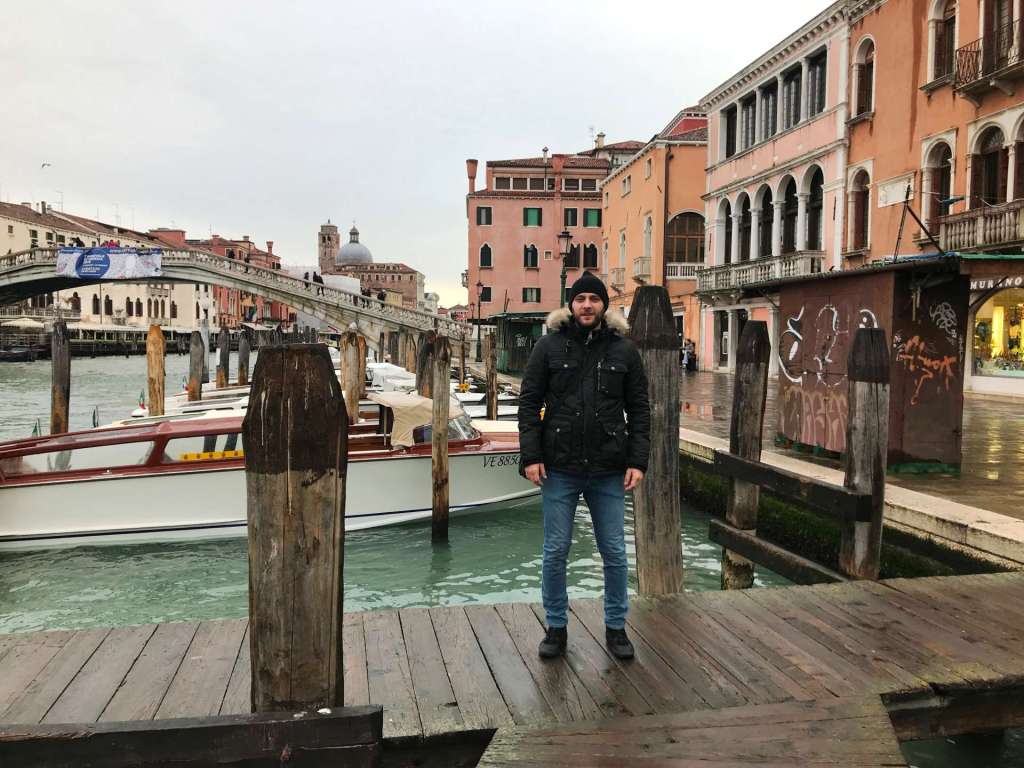
Rialto Market is opened between 6.00 and 11.00 am/1.00 pm the latest. First we reached Rialto Pescaria, and then Rialto Erberia. See in the picture below some important palazzi across the Grand Canal: Ca’ D’ Oro and Ca’ Sagredo Hotel, and also the Giant Venice Hands work of art exposed at that time.
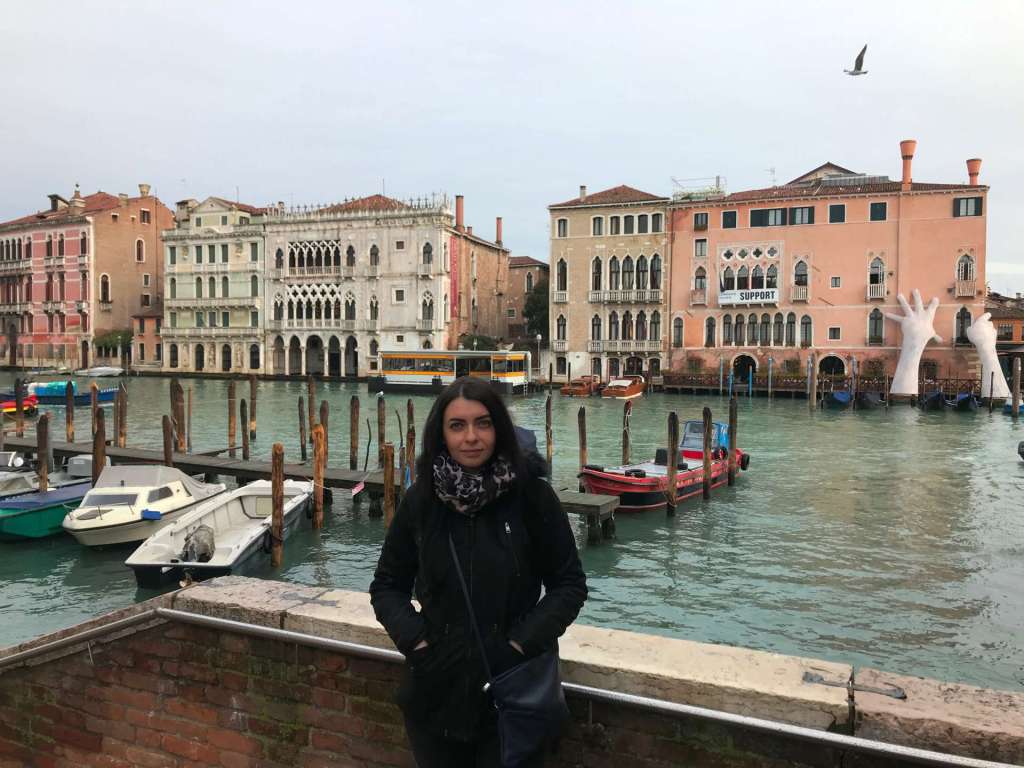
Exploring Rialto Pescaria and Crossing the Grand Canal
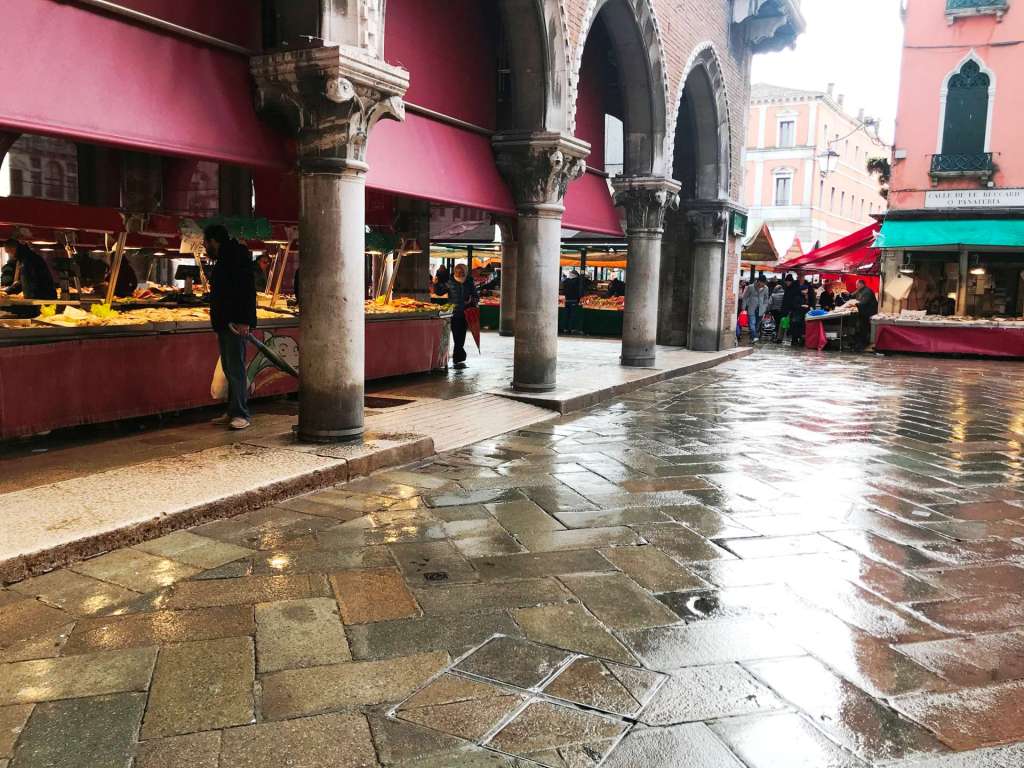
Rialto Pescaria was quite empty at that time, maybe also because it rained a little that morning.
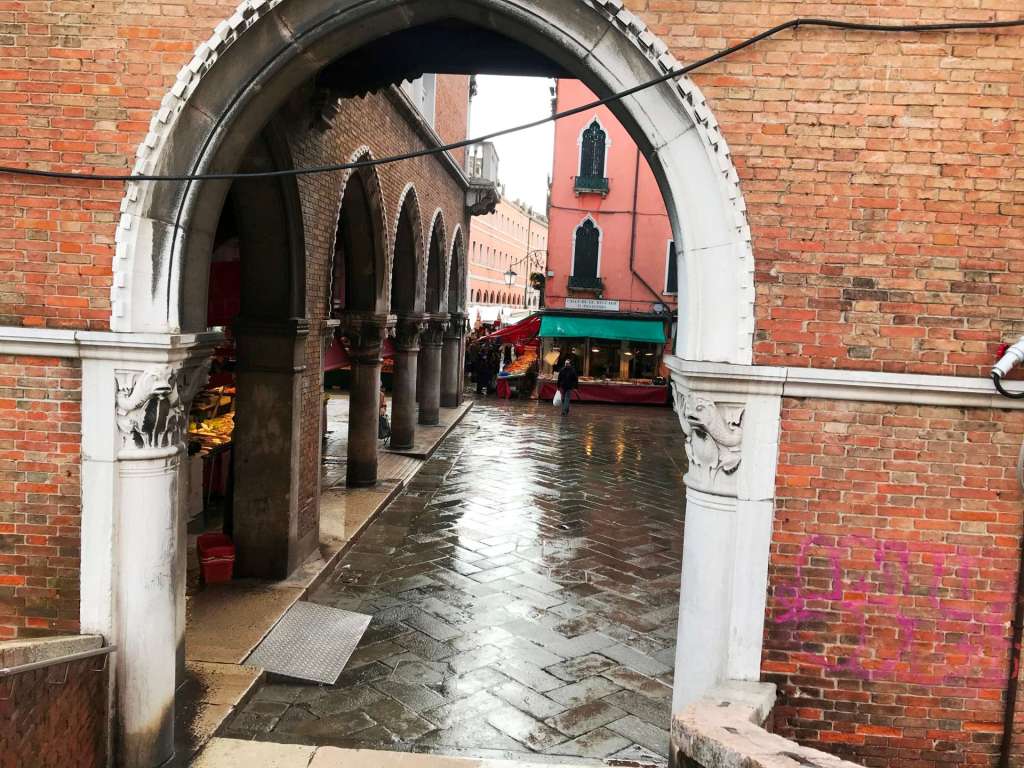
During our visit, we explored both the fish and vegetable markets—Rialto Pescaria and nearby Rialto Erberia.
Then we crossed the Grand Canal in a traghetto (a gondola) from Santa Sofia to Ca’ D’ Oro traghetto stop.
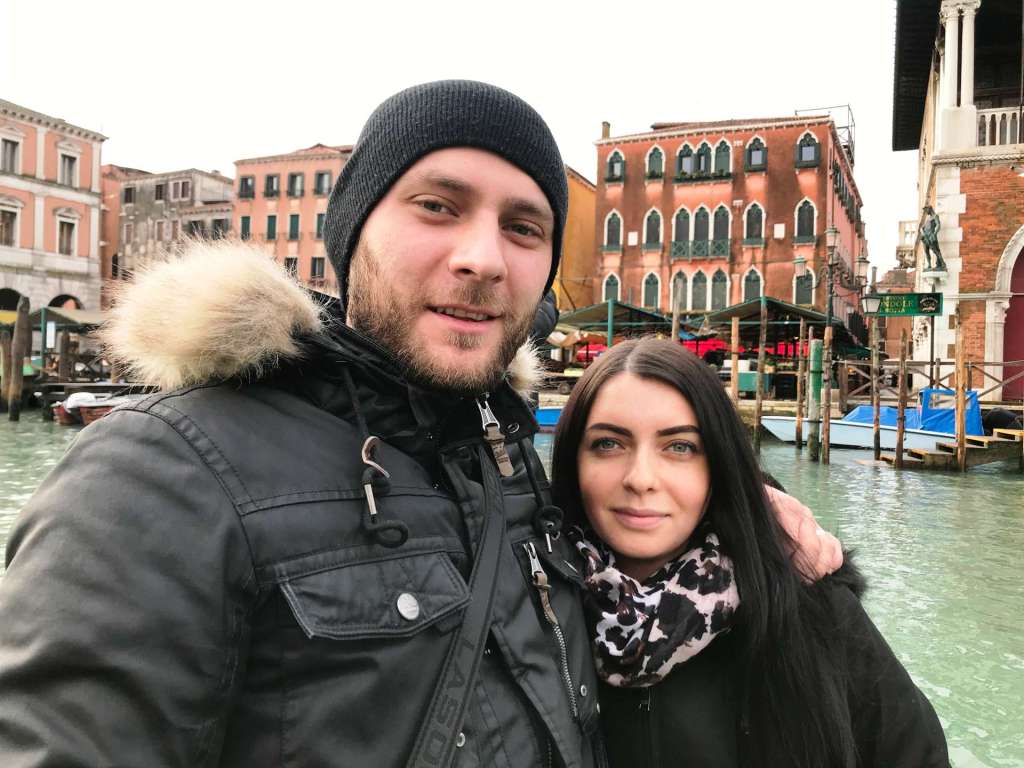
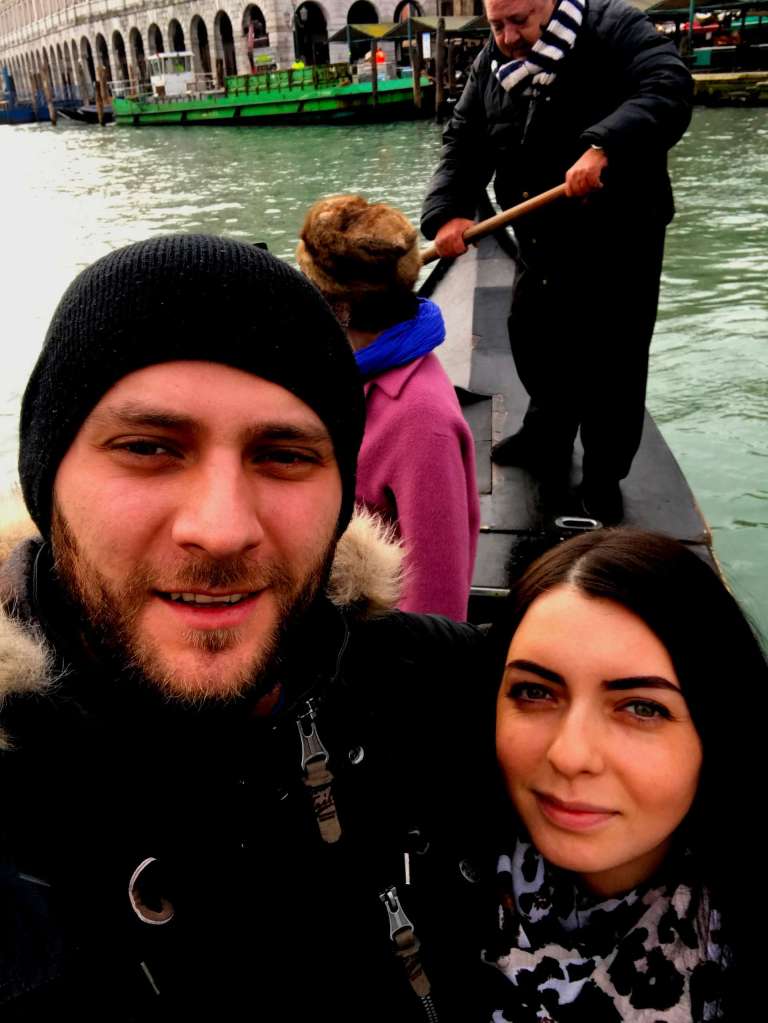
However, Grand Canal crossing in a traghetto was a short ride. The locals usually do it standing, and so we did.
We eventually arrived on the pier on the other side of the Grand Canal.
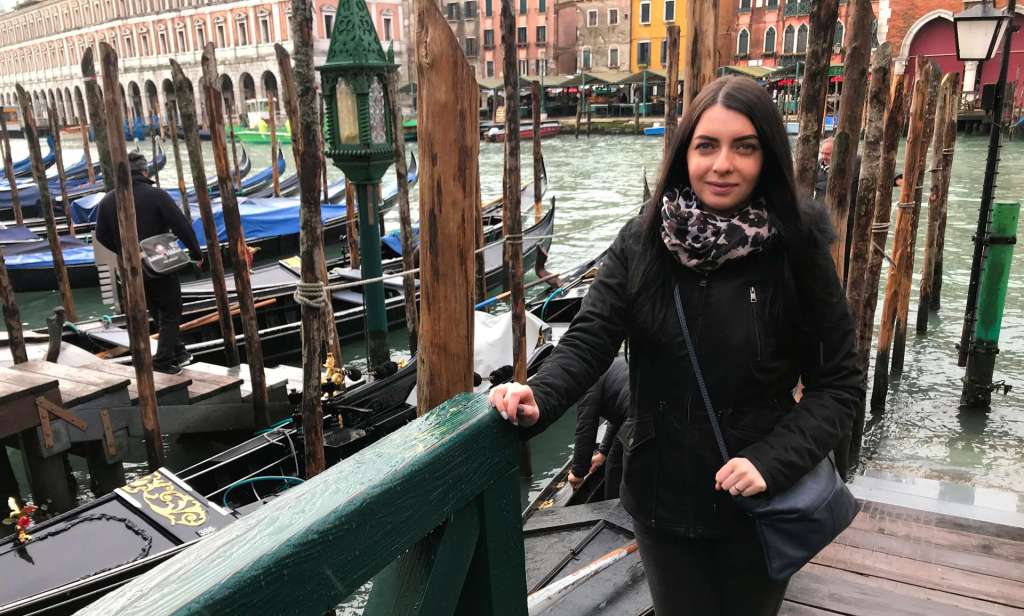
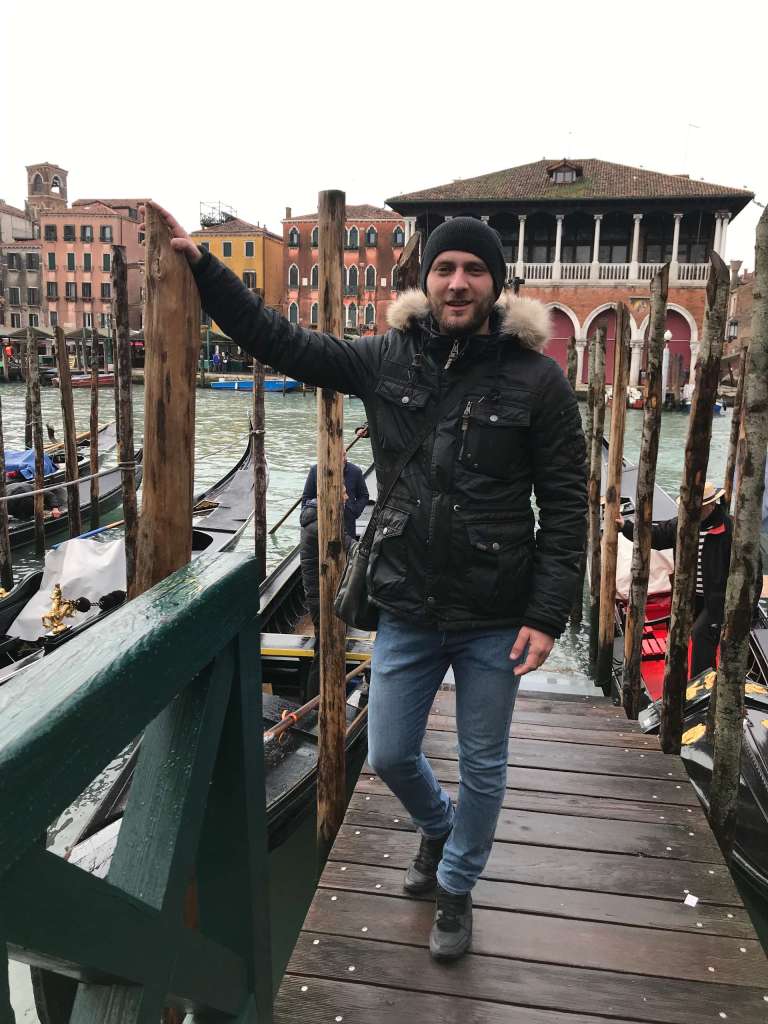
From Rialto to San Marco – A Walking Tour Through Venice Carnival Italy
From there, we continued our walk toward San Marco and eventually arrived in Campo Santi Apostoli; see Chiesa Cattolica Parrocchiale dei Santi Apostoli in the picture below.
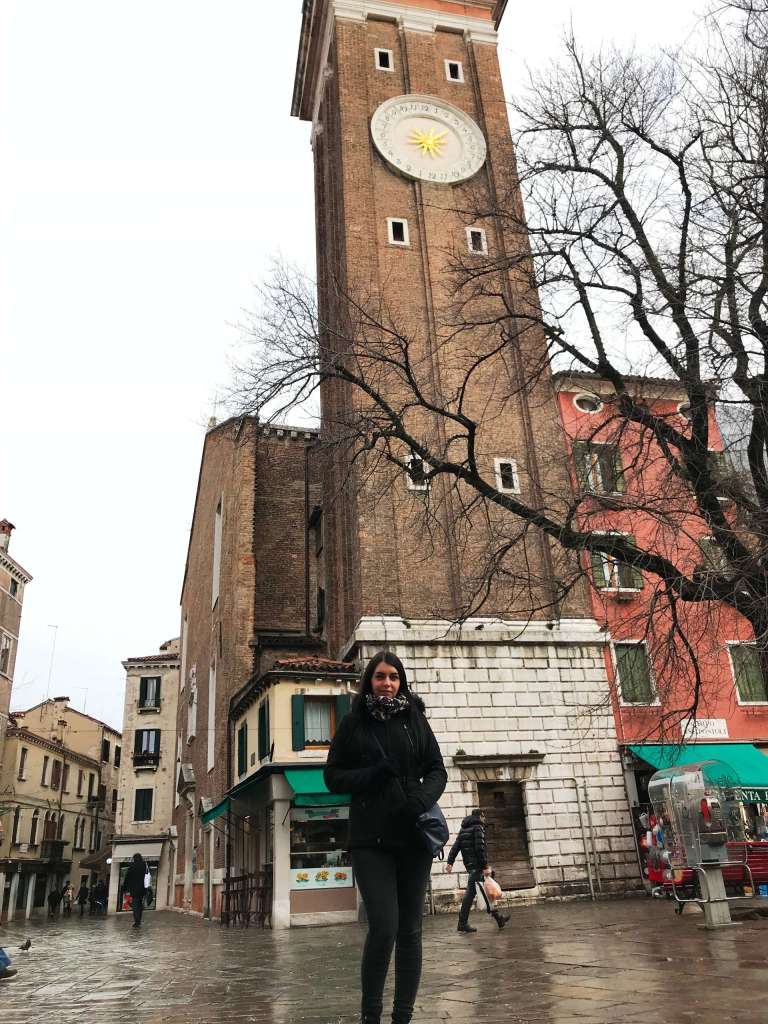
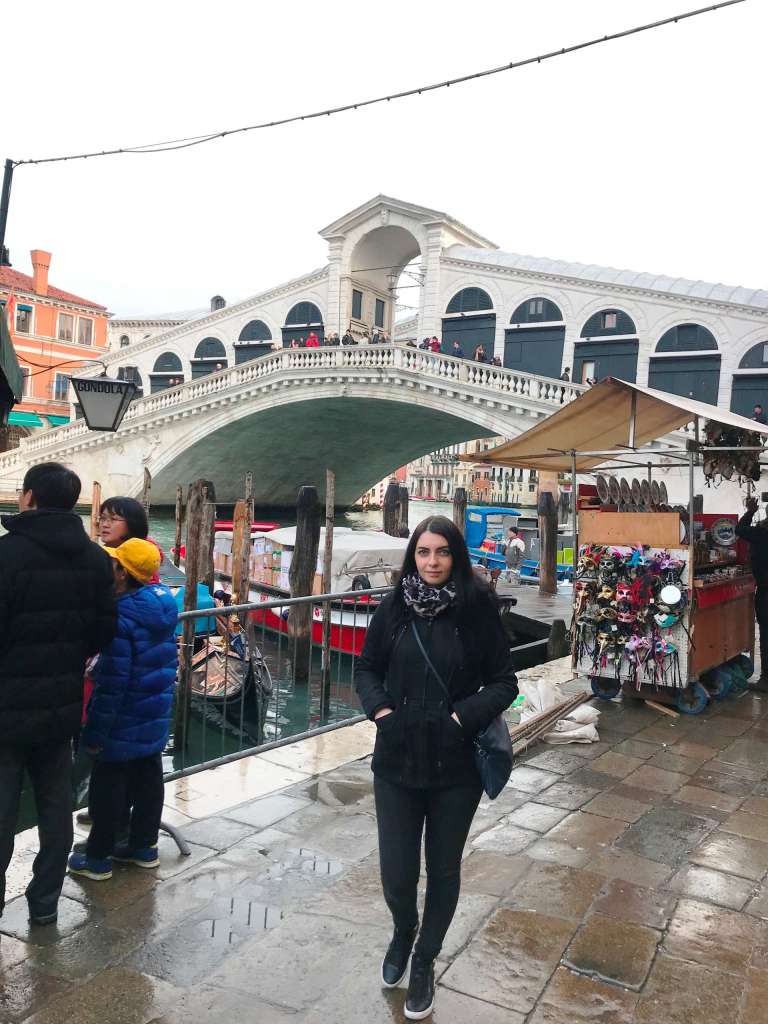
From there, we continued on the narrow streets and we soon reached Campo San Bartolomio and, shortly after, the iconic Rialto Bridge.
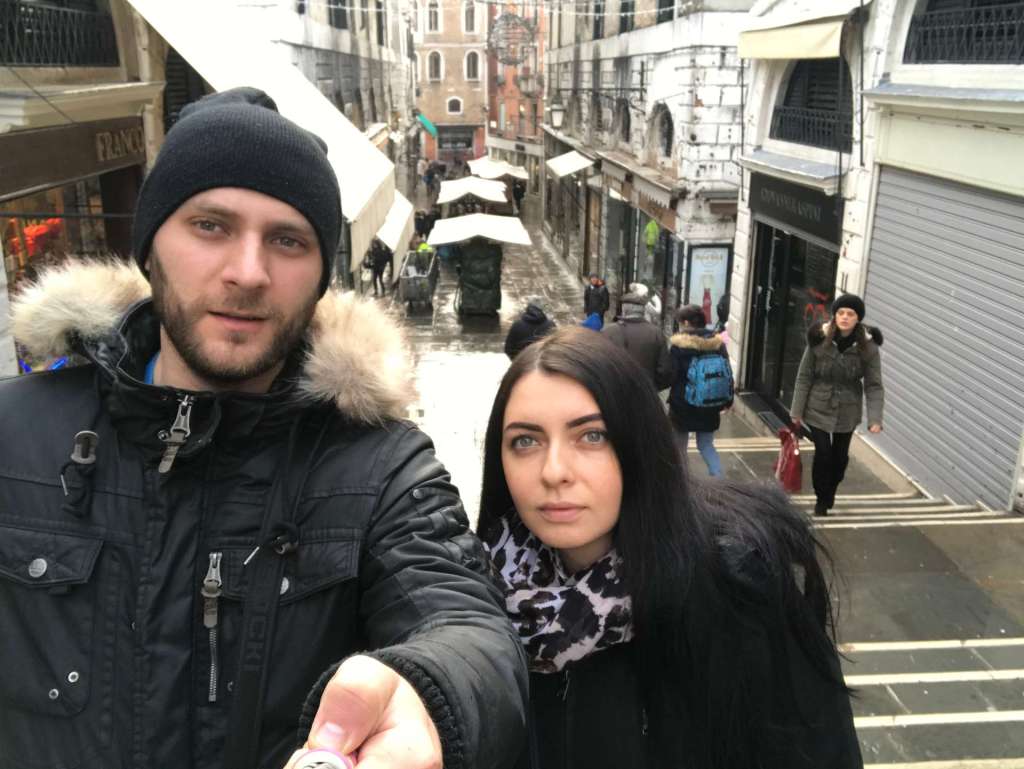
Once we reached the bridge, we crossed it back and forth in order to take in the view. At the same time, we captured plenty of photos from every angle to remember the moment.
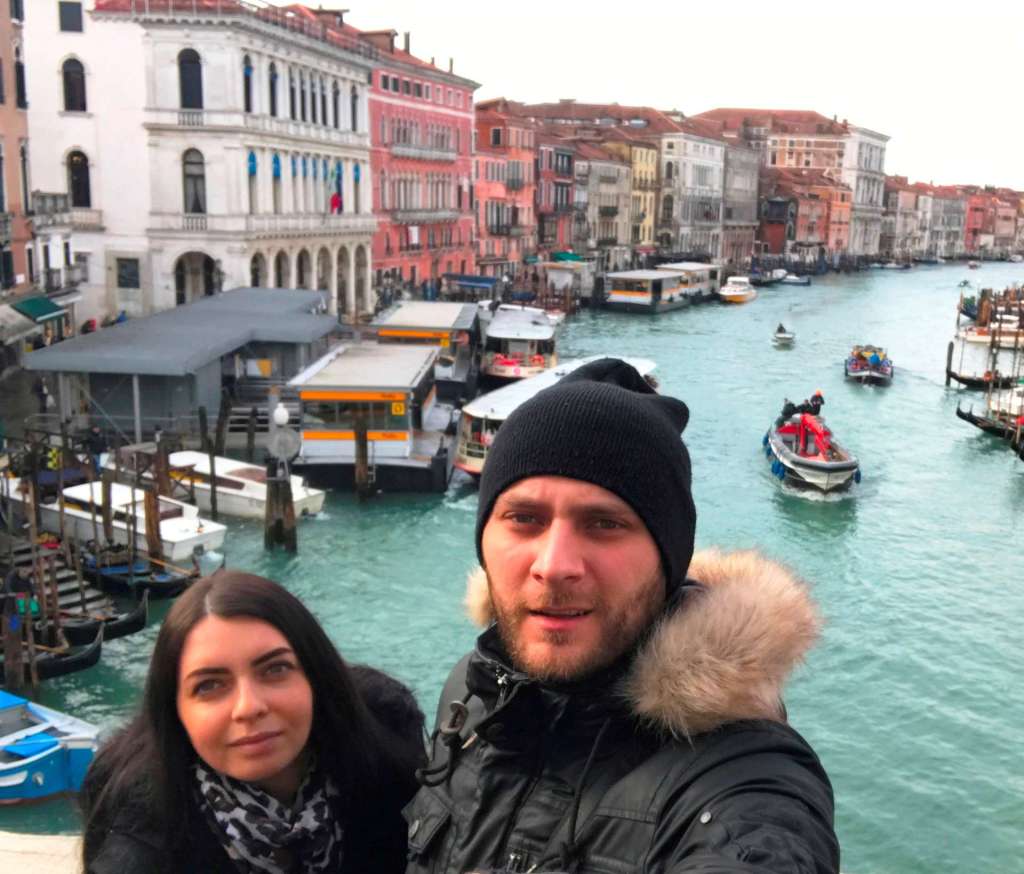
See the Grand Canal from Rialto Bridge in this picture.
Rialto Bridge has 3 alleys: 2 exterior alleys with railings, and a central wide alley with shops on both sides, but also has a lot of steps.
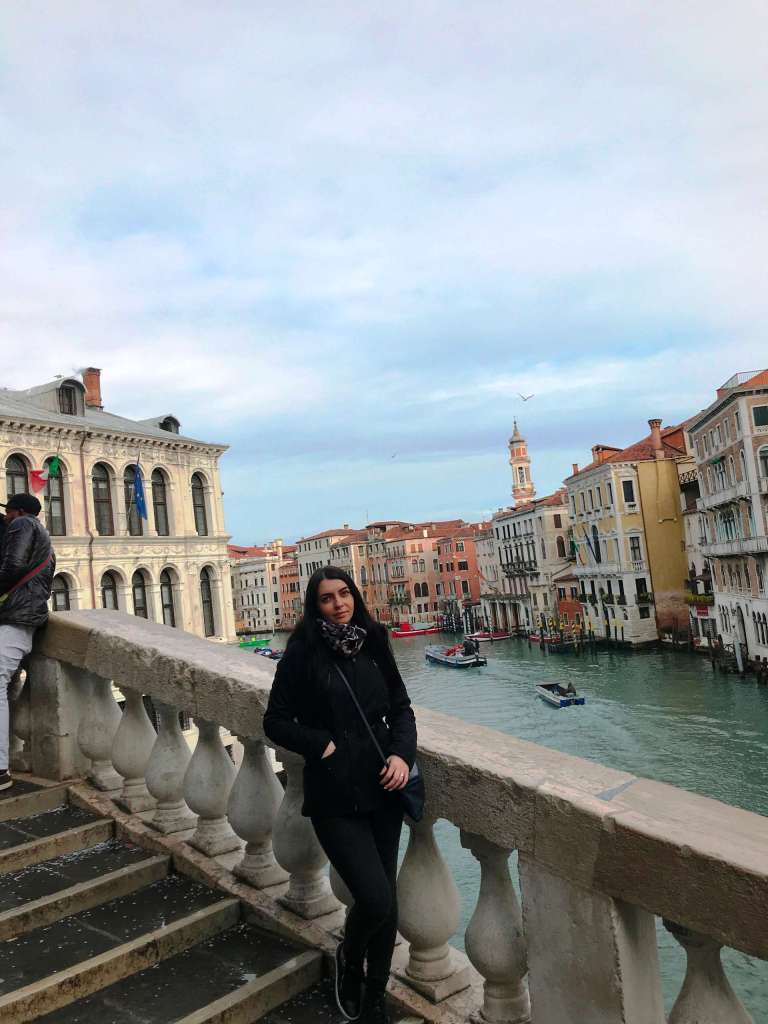
In the next two pictures you can also see the Grand Canal from Rialto Bridge from the opposite side.


Once we had finished exploring the area, we made our way back by climbing the stairs in order to reach the San Marco side of the Rialto Bridge.
Discovering a Venice Hidden Gem: Scala del Bovolo
And then we continued walking on Grand Canal’s shore on Riva de Ferro, asked around and then finally managed to find Scala del Bovolo (Palazzo Contarini del Bovolo).

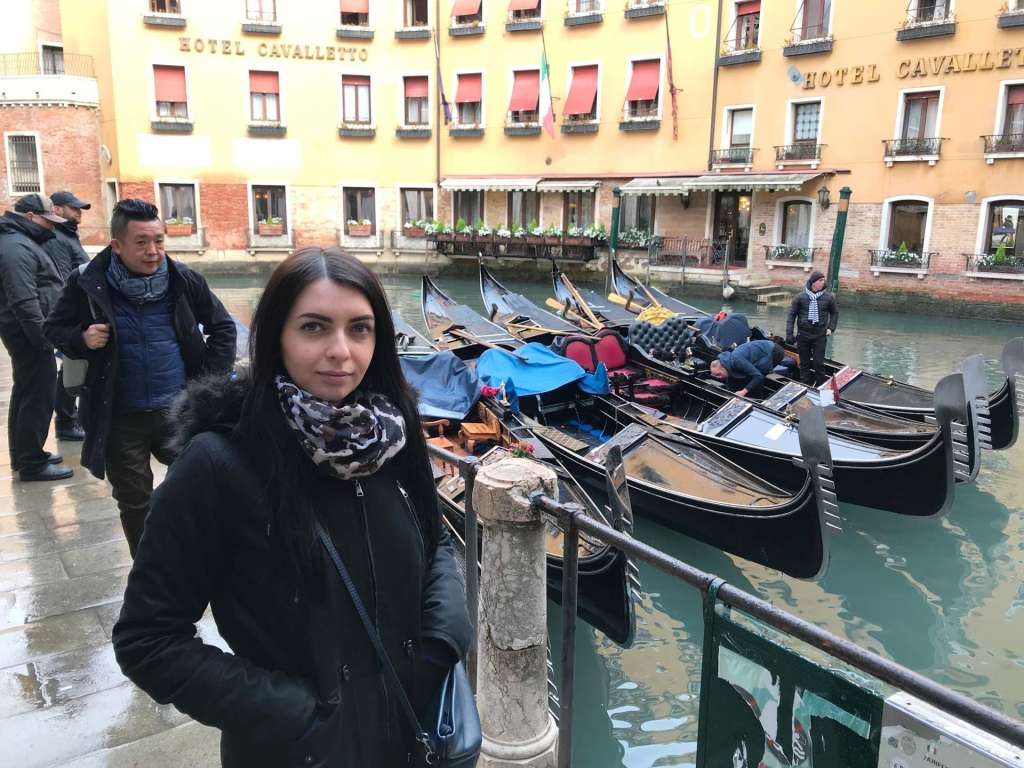
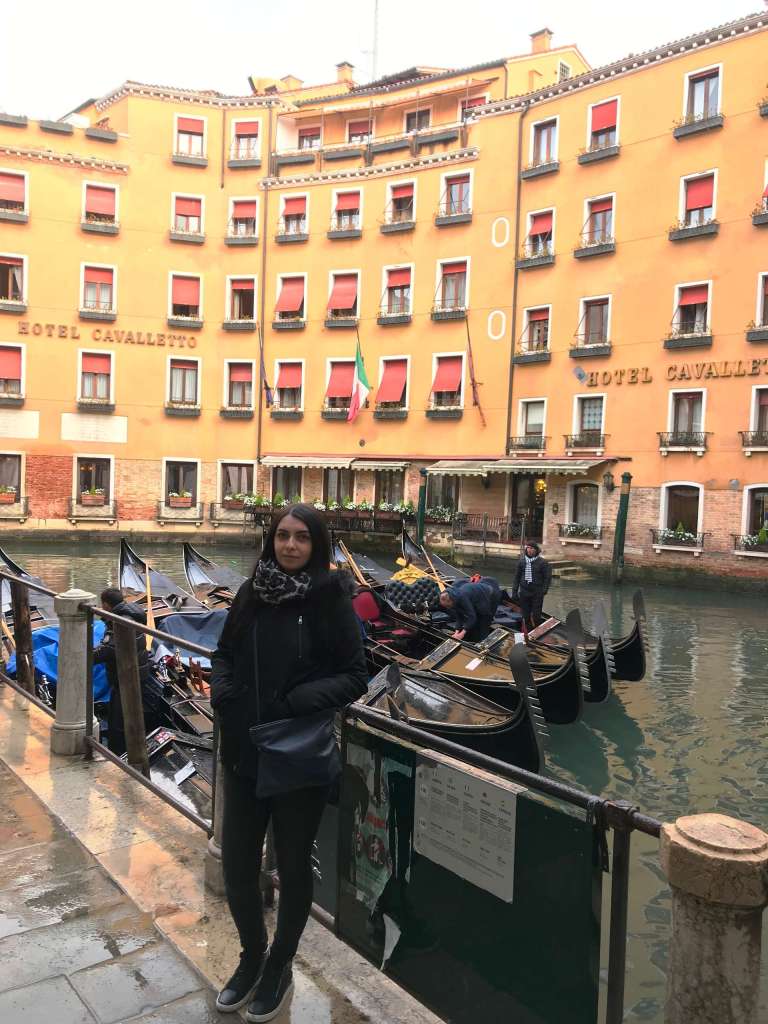
Then we walked on the narrow streets and got to Gondola Station Bacino Orseolo and Hotel Cavalletto & Doge Orseolo. That is a beautiful area as you can see in the following 2 pictures.
Afterwards we immediately got to Piazza San Marco.
Arriving at Piazza San Marco at Carnival – The Heart of Venice, Italy
In St. Mark’s square you can find:
- Museo Civico Correr (Correr Museum), Ala Napoleonica (Napoleonic Wing)
- Procuratie Veccchie, Caffe Quadri
- Torre dell’Orologio
- Campanile di San Marco
- Basilica di San Marco (St. Mark’s Basilica)
- Palazzo Ducale (Doge’s Palace), Ponte dei Sospiri (Bridge of Sighs)
- Procuratie Nuove, Caffe Florian
- Biblioteca Nazionale Marciana
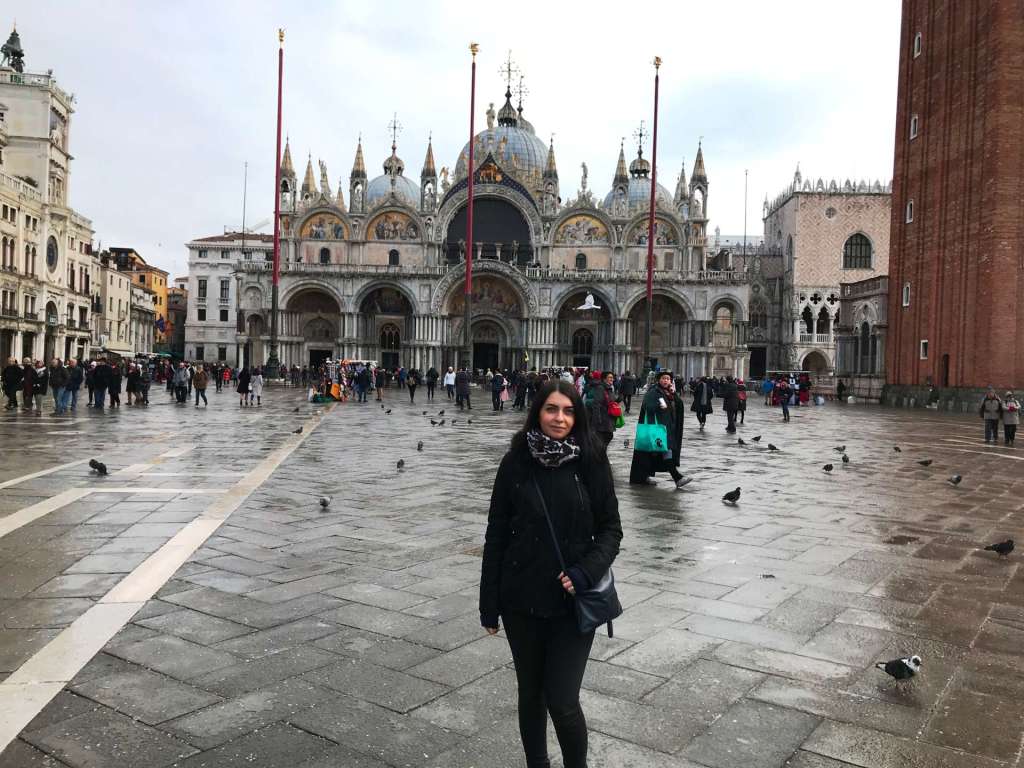
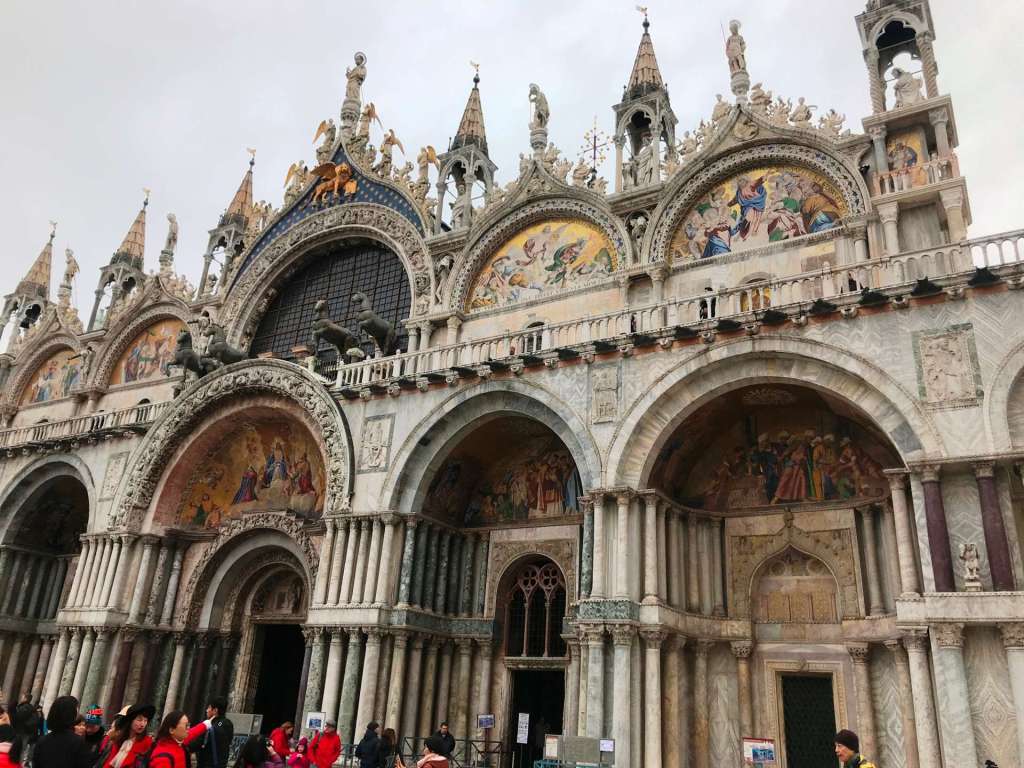
Basilica San Marco it’s a spectacular church with Byzantine architecture exterior, but unfortunately, the beautiful interior it is forbidden to be photographed or filmed. Therefore, I have no pictures of the interior to show you.
St Mark’s Campanile is 99 m high, therefore the tallest tower in Venice.

Iconic Landmarks Around St. Mark’s Square During the Venice Carnival in Italy
In the picture below, you can see the beautiful Torre dell’ Orologio (The Clock Tower). Just beneath it, there is a passage that, in fact, leads through the Mercerie shopping streets and eventually takes you to the Rialto area.
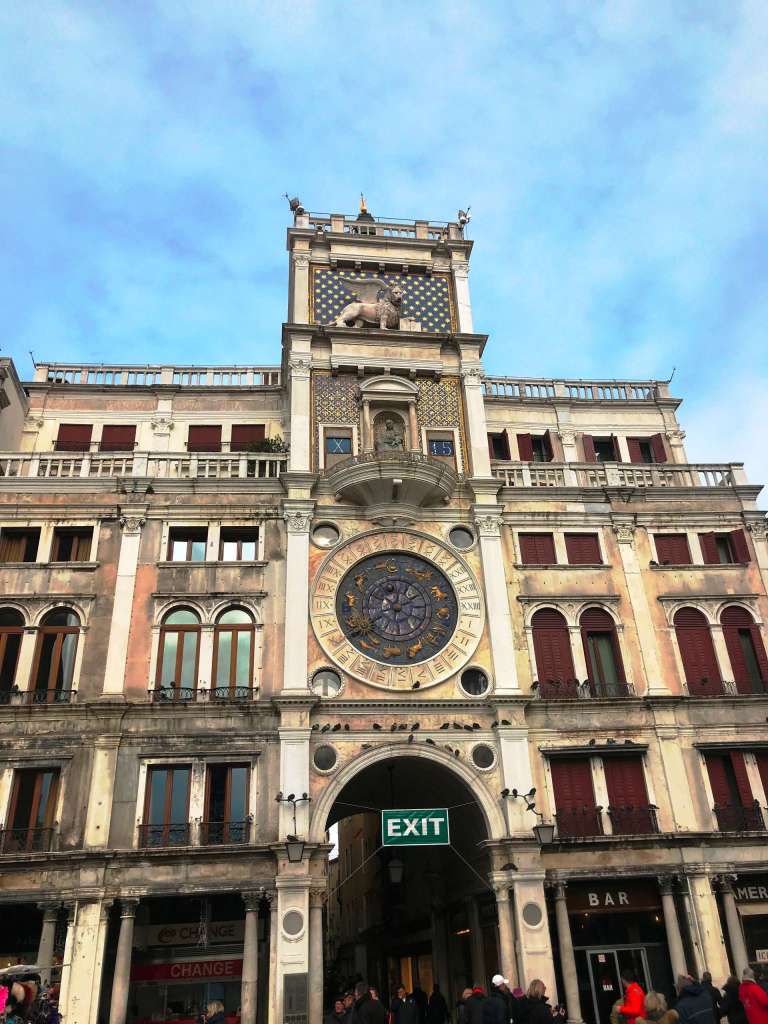
Then just around the corner from the main entrance to the Basilica di San Marco, you’ll find the charming Piazzetta dei Leoncini. Situated between the northern facade of the basilica and the Palazzo Patriarcale, and also near the Chiesa di San Basso, this small square offers a quieter yet historically rich contrast to the bustle of Piazza San Marco.

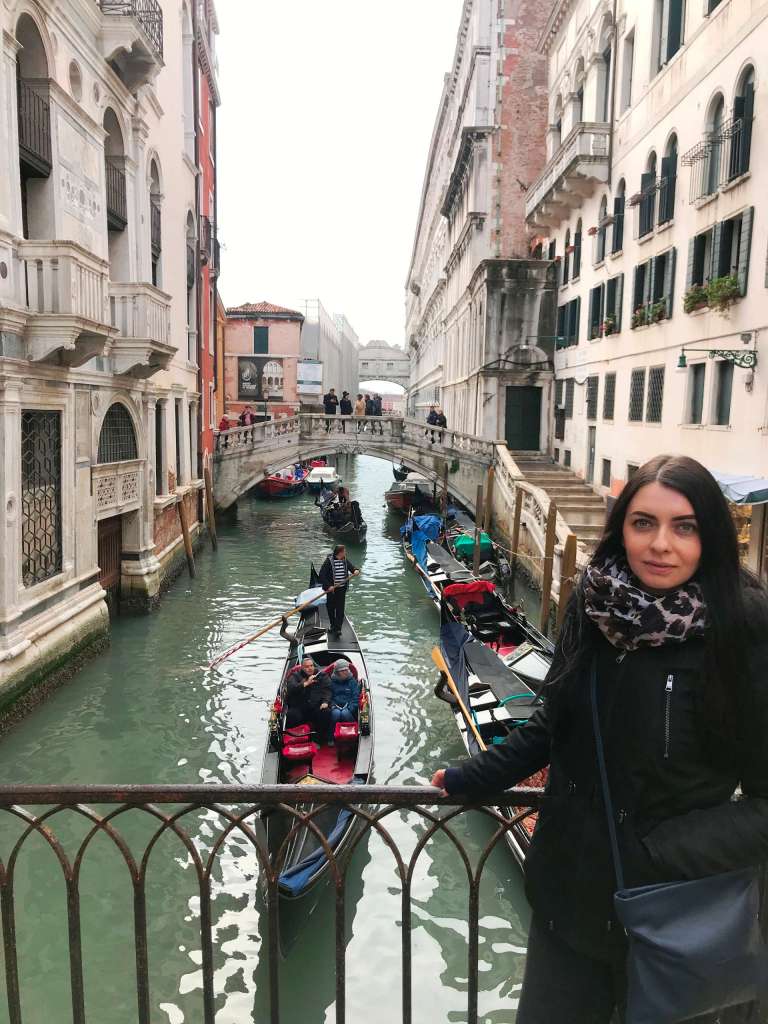
Then we went on Ponte dela Cannonica from where we could see the Bridge of Sights.
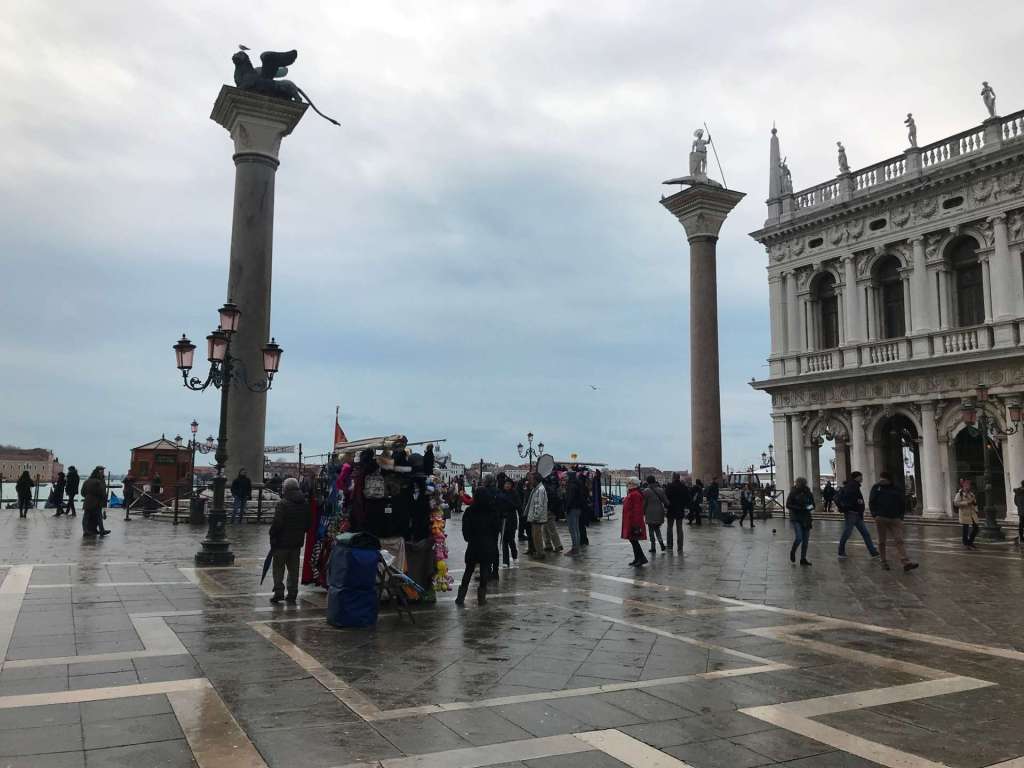
Then we got back to Piazzetta San Marco – in the pictures below you can see Colonne di San Marco e San Teodoro.

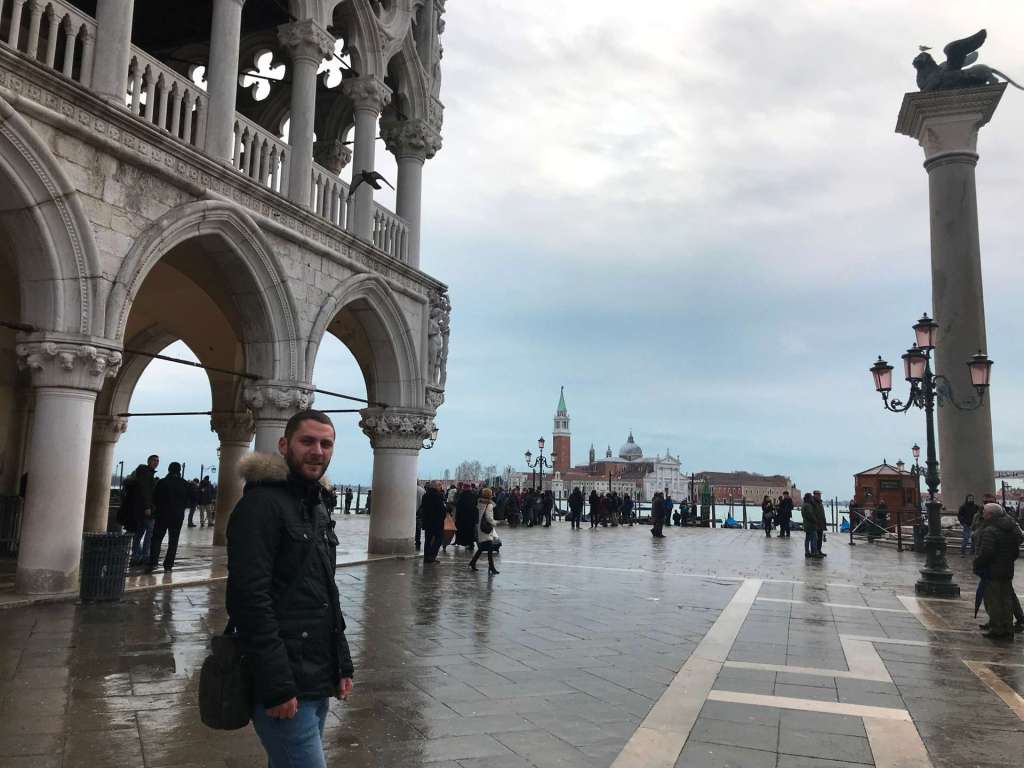
Below you can see the Piazzetta and also the Campanile from another angle.
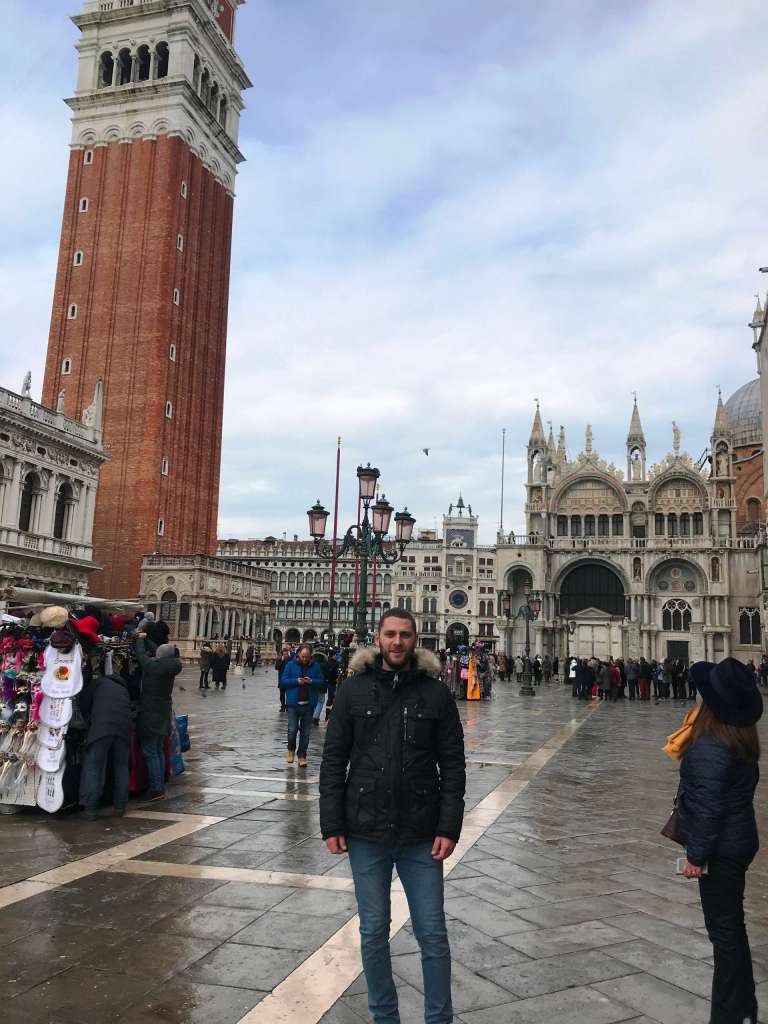
Directly opposite to Palazzo Ducale, there is the Biblioteca Marciana.

The Elegant Riva degli Schiavoni and the Bridge of Sighs
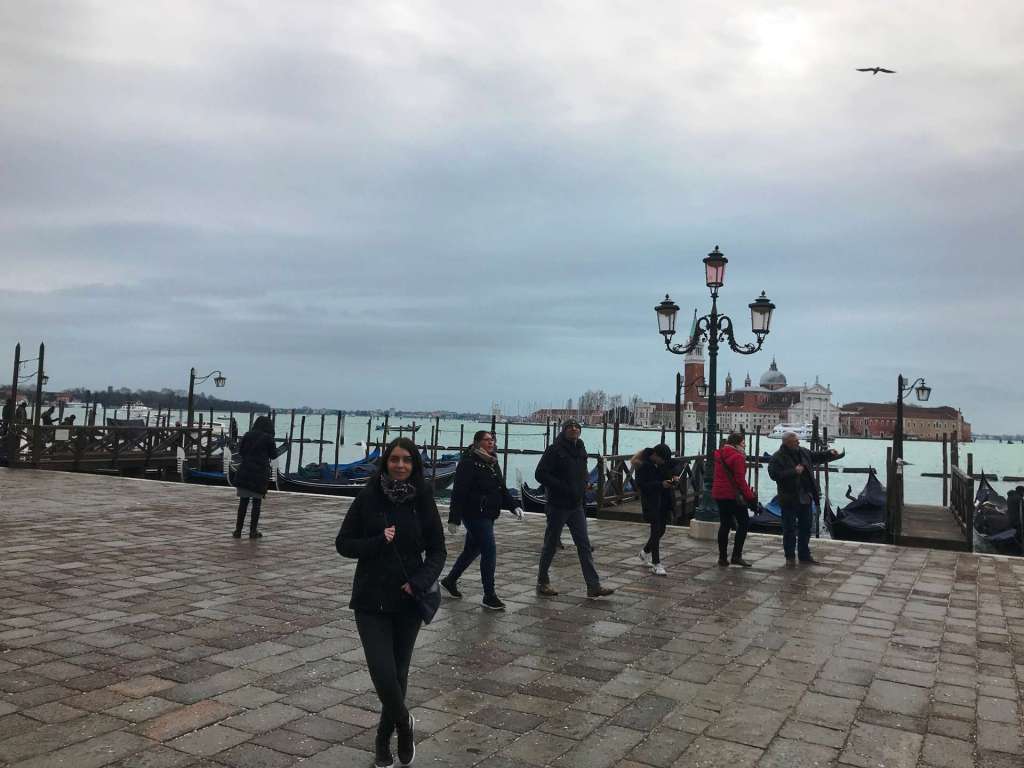
From there, we continued our stroll along the elegant Riva degli Schiavoni, which, in addition, offers stunning views of Isola di San Giorgio Maggiore, the Basilica di Santa Maria della Salute, and the Doge’s Palace. Along the way, we also took time to admire the beautiful blue gondolas gently bobbing in the water.

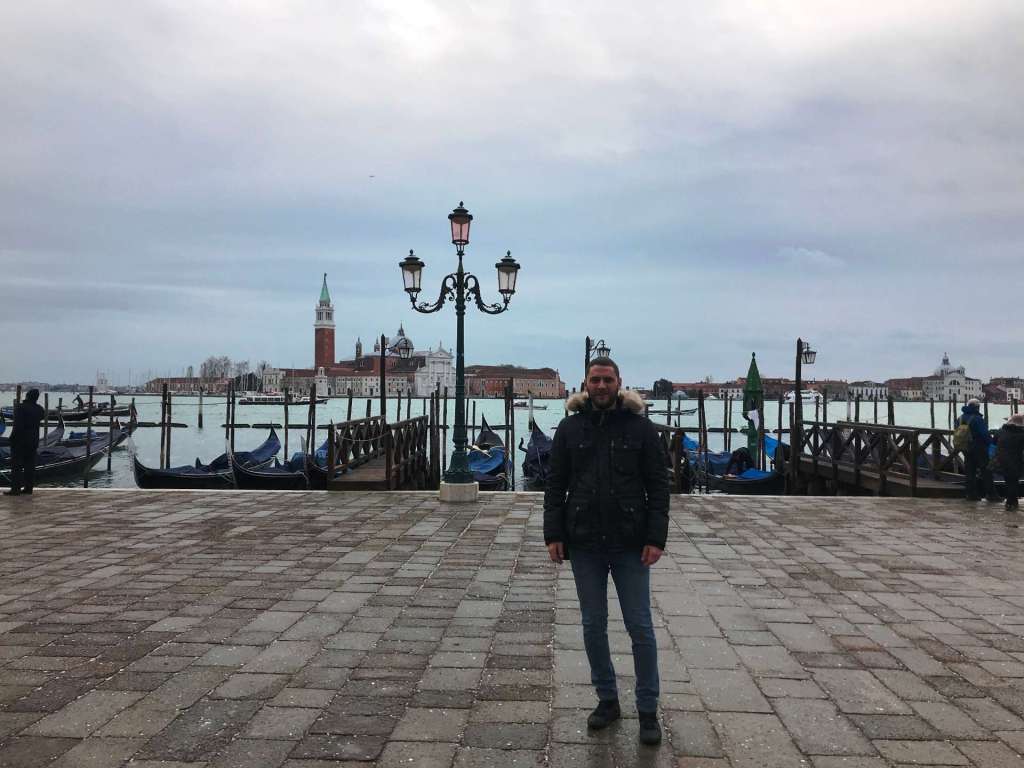


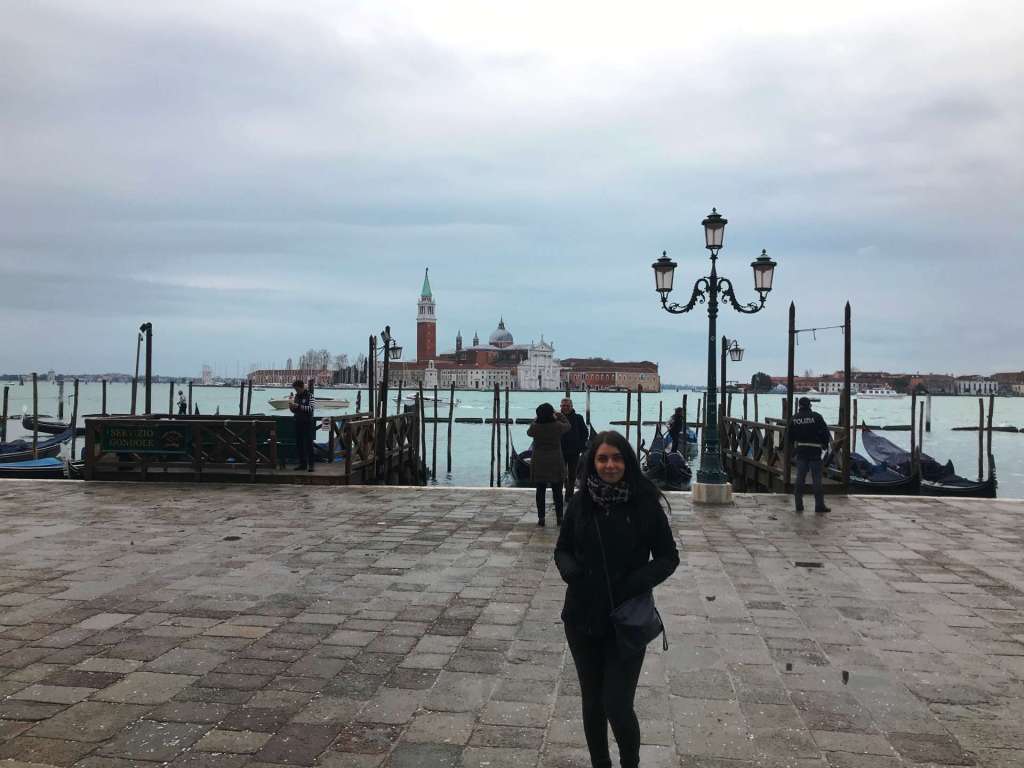
After strolling around the iconic Piazzetta San Marco, we then crossed the historic Ponte della Paglia to enjoy the best views of the famous Bridge of Sighs.
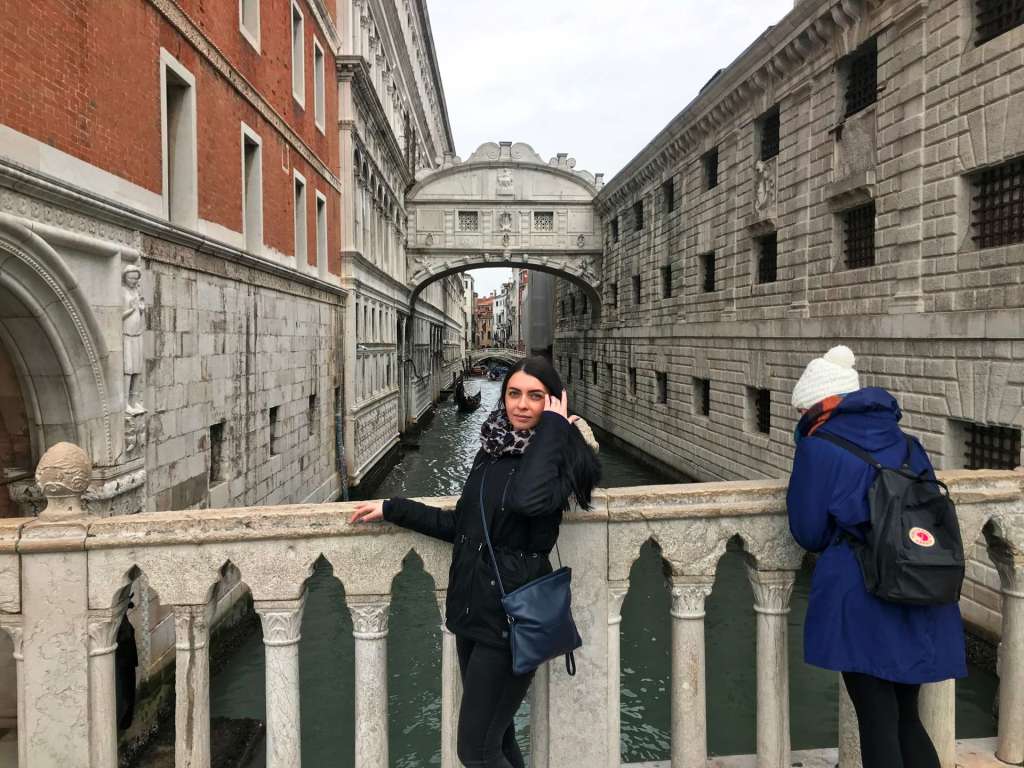
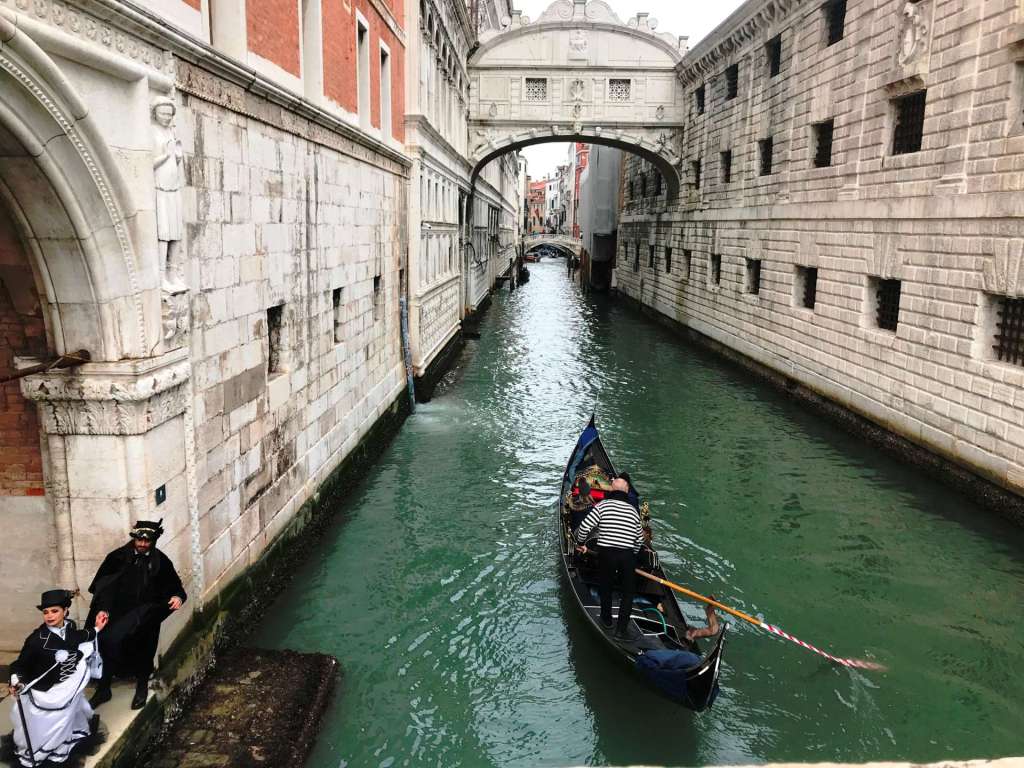
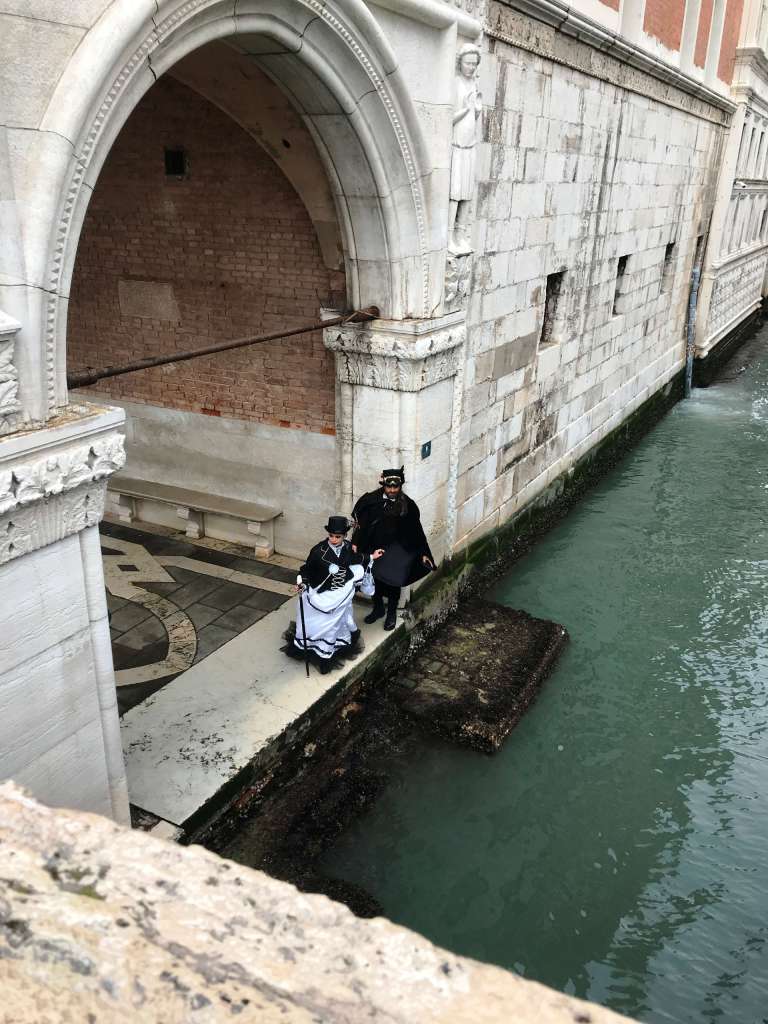
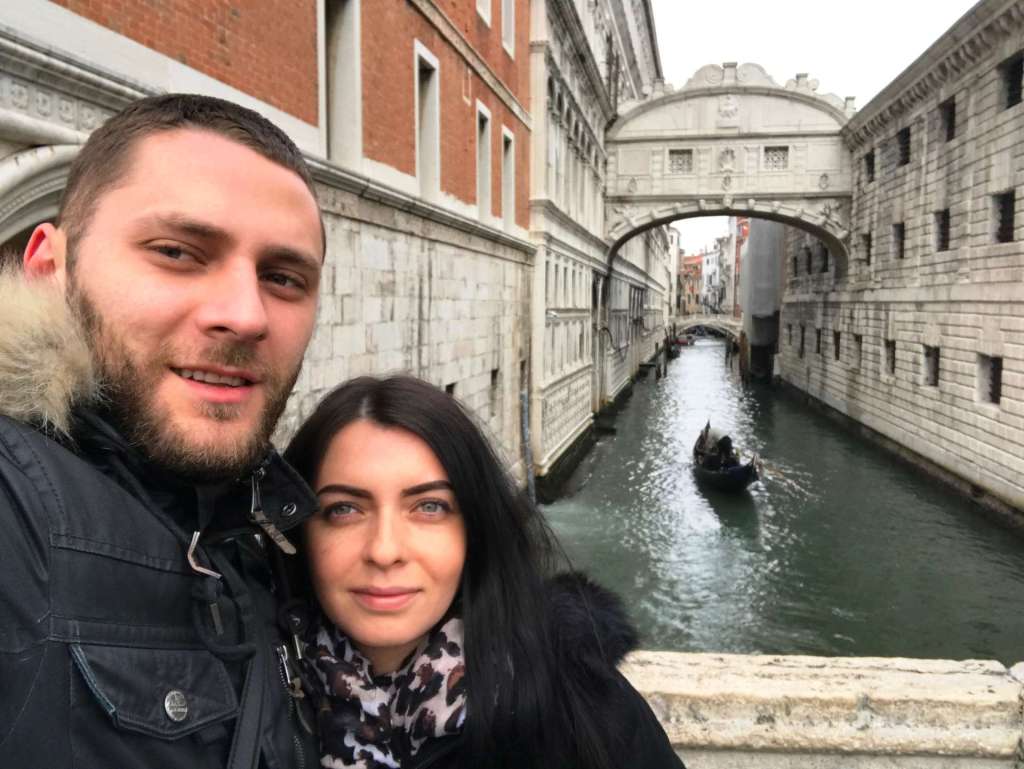
There was a masked couple taking pictures in that iconic spot, and also a gondola was passing underneath the bridge.
Doge’s Palace Visit – The Courtyard and the Impressive Staircases
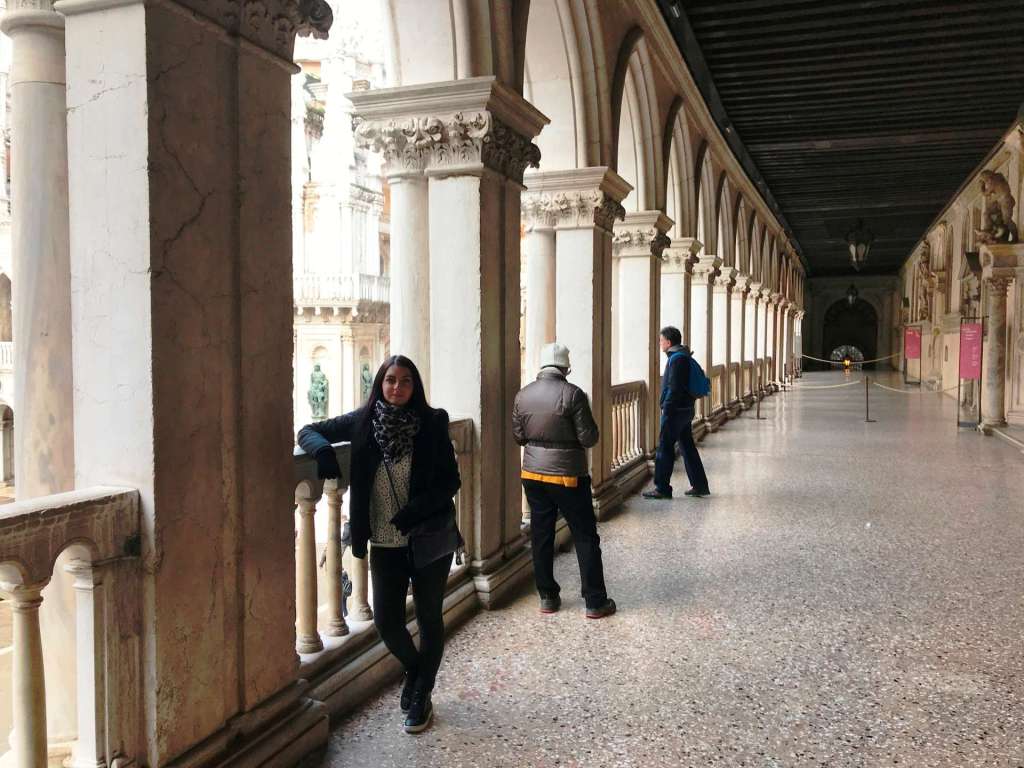
We visited Doge’s Palace, the tour was included in the price of Museum Pass + Rolling Venice Card. In the following pictures you can see the courtyard. The Doge’s Palace is a masterpiece of Gothic architecture. During our visit, we first admired the stunning Courtyard; then, we moved on to the impressive Giants’ Staircase (Scala dei Giganti), which is adorned with statues of Mars and Neptune.
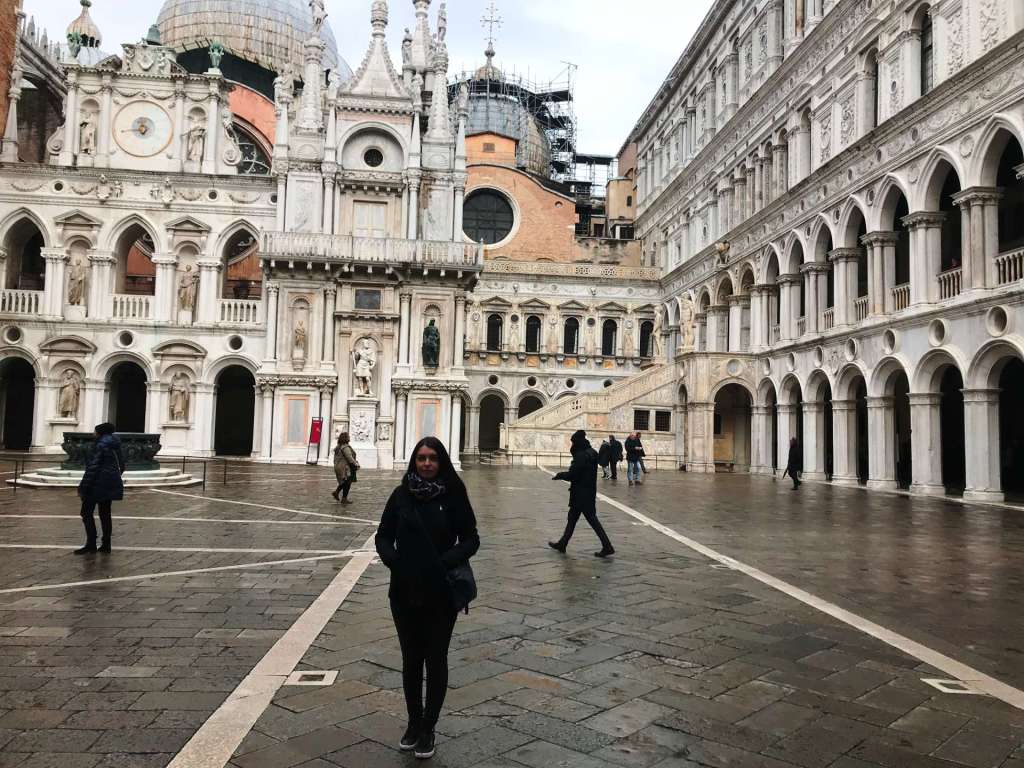

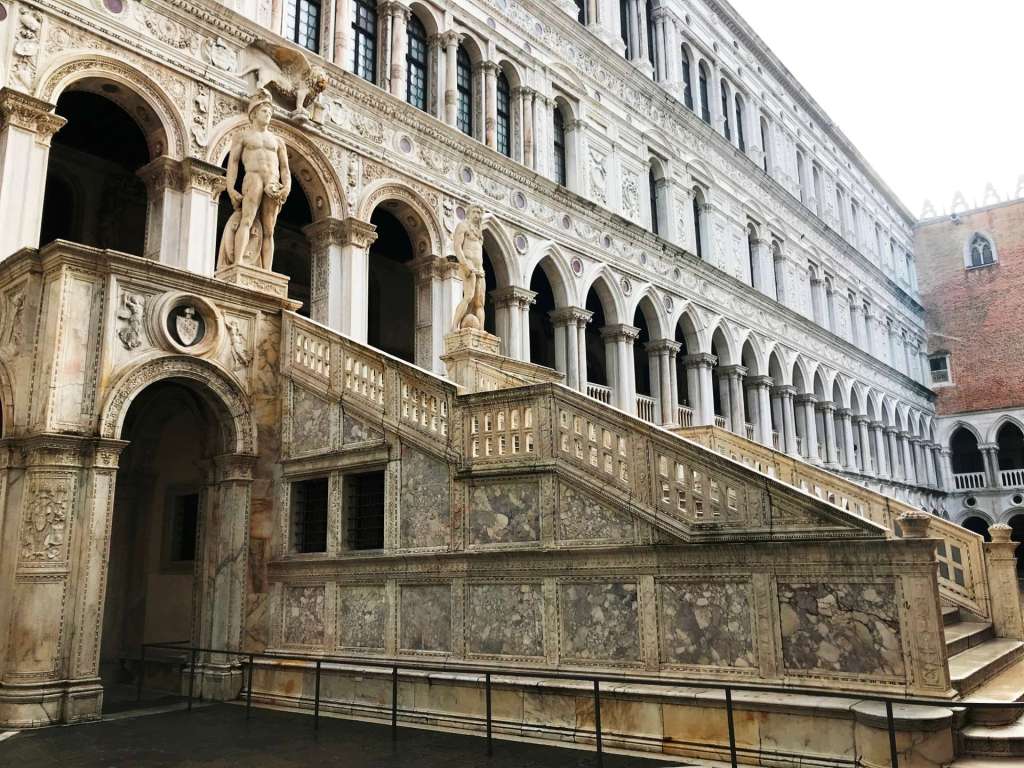
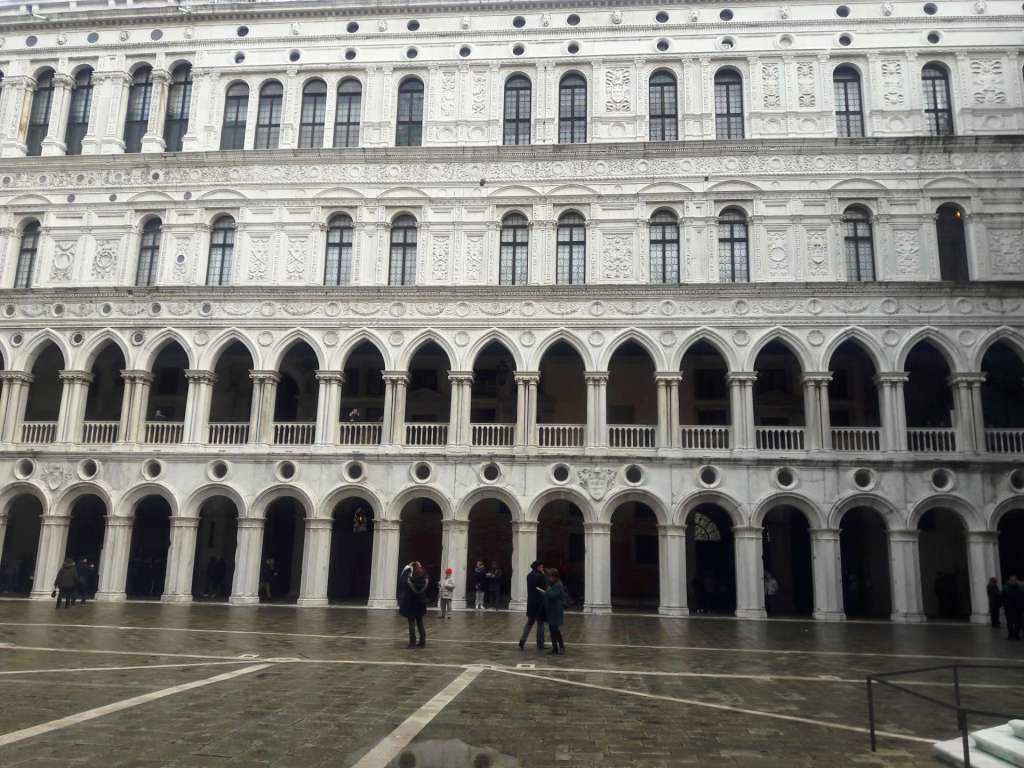
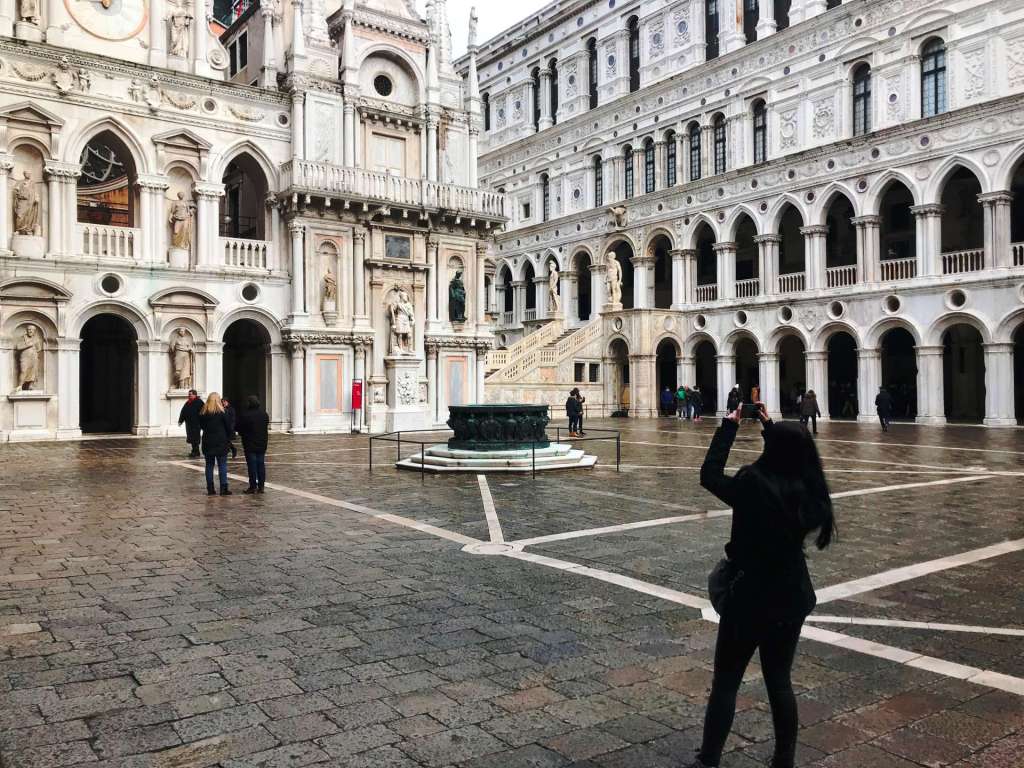
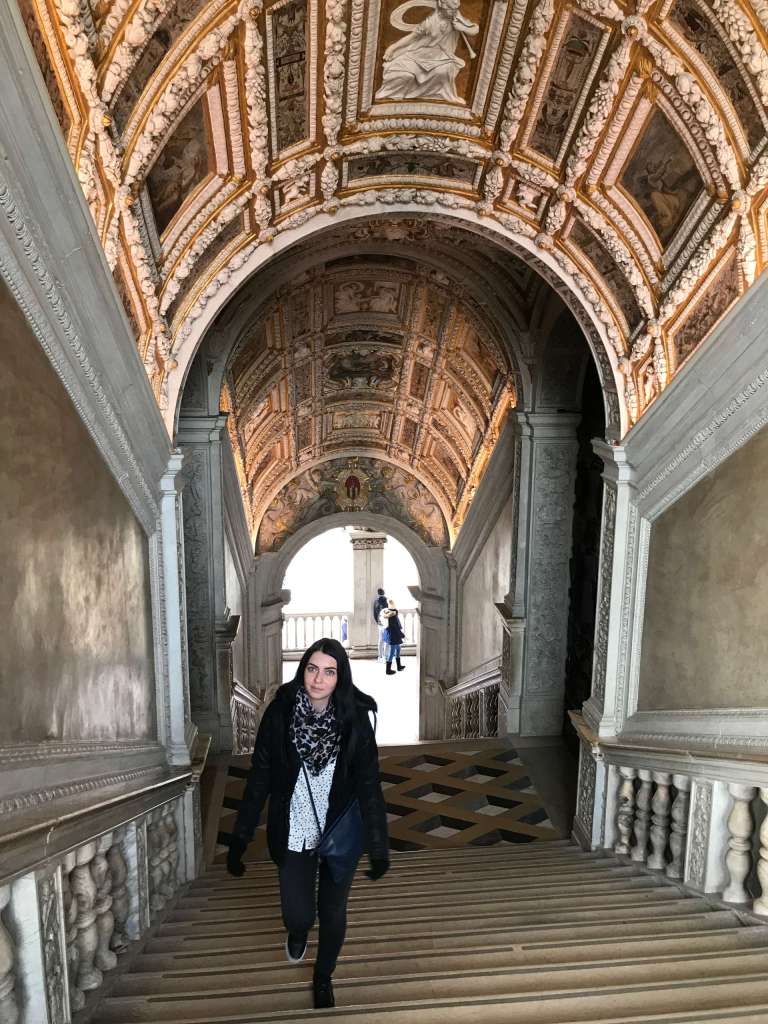
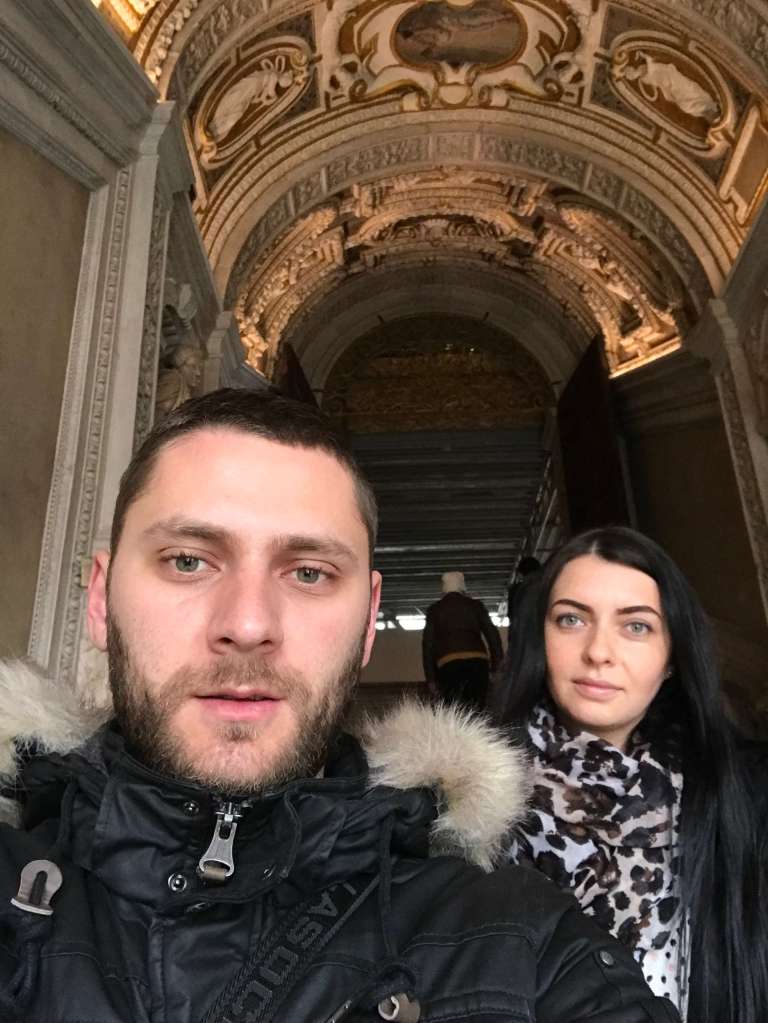
After skipping the lower levels, we then climbed the astonishing Gold Staircase (Scala d’Oro) on the first floor.
Inside the Doge’s Palace – A Glimpse of Italy Venetian History During the Carnival
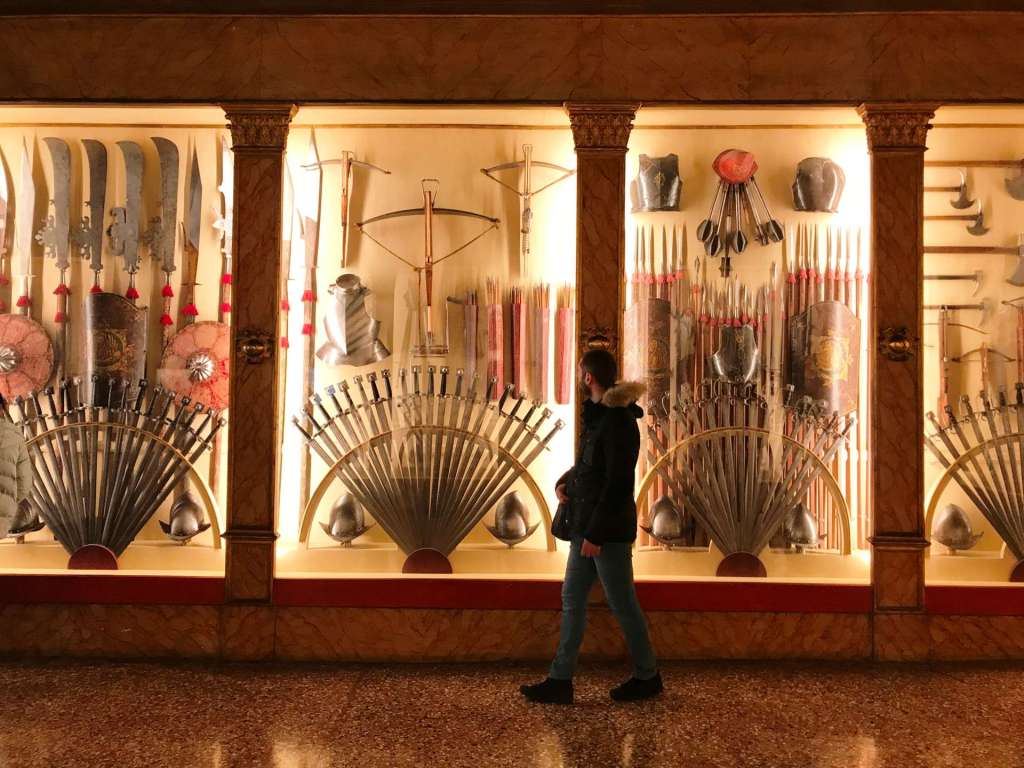
Then we visited the Loggias, Doges’ private rooms, the Grimani Room, the Shield Room, the Armory, also the prisons.

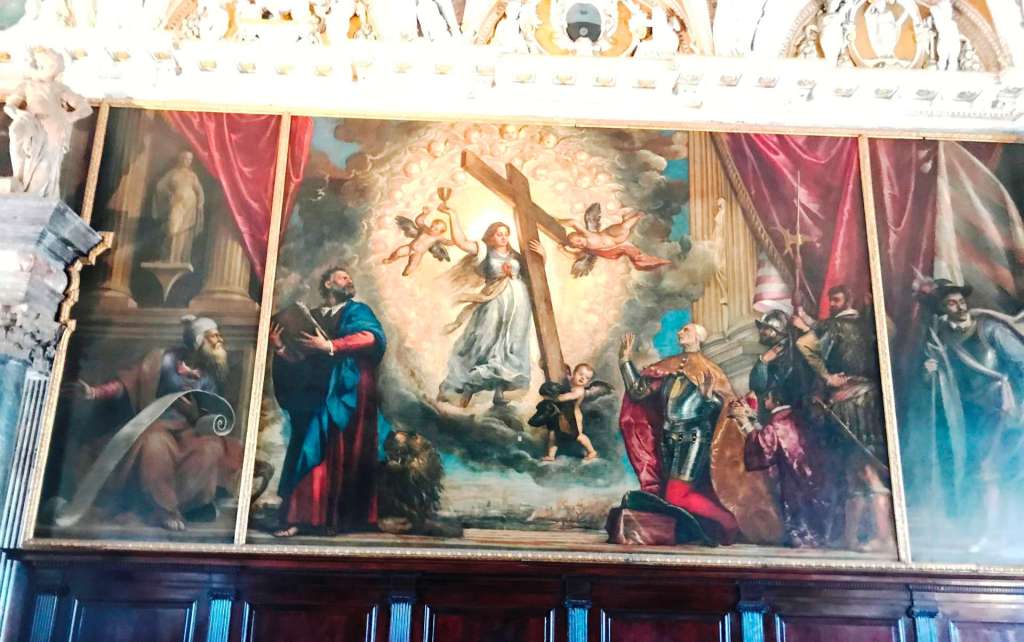
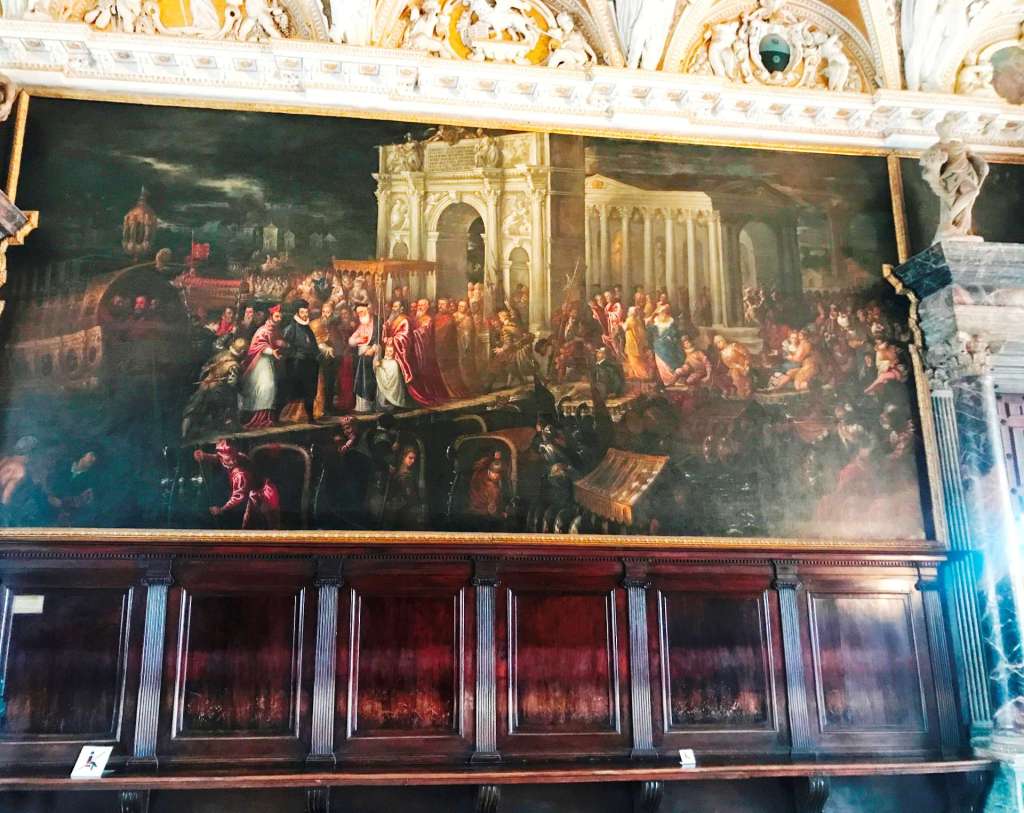
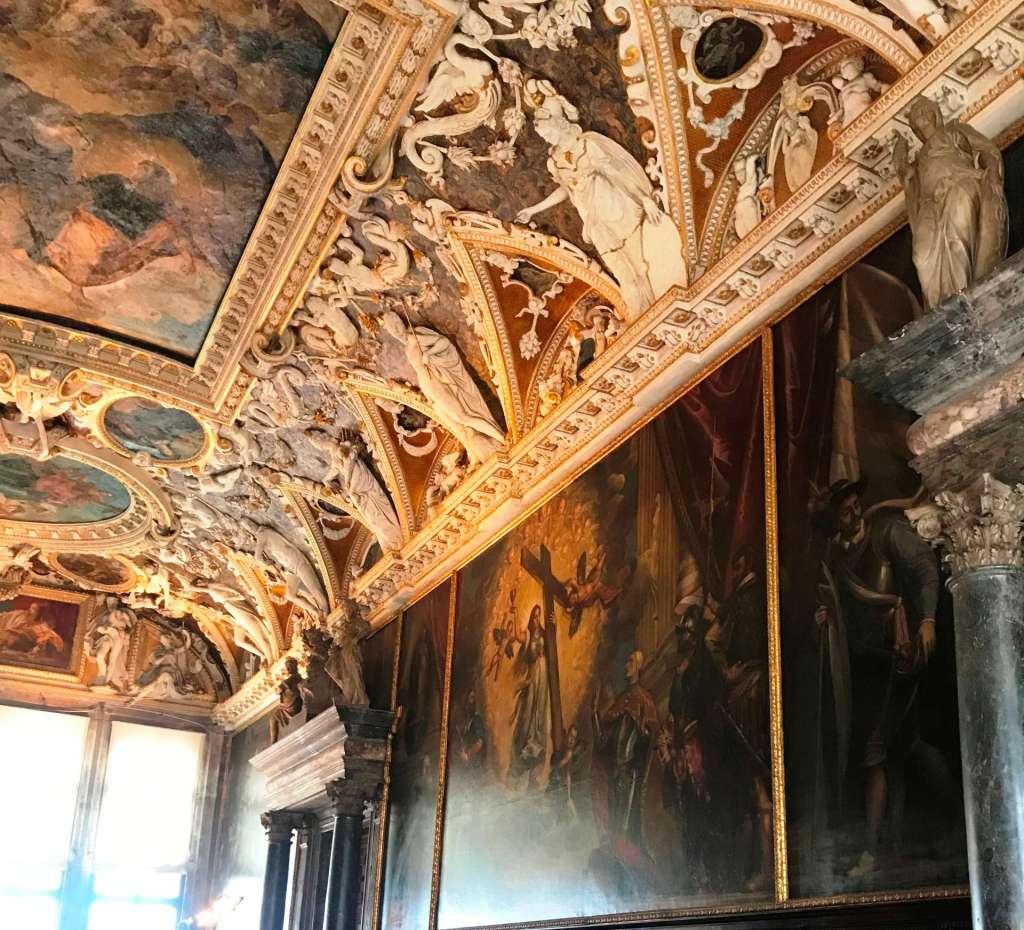
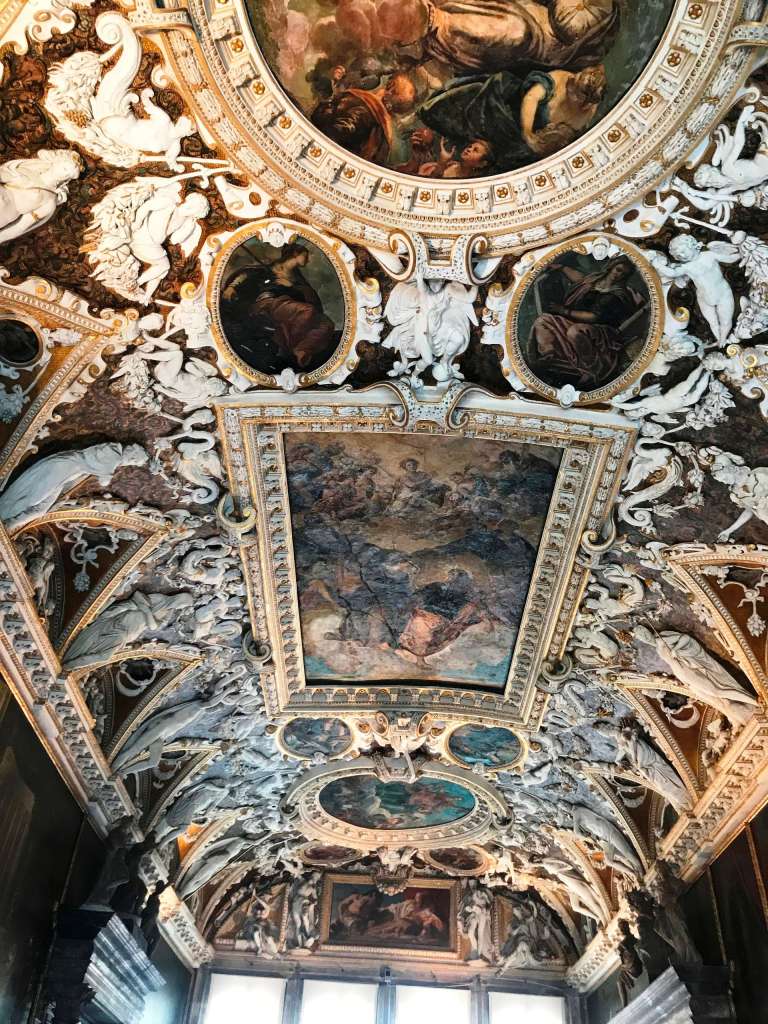
In addition, we admired the interiors which are truly very impressive.
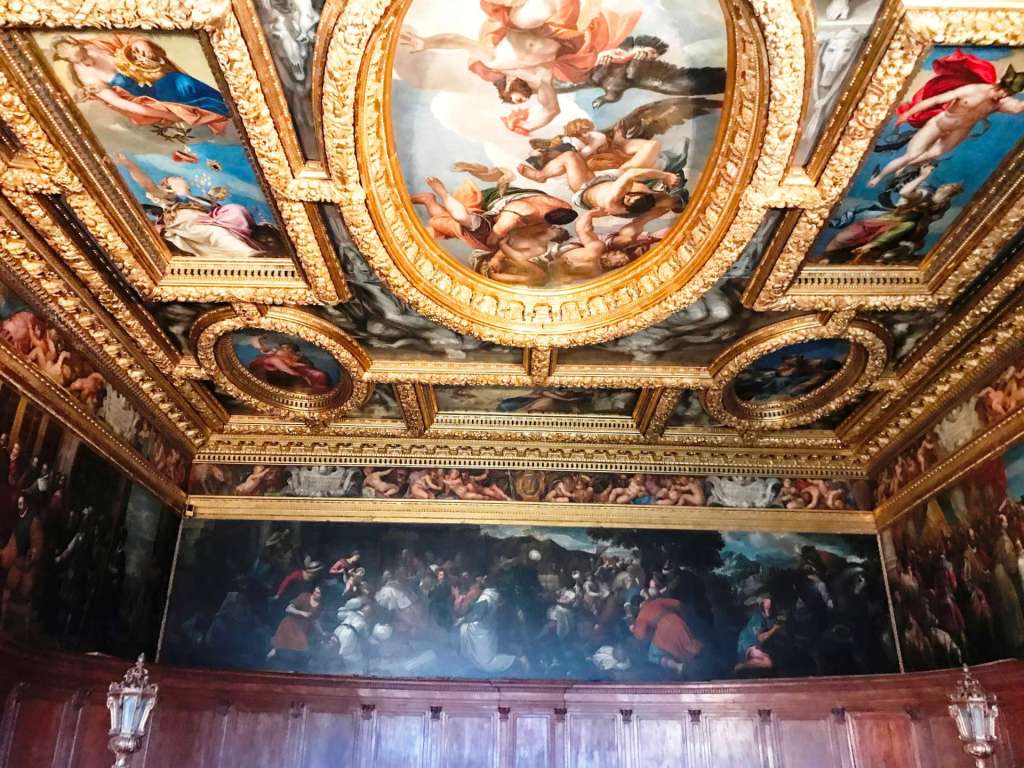
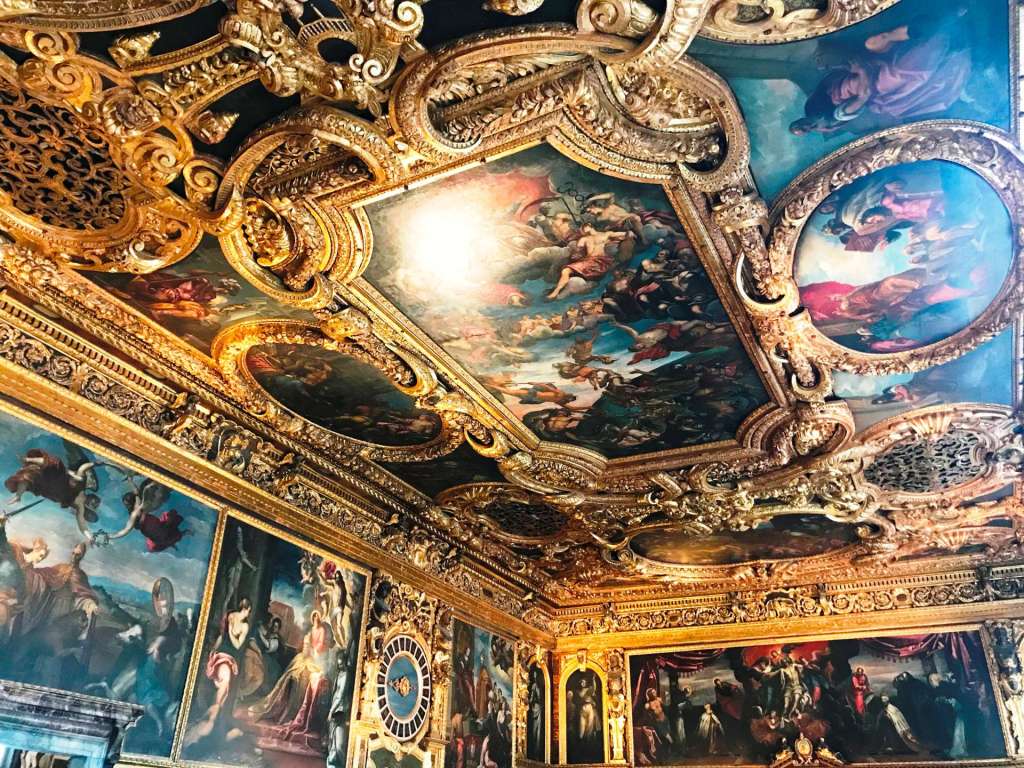

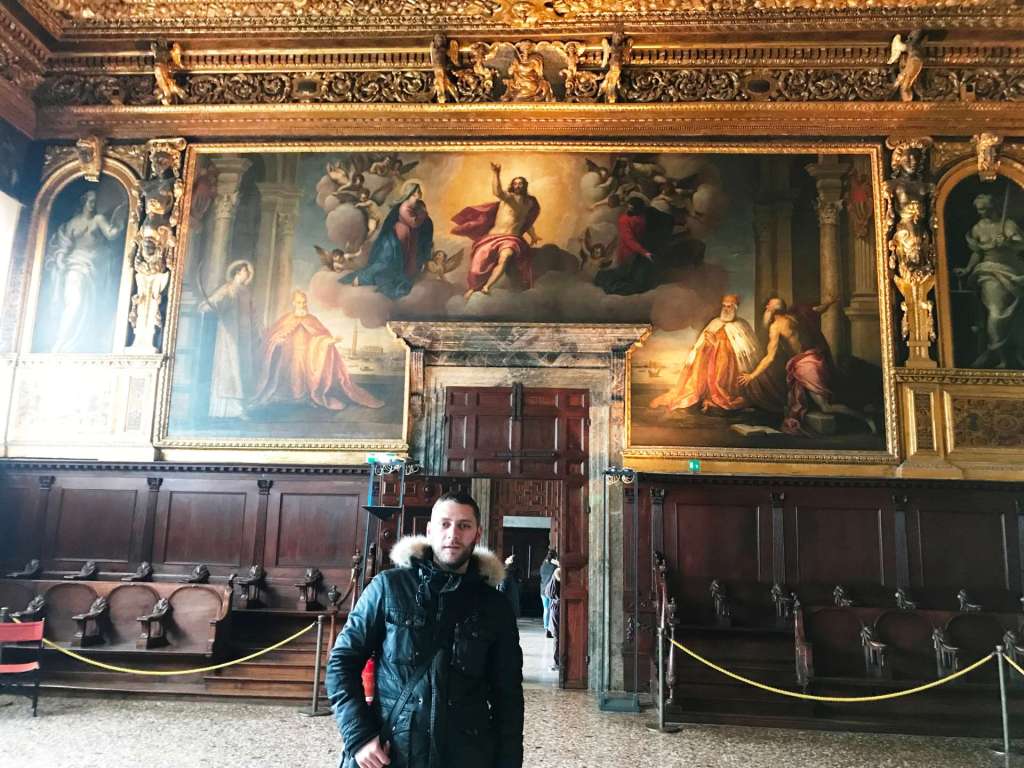
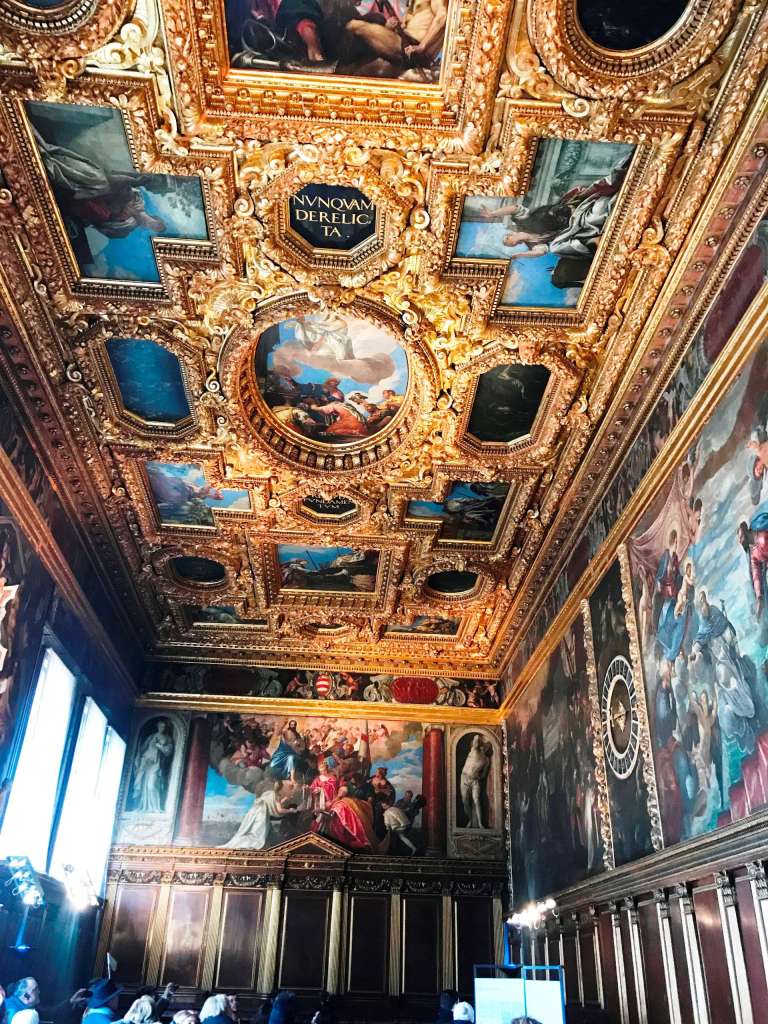
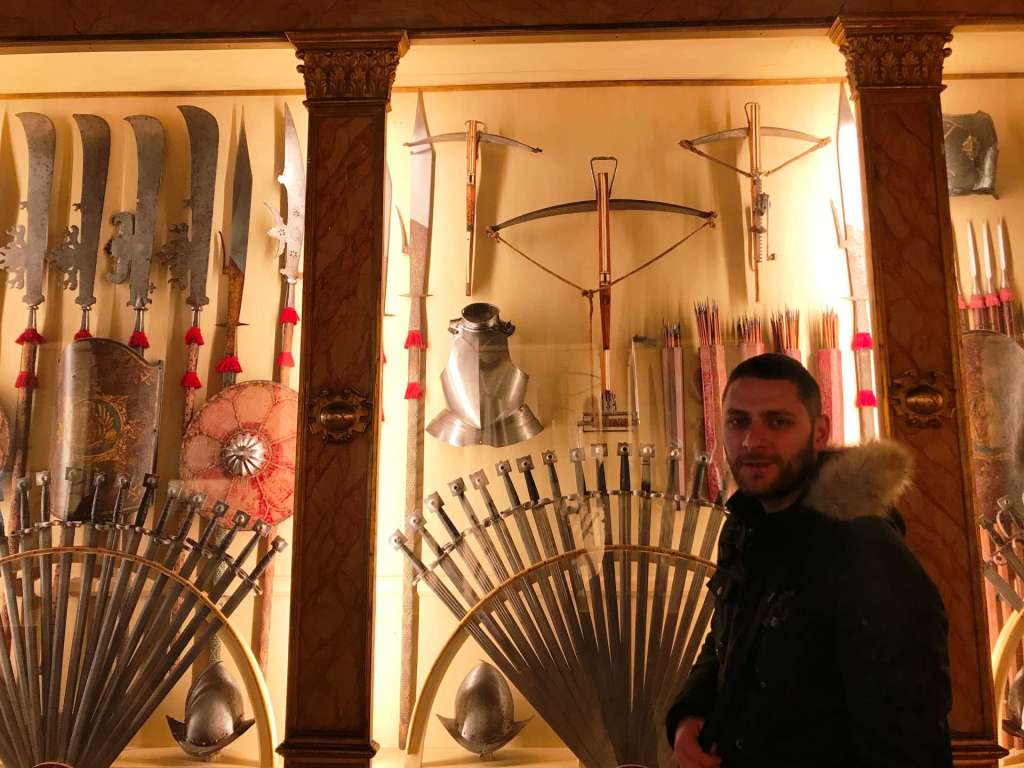
Throughout its history, the building has served various roles—as a senate, administrative center, court, and also a prison. Moreover, just below, you can find the armory.


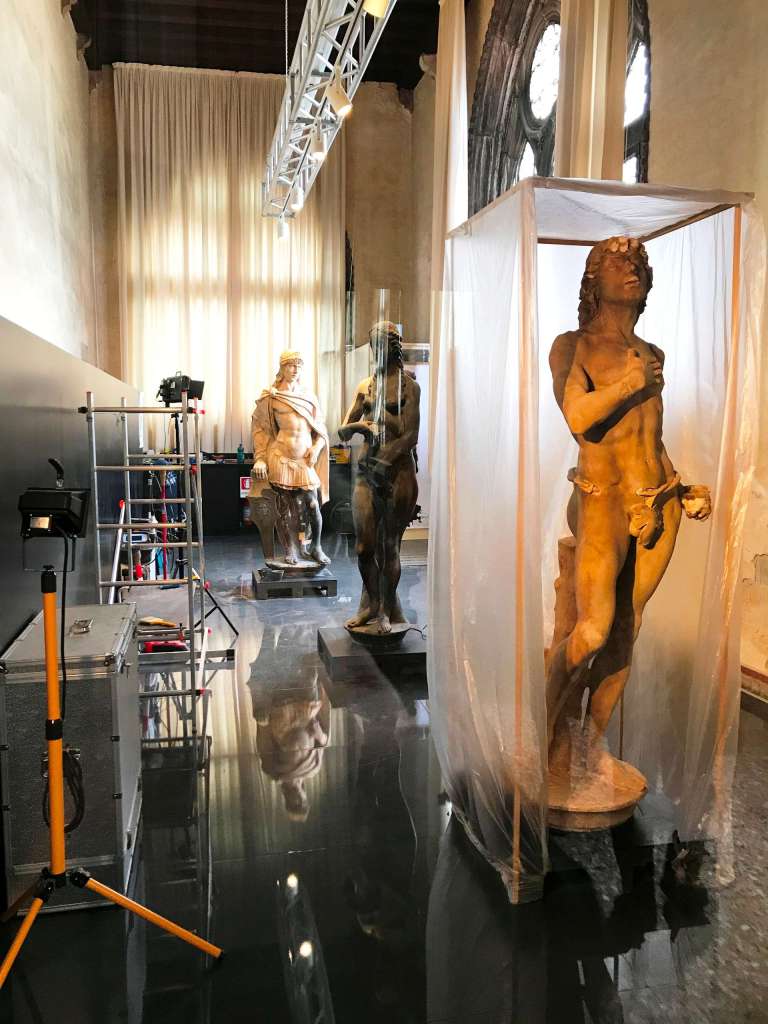
Adam and Eve statues were exposed separately in order to be better preserved.
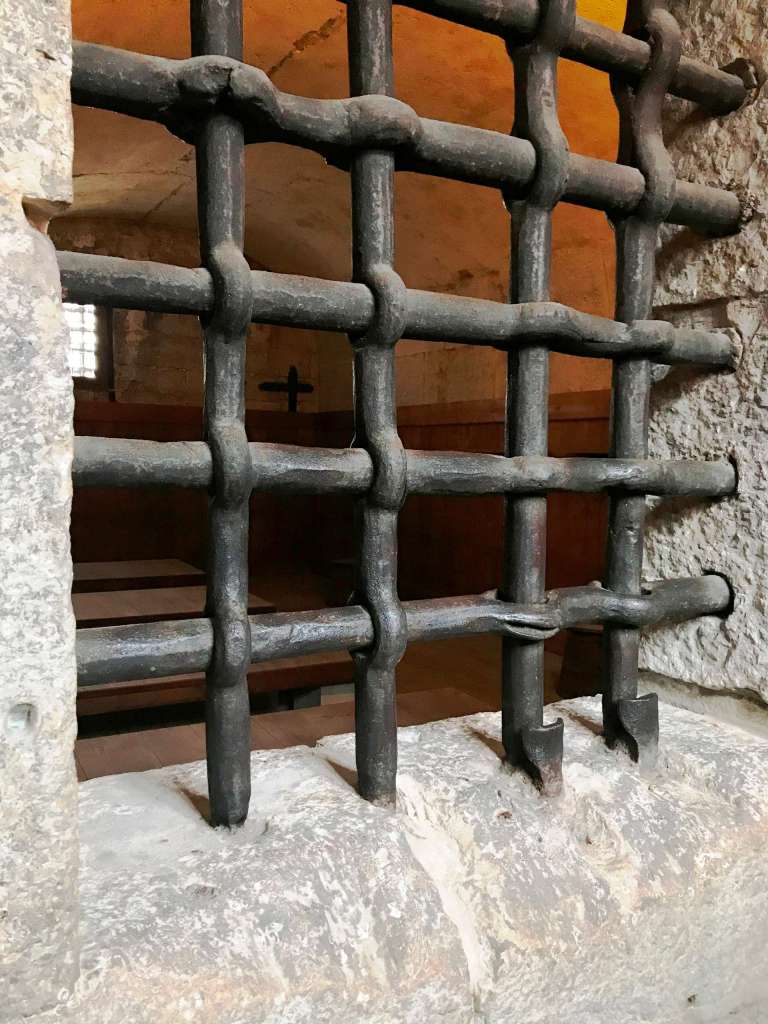
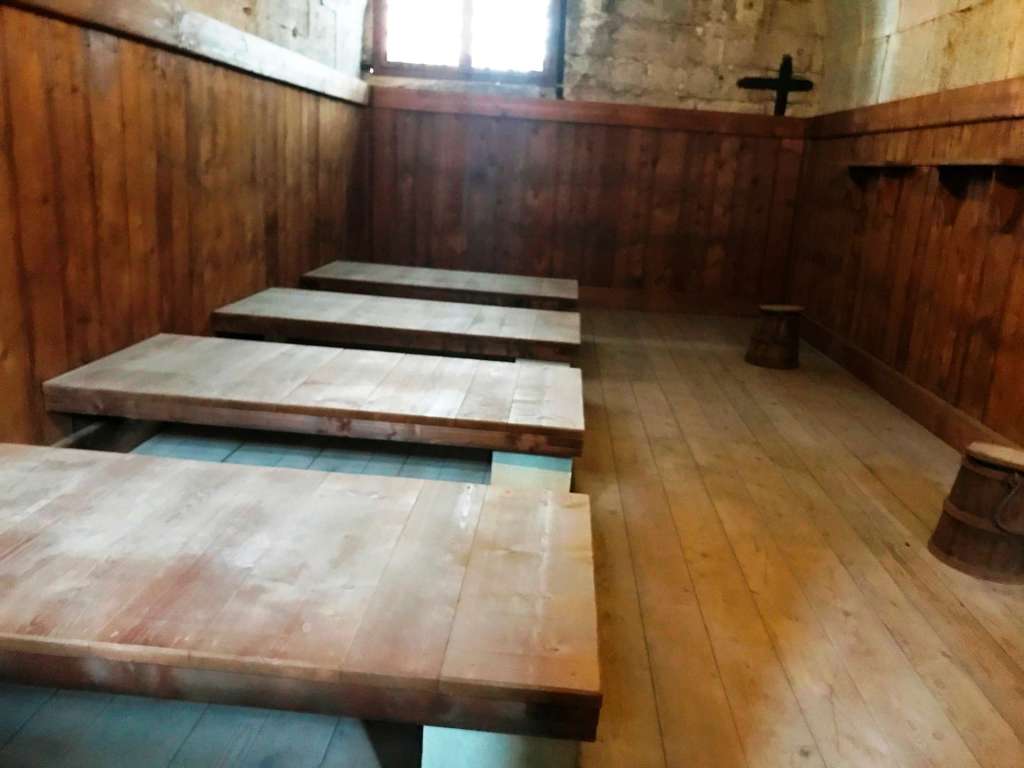
Then the last part of the tour got us through the old prisons, were once even Casanova was held prisoner until he managed to escape through the roof.
The Ponte dei Sospiri (Bridge of Sighs) connects the prison to the interrogation room inside the Doge’s Palace. Specifically, it is a covered bridge that can only be crossed from within the Doge’s Palace itself. Furthermore, it spans above the Rio di Palazzo. During our visit, we passed through the Bridge of Sighs; below, you can see the first picture we took from there.


Vaporetto Ride Along the Grand Canal
After visiting Doge’s Palace, we then boarded vaporetto No. 1 and disembarked at Rialto. From there, we eventually managed to find a spot and have lunch in one of the many restaurants in that bustling area.
Then we took vaporetto No. 1 back towards San Marco.
Along the Grand Canal, we also took pictures of the remarkable palazzi. Notably, the first one we encountered after crossing the Rialto Bridge was Ca’ Foscari University.
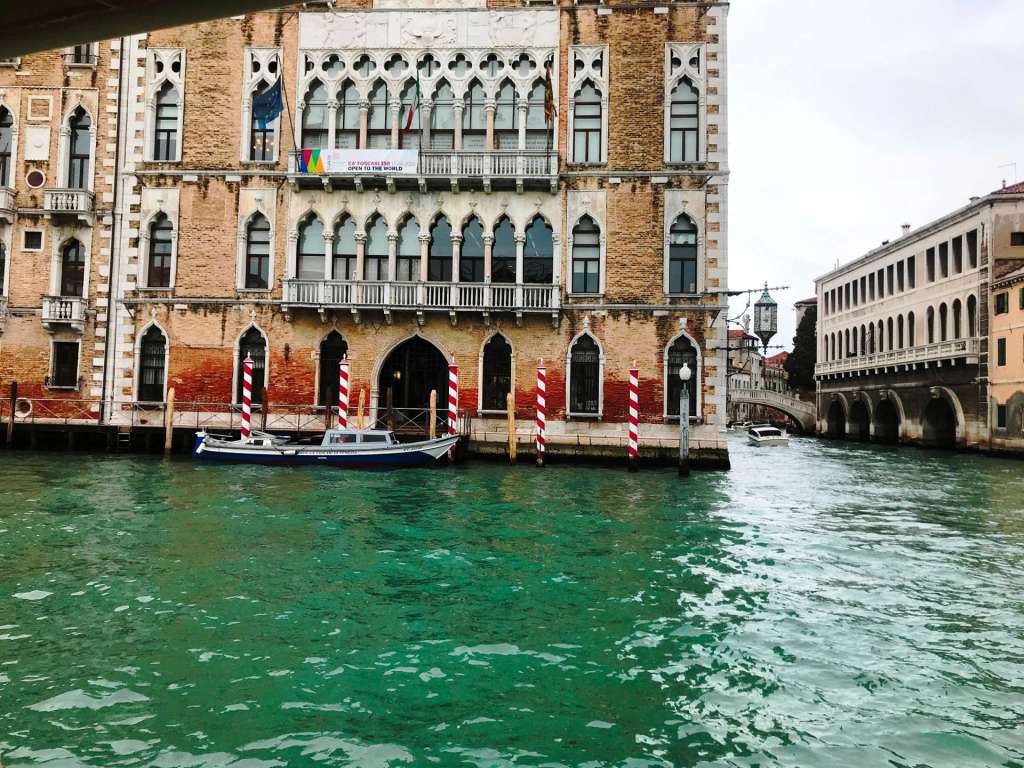
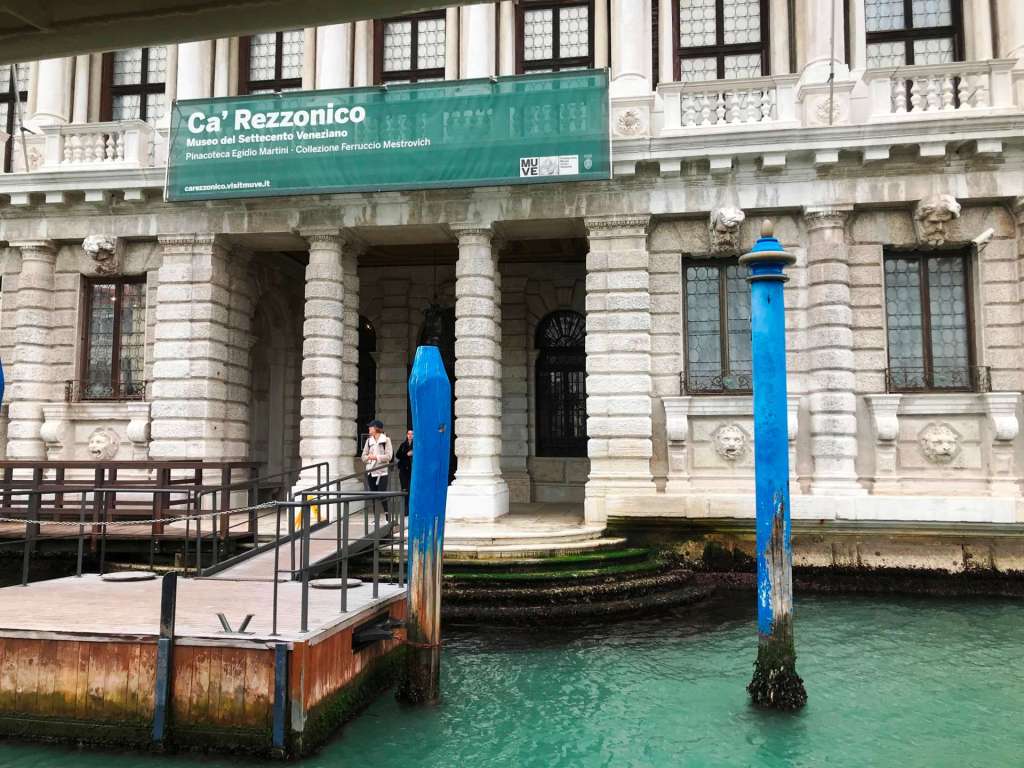
Following that, our next sight was Ca’ Rezzonico, Venice’s captivating 18th-century life museum.
Then we passed by Accademia and Campo de la Carità where the Galleria dell’Accademi it’s located, which contains works of art by Bellini, Titian, Carpaccio and Tintoretto.
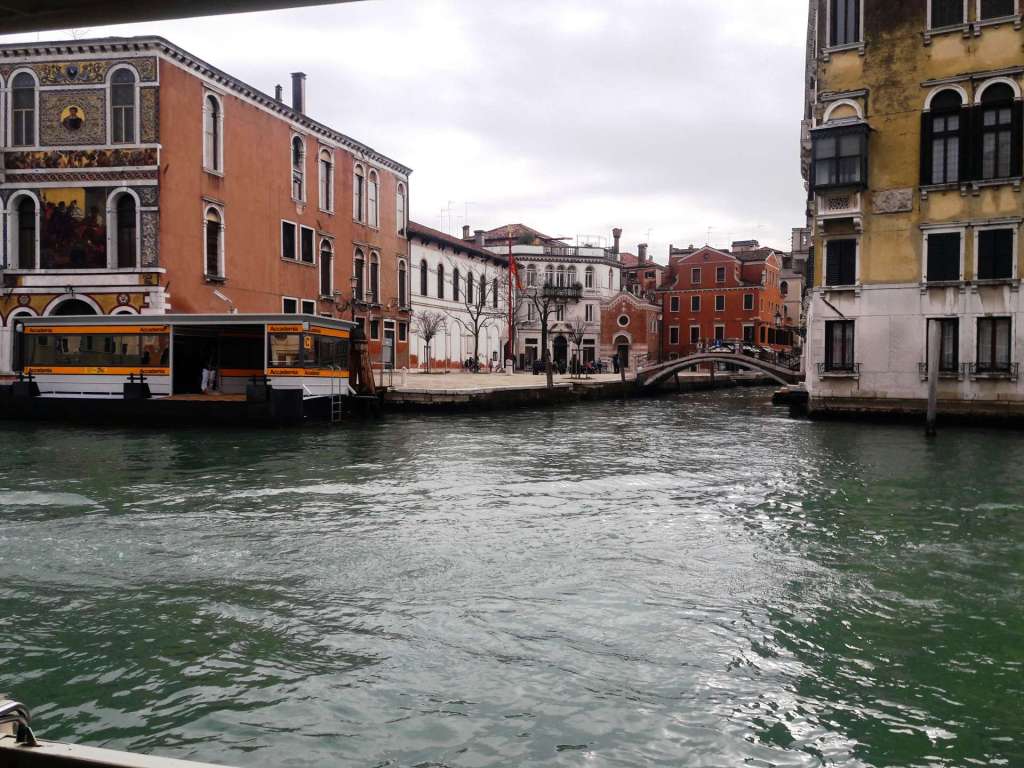
Then the vaporetto passed underneath Ponte dell’ Accademia, located at the end of the Grand Canal, just before the canal feeds into St. Mark’s Basin. The bridge links San Marco and Dorsoduro sestieri.
Afterwards, we turned our attention to the next remarkable building, Palazzo Da Mula Morosini.
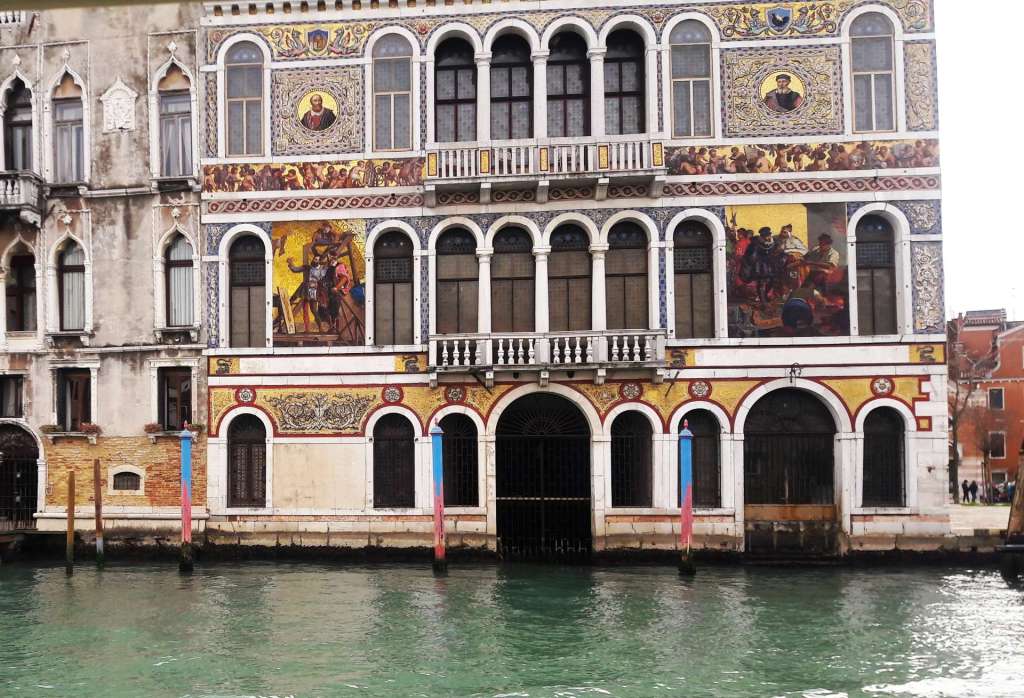
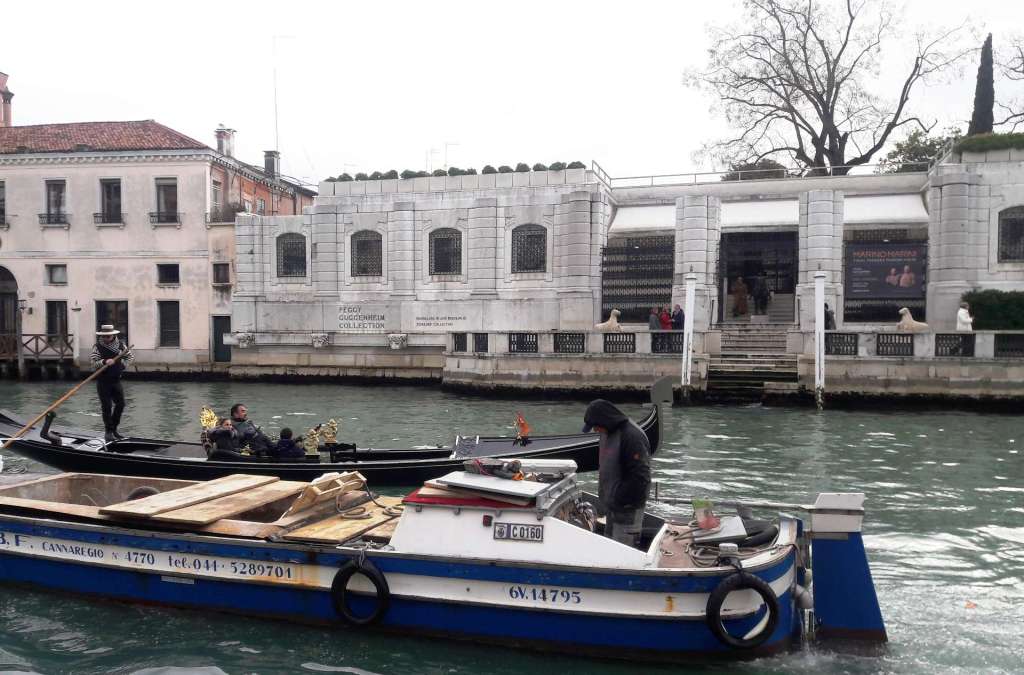
Then we saw Peggy Guggenheim Collection – a museum hosting works of art by Picasso, Pollock, Kandinsky, Mirò, de Chirico and also Dalì.
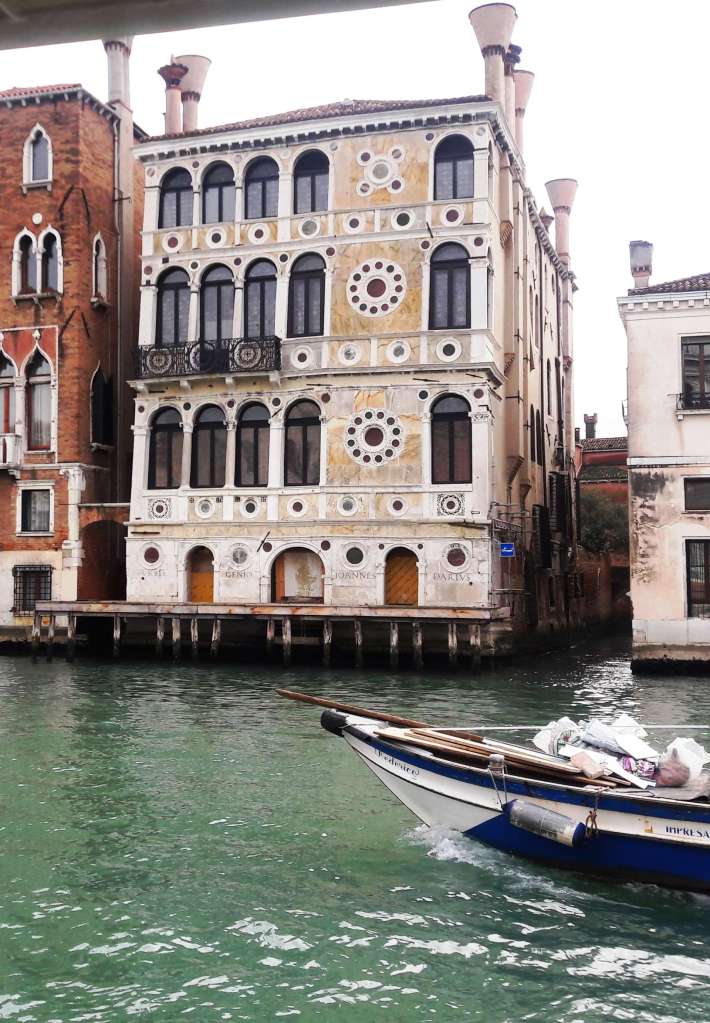
Next, we came across another interesting building, Ca’ Dario (Palazzo Dario). Interestingly, it is said to be haunted or cursed. In fact, this place has been linked to the mysterious deaths of around 10 people over time.
Exploring Dorsoduro and Basilica Santa Maria della Salute
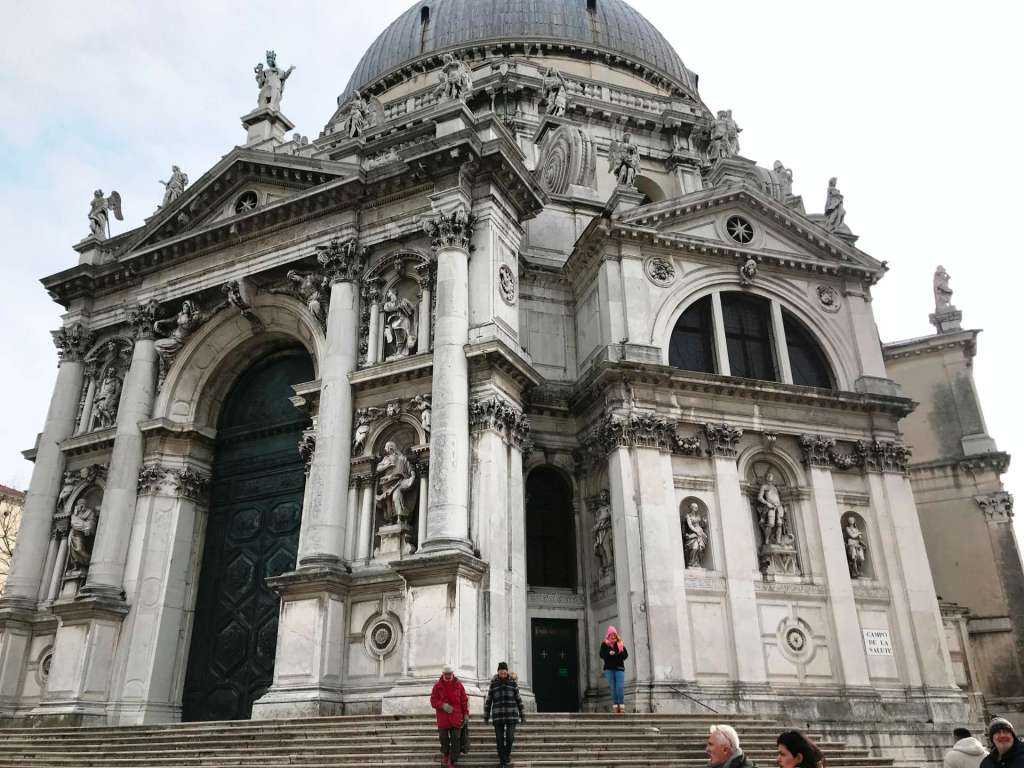
Between the Vaporetto No. 1 stops of Santa Maria del Giglio and San Marco, there is the Salute stop. At this point, we decided to get off and take a leisurely stroll around the area. As a result, we had the chance to explore the surroundings more closely. In the picture below, you can see a close-up view of the famous Basilica Santa Maria della Salute.
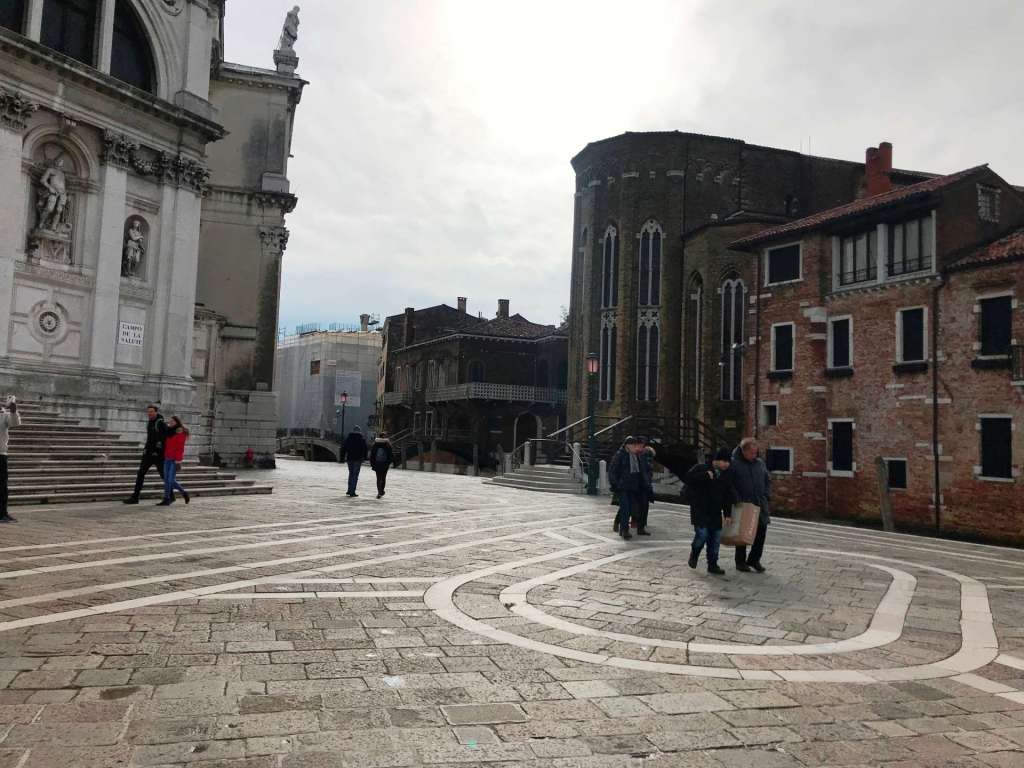
Also, take a look at Campo della Salute in the next pictures.

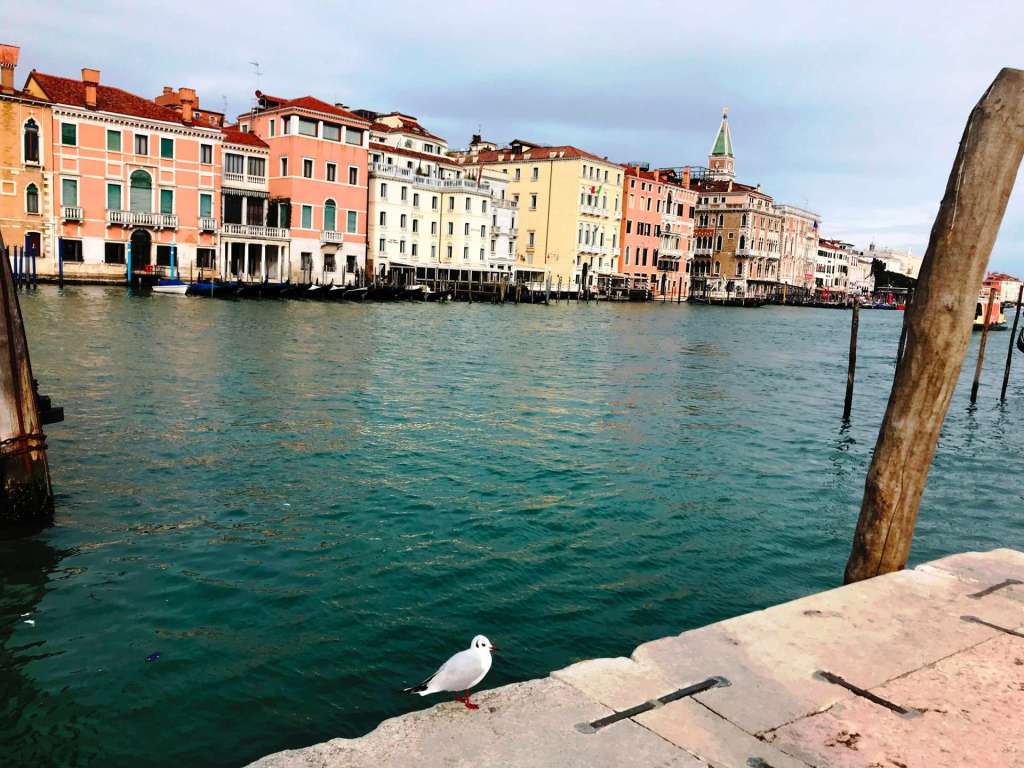
Afterwards, we continued along Fondamenta Salute and eventually reached Dogana di Mare, also known as Punta della Dogana (the old Sea Customs Post). Notably, it is situated right at the tip of the triangular peninsula you can see on the map of the Grand Canal.
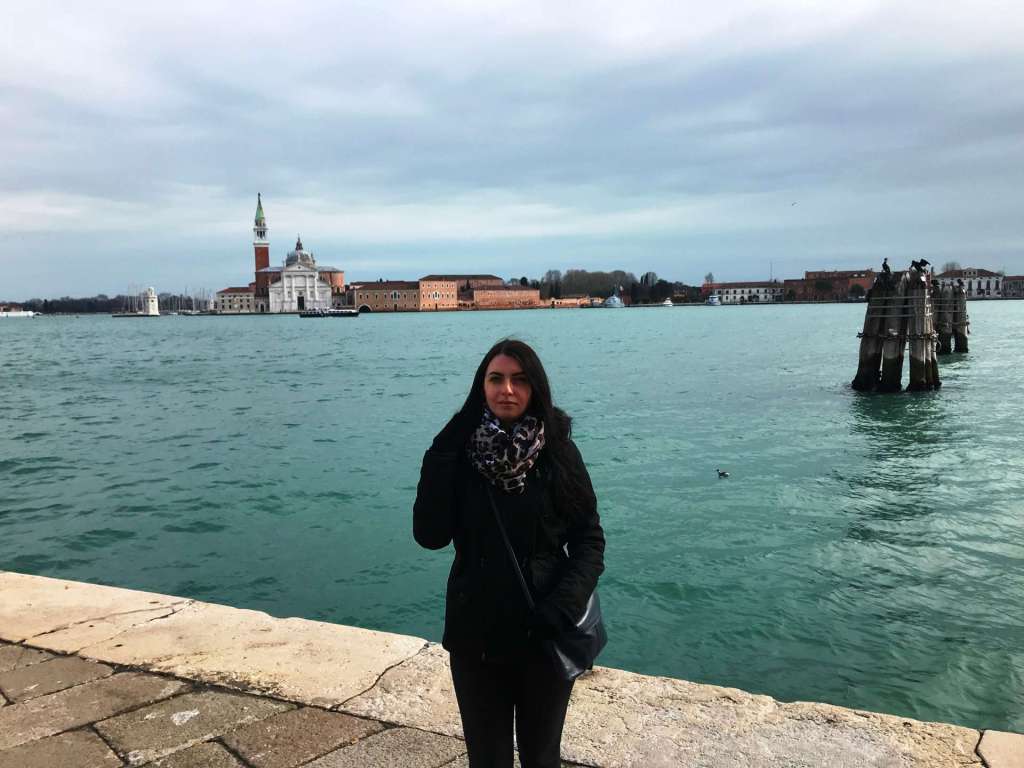
From Punta della Dogana, we were able to spot San Giorgio Maggiore island in the distance. As you can see in the following pictures, the island stands beautifully against the horizon.

We enjoyed the nice blue water views, but I can tell you that it was very windy and couldn’t manage to spend much time there though.
St. Mark’s Campanile Views – Venice from Above
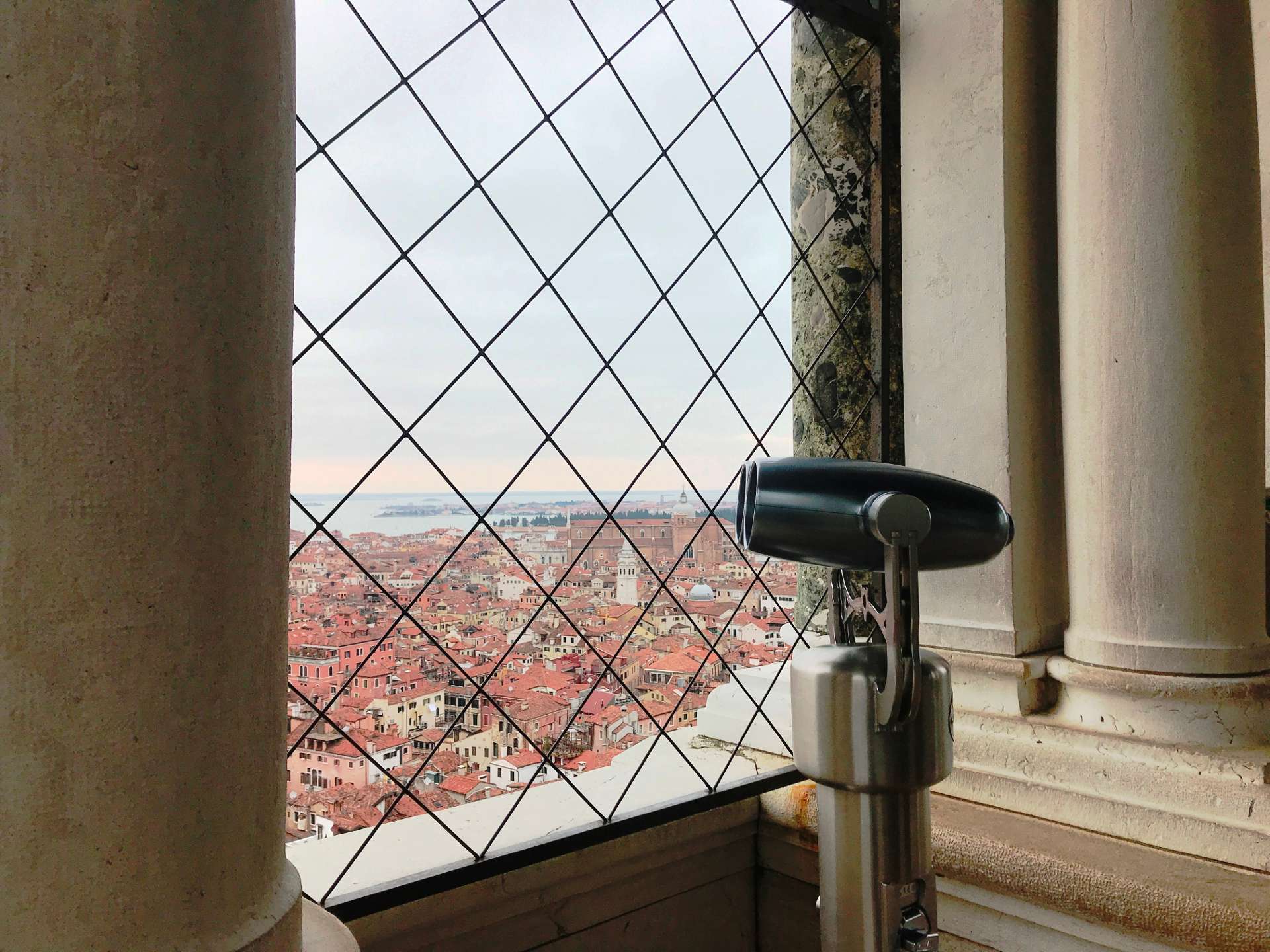
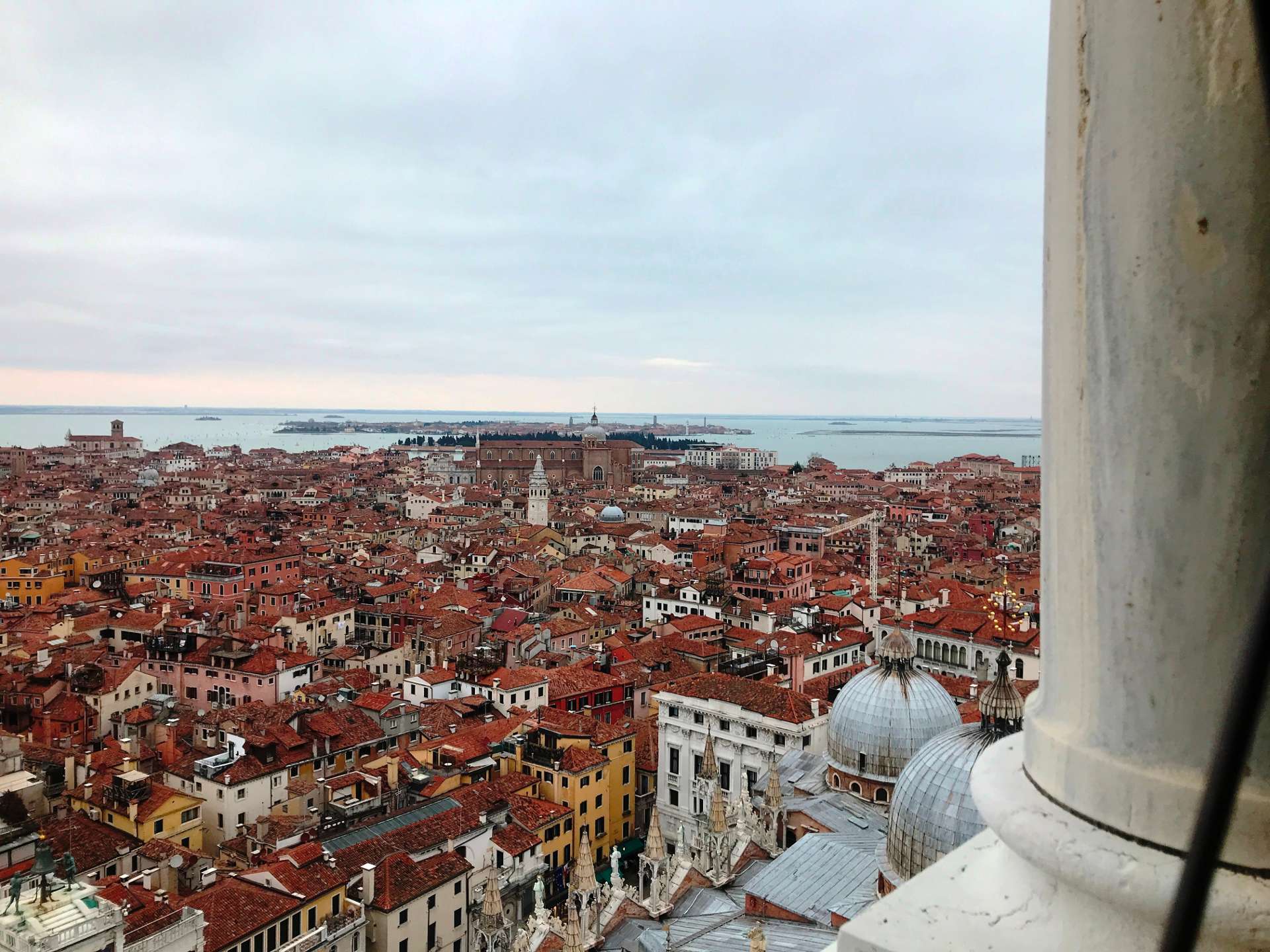
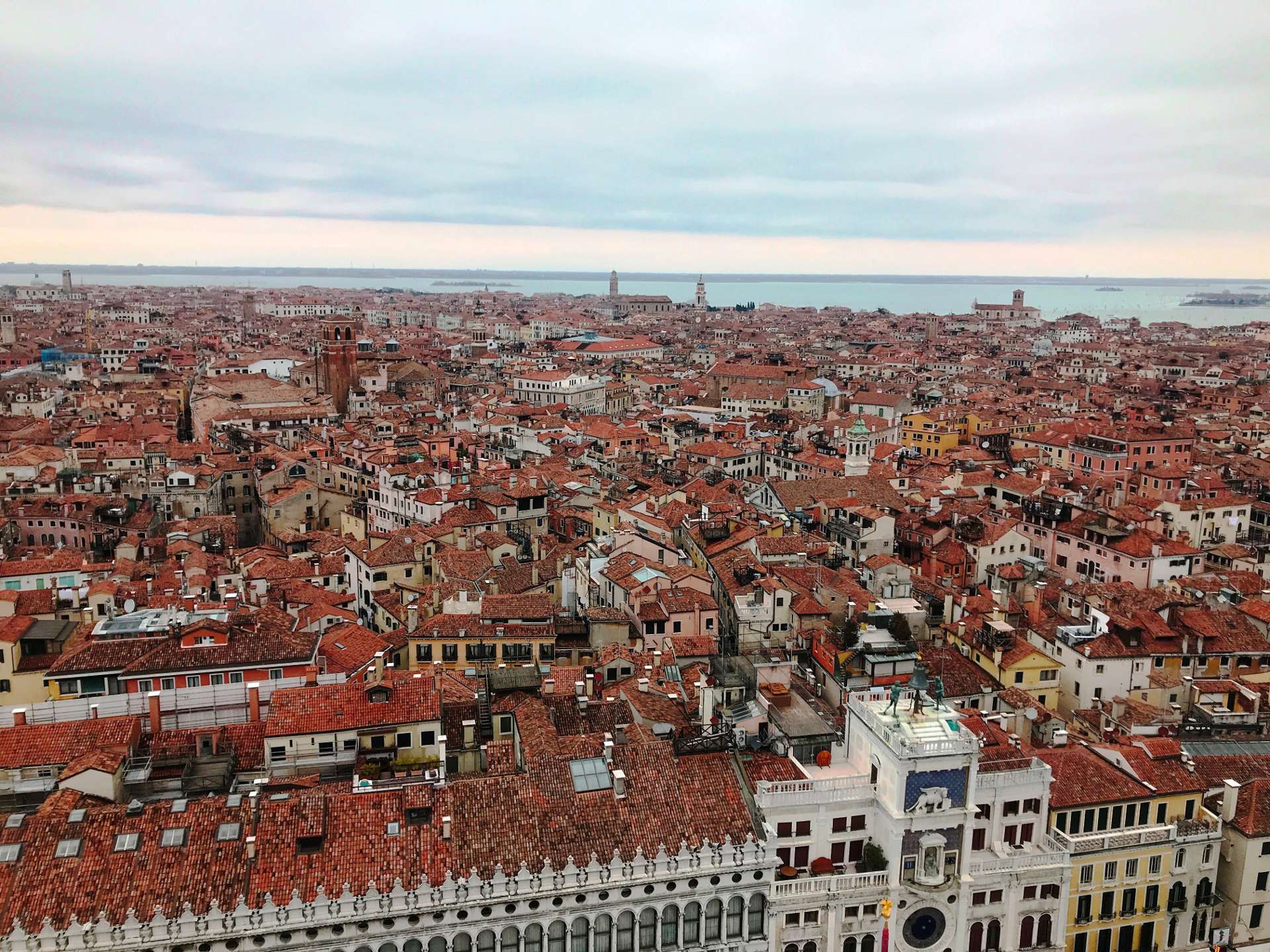
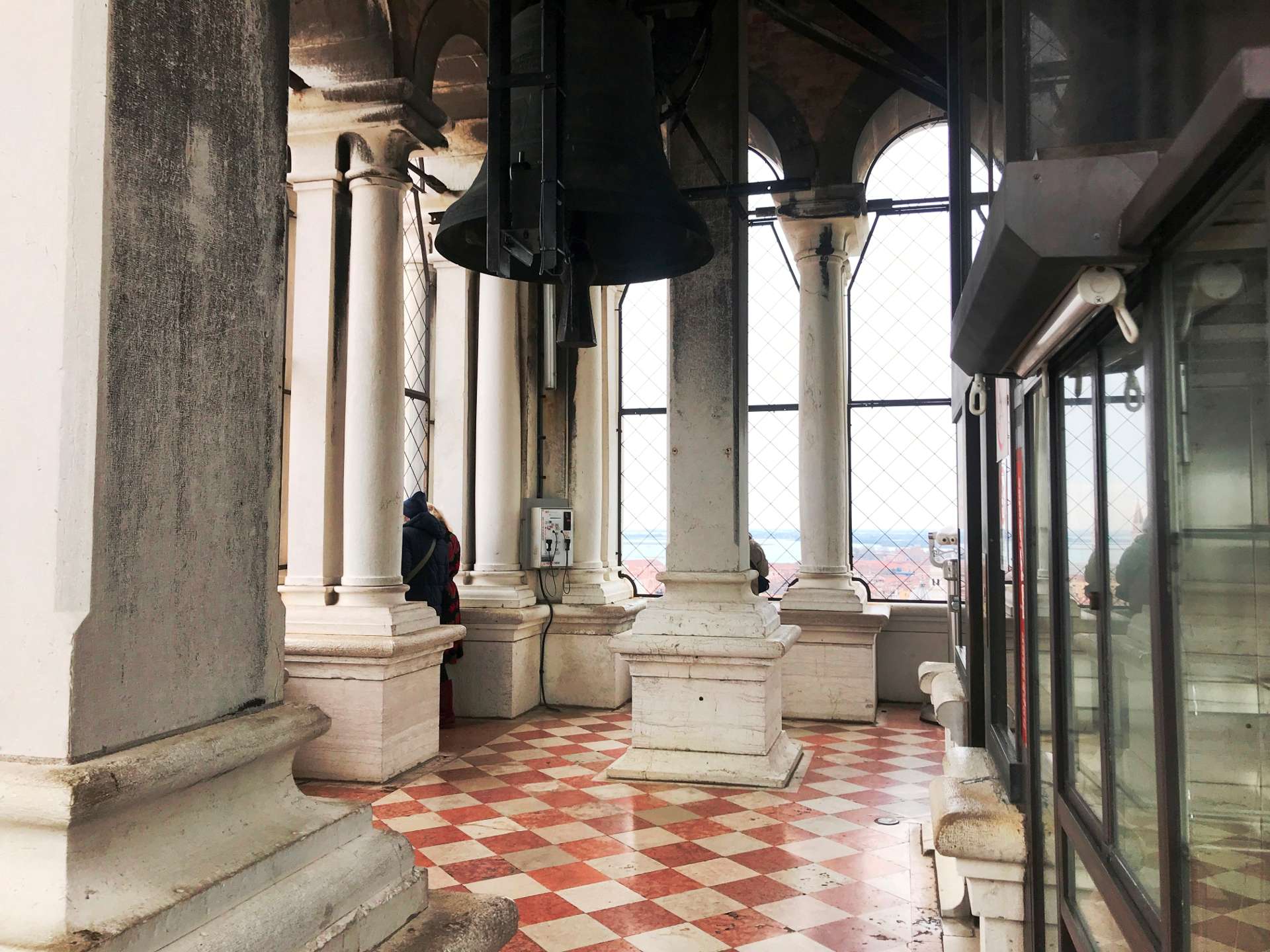
Afterwards, we took the vaporetto and arrived at St. Mark’s Square. Once there, we visited the Campanile (St. Mark’s Bell Tower). The entrance fee was 16 euros for both of us. Then, we took the elevator to the top of the Campanile. From up there, we were able to enjoy stunning views of the roof of St. Mark’s Basilica, also the entire St. Mark’s Square, and the whole city of Venice.

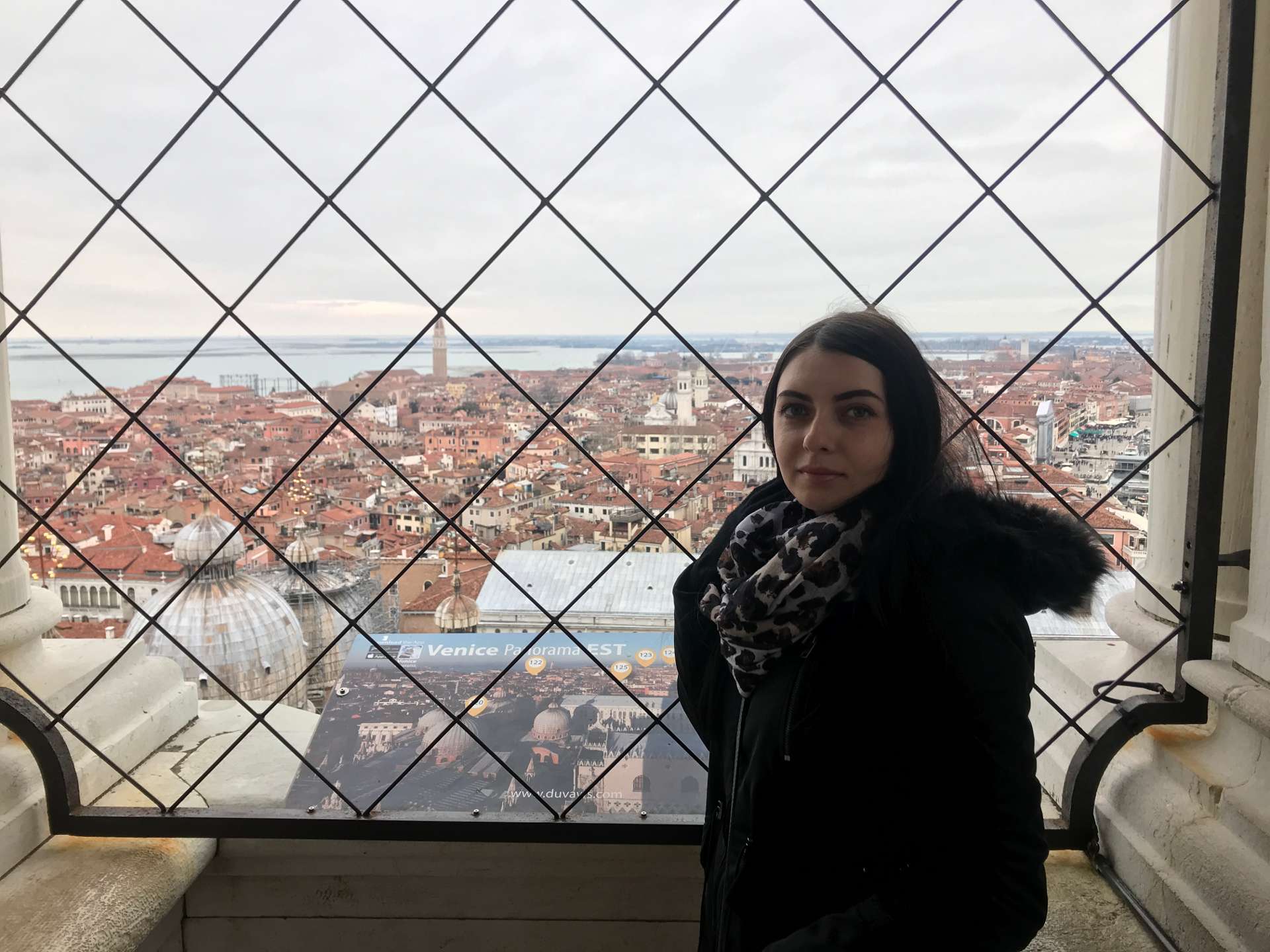


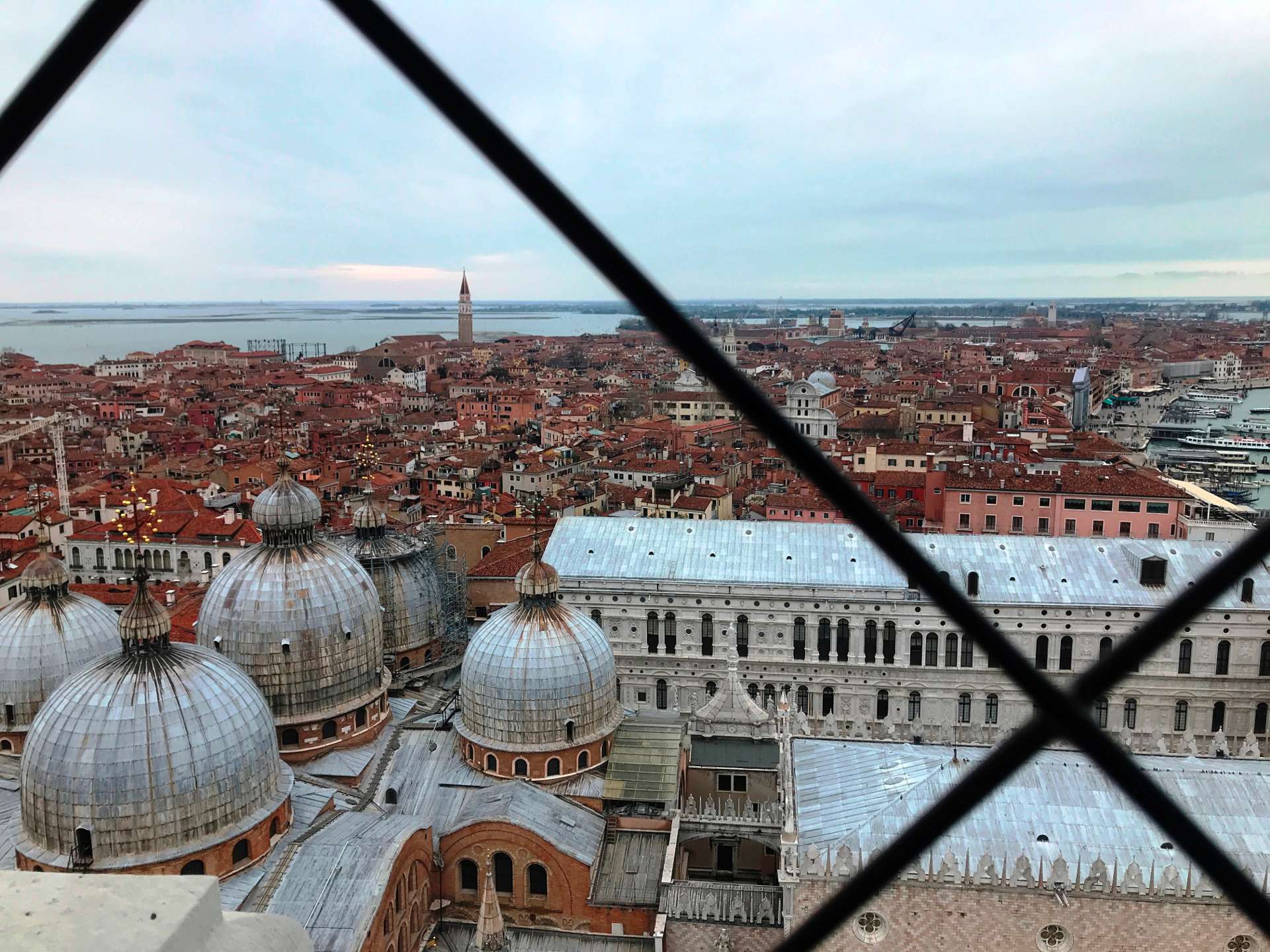
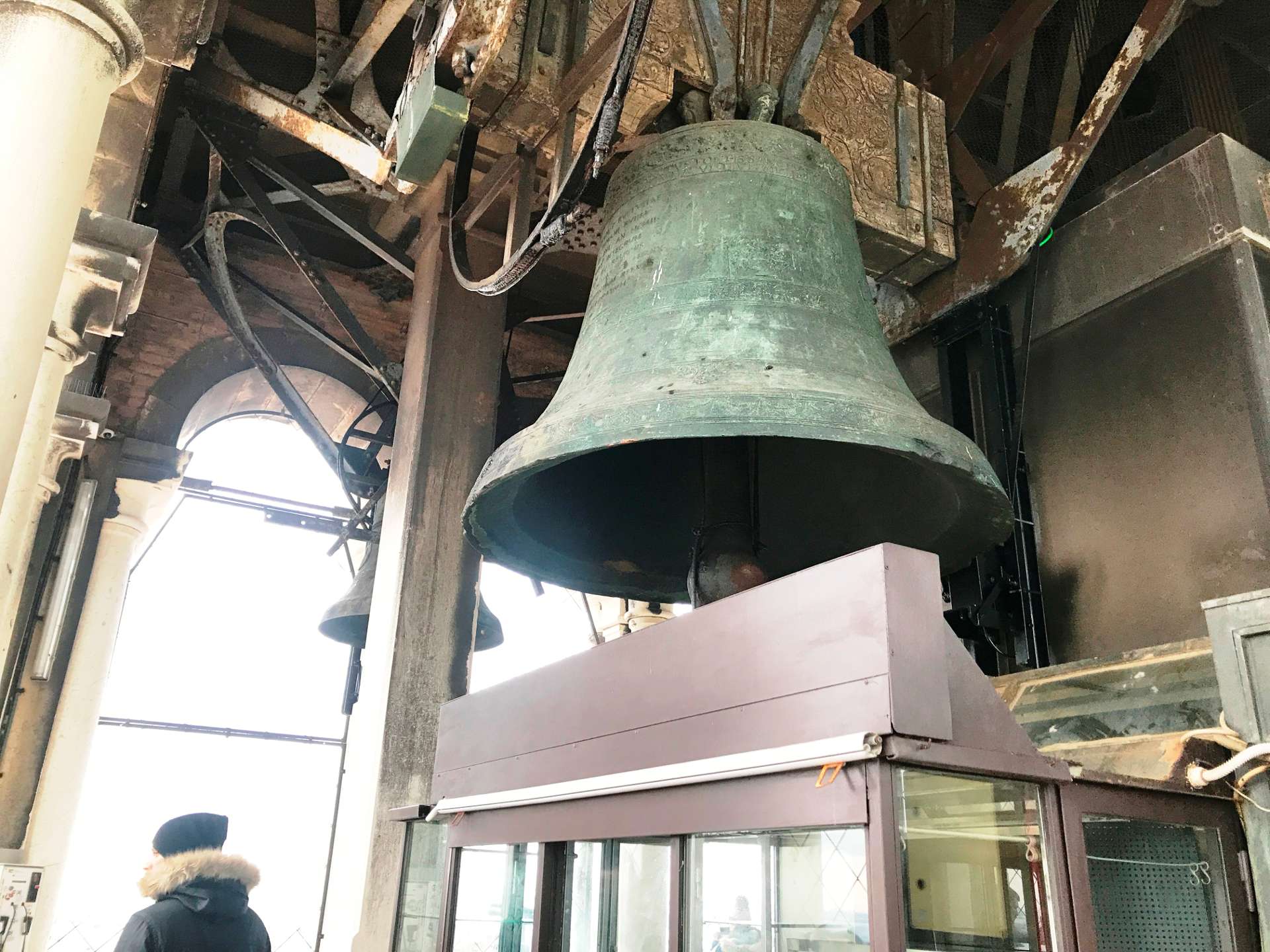
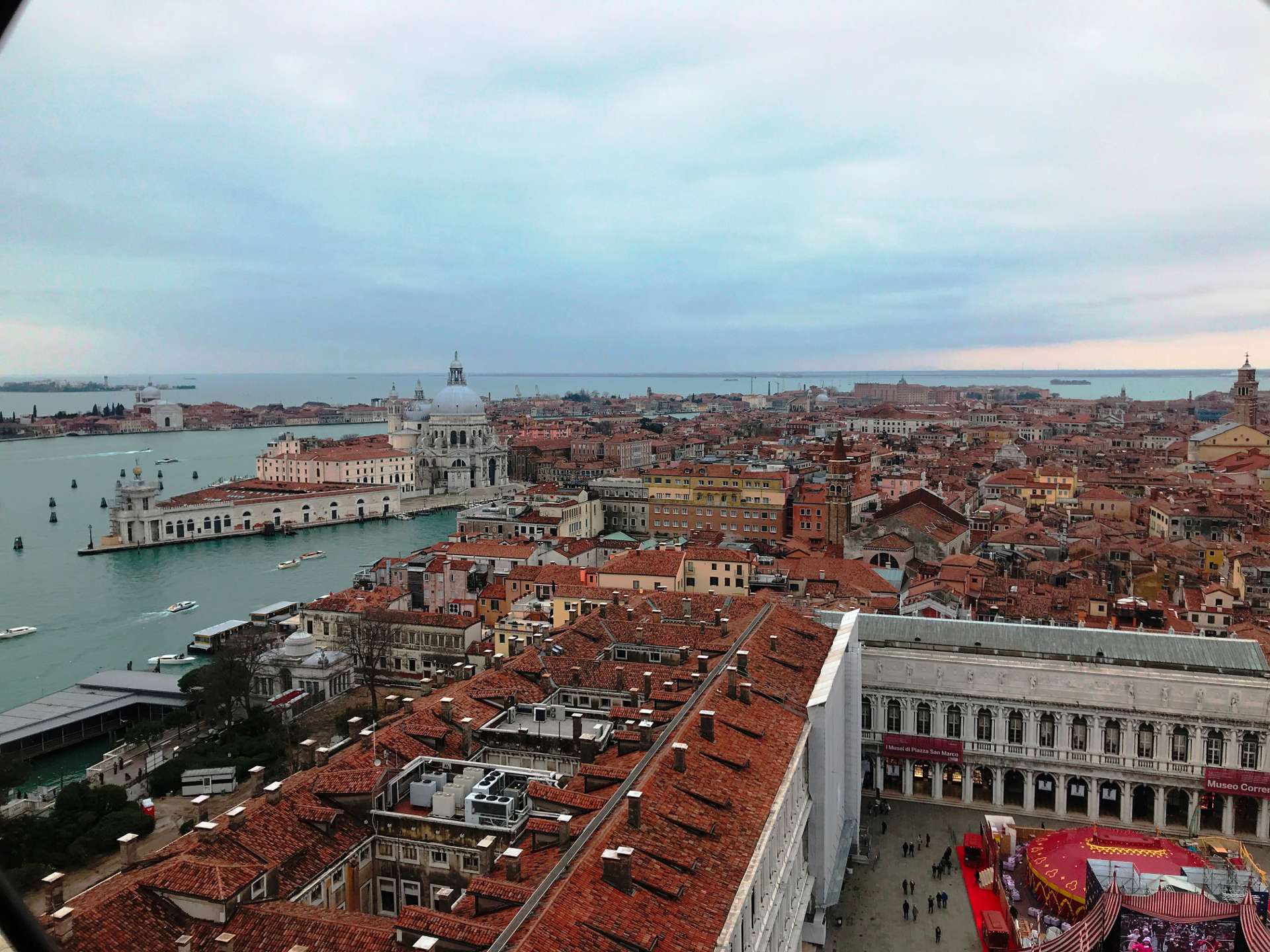
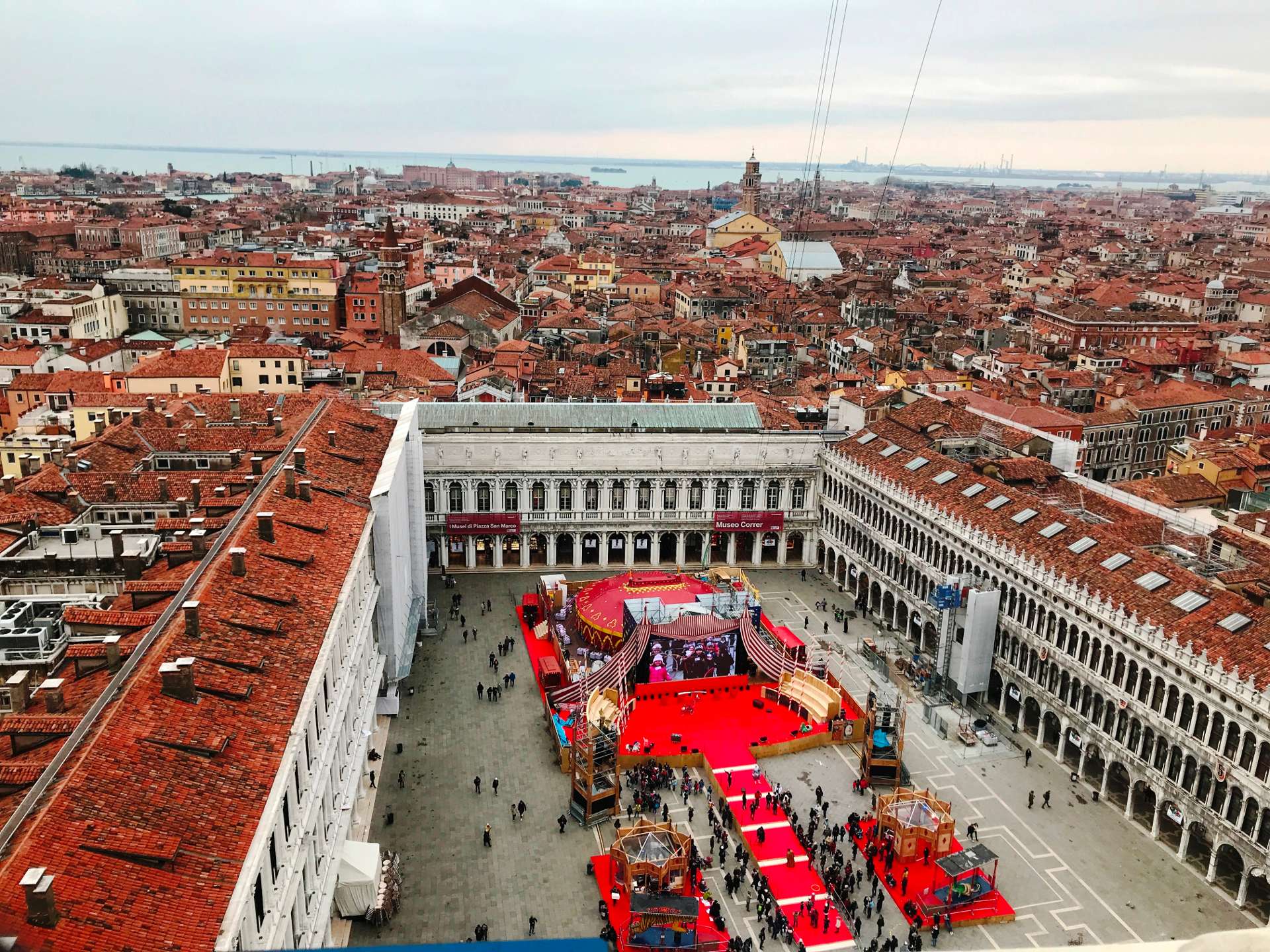

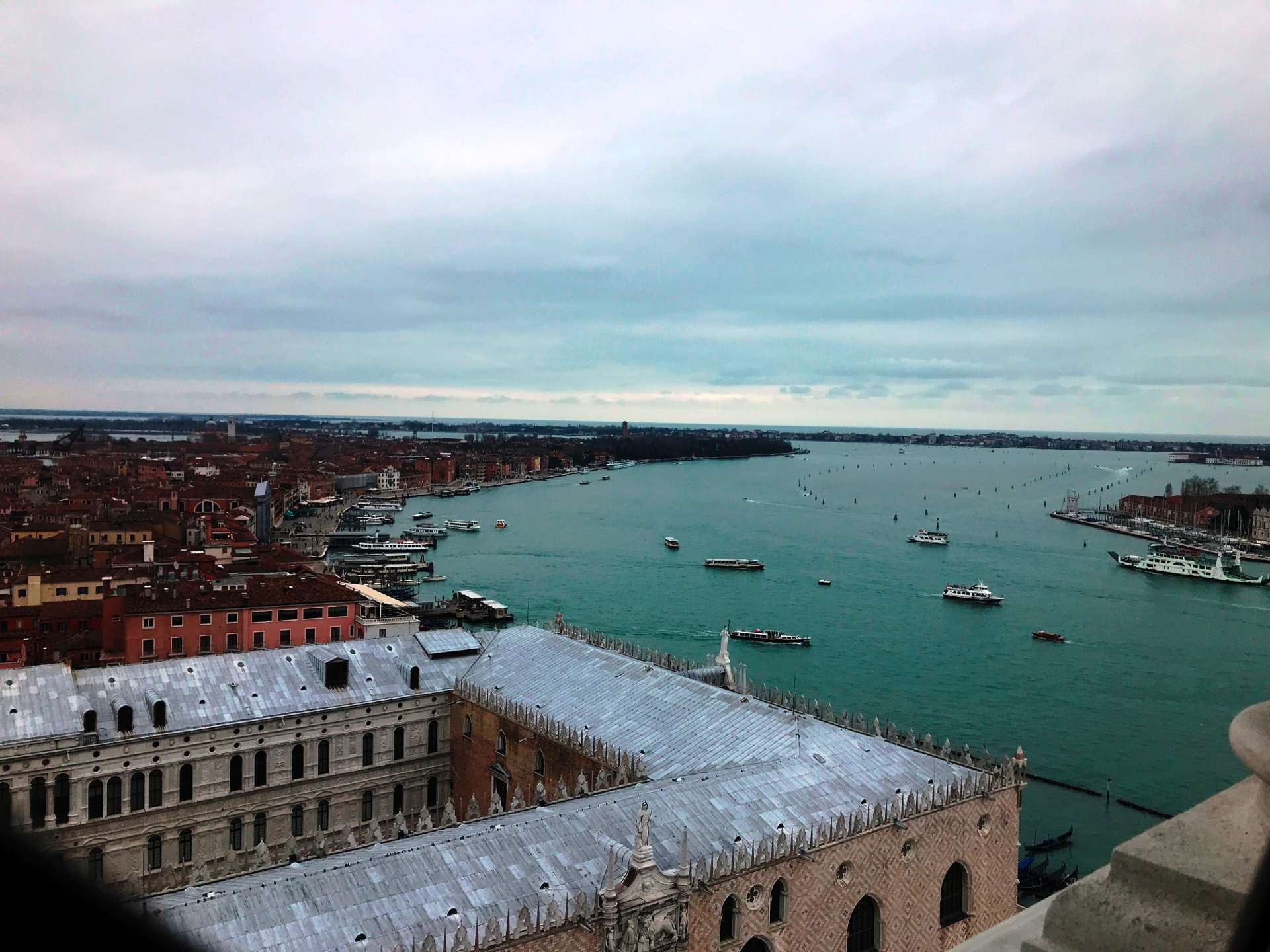
Then, back in the square we notice a huge line at the entrance of Basilica di San Marco; good thing that we visited it in the morning because then it wasn’t crowded at all.
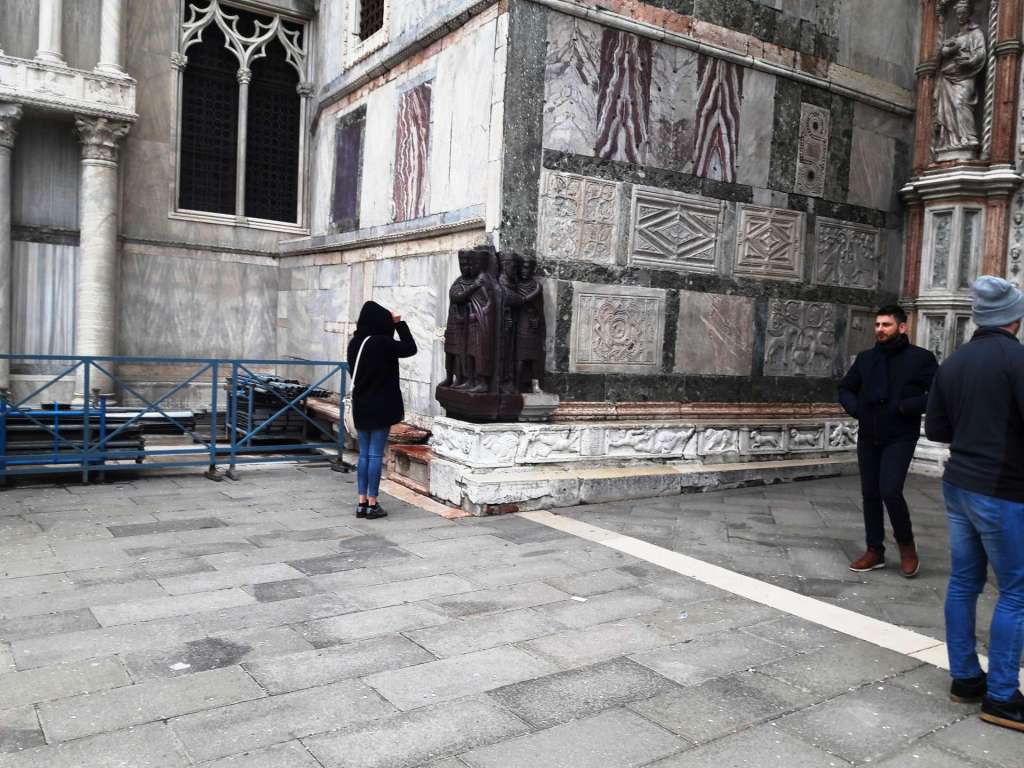
As we explored, we noticed the interesting Tetrarchs (Monumento ai Tetrarchi) situated on the side of the Basilica di San Marco, specifically towards the Palazzo Ducale and Porta della Carta—the door that connects the Basilica and the Doge’s Palace.
Then we again took a look and pictures of Caffe Florian, now that the crowds were gone; before they would gather again at night. This café was opened since 1720 and frequented by Casanova, being at that time the only cafe that admitted women.

Visiting Correr Museum and Biblioteca Marciana
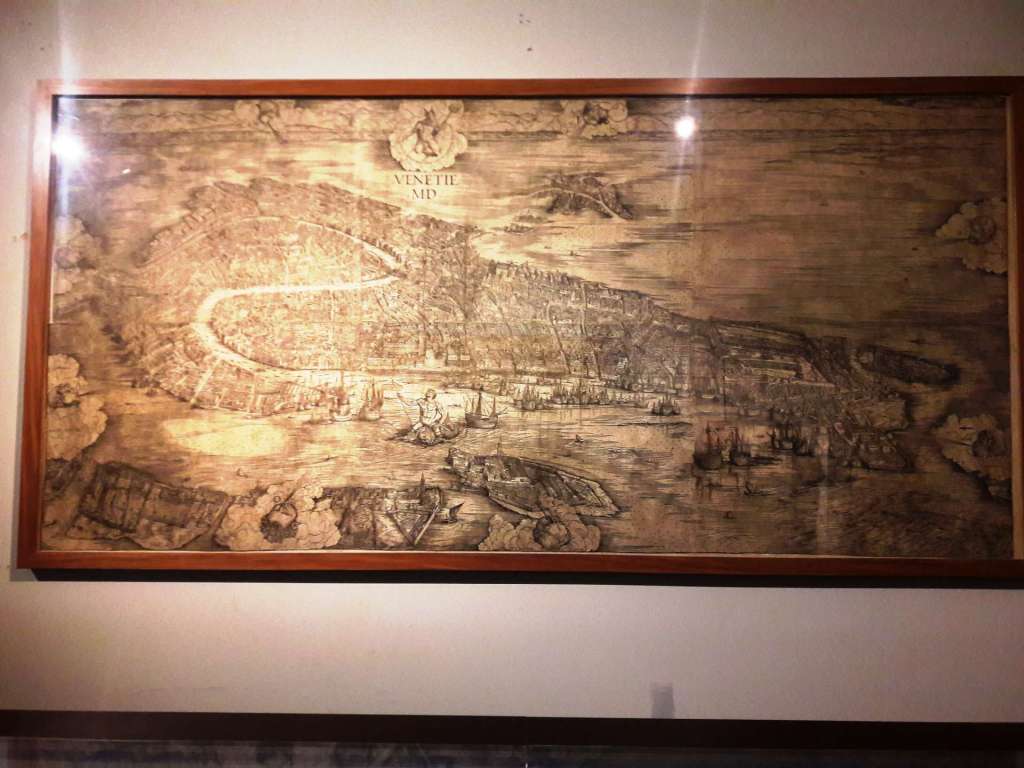
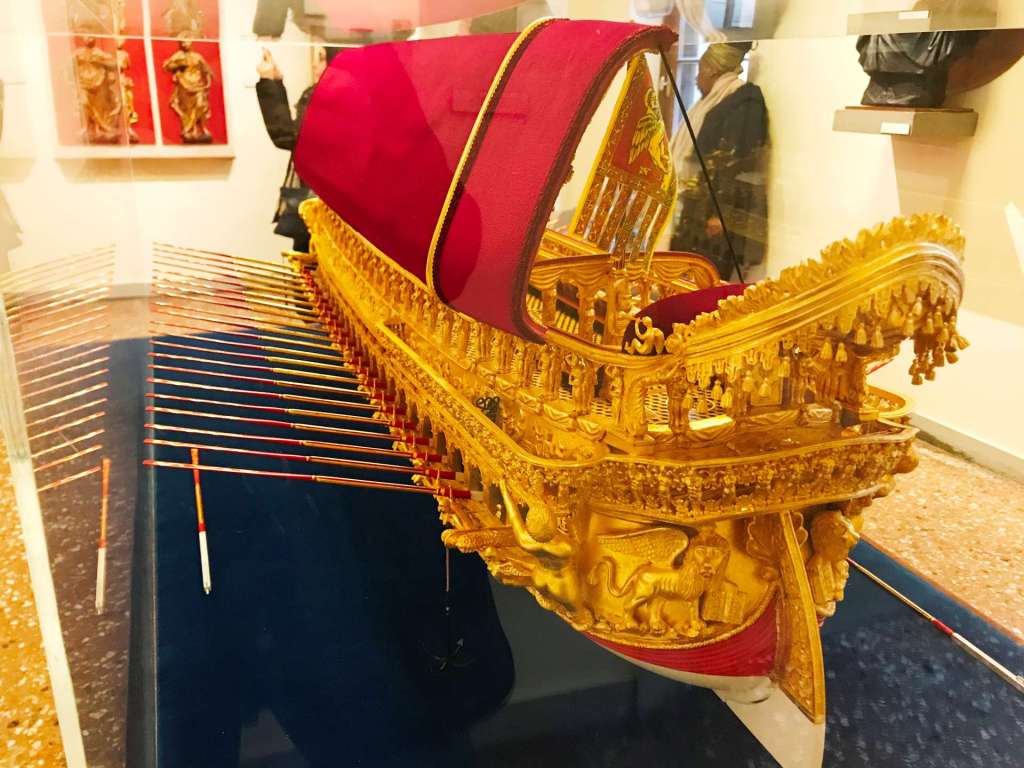
Next we began the tour of Correr Museum + Procuratie Nuove (ex Palazzo Reale) + Venice National Archaeological Museum + Monumental Rooms of Biblioteca Nazionale Marciana, included in the price of Museum Pass + Rolling Venice Card. The tour took around an hour or less; because we like to visit fast, take a lot of pictures and then move to the next sight to visit.

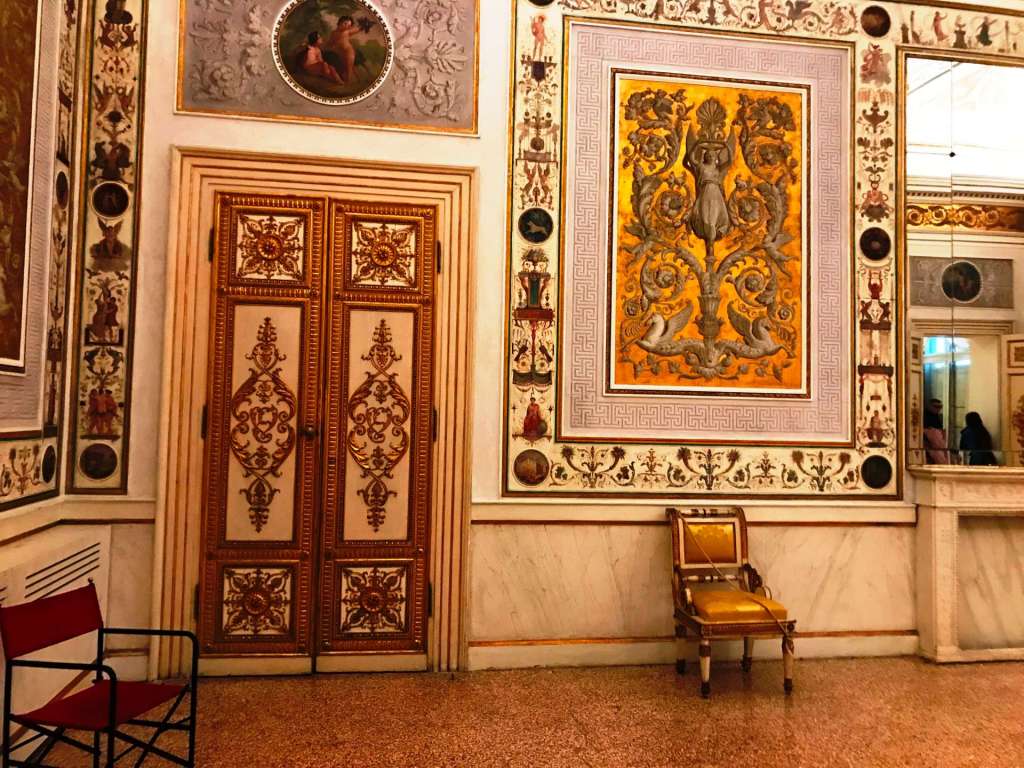

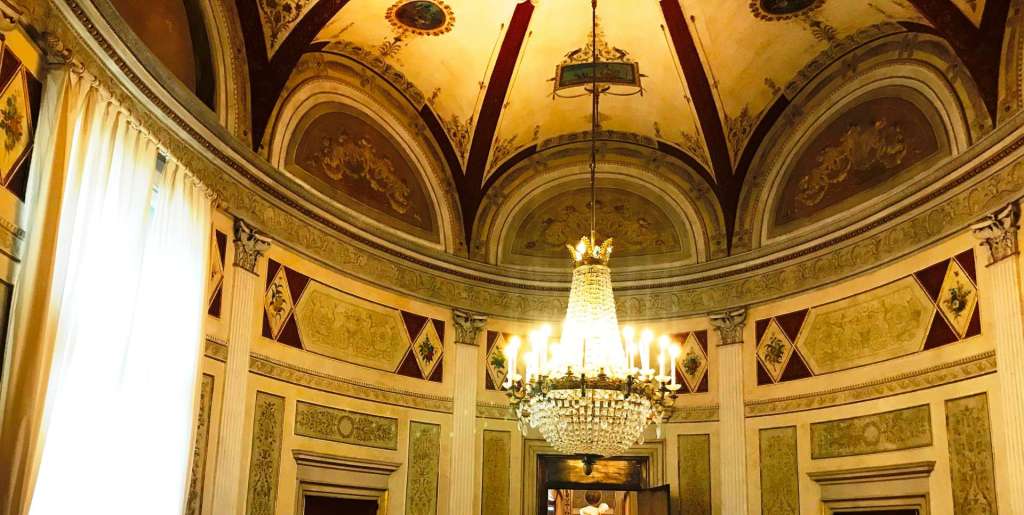
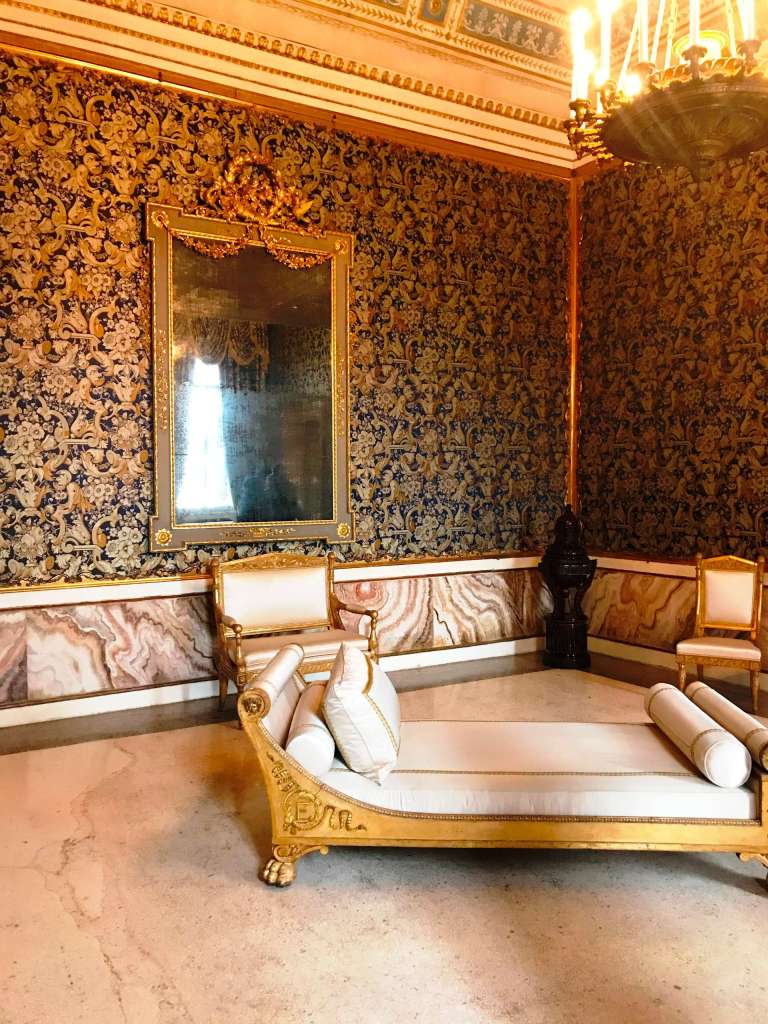

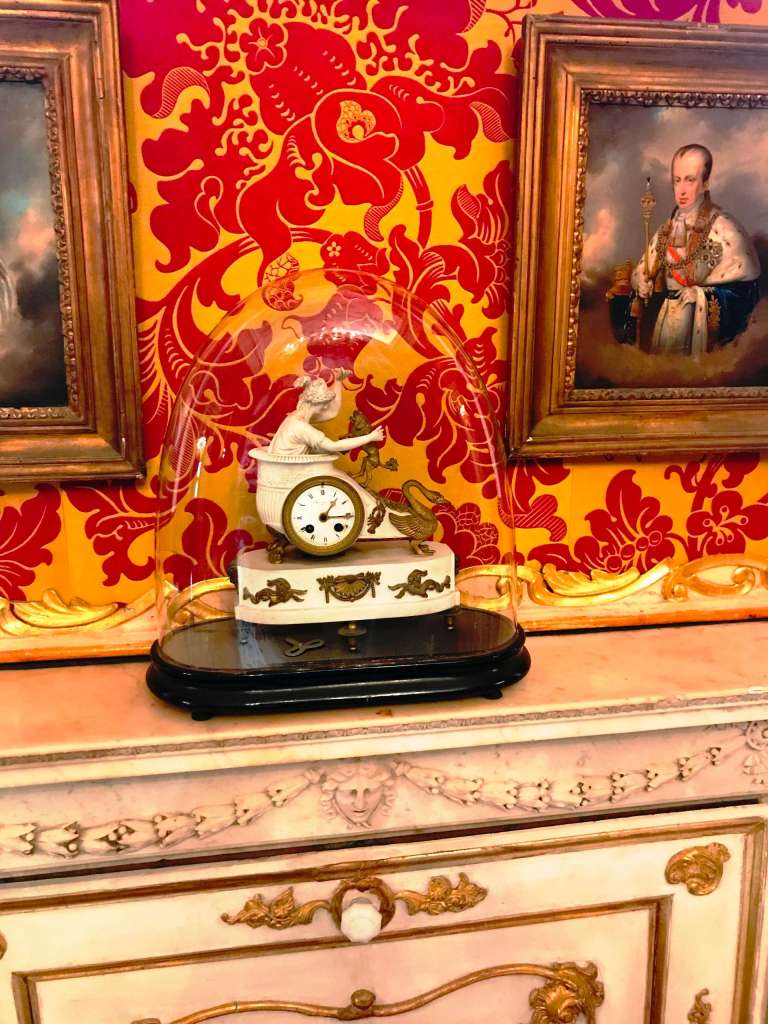

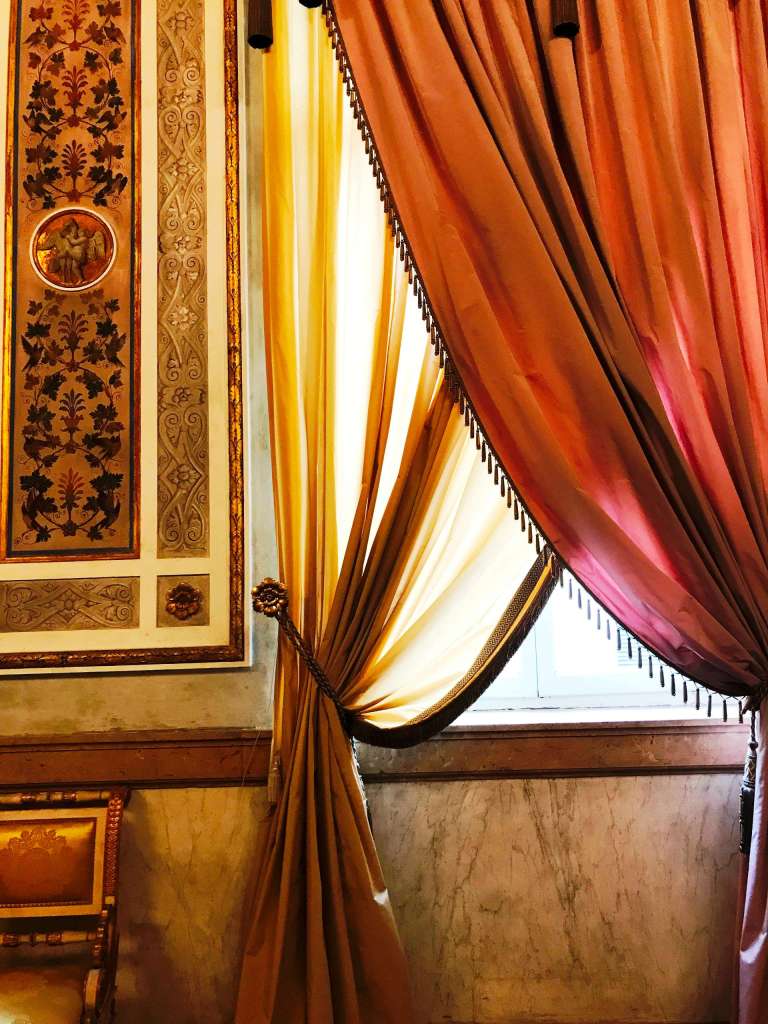

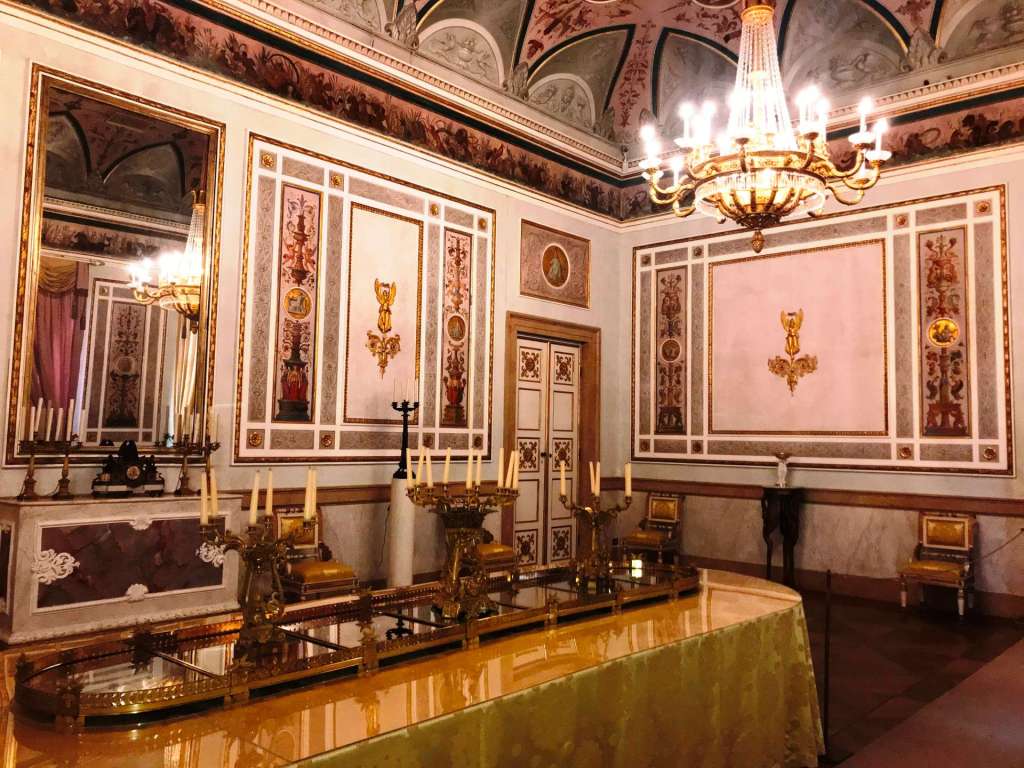
After thoroughly exploring the astonishing decorations and exquisite furniture of the imperial rooms at the Correr Museum, we then moved on to the Biblioteca Marciana, where we admired the impressive collections on display.


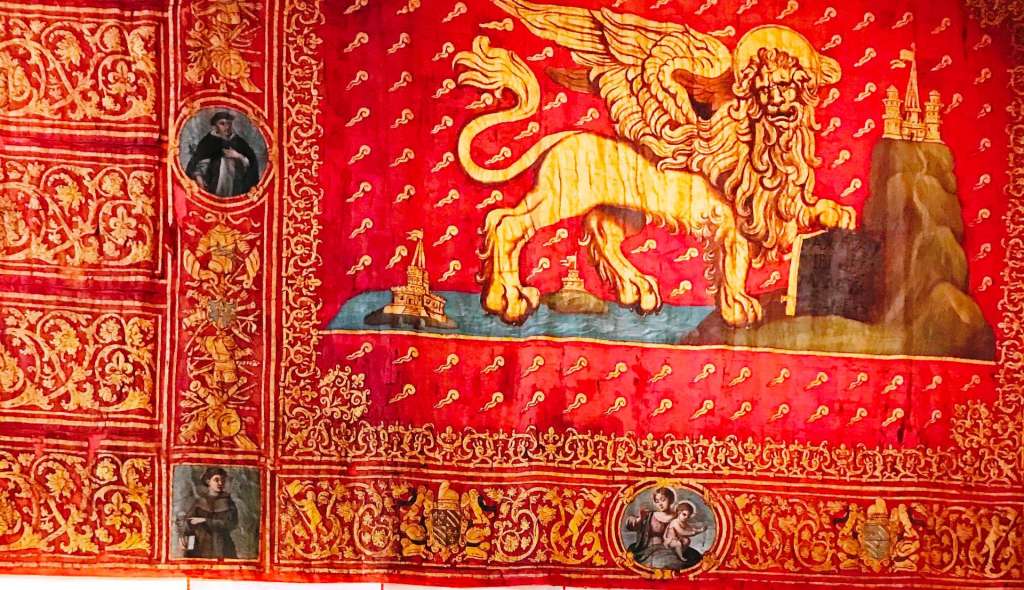
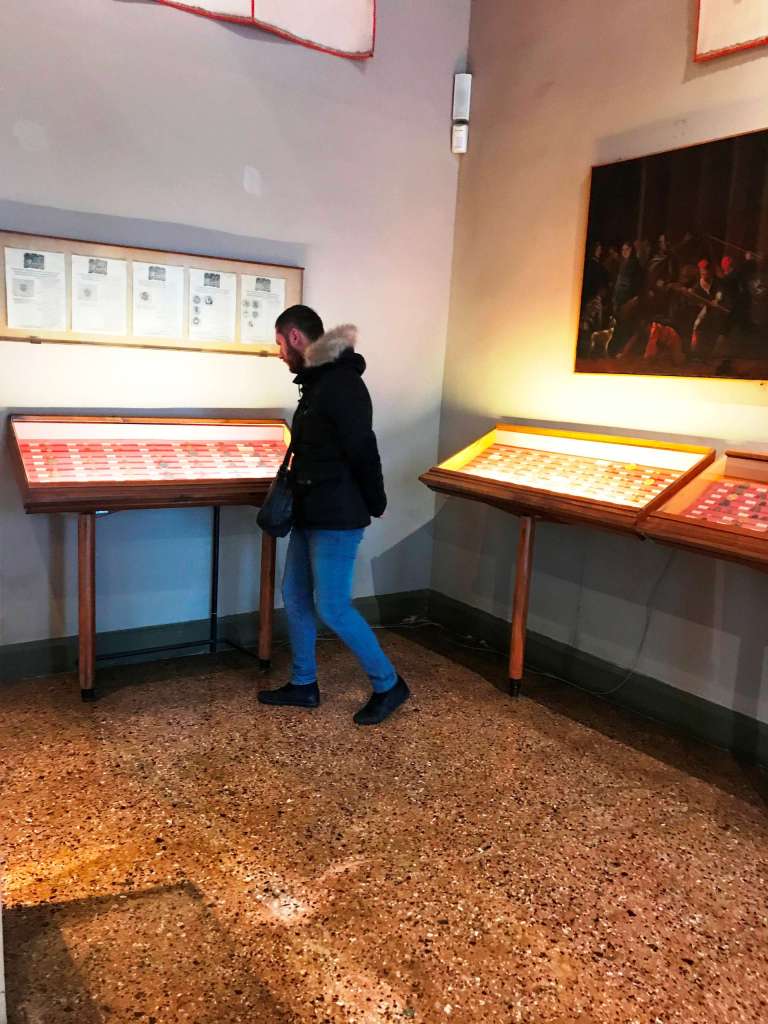
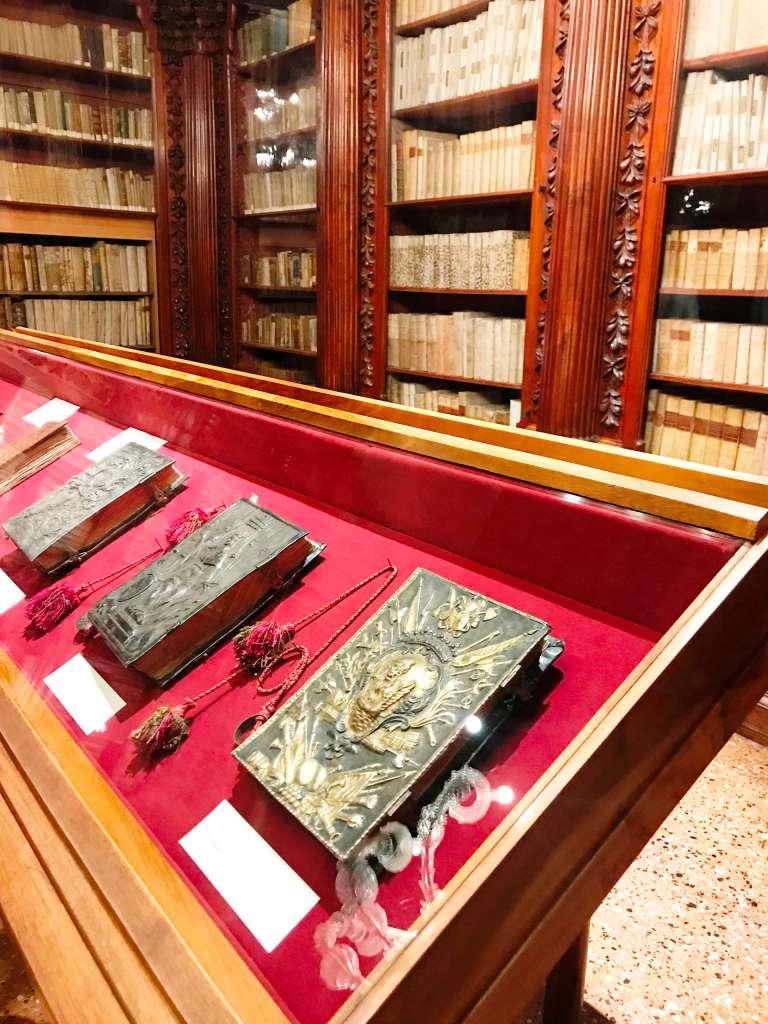
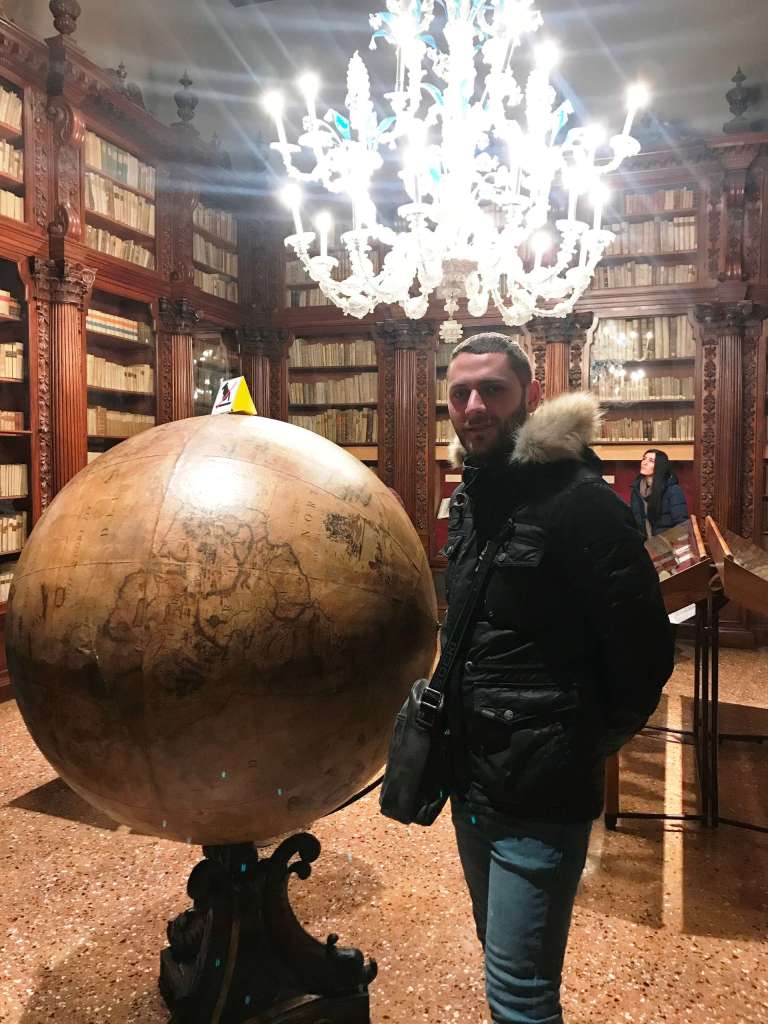
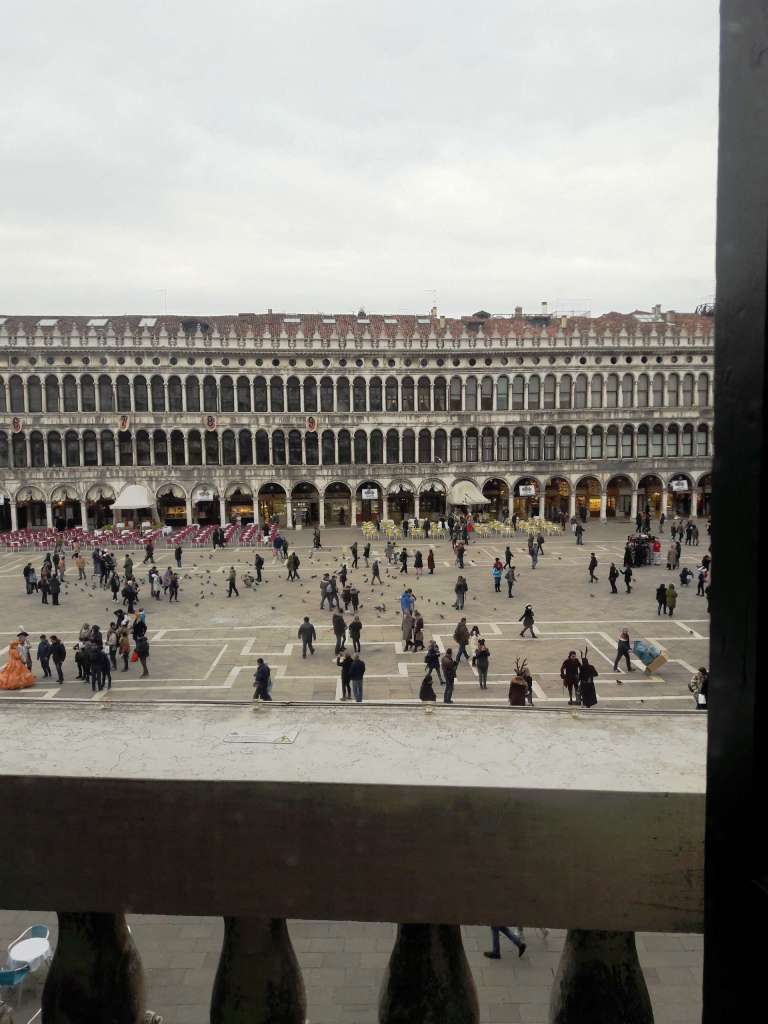
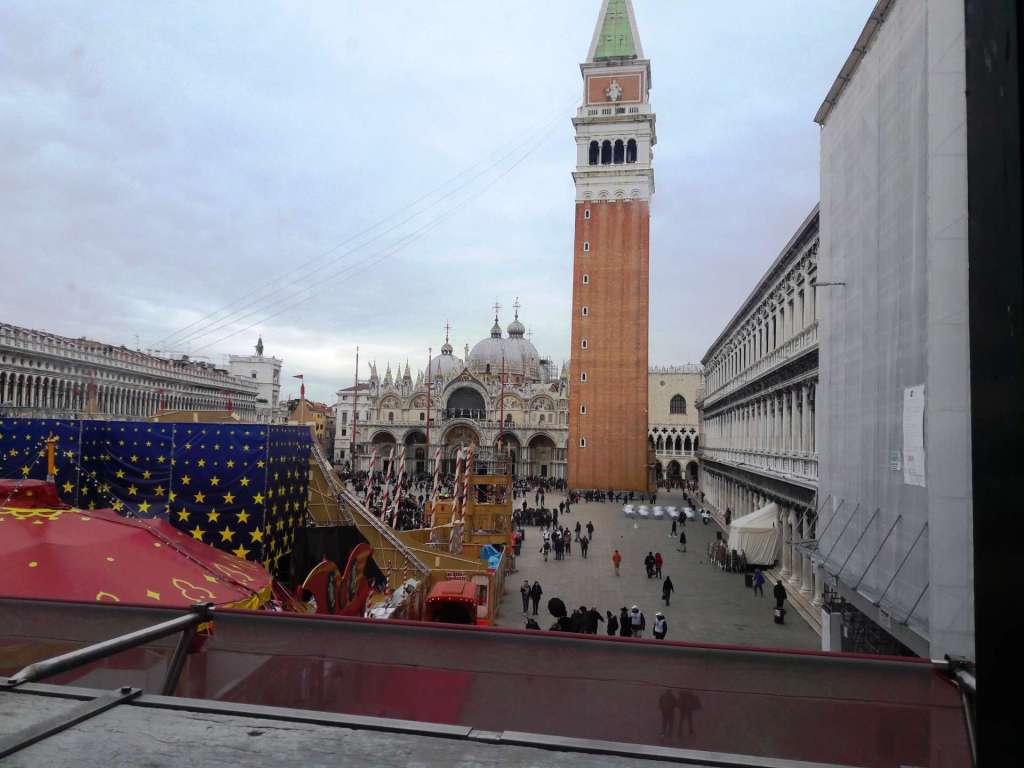
The next stop of the tour was the Archeological museum, from where we managed to capture some pictures of St. Mark’s square.

Afternoon in Piazza San Marco – Cafés and Venice Carnival Atmosphere
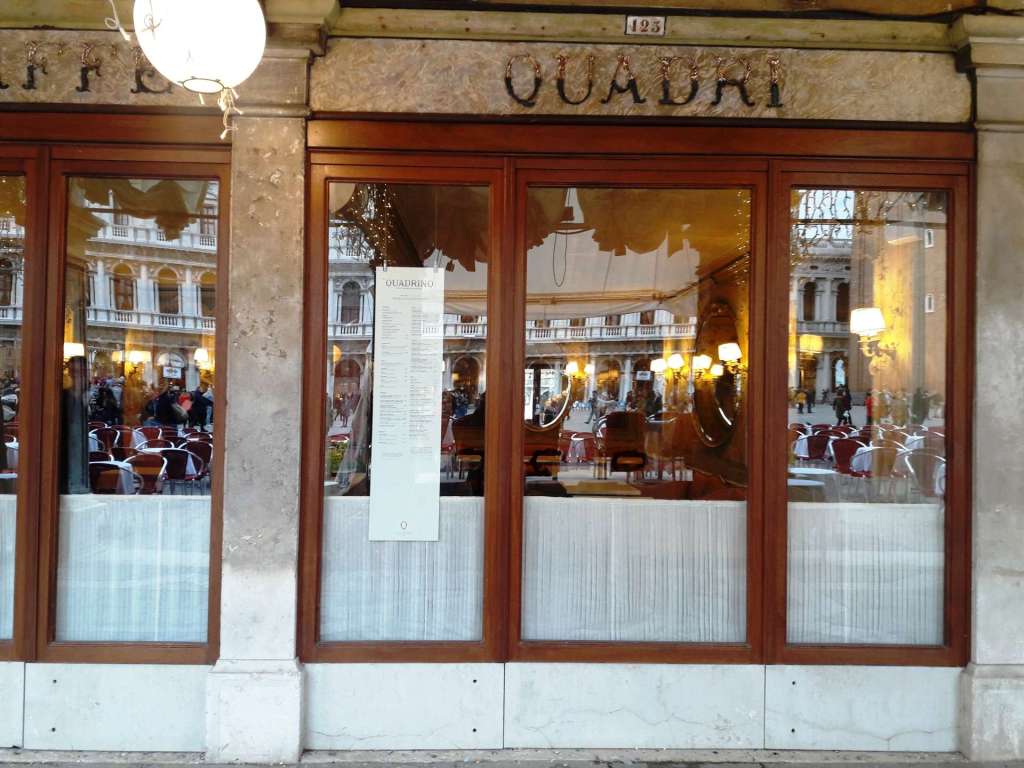
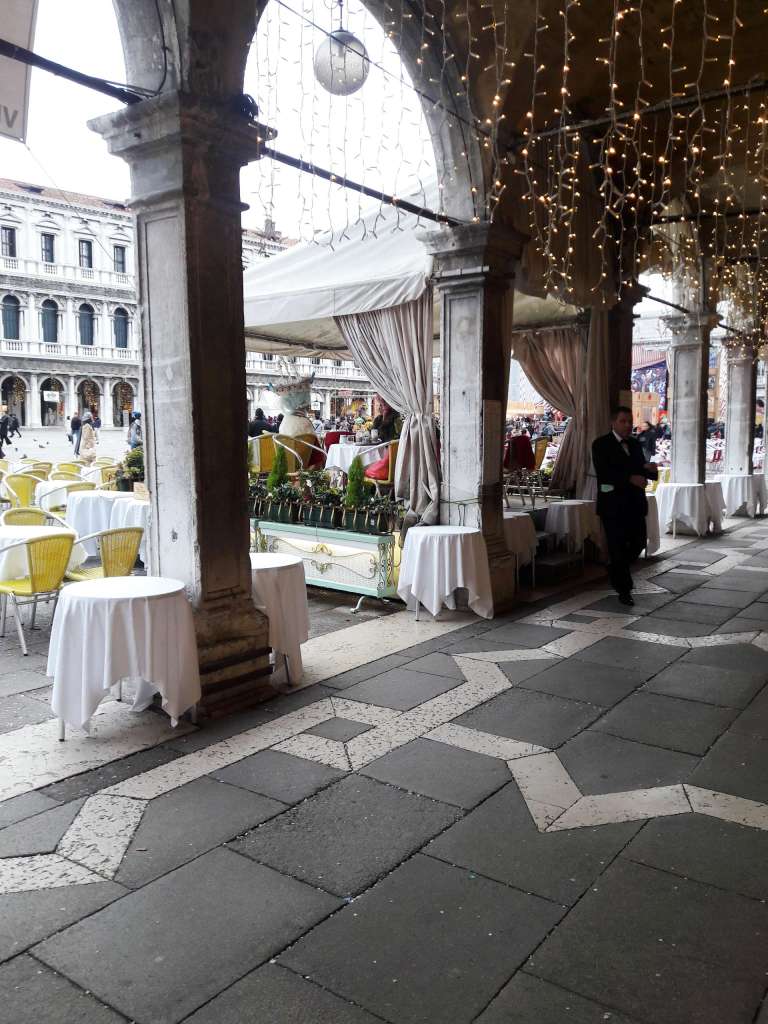
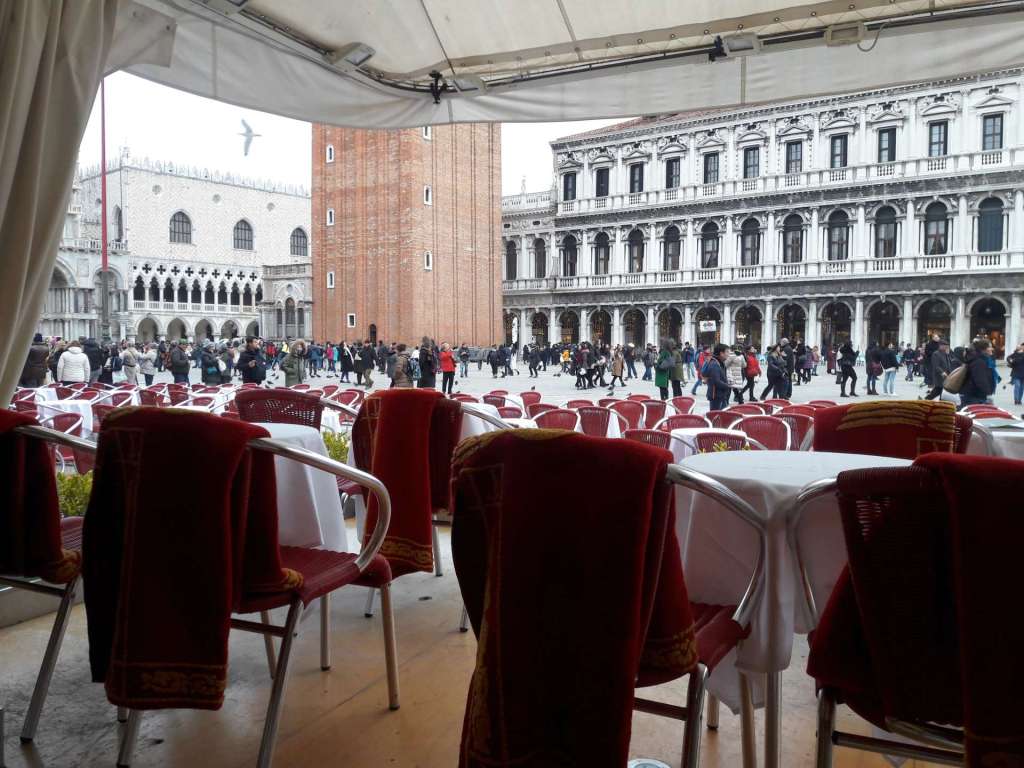
Then, after exiting the Correr Museum, we crossed the piazza in order to photograph the famous Caffè Quadri. Both Caffè Quadri and Caffè Florian are renowned and historic cafes located in St. Mark’s Square; in fact, they have been iconic symbols of Venice for over 300 years. Also nice is Caffe Lavena nearby.


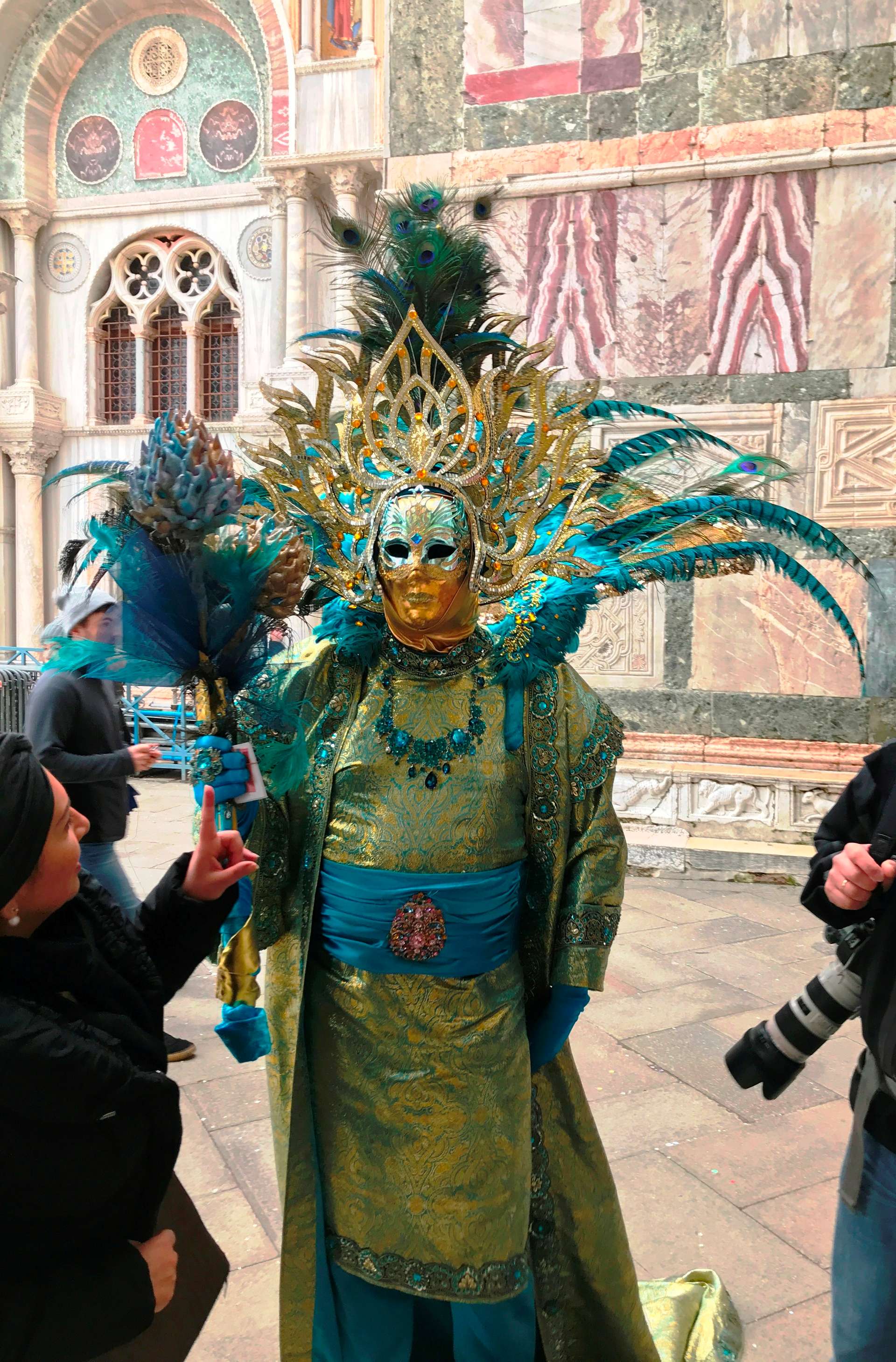
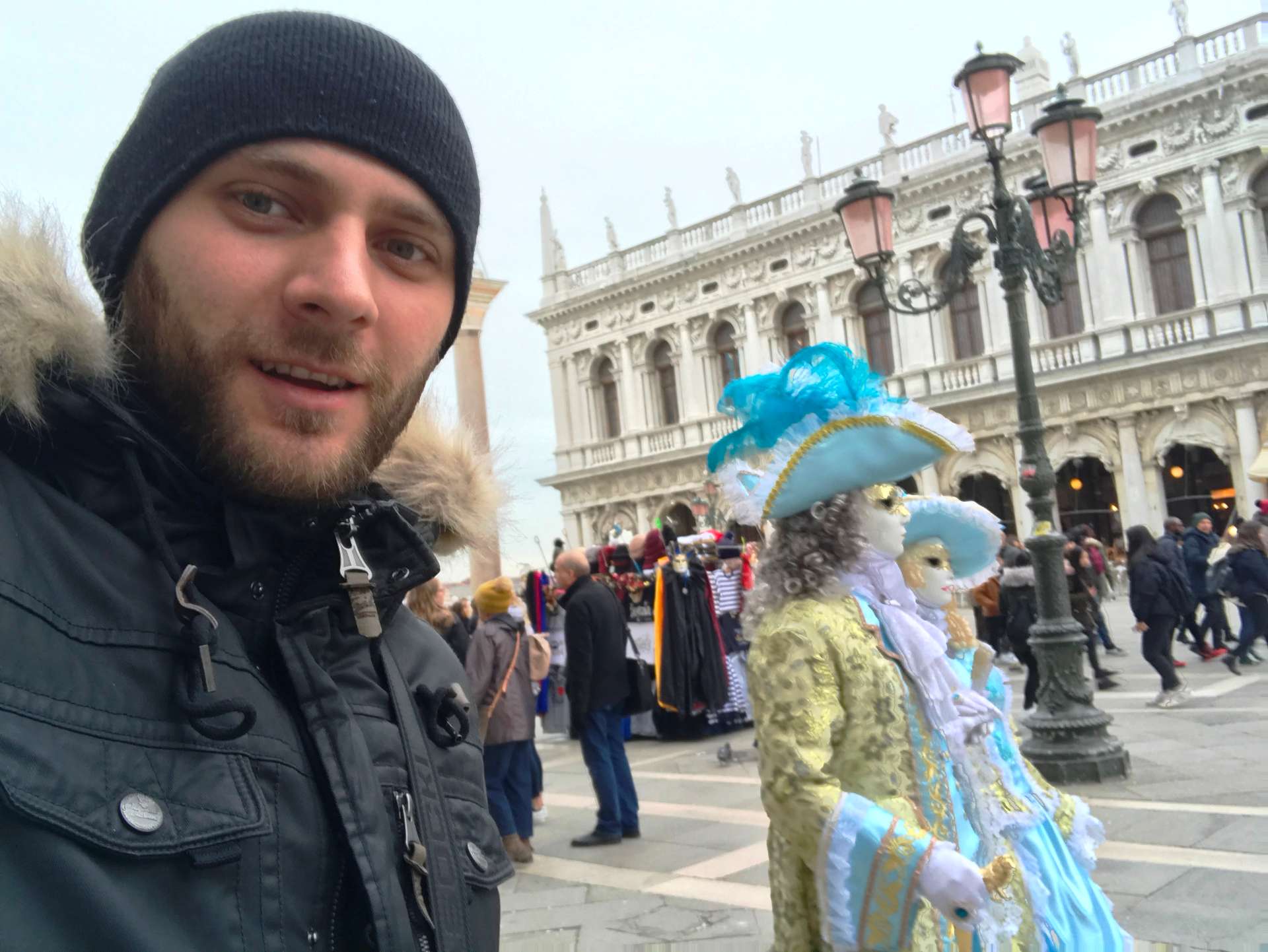
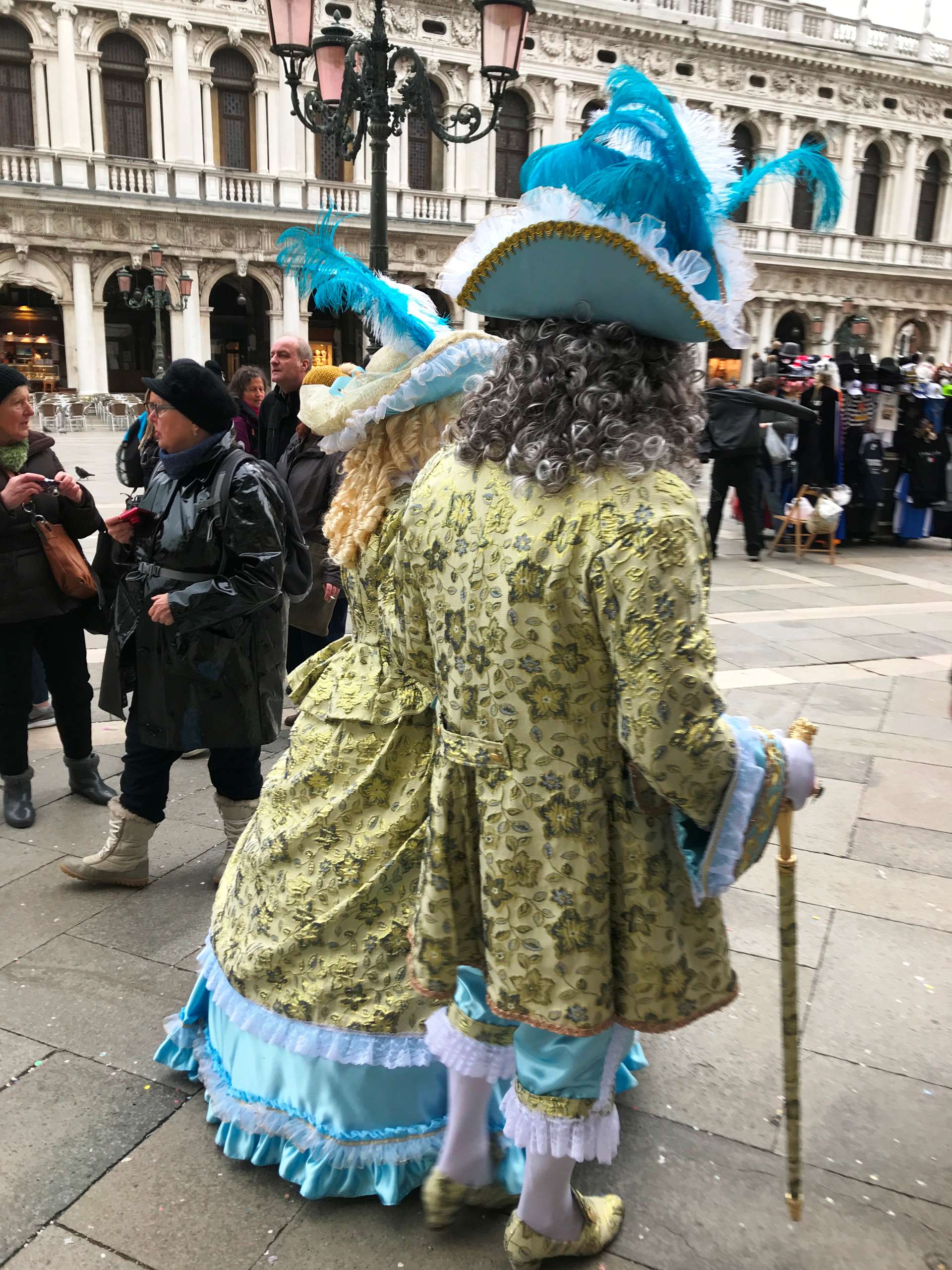

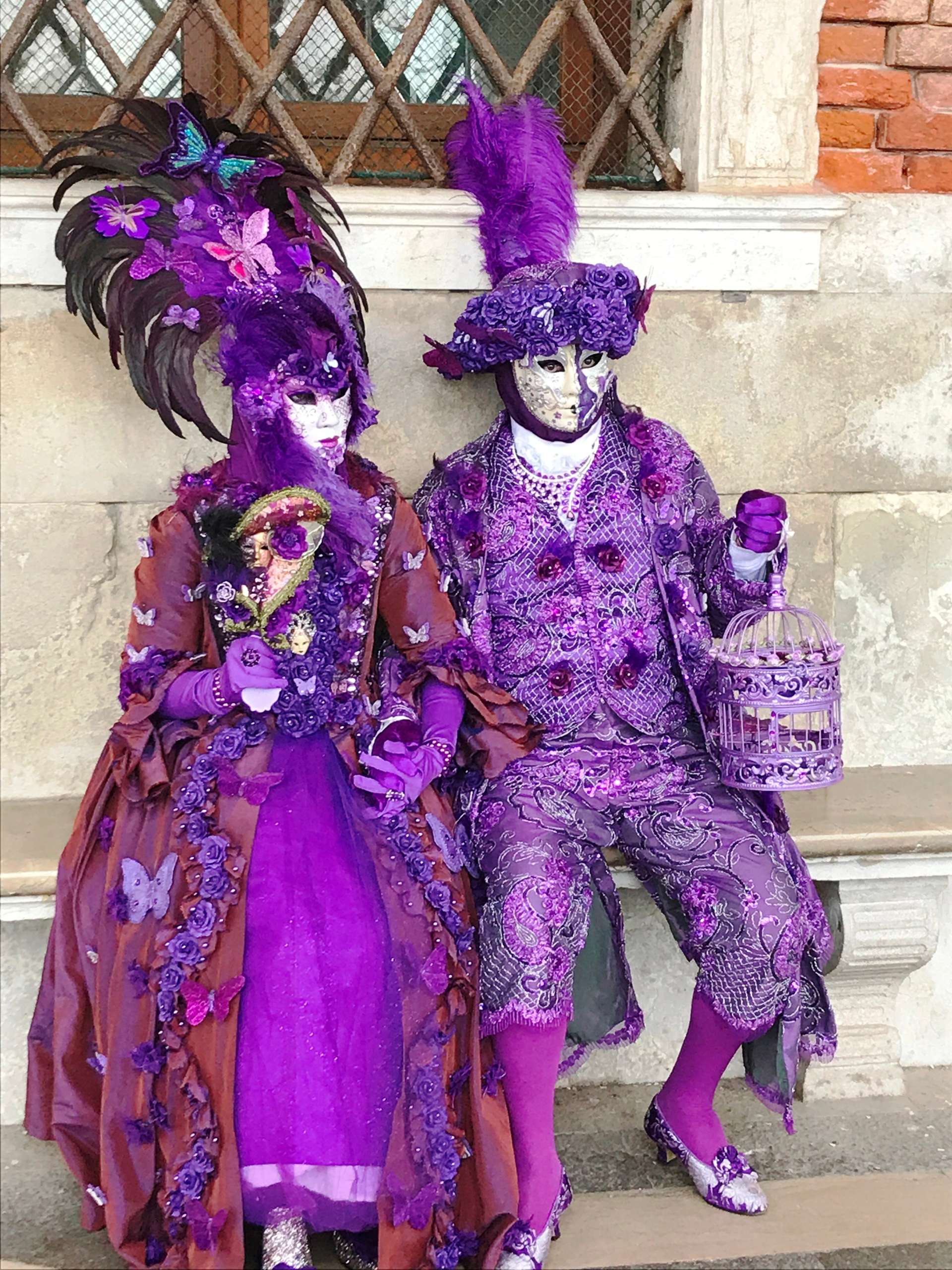

Later in the afternoon, Piazza San Marco and also the nearby promenade gradually began to fill with tourists and costumed people arriving to celebrate the Carnival.
Evening Walk Through Rialto and Cannaregio – Venice Carnival Italy by Night
We then headed towards Rialto and then Cannaregio, passing through Mercerie streets.
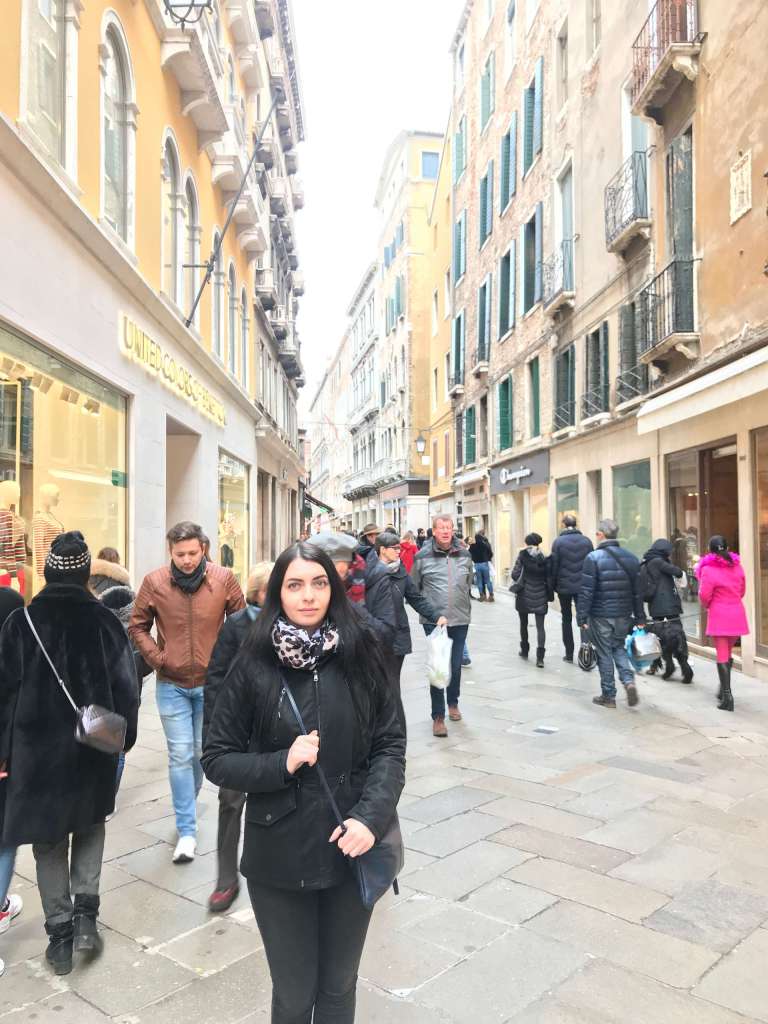
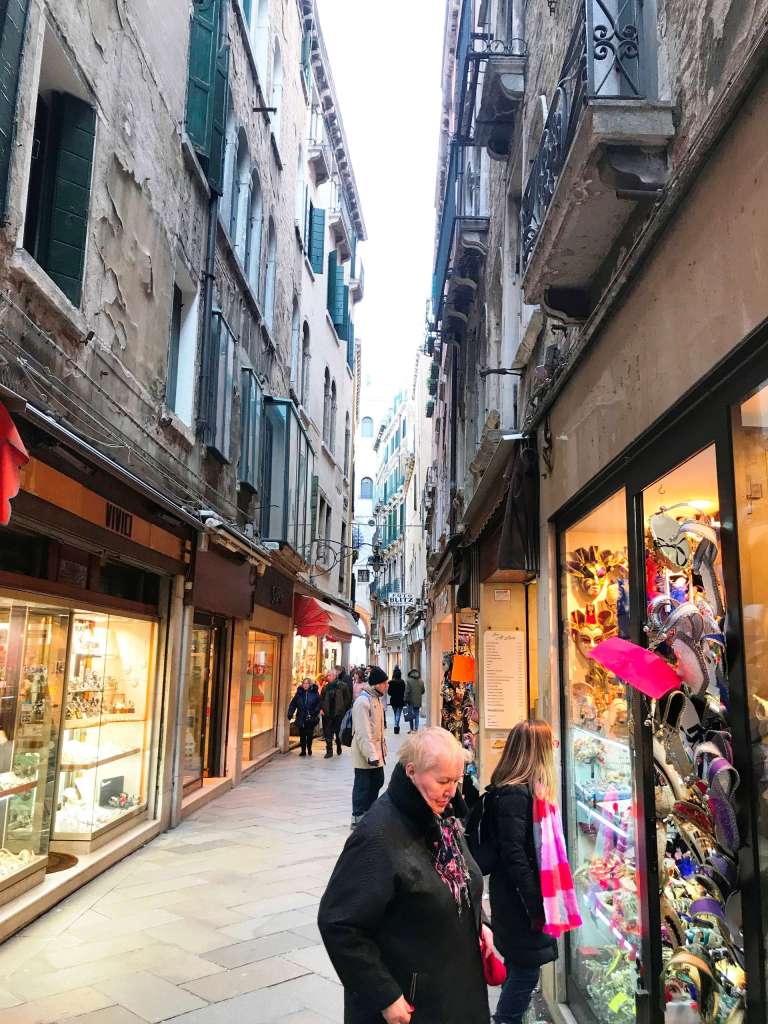

On our way on the narrow streets we encountered many shops and stores and also some famous designer stores of course. And we also discovered some nice corners and tiny canals that emphasize the beauty of Venice.

We arrived at the Ferrovia and entered inside to see how it looked like, given that we didn’t traveled to Venice by train, but for many tourists it’s the first encounter with Venice.
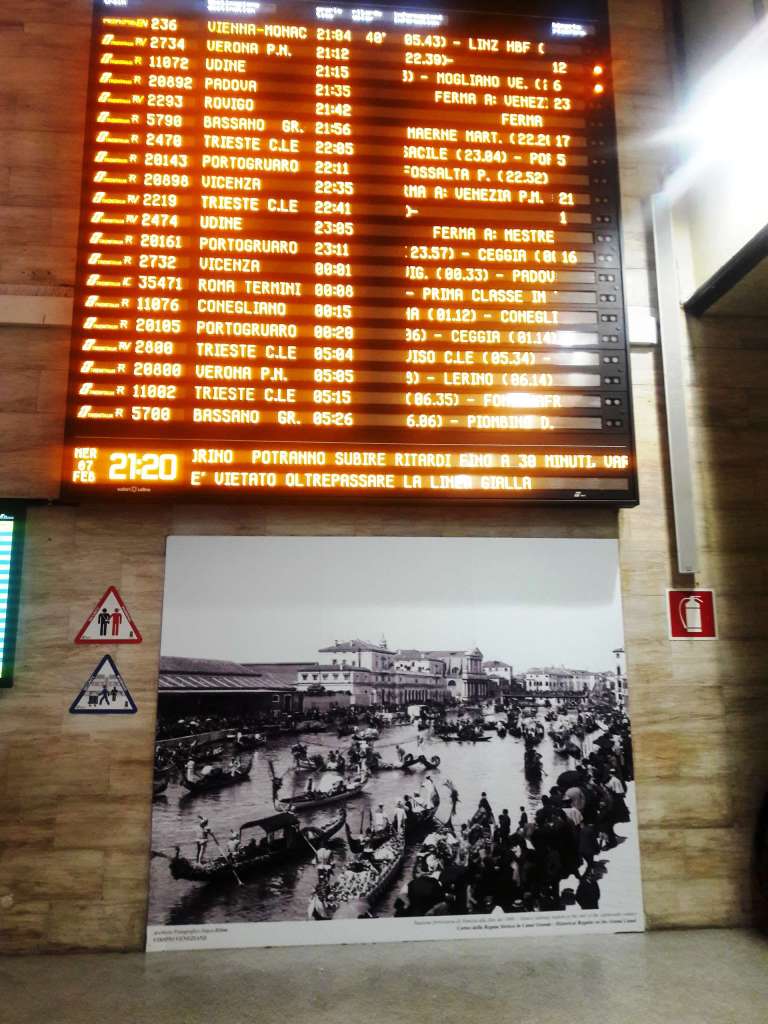
After crossing the Scalzi Bridge, we eventually made our way to Pizzeria Ai Bari, where we enjoyed a delicious dinner. Tucked away from the main tourist paths, this authentic Italian restaurant was truly a hidden gem—a cozy, hole-in-the-wall spot that offered a genuine local experience.We had Lasagna and Gnocchi, both very tasteful and at low prices.


Read On
Make sure you also check out Our Venice Carnival Italy Visit – Day 3 to continue exploring — from hidden corners to grand vistas, there’s much more to discover. You can find all our posts about Venice on this page. Also, for more inspiration and practical tips on visiting Italy, grab our maps and travel guides and head over to our Italy Travel Hub and Italy Bucket List — your starting point for all things Italian! Want to discover more? Don’t miss our posts about Lake Como, Milan and Bergamo!
Thanks for reading!
Table of contents
- Morning at Rialto Market During the Venice Carnival in Italy
- From Rialto to San Marco – A Walking Tour Through Venice Carnival Italy
- Arriving at Piazza San Marco at Carnival – The Heart of Venice, Italy
- The Elegant Riva degli Schiavoni and the Bridge of Sighs
- Vaporetto Ride Along the Grand Canal
- Exploring Dorsoduro and Basilica Santa Maria della Salute
- Evening Walk Through Rialto and Cannaregio – Venice Carnival Italy by Night
- Read On
- ❓ Frequently Asked Questions (FAQ) — Day 2: Venice Carnival Exploration
Related:
❓ Frequently Asked Questions (FAQ) — Day 2: Venice Carnival Exploration
🛫 1. What did you do first on Day 2 in Venice?
We woke up early and headed on foot toward Rialto Market, exploring Rialto Pescaria (fish market) and Rialto Erberia (produce market) before crossing the Grand Canal by a traghetto (local gondola ferry).
🎭 2. Why visit Rialto Market early in the morning?
The market opens early and is less crowded at that time, therefore perfect for seeing the vibrant stalls and local life.
🌉 3. How did you cross the Grand Canal?
We rode a traghetto from Santa Sofia to the Ca’ d’Oro stop, a short traditional gondola ride that’s a fun and authentic way to cross Venice’s main waterway.
📸 4. What landmarks did you visit next?
From there we walked toward Piazza San Marco, stopping at Rialto Bridge, and continued through narrow streets to explore Venice’s historic core — also taking lots of photos along the way.
🏛 5. What did you see in Piazza San Marco?
In St. Mark’s Square we saw:
- St. Mark’s Basilica (not photographed inside due to restrictions)
- St. Mark’s Campanile (Bell Tower)
- Torre dell’Orologio (Clock Tower)
- Piazzetta dei Leoncini and the elegant piazza surroundings.
🏰 6. Did you visit the Doge’s Palace?
Yes — we explored the Doge’s Palace (Palazzo Ducale) using our Venezia Unica Museum Pass + Rolling Venice transport card, including the courtyard, stunning staircases, historic rooms, and the Bridge of Sighs (Ponte dei Sospiri) route.
Tips:
🚤 7. How did you use the vaporetto (public water bus)?
After the Doge’s Palace, we took Vaporetto No. 1 along the Grand Canal, stopping at Rialto for lunch and then continuing back toward San Marco — enjoying views of palazzi like Ca’ Foscari, Ca’ Rezzonico, and the Peggy Guggenheim Collection along the way.
🌊 8. What other scenic spots did you explore?
We walked around the Dorsoduro area, seeing Basilica Santa Maria della Salute and also Punta della Dogana (former customs house) with great views toward San Giorgio Maggiore island.
☕ 9. What was the museum experience like?
Later in the afternoon, we visited the Campanile, the Museo Correr, Procuratie Nuove, Venice National Archaeological Museum, and Marciana Monumental Rooms — all included in the city pass — enjoying Venetian history and art.
🍝 10. Where did you eat dinner?
We finished our second day with an authentic meal at Pizzeria Ai Bari, a cozy local spot tucked away from the main tourist routes, where we enjoyed dishes like lasagna and gnocchi.
📷 11. Did you see Carnival costumes and festivities?
Yes — as the afternoon progressed, costumed people and festival energy increased, especially around Piazza San Marco and also nearby streets, making Venice actually feel festive and colorful during Carnival.
🧥 12. Any tips for Day 2 at Venice Carnival?
- Explore early in less crowded areas like Rialto Market.
- Use the vaporetto for scenic canal views and also easy travel between attractions.
- Book museum passes ahead to save time and, moreover, get included tickets to major palaces and museums.
Have questions or want to connect?


