
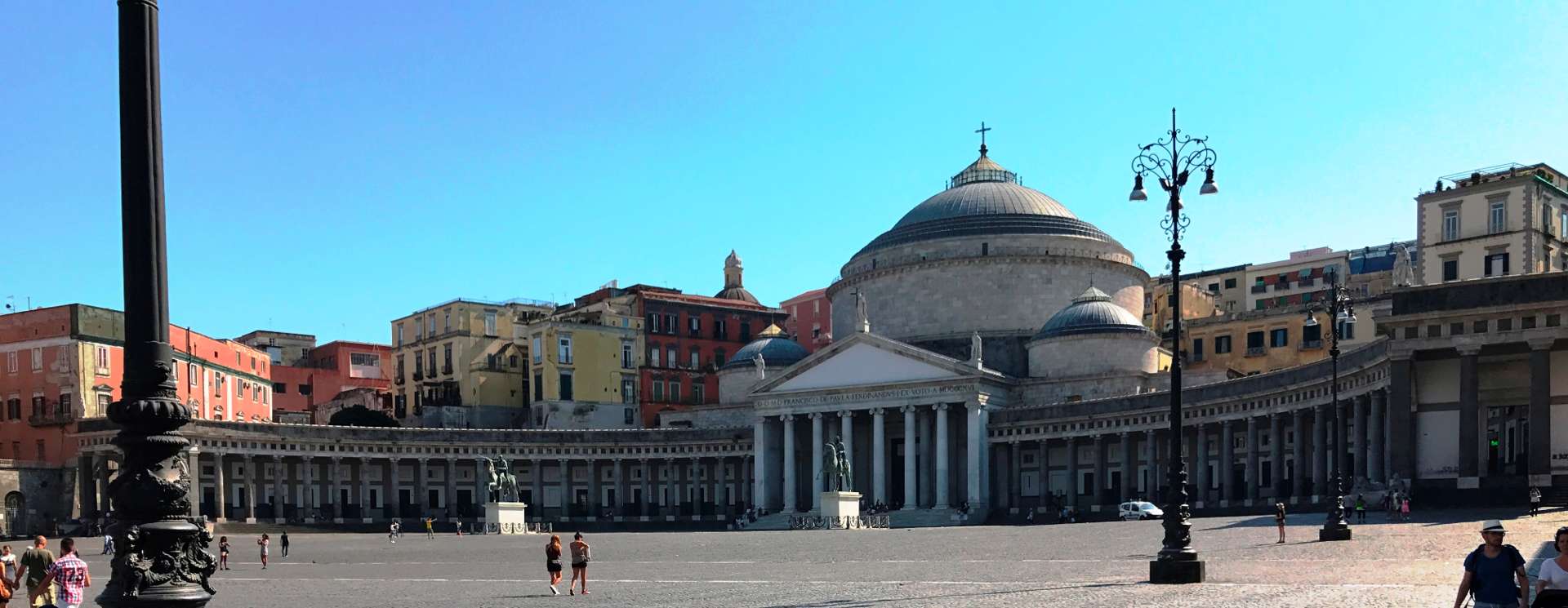
Breakfast and Beginning the Itinerary in the Metropolitan City of Naples
After the Italian breakfast – coffee and a cornetto (croissant) served at the hotel we started our itinerary through the Metropolitan City of Naples towards Via dei Tribunali. We had in mind to visit Naples historic center with its narrow streets and some of its many churches and then to climb Vomero hill. As we exited the hotel, we went left on Via Cesare Rosaroll. Then at the second intersection, we got to Piazza San Francesco di Paola. We turned left and passed through Porta Capuana.
Porta Capuana – Historic Gateway of Naples
Porta Capuana is one of the most historic and notable gates in the city of Naples. It is located in the eastern part of the city center. It serves as a symbolic and architectural landmark. The gate connects the heart of old Naples with the newer parts of the city. Porta Capuana was built in 1484 during the reign of King Ferdinand I of Aragon. The gate is primarily built in a Renaissance style, though it has some Gothic elements. Its name, “Porta Capuana,” derives from its role as the main gateway to the ancient Roman city of Capua. This city was located to the north of Naples.
Today, Porta Capuana is a popular spot for both tourists and locals. It provides access to the vibrant markets of Naples’ historic center. The narrow streets and ancient architecture further enhance the experience.

Via dei Tribunali – Heart of the Metropolitan City of Naples
We continued our Naples itinerary straight ahead along the walls of the medieval Castel Capuano. We turned left on Via Concezio Muzy and surrounded Castel Capuano. In front of the castle, we turned right on Via dei Tribunali.
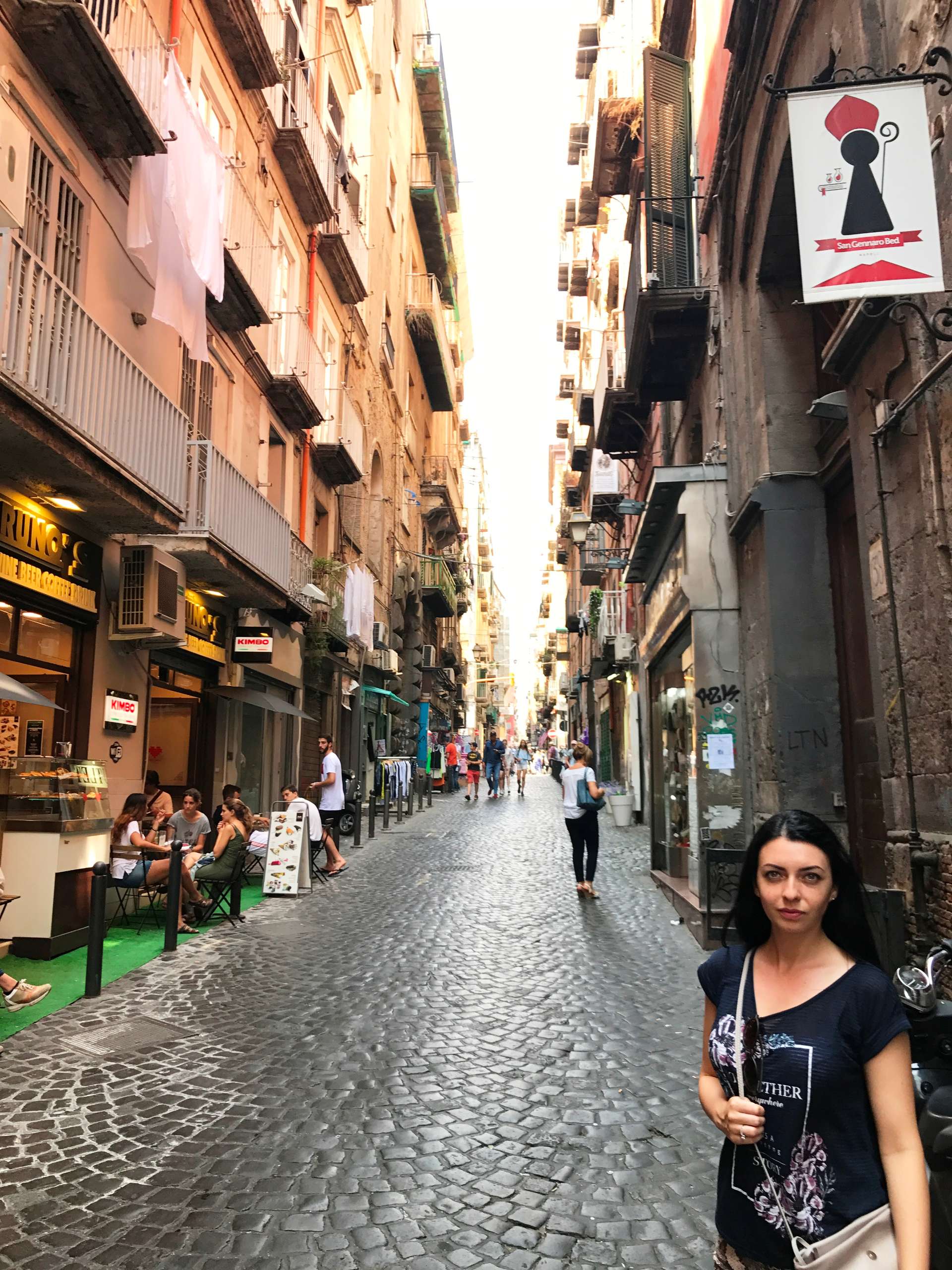
Via dei Tribunali is one of the most famous and historic streets in the Metropolitan City of Naples. This narrow, vibrant street is located in the heart of the city’s historic center. It runs east to west. The street offers a glimpse into the rich culture, history, and daily life of Naples.
History and Character of Via dei Tribunali
It has ancient origins. Via dei Tribunali follows the path of the ancient Roman road called the “decumanus major.” This road was one of the main thoroughfares of the Roman city of Neapolis (modern Naples). This layout dates back to around the 6th century BC. The street gets its name, “Via dei Tribunali,” from its medieval role. It was home to several court buildings (tribunals). The street also hosted administrative offices of the city.
Via dei Tribunali was a central artery in the city. It connected important religious and civic buildings. These included the Cathedral of Naples (Duomo di Napoli).
Via dei Tribunali is a bustling street. It is full of life with a constant flow of people. Locals running errands and tourists exploring the historic center of Naples fill the street. Street musicians, vendors, and the energy of the Neapolitan people make this area particularly lively.
Street Life and Food in the Metropolitan City of Naples
At the beginning of our Naples itinerary on Via dei Tribunali we found a fish store on the left: Pescheria O’Puzzulano.
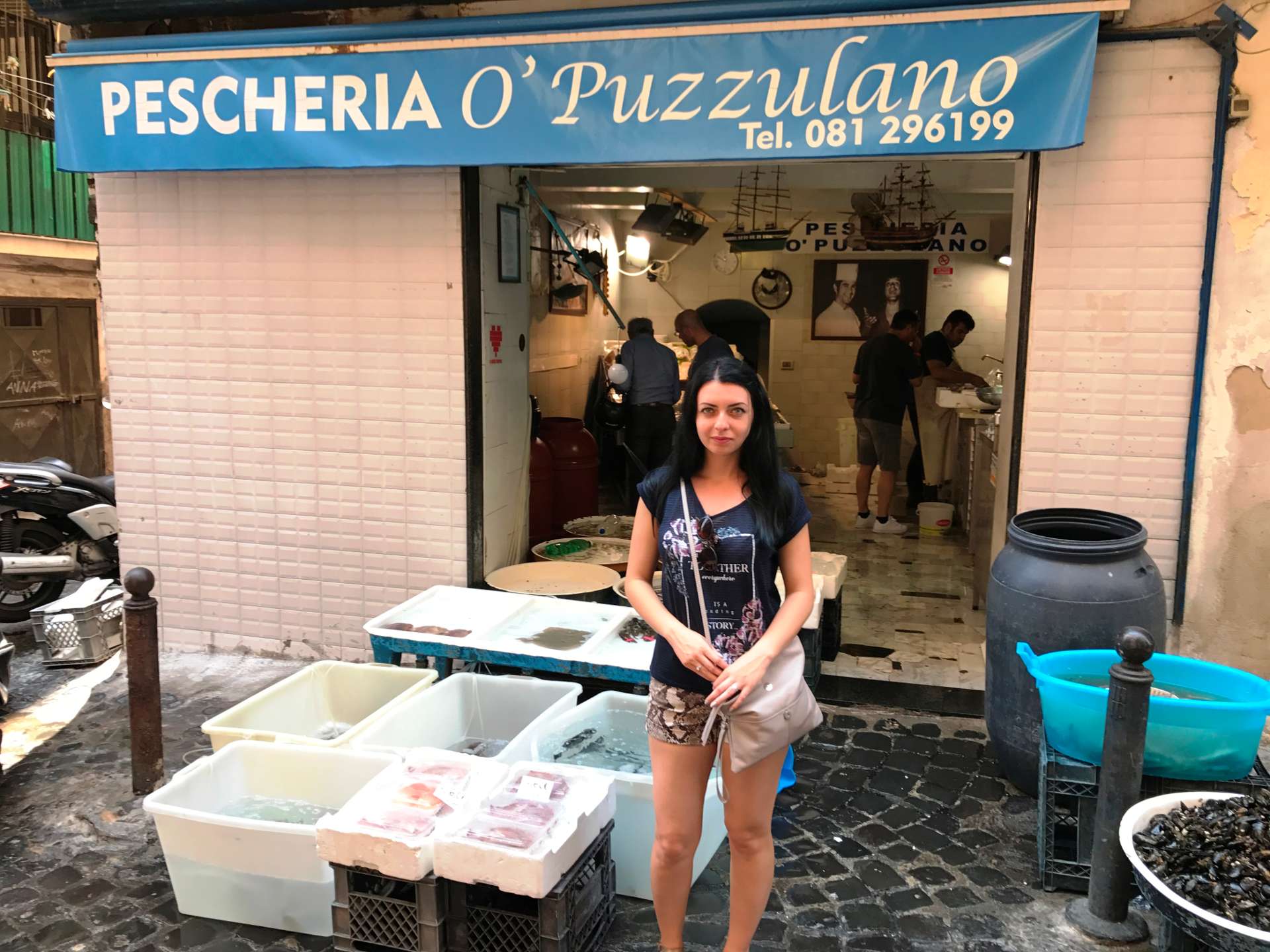
Via dei Tribunali is famous for its vibrant street life and street food stalls. It is home to some of Naples’ best-known pizzerias. These include Pizzeria Sorbillo, famous for its traditional Neapolitan pizza. Another iconic spot is Di Matteo, often crowded with both locals and tourists. The street is full of with small artisan workshops, bakeries, and cafes, where visitors can experience authentic Neapolitan craftsmanship and cuisine.
Obelisco di San Gennaro – Symbol of Faith in the Metropolitan City of Naples
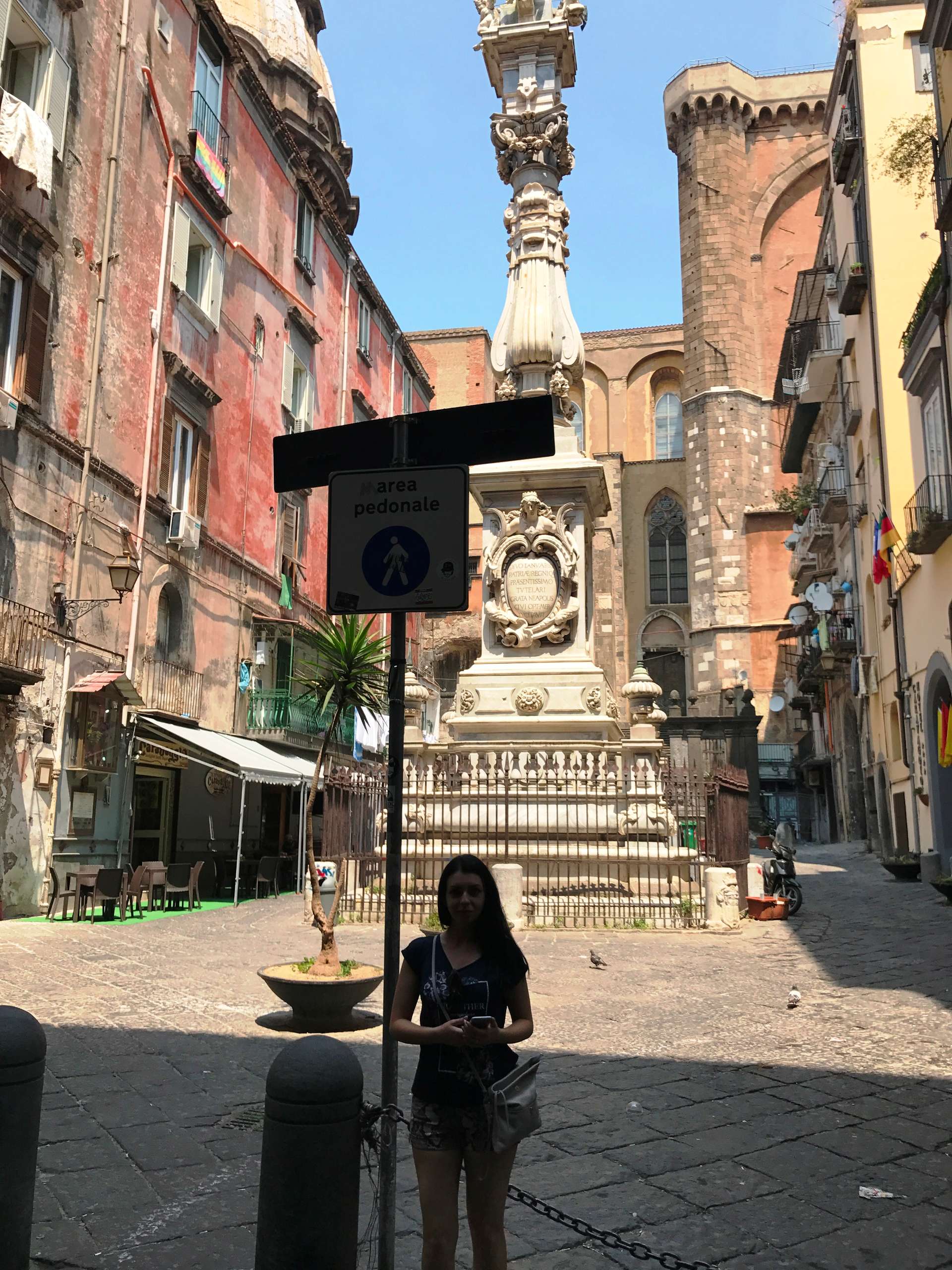
Then we continued ahead and stopped at the Obelisco di San Gennaro, located on the right side of the street.
The obelisk is a masterpiece of Baroque art, made of marble and decorated with various statues and reliefs. At the top of the obelisk stands a statue of San Gennaro himself in a blessing pose. He holds a bishop’s mitre and a vial of his miraculous blood. San Gennaro is the protector of the city. His legacy plays a central role in Neapolitan culture and faith. The monument is closely related to the “Miracle of San Gennaro.” This is a significant religious event in Naples. The blood of the saint, preserved in a vial, liquefy three times a year and this way it offers protection to the city.
Duomo di Napoli
The Obelisco di San Gennaro is an iconic monument. It is richly adorned and dedicated to the city’s patron saint, San Gennaro (Saint Januarius). It stands in the historic center of Naples, in the Piazza Riario Sforza. Also, it is located just outside the Cathedral of Naples (Duomo di Napoli). This is where the relics of the saint are preserved. In the 17th century the people of Naples erected the obelisk in gratitude to San Gennaro. They say the saint miraculously saved the city from the catastrophic eruption of Mount Vesuvius in 1631.
Via dei Tribunali encapsulates the essence of Naples. It features narrow alleys and ancient buildings. The street is a place where sacred and everyday life mingle. It is one of the best places to experience the layered history and culture of the city.

On Via dei Tribunali there are several historic churches that showcase the rich religious and artistic heritage of Naples. This street is just in the heart of the historic center of Naples and it’s also a UNESCO World Heritage Site. It connects many other important streets and squares, such as Piazza San Gaetano. Spaccanapoli is another famous ancient street that runs parallel to Via dei Tribunali.
Via San Gregorio Armeno – The Christmas Alley of Naples
Continuing our itinerary through the historic center of Naples we found the Monumento a San Gaetano on the right we went left on Via S. Gregorio Armeno – the Christmas Alley, and we finally found the Chiesa di San Gregorio Armeno on the left.
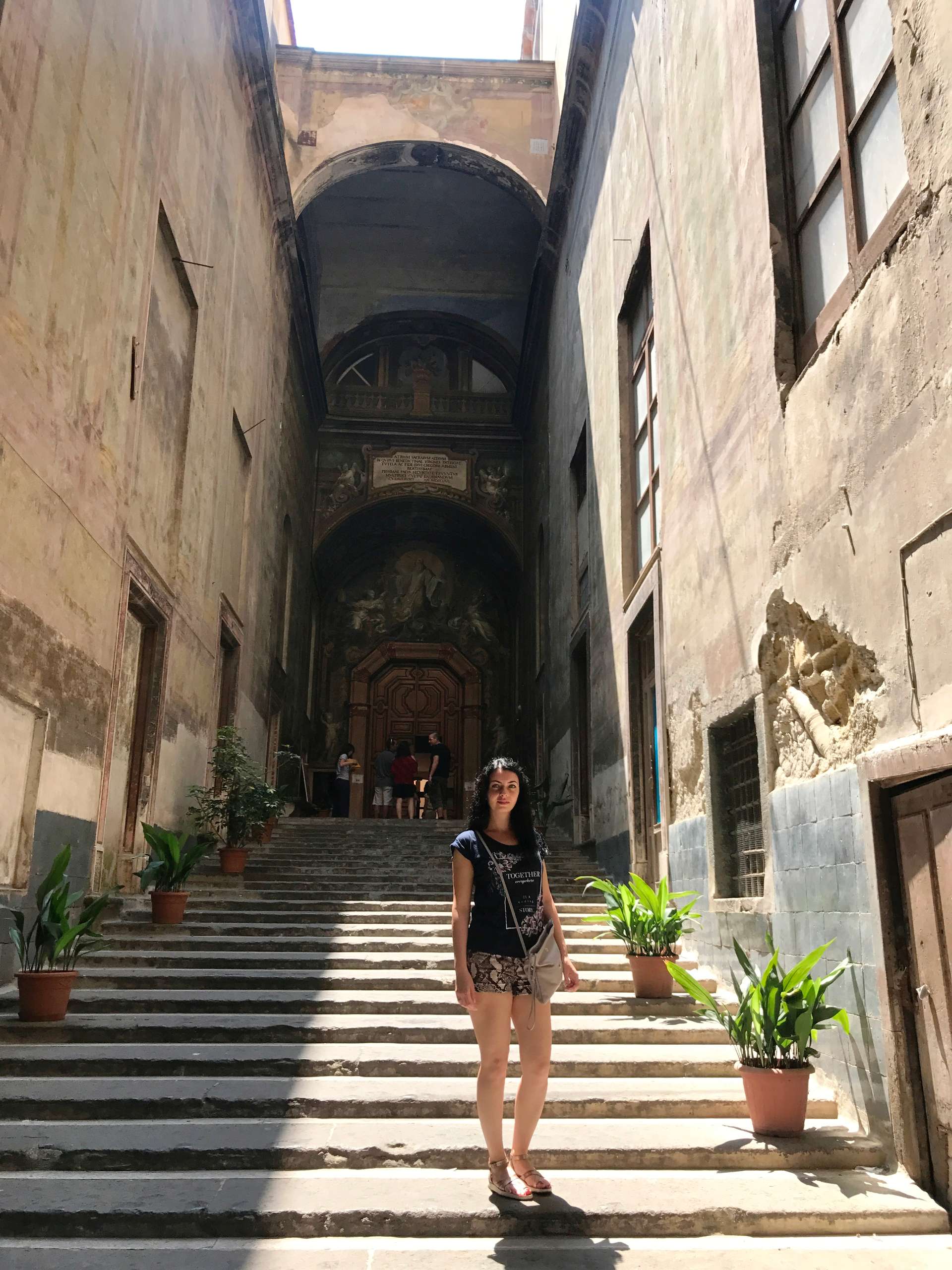
The Chiesa di San Gregorio Armeno is one of the most significant and beautiful churches in Naples. It is Located on the famous Via San Gregorio Armeno, famous for its artisan workshops and an important stop on our Naples itinerary. It is also famous for traditional nativity scene makers.
Chiesa di San Gregorio Armeno – A Baroque Gem
This church is a stunning example of Naples Baroque architecture. It is a site of deep religious significance. The site where the church stands has ancient roots. Originally, it was home to a Roman temple dedicated to the goddess Ceres. Later, it was eventually transformed into a Christian place of worship. The church itself was established in the 8th century by nuns who fled the Byzantine iconoclastic persecutions.
The church is dedicated to Saint Gregory of Armenia (San Gregorio Armeno). He was a revered 4th-century bishop known for spreading Christianity in Armenia. His relics were brought to Naples in the 11th century, and the church became so a prominent religious center.
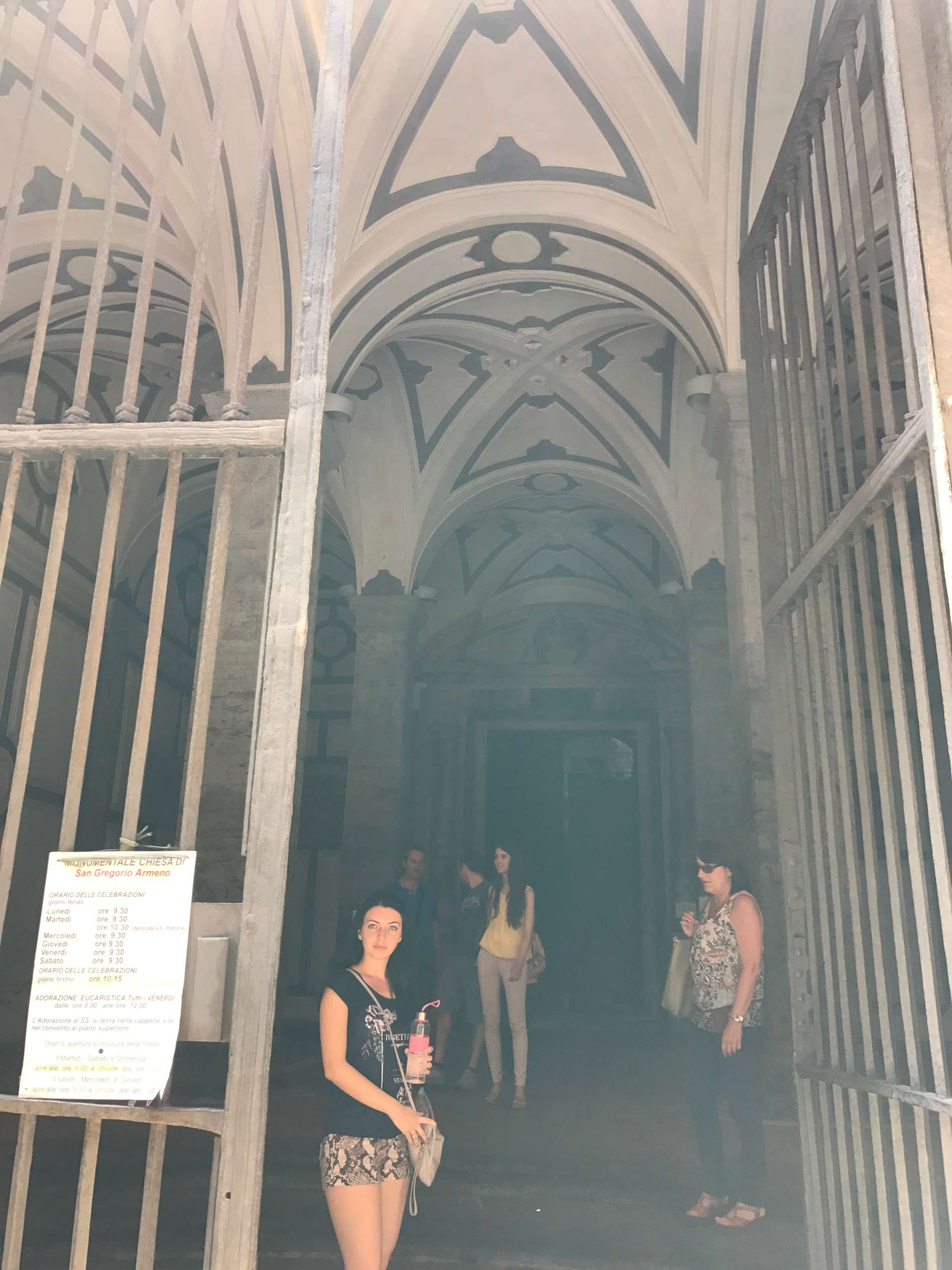
The church’s simple exterior contrasts with its ornate interior, a hallmark of Baroque design in Naples. Inside, the church is a breathtaking display of Baroque art. The ceiling features magnificent frescoes, while the walls are rich in gilded stucco and intricate marble decorations. In addition to Saint Gregory, the church also houses the relics of Saint Patricia, a 7th-century saint who is particularly venerated in Naples. Saint Patricia’s blood is believed to liquefy, similar to the miracle of San Gennaro, and this phenomenon is celebrated by the local faithful.
The church is located on the famous Via San Gregorio Armeno, also known as the “Christmas Alley” of Naples. The name comes from the numerous artisan shops that sell handcrafted nativity scenes, a Neapolitan tradition. This street is also one of the most popular tourist destinations in Naples, especially during the Christmas season, and the church adds a significant spiritual element to the area.
Street Food in the Metropolitan City of Naples – Pizza Fritta
We then got back to Via dei Tribunali and searched for something to eat. We bought some pizza fritta from Pizzeria I Decumani before continuing our itinerary through the city center of Naples. At I Decumani, the pizza fritta is part of a rich menu of street‑food style offerings. It’s a half‑moon or pouch of Neapolitan dough, deep‑fried to a golden‑airy crisp and generously stuffed. The stuffing typically includes ricotta, cicoli (pork cracklings), provola, and tomato. Also, they serve it hot so the fillings stay wonderfully creamy without being greasy.
After we passed by the Gino e Toto Sorbillo pizzeria located on the right side of the street, we turned left on Via Nilo. At the first intersection, with Via San Biagio dei Librai, one of Naples’ most famous streets which is part of the ancient Spaccanapoli, the street that splits the city in half, we got to Piazzetta Nilo and found the Statua del Dio Nilo.
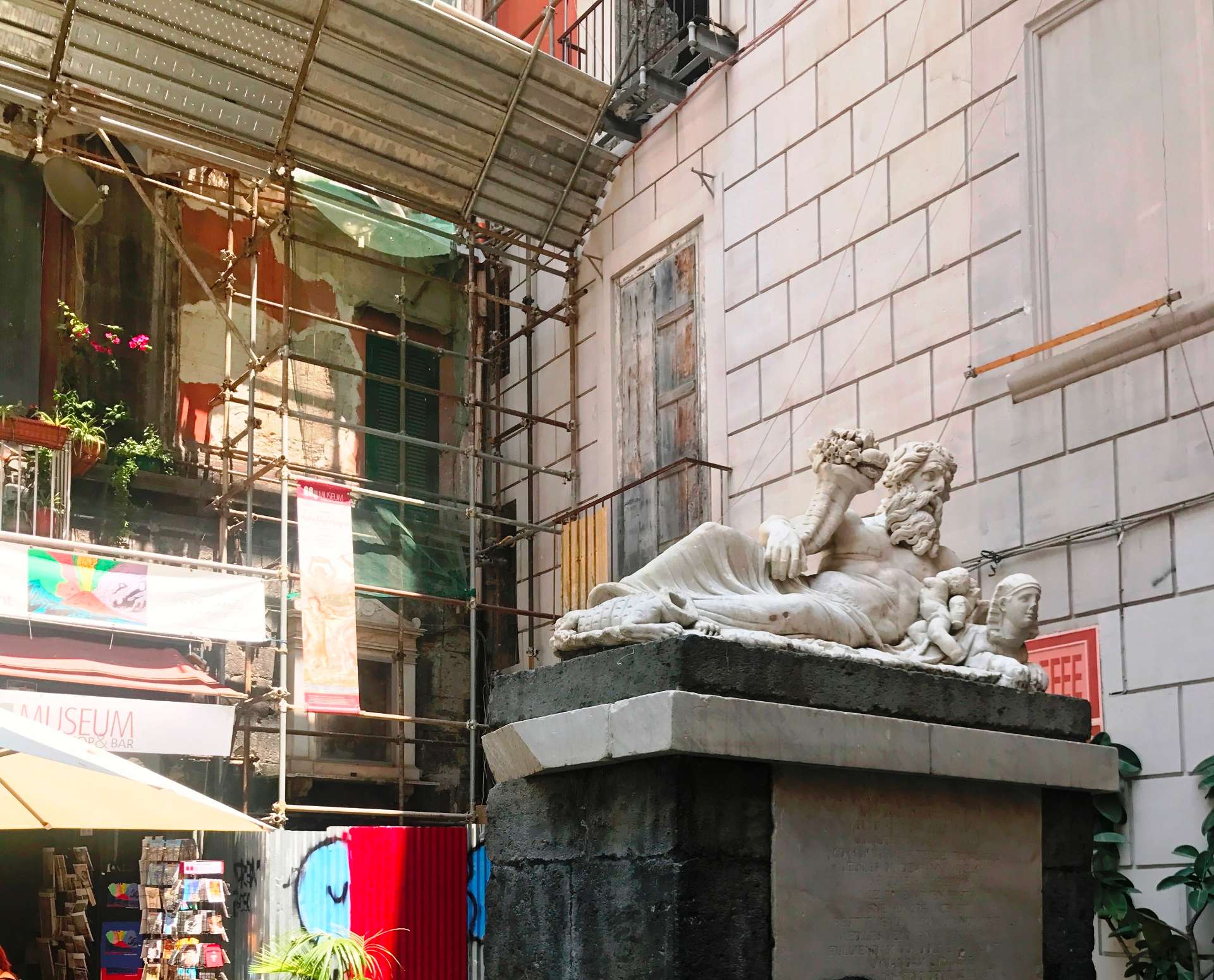
Piazzetta Nilo with its Statue of the Nile God
Piazzetta Nilo is a small but historically rich square located in the heart of the historic center of Naples. The square derives its name from the Nile River and was once at the heart of the “Alexandrian” quarter of Neapolis. This quarter was home to a large Egyptian community that settled in Naples during the Roman period, reflecting the city’s long-standing role as a crossroads of cultures and civilizations.
The central feature of Piazzetta Nilo is the Statue of the Nile God (Statua del Dio Nilo), also known as the “Body of Naples.” This ancient Roman statue represents the Nile River god as an old man reclining on a rock. Originally sculpted in the 2nd or 3rd century AD, the statue was a tribute from the Egyptian merchants and residents who lived in the area. The statue had been lost and buried for centuries, with only its head visible. It was finally rediscovered and fully restored in the 17th century. The presence of the Nile God statue in the heart of Naples highlights the city’s historical role as a melting pot of different cultures, especially during the Roman Empire when Naples was a major port city with a significant foreign population.
Today, Piazzetta Nilo is full of cafes, bars, and small shops, thus giving it a lively and welcoming atmosphere. Both locals and tourists frequent this area. They come to admire the statue, explore nearby attractions, or simply enjoy the lively ambiance of the historic center.
Piazza San Domenico Maggiore and Cappella Sansevero
Afterwards we continued our Naples itinerary walking ahead on Spaccanapoli towards west. We arrived in Piazza San Domenico Maggiore with its Obelisco di San Domenico.
We visited Cappella Sansevero (also known as the Sansevero Chapel Museum). It is one of the most fascinating and mysterious artistic sites in Naples and therefore a highlight of our itinerary.
This small Baroque chapel in the heart of the historic city center of Naples is famous for its extraordinary sculptures, especially the “Veiled Christ” (Cristo Velato) by Giuseppe Sanmartino, which is one of the greatest masterpieces of sculpture in the world. Carved from a single block of marble, this sculpture depicts Christ lying dead, covered by a translucent shroud entirely made of marble. He sculpted the veil is so finely it looks like real fabric — a technical marvel that has mystified visitors for centuries. In the underground chamber, there are two “anatomical machines”, mysterious skeletons showing the full circulatory system, preserved in astonishing detail. Moreover, the chapel is full of alchemical, Masonic, and religious symbols. You cannot take pictures inside, in order to protect the artworks from damage.
Obelisco dell’Immacolata – Baroque Splendor of the Metropolitan City of Naples
We eventually returned to Spaccanapoli and continued our Naples itinerary towards west and then we reached Piazza del Gesù Nuovo and first we noticed the church and the obelisk.
The marble obelisk is a stunning example of Neapolitan Baroque art and architecture. It features a richly decorated and highly intricate design, with sculptural elements that celebrate the Virgin Mary and her role in the Catholic faith. It is about 30 meters high and adorned with various statues, reliefs, and inscriptions. At the very top of the obelisk stands a majestic bronze statue of the Virgin Mary. Every year on December 8th, the Feast of the Immaculate Conception, the obelisk becomes the focal point for religious celebrations in Naples.
The Obelisco dell’Immacolata / Obelisk of the Immaculate Conception, is one of the most iconic Baroque monuments in Naples and also a highlight of our itinerary. It is located in Piazza del Gesù Nuovo, right in front of the Church of Gesù Nuovo. This impressive obelisk stands as a symbol of Naples city’s deep devotion to the Virgin Mary. The Franciscan order erected he obelisk between 1747 and 1750, during the height of the Baroque period, to honor the Immaculate Conception of the Virgin Mary.

Piazza del Gesù Nuovo is one of Naples’ most vibrant and historic squares. The piazza is surrounded by important landmarks, including the Church of Gesù Nuovo and the Basilica of Santa Chiara.
Church of Gesù Nuovo – A Unique Facade and Baroque Interior in Naples
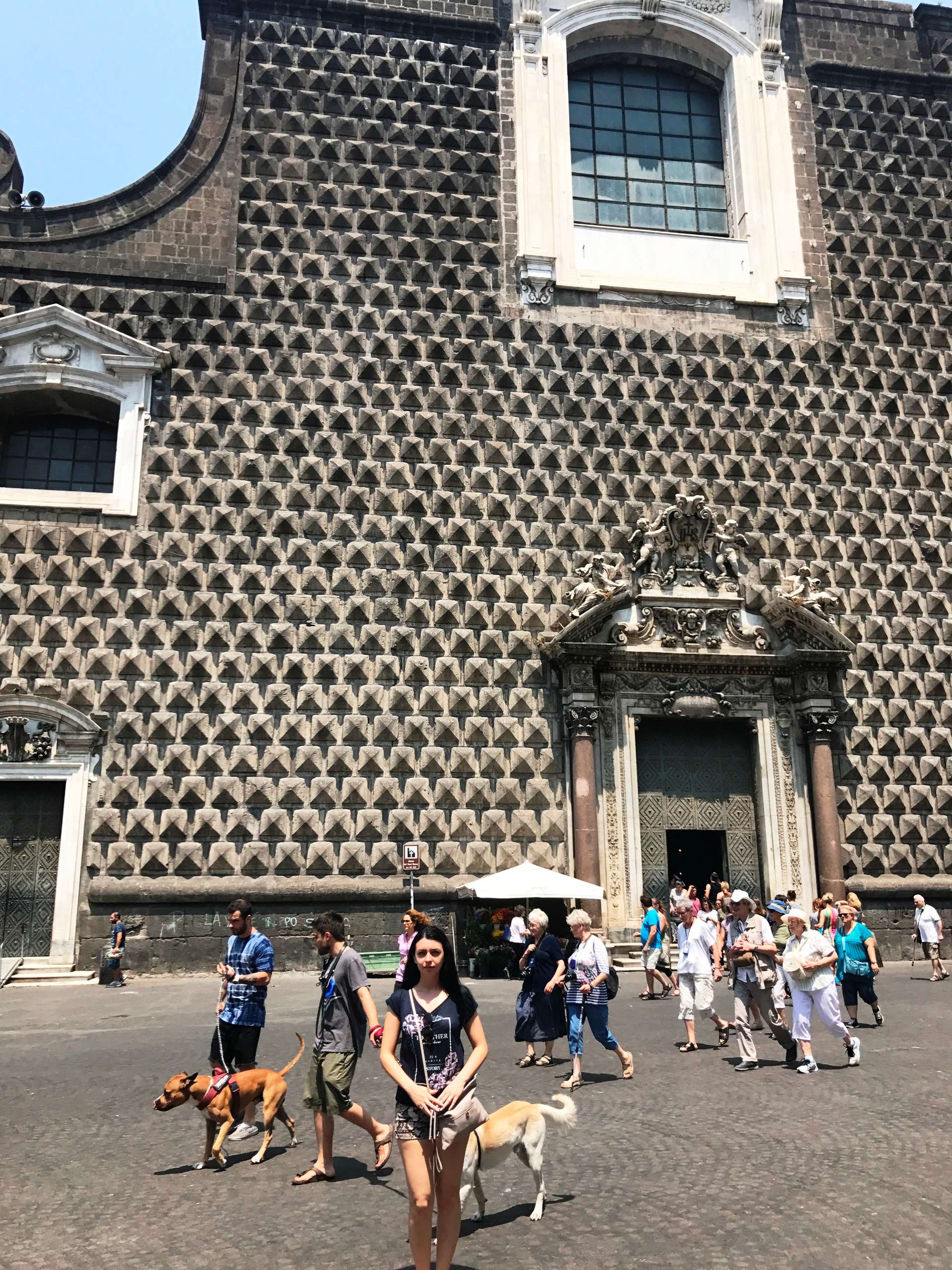
In 1470 Roberto Sanseverino, Prince of Salerno, originally built the Church of Gesù Nuovo as a Renaissance palace. The palace featured a unique diamond-pointed ashlar facade. In 1584, the Jesuits acquired the palace and converted it into a church. Despite the transformation, they preserved the original facade, which remains one of the most recognizable features of the building.
The facade of Gesù Nuovo is one of its most striking elements. Made of grey piperno stone, it features a distinctive diamond-pointed ashlar pattern. The facade is also inscribed with mysterious symbols that were once thought to be decorative but have since been interpreted as musical notes, potentially creating a melody. The interior of the church is a masterpiece of Baroque art and architecture. The ceiling has some magnificent frescoes depicting scenes from the life of Christ and also other religious themes. The side chapels are rich in intricate marble work, paintings, and sculptures. The high altar is a stunning example of Baroque art, featuring opulent marble inlays, gilded decorations, and religious imagery. It is the focal point of the church’s interior and draws the eye upward towards the grand dome.
The Church and Monastery of Santa Chiara
Next on our Naples itinerary was The Church of Santa Chiara, with its Gothic architecture and famous cloister, located nearby.
The Church of Santa Chiara (Italian: Chiesa di Santa Chiara) is one of the most important and historically rich religious sites in Naples. It’s part of a larger monastic complex in Naples – the Monastery of Santa Chiara, which includes a church, a monastery, a convent, a museum, and one of the most stunning cloisters in southern Italy. Built between 1310 and 1340 by King Robert of Anjou and his wife Sancia of Majorca, the church was intended to serve as the burial place for the Angevin royal family in Naples. It was originally constructed in Provençal-Gothic style, but after heavy damage during World War II, it was restored to reflect its original medieval simplicity, removing later Baroque additions.
The Majolica Cloister (Chiostro delle Clarisse) is the most famous part of the Church of Santa Chiara — a true hidden gem of Naples. Built in the 18th century and designed by Domenico Antonio Vaccaro, it features vibrant hand-painted majolica tiles that decorate the columns and benches, depicting bucolic scenes, mythological imagery, and floral patterns. Moreover, orange trees and flower beds create a peaceful oasis in the heart of the city.
Sfogliatelle and Babbà
From Piazza Gesù Nuovo we went forward West on Spaccanapoli until we got to Via Toledo and walked South. Next on our Naples itinerary we took the metro L1 from Toledo for a stop to Municipio. From Piazza Municipio we went South West on Via Giuseppe Verdi and at the second intersection we turned right on Via Santa Brigida and arrived at Galleria Umberto I.
A quick stop on our itinerary: we went to Mary’s Sfogliatella / La Sfogliatella di Mary to eat something sweet and traditional in Naples: some ice cream, Sfgliatelle and Babbà – my favorite. Sfogliatelle is a sweet pastry, usually found in two varieties – called riccia and frolla, often eaten as breakfast. And Babbà is a sort of sweet bread containing some rum and often decorated with cream and strawberries.

Elegance in the Heart of the Metropolitan City of Naples -Galleria Umberto I
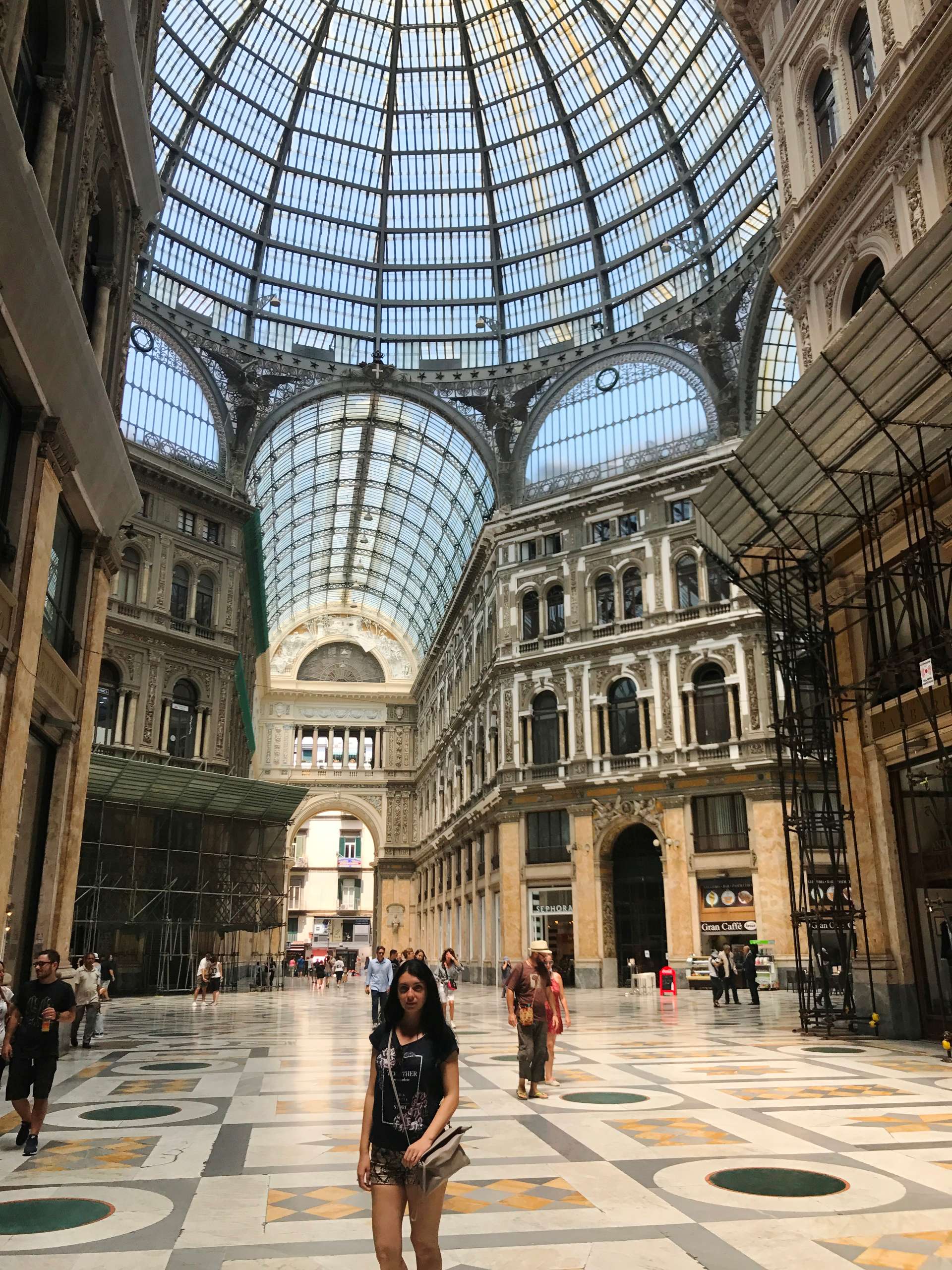
Galleria Umberto I is one of Naples’ most famous architectural landmarks and also a symbol of the city’s late 19th-century urban renewal. Located near the Teatro di San Carlo and the Royal Palace, this grand shopping gallery serves as both a cultural monument and a bustling commercial center in Naples, blending architectural elegance with modern-day urban life.
The Galleria was built between 1887 and 1890 as part of the “Risanamento” project, a major urban redevelopment plan aimed at revitalizing Naples after a period of poor urban conditions and also widespread disease.
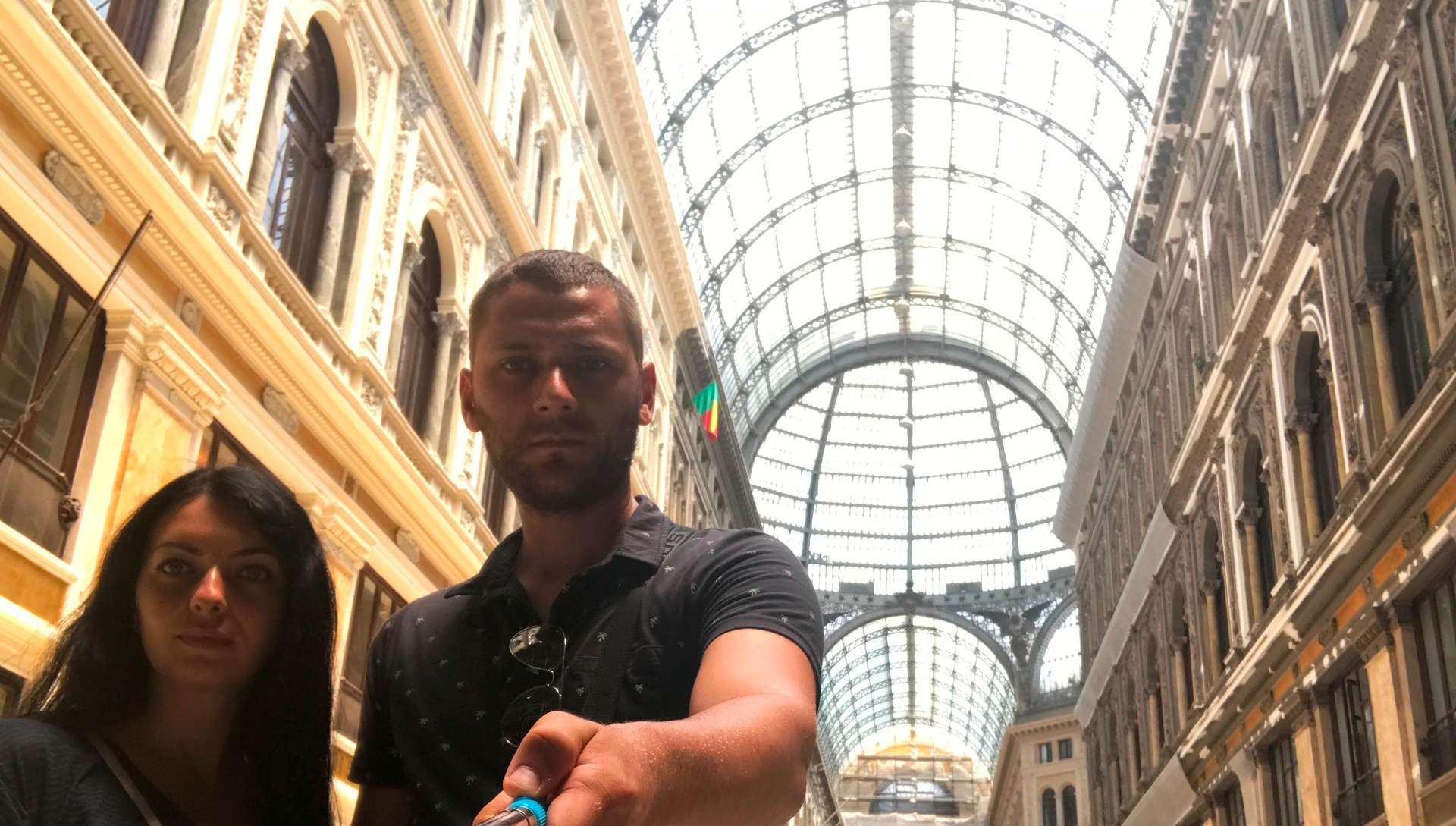
Galleria Umberto I was modeled after other grand European shopping arcades, particularly the Galleria Vittorio Emanuele II in Milan. It was designed to be a symbol of Naples’ modernization and, moreover, a showcase of its architectural grandeur.
The architecture of Galleria Umberto I blends both Neoclassical and Baroque elements, creating a majestic and imposing space. One of the most striking features of the Galleria is its immense glass and iron dome, which rises to a height of 56 meters. The floor of the Galleria is another remarkable aspect of its design. It’s pavement has intricate mosaics that depict the zodiac signs, adding both a touch of elegance and symbolism to the space.

The Galleria has four arcades, each adorned with columns and pilasters, leading to a variety of high-end shops and cafes and restaurants. The ground level of the gallery is for commercial activities, while the upper floors once housed offices and private residences.
Galleria Umberto I has long been a social hub for Naples. Today, it remains a popular meeting point for both locals and tourists.
Other Highlights in the Metropolitan City of Naples
The Galleria is one of Metropolitan City of Naples’ top tourist destinations due to its architectural splendor and also its central location near other major attractions, such as Piazza del Plebiscito, the Royal Palace, and Castel Nuovo (Maschio Angioino).
Nearby Teatro din San Carlo is one of the oldest and most prestigious opera houses in the world. But we skipped the visit as we wanted to get in time to Vomero to visit Castel Sant’Elmo.
Out of Galleria Umberto I and back in Via Toledo we went North, passed by a Zara store and then turned left at the first intersection and got to Piazzetta Duca d’Aosta. There we found the Augusteo funicular station.
Funicular trip to Castel Sant’Elmo
Next on the Naples city itinerary we took the funicular up to Piazza Fuga in Vomero neighborhood. From there we walked 10 minutes to the castle. Then we turned right on Vis Alessandro Scarlatti. At the second intersection we saw the other funicular station, Funicolare Montesanto, we turned right after the station, then turned right again and then left at the first intersection and finally got to Castel Sant’Elmo.

Castel Sant’Elmo panoramic views of Naples
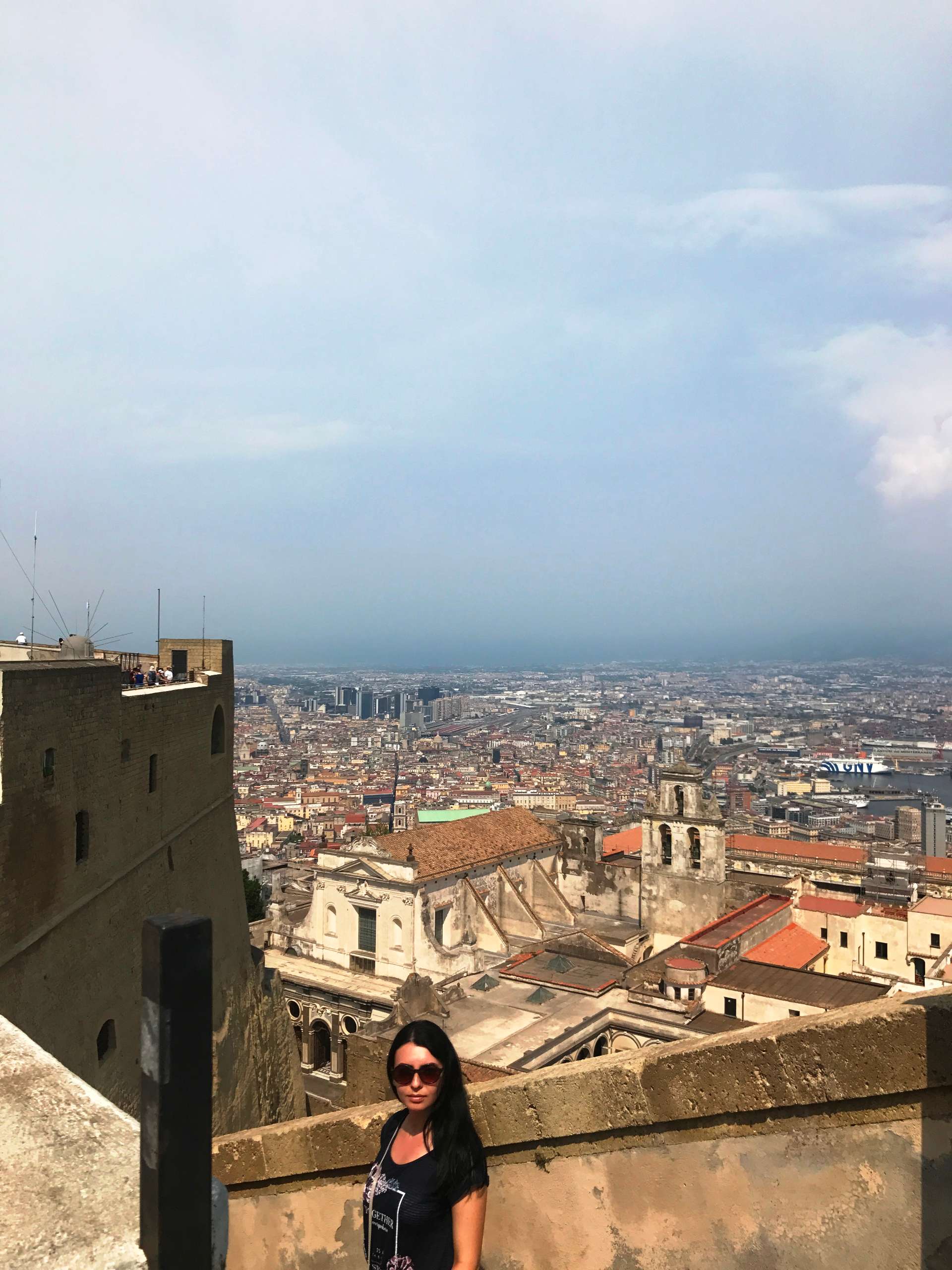
Castel Sant’Elmo is a massive medieval fortress located atop the Vomero hill in Naples. Offering breathtaking panoramic views of the city and the Bay of Naples, it is therefore one of the most iconic and also strategically important landmarks in Naples’ history. The site in Vomero where Castel Sant’Elmo stands has been fortified since ancient times. The original structure, known as Belforte, was built in 1275 during the reign of Charles of Anjou. However, it was in the early 16th century under Spanish rule that the fortress as we know it today began to take shape. Castel Sant’Elmo played a crucial role in the defense of Naples due to its elevated position on Vomero hill, which allowed for control over the entire city and the surrounding coastline. Throughout its history, it was used for military purposes.
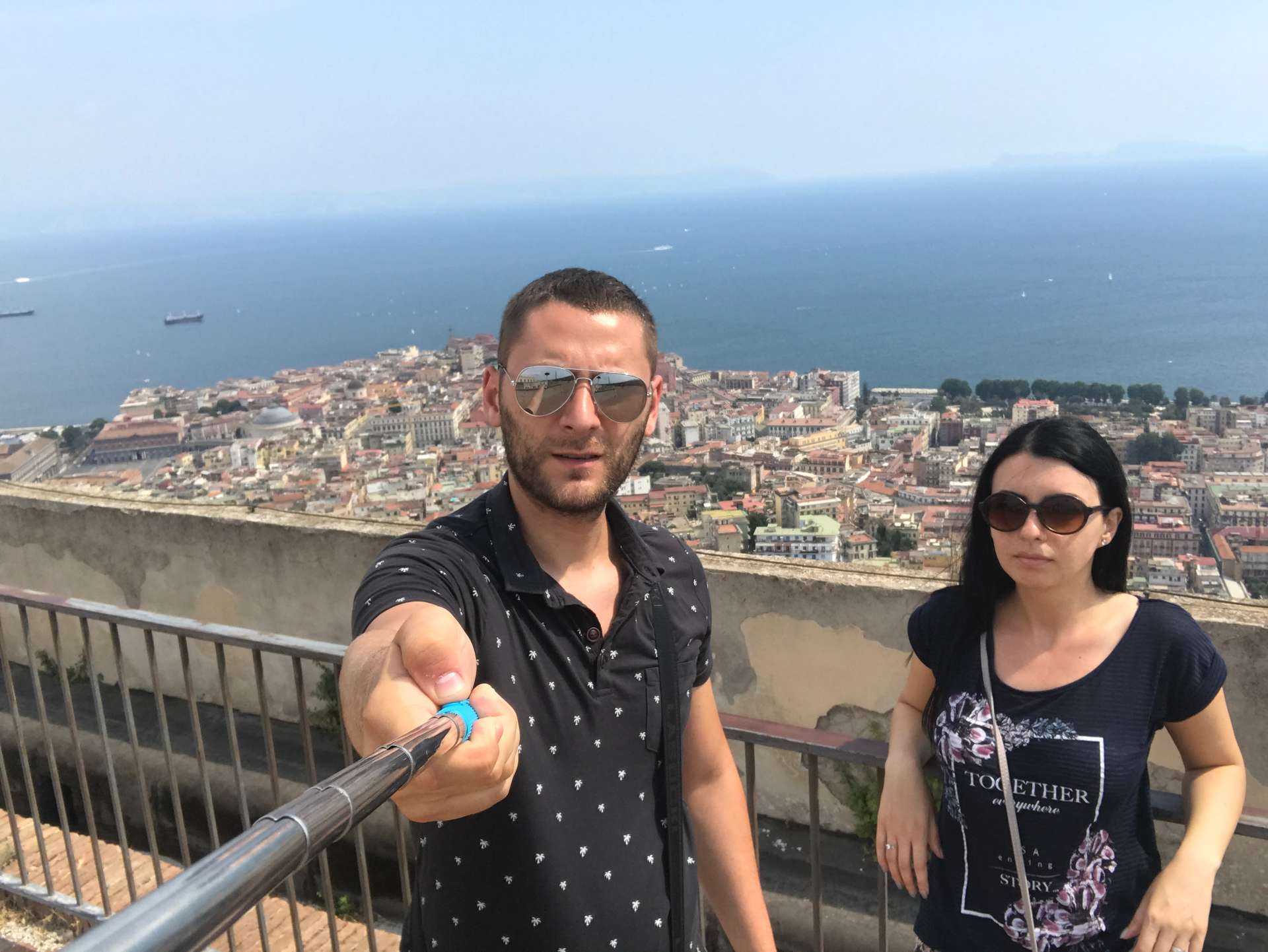
One of the most compelling reasons to visit Castel Sant’Elmo and Vomero hill is the panoramic view it offers. From the castle’s ramparts, visitors can enjoy sweeping vistas of Naples, the Bay of Naples, Mount Vesuvius, the islands of Capri and Ischia, and even the Sorrento Peninsula on clear days.

The castle has a distinctive star shape with six points, maximizing its defensive capabilities, thus allowing defenders to cover all approaches with crossfire. Castel Sant’Elmo is built from tuff, a local volcanic stone, giving it a solid and also imposing presence on the Vomero hill.
Afterwards, on our way back to the funicular station we had a look at the streets and the atmosphere of Vomero. We even witnessed a wedding celebration at a church in the area.
Exploring the Vomero District
Vomero is easily accessible from the lower parts of Naples thanks to its funiculars (including the Funicolare di Chiaia and Funicolare di Montesanto) and the Metro Line 1, which has stops at Piazza Vanvitelli and other key locations in the neighborhood.
Vomero is one of Naples’ most vibrant and affluent neighborhoods, perched on a hill overlooking the historic center of the city. Famous for its elegant architecture, scenic views, and bustling commercial streets, Vomero offers a unique blend of cosmopolitan energy and tranquility, making it a popular destination for both locals and visitors of Naples. Vomero’s design features wide streets, parks, and open spaces, reflecting a more modern urban planning approach than the narrow and winding streets of the historic center of Naples. Its architecture is a mix of Liberty style (Italian Art Nouveau), neoclassical buildings, and also more contemporary structures. But one of Vomero’s defining features is its elevated position, which provides spectacular views over Naples, the Bay of Naples, and also Mount Vesuvius. The neighborhood’s high vantage point makes it a popular place for scenic walks and photography.
Vomero Highlights
Vomero is home to two of Naples’ most important historical landmarks: Castel Sant’Elmo star-shaped medieval fortress and Certosa di San Martino, a former monastery, now a museum, known for its Baroque architecture and art, as well as its stunning views. There is a beautiful public park in Vomero that includes Villa Floridiana, an elegant neoclassical villa that houses Naples National Museum of Ceramics. This park in Vomero offers both peaceful green spaces and wonderful views of the Gulf of Naples.
Vomero is one of Naples’ main shopping districts. Its central streets, such as Via Alessandro Scarlatti and Via Luca Giordano, are full of fashionable boutiques, cafes, restaurants, and popular chains. This gives the neighborhood a lively, modern atmosphere, making it a favorite spot for shopping and dining. Vomero is one of the more affluent areas of Naples, with well-maintained residential buildings, elegant streets, and a generally higher standard of living compared to some other parts of the city. Its combination of residential calm and urban activity attracts a mix of families, young professionals, and students. Vomero also has a vibrant nightlife, particularly in areas like Piazza Vanvitelli and along the main commercial streets. The neighborhood’s bars and cafes are popular gathering spots in the evenings, creating a lively social scene.
In conclusion, Vomero offers a unique contrast to the historic center of Naples, with its modern layout, elegant streets, and especially its panoramic views. Therefore it provides a refreshing and upscale experience that highlights a different side of Naples.
Evening in the Metropolitan City of Naples
We took the funicular from Vomero, Piazza Fuga back to Augusteo and from there we walked to Municipio, and then we crossed the road towards the seashore and went to Naples Beverello, the Port of Naples. We visited Galleria del Mare, the shopping center located within the port. Afterwards, we went towards east to reach Molo Immacolatella Vecchia ferry terminal in order to find the pier from where the ferries depart for Capri, because we were planning a day trip to Capri the next day.
We wanted to visit also the Ovo Castle / Castel dell’Ovo, but it was getting late and we searched for a place to have dinner. So, we returned to Piazza Municipio and ate some pizza at a terrace of a trattoria in the piazza. It started raining, so we ran to the metro Municipio. Took L1 for three stops to Piazza Garibaldi and then we also visited the Shopping Gallery of Piazza Garibaldi /
Galleria Commerciale di Piazza Garibaldi (website: https://www.napolicentrale.it/) and bought an umbrella and finally walked in the rain to our hotel and so we ended our Naples itinerary.
Read On
Make sure to check out Our Metropolitan City of Naples, Amalfi Coast, Capri and Pompeii Italy visit: Day 4 to continue exploring — from hidden corners to grand vistas, there’s much more to discover. Also, you can find all our posts about Naples on this page. For more inspiration and practical tips on visiting Italy, grab our maps and travel guides and also head over to our Italy Travel Hub and Italy Bucket List — your starting point for all things Italian! And if you’re looking to expand your itinerary, don’t miss our posts on Rome and Vatican experiences, and also our day trips to Nemi, Tivoli and Riviera di Ulisse.
Thanks for reading!
Table of contents
- Breakfast and Beginning the Itinerary in the Metropolitan City of Naples
- Porta Capuana – Historic Gateway of Naples
- Via dei Tribunali – Heart of the Metropolitan City of Naples
- Duomo di Napoli
- Via San Gregorio Armeno – The Christmas Alley of Naples
- Chiesa di San Gregorio Armeno – A Baroque Gem
- Street Food in the Metropolitan City of Naples – Pizza Fritta
- Piazzetta Nilo with its Statue of the Nile God
- Piazza San Domenico Maggiore and Cappella Sansevero
- Obelisco dell’Immacolata – Baroque Splendor of the Metropolitan City of Naples
- Church of Gesù Nuovo – A Unique Facade and Baroque Interior in Naples
- The Church and Monastery of Santa Chiara
- Sfogliatelle and Babbà
- Elegance in the Heart of the Metropolitan City of Naples -Galleria Umberto I
- Funicular trip to Castel Sant’Elmo
- Evening in the Metropolitan City of Naples
- Read On
- ❓ Frequently Asked Questions (FAQ) — Day 3: Historic Naples & Vomero Views
Related:
❓ Frequently Asked Questions (FAQ) — Day 3: Historic Naples & Vomero Views
📍 1. What was the focus of Day 3 in Naples?
Day 3 was dedicated to exploring Naples’ historic center — from ancient gates and vibrant streets to Baroque churches, street food, impressive architecture, and also panoramic city views from Castel Sant’Elmo, atop Vomero hill.
🏛 2. Where did your Naples itinerary begin?
After breakfast, we walked toward Porta Capuana, the historic Renaissance gateway into Naples’ old city, and then continued onto Via dei Tribunali, a lively street packed with history, food stalls, and authentic Neapolitan culture.
🍕 3. What makes Via dei Tribunali special?
Via dei Tribunali follows an ancient Roman road and is now a bustling artery of Naples’ historic center — full of street life, music, markets, artisan shops, and, moreover, classic Neapolitan pizzerias like Sorbillo and Di Matteo.
✝️ 4. Which religious and artistic sites did you visit?
Highlights included:
- Obelisco di San Gennaro — a Baroque monument honoring Naples’ patron saint.
- Duomo di Napoli — the city’s cathedral with deep cultural significance.
- Chiesa di San Gregorio Armeno — a historic church amid the famous “Christmas Alley.”
- Obelisco di San Domenico & Cappella Sansevero — home to the breathtaking marble sculpture Cristo Velato and mysterious anatomical machines.
- Obelisco dell’Immacolata & Church of Gesù Nuovo — Baroque art and architecture in a central square.
- Church and Monastery of Santa Chiara — including the colorful Majolica Cloister.
🍴 5. What local food did you try on this day?
We enjoyed pizza fritta — deep-fried Neapolitan dough stuffed with ricotta, pork cracklings, provola, and tomato — from Pizzeria I Decumani, and later indulged in sfogliatelle and babbà desserts at Galleria Umberto I.
Tips:
🗽 6. What’s Piazzetta Nilo?
Piazzetta Nilo is a small square in Naples’ historic core, featuring the ancient Statue of the Nile God, a relic of the city’s multicultural Roman past (when an Egyptian community thrived here).
🛍 7. Did you visit any cultural or shopping spots?
Yes — we visited some modern shops on Via Toledo and afterwards we explored Galleria Umberto I, a beautifully elegant 19th-century shopping arcade near Naples’ historic core, perfect for architecture, cafés, and a quick refresh. We also visited Piazza del Plebicisto and saw Gran Caffè Gambrinus.
🚠 8. How did you reach higher viewpoints of Naples?
We took the funicular to Vomero (Piazza Fuga) and then walked to Castel Sant’Elmo, a medieval fortress offering sweeping panoramic views of Naples, the Bay of Naples, Mount Vesuvius, and even Capri on a clear day.
🏙 9. What’s special about the Vomero district?
Vomero is an elegant, elevated neighborhood with wide boulevards, parks, cafés, boutiques, and moreover, breathtaking city views — therefore a vivid contrast to Naples’ historic center.
🌧 10. How did you end your Naples itinerary?
In the evening we took the funicular back to the seafront, explored the Port of Naples (Beverello) area, scoped the ferries to Capri for our next day’s adventure, and enjoyed pizza dinner in Piazza Municipio before returning to our hotel.
Have questions or want to connect?


