
For the first half of our last full day in Italy we planned a second visit to some of the landmarks in Rome: the Spanish Steps, the Pantheon and Fontana di Trevi, and for the second half of the day, a short trip to Tivoli to see the old town and Villa d’Este gardens and fountains.
A Morning Walk Through Rome Before Our Italy Tivoli Trip
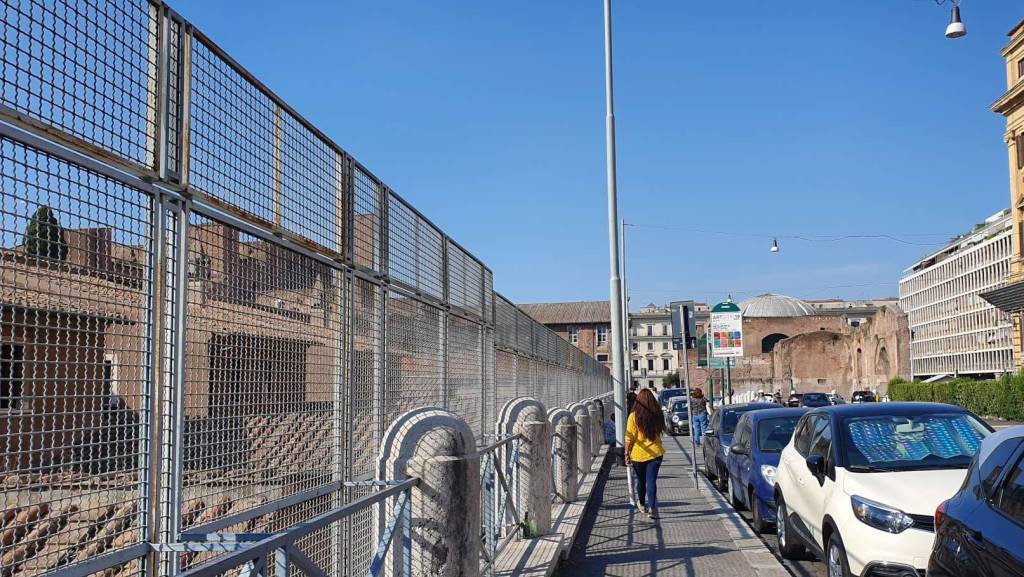
So we started our morning with a walk towards Piazza di Spagna. We walked on Via Montebello until the street ended, turned right on Via Volturno and then left on Via Cernaia. We even had a glimpse of Terme di Diocleziano – Roman Baths and Cratere Colossale from the sidewalk.
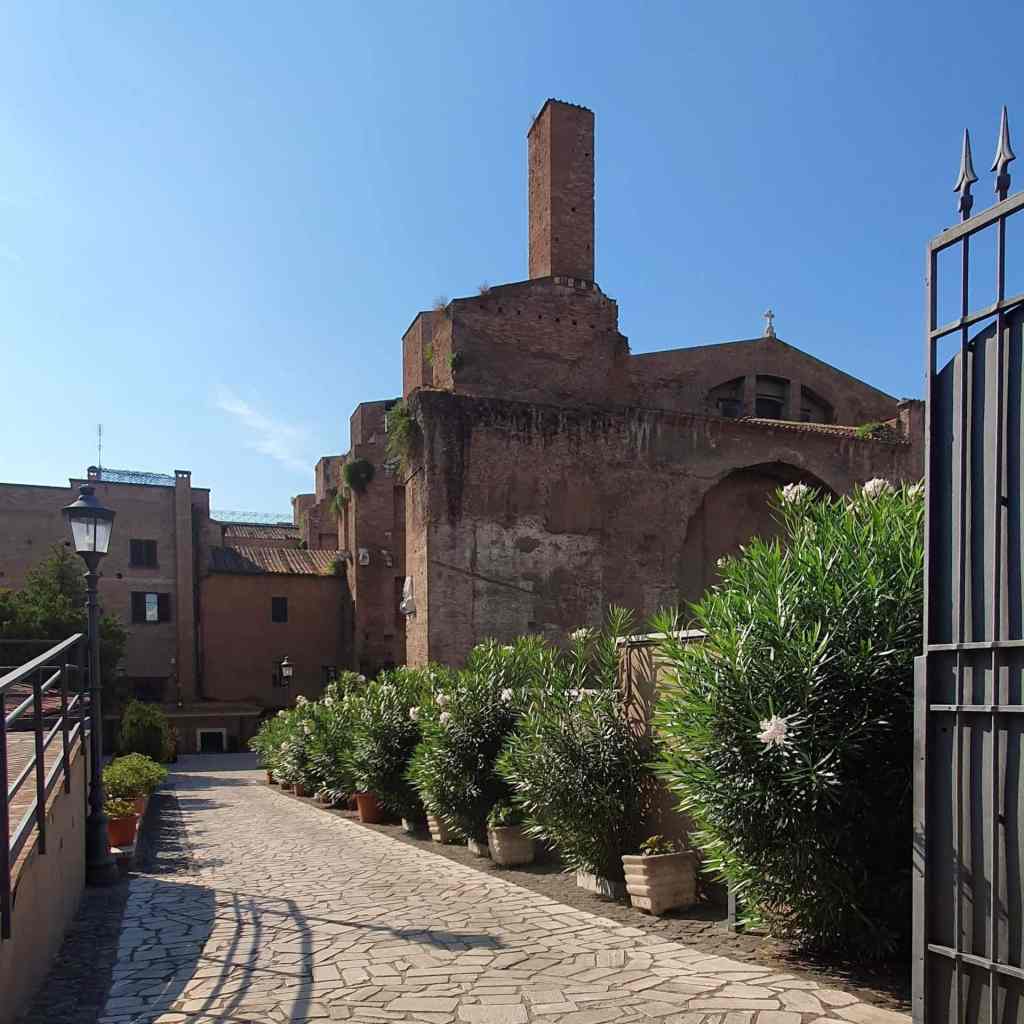
Also, at the end of Via Cernaia we saw Aula Ottagona on the right.
Discovering Rome’s Hidden Fountains and Churches
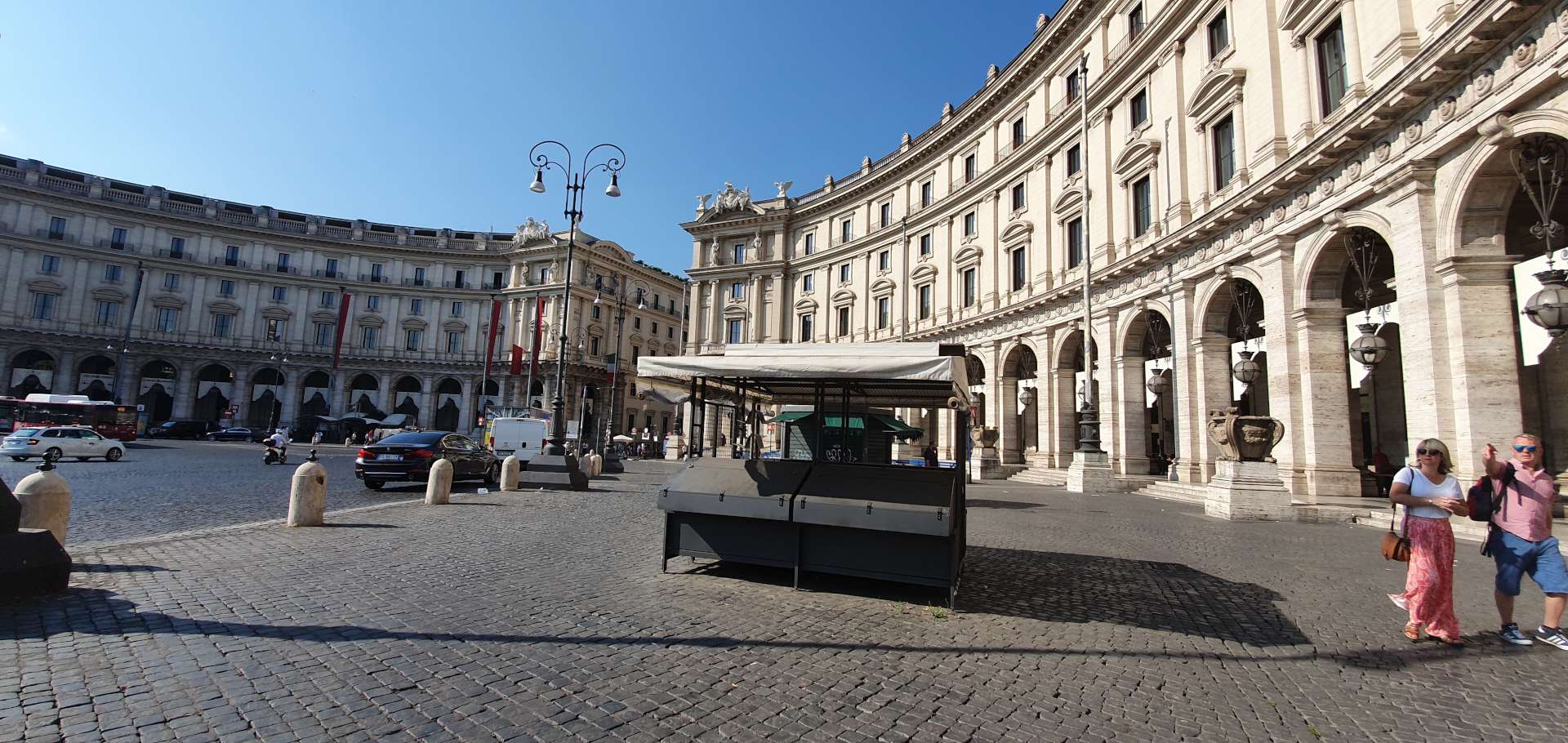
We walked slightly to the left and eventually arrived in Piazza della Repubblica. We noticed Santa Maria degli Angeli e dei Martiri church in the distance.
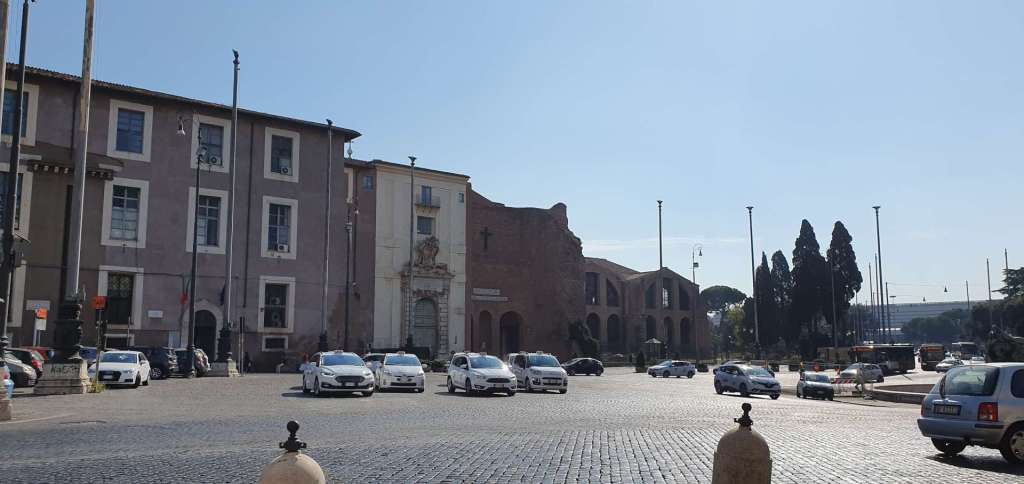
Then we had a look around Piazza della Repubblica admiring the architecture.

We then continued north on Via Vittorio Emanuele Orlando. At the first intersection we found Fontana dell’Acqua Felice (del Mose) on the right and also Chiesa di Santa Maria della Vittoria, on the right across the street.
We crossed the street to the left and arrived in Piazza di San Bernardo. Then we walked forward on Via Venti Settembre. At the second intersection there was the Crossing of Quattro Fontane (Incrocio delle Quattro Fontane). We also noticed Chiesa di San Carlino alle Quattro Fontane on the left, after passing through the intersection.


It seems an accident happened just before we got there.

From Palazzo Barberini to the Spanish Steps
We turned right at the intersection and then headed north on Via delle Quattro Fontane. Then we found Palazzo Barberini and its beautiful gardens on the right.

Further ahead, we reached Piazza Barberini with its Fontana del Tritone.

From Piazza Barberini we went left on Via del Tritone. After the Sephora store we turned right on Via Francesco Crispi. At the intersection we took the street in the middle towards north west, Via Gregoriana. By the end of the street we found Palazzo Zuccari with its door and windows shaped like heads of monsters.

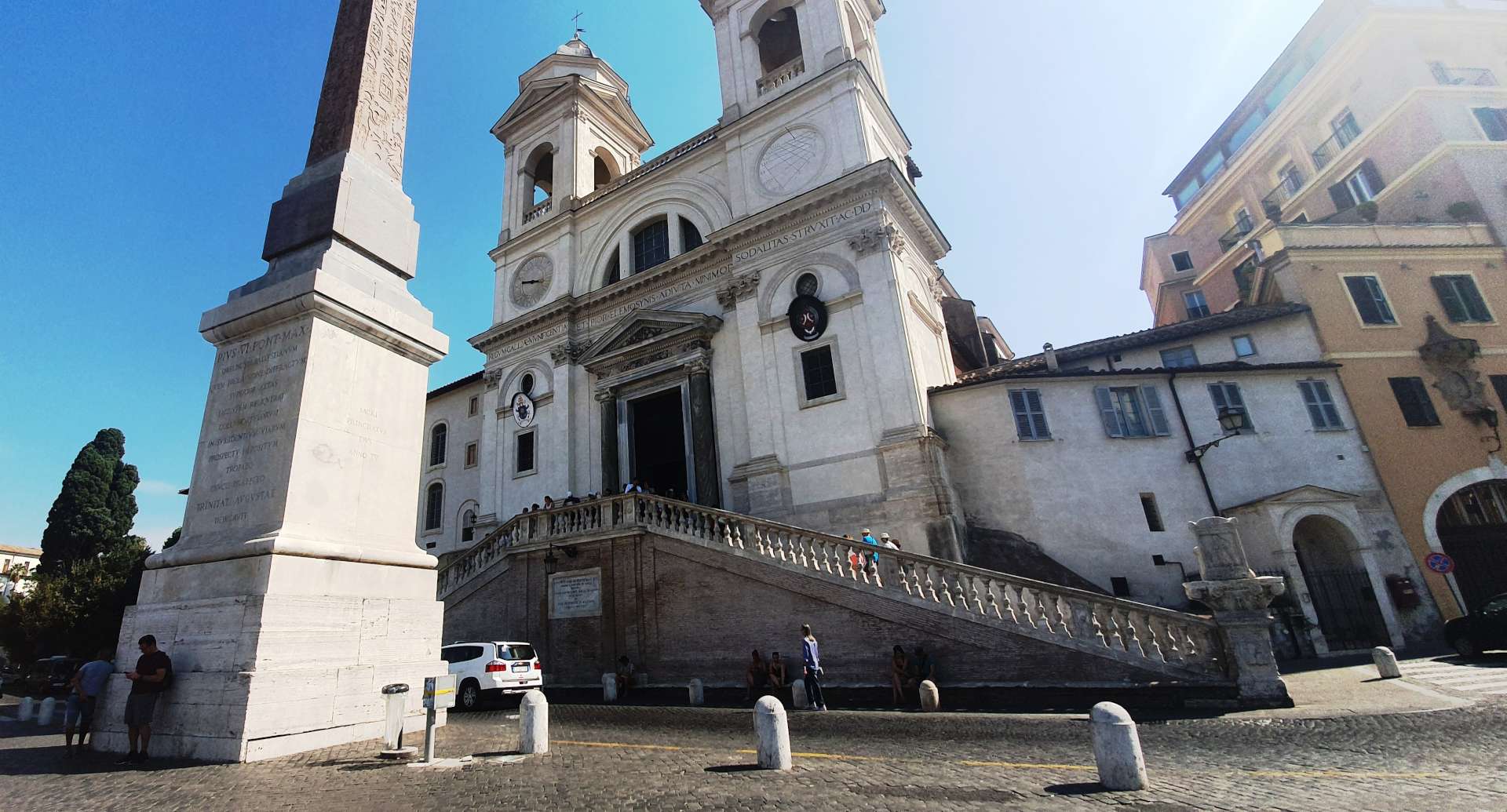
At the intersection we finally arrived at the Trinita dei Monti church and the Sallustiano obelisk, by the Spanish Steps.
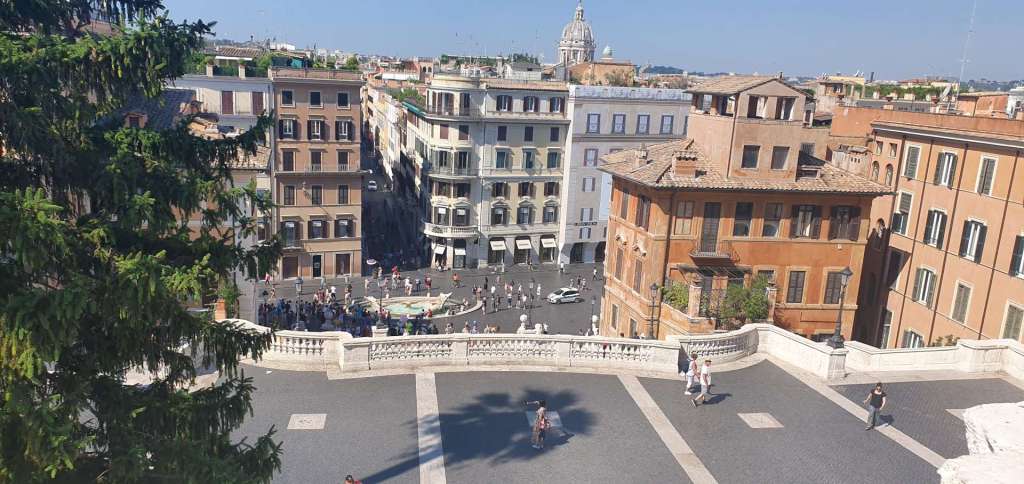
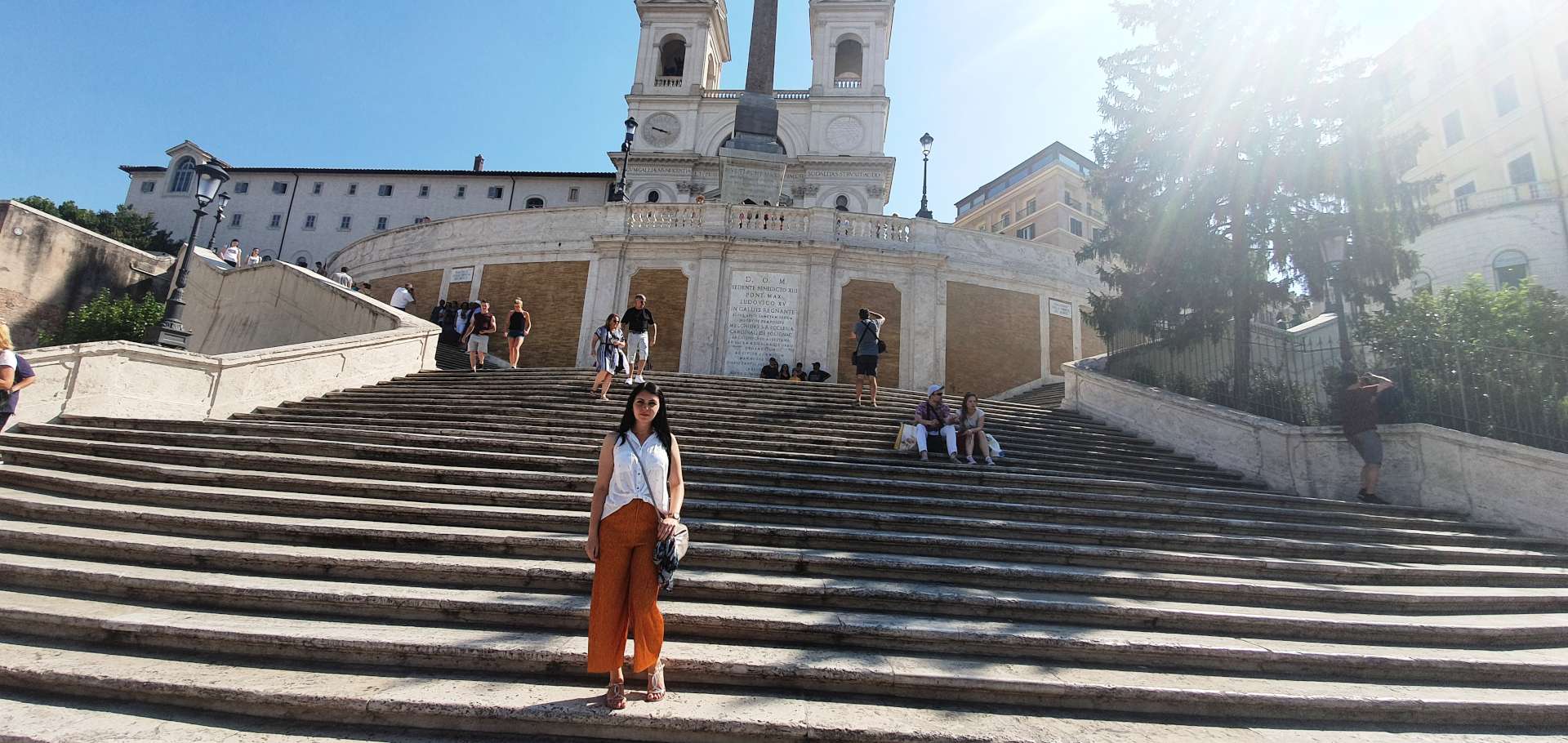
Eventually, we found it easier to climb down the Spanish Steps than to climb them up.
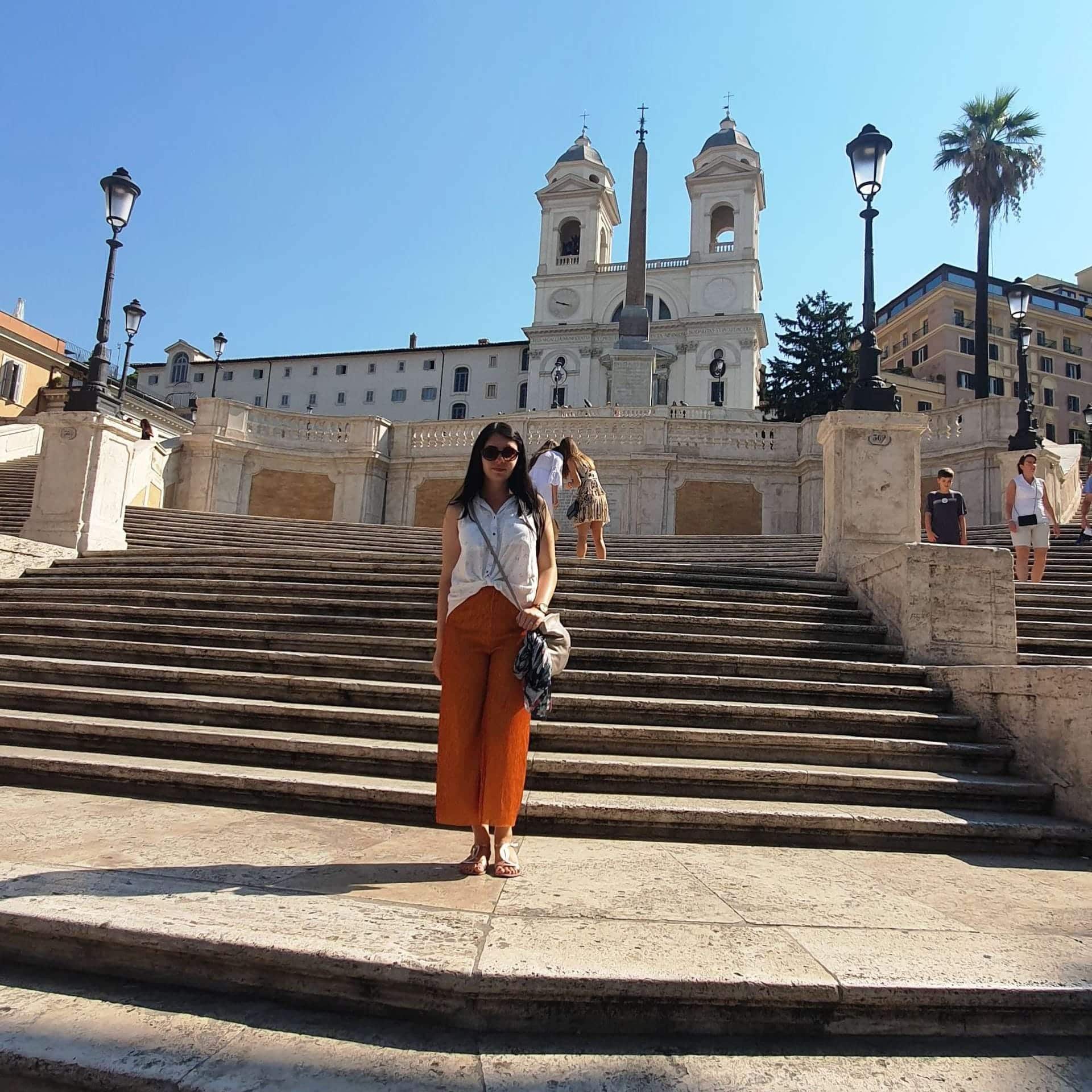
The Spanish Steps and Breakfast Stop
At the bottom of the Spanish Steps we reached Piazza di Spagna, with the Fontana della Barcaccia.

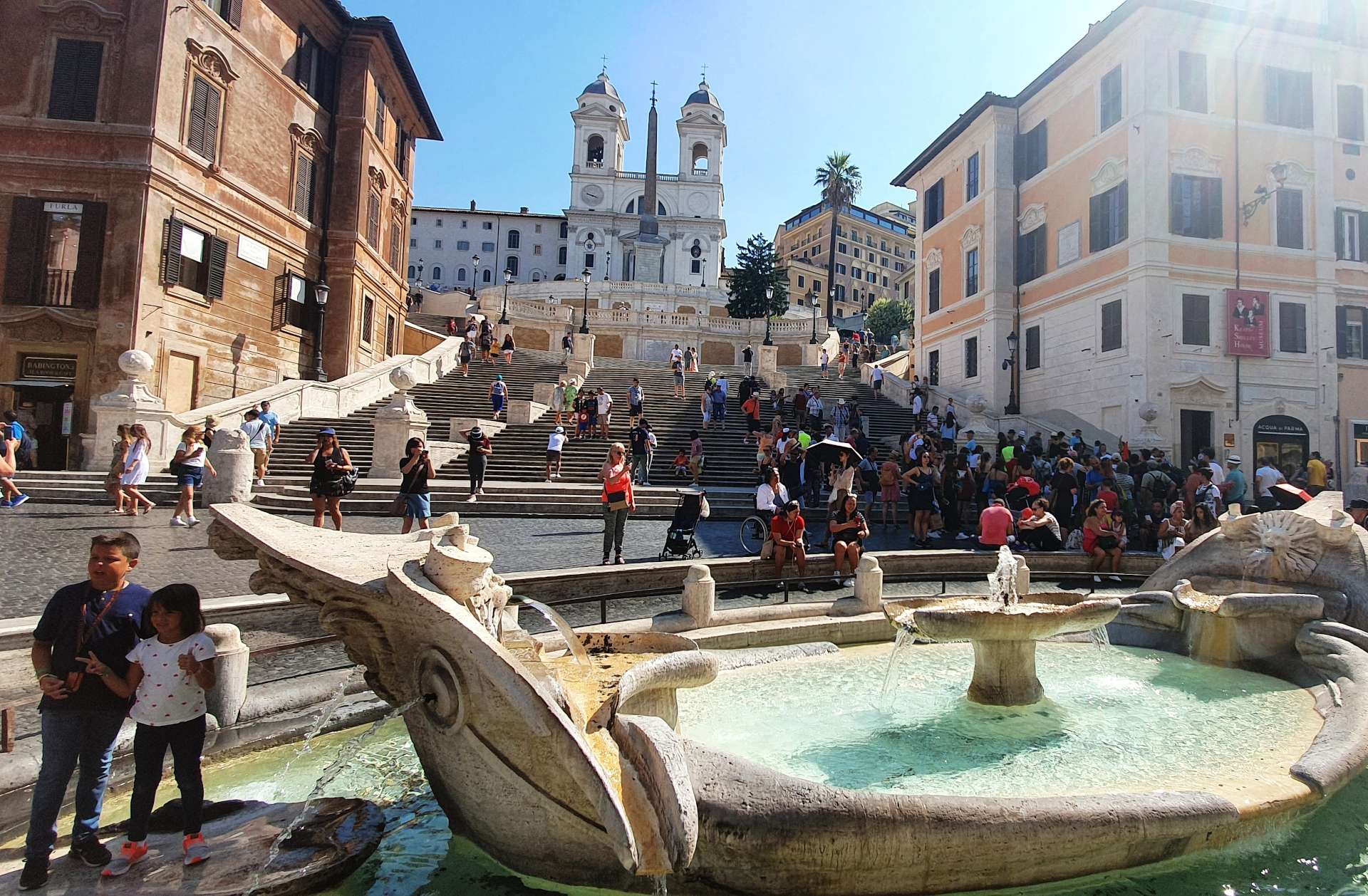
We walked a little to the left and arrived in Piazza Mignanelli. There we found the Column of the Immaculate Conception.

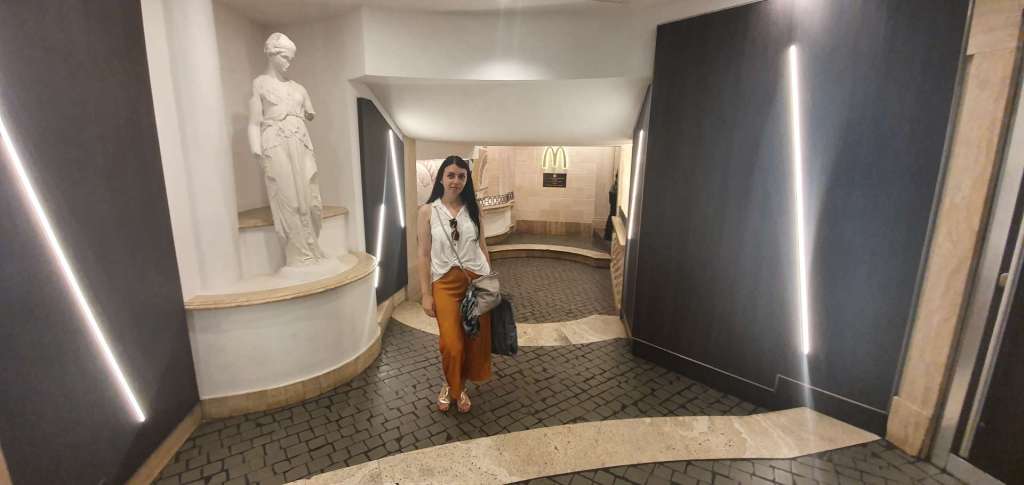
As exiting the piazza by the left corner, we found a McDonalds restaurant. We heard it had some interesting decorations inside, different from the usual McDonalds place. So we stopped for breakfast there.
Shopping Around Via dei Condotti and Via Borgognona
Just in front of McDonalds started Via Frattina and we went to check out some shops and then got back to the Spanish Steps.


Next we walked on Via dei Condotti, which starts just in front of the Barcaccia Fountain.


After two blocks we turned left on Via Bocca di Leone and then reached Via Borgognona.
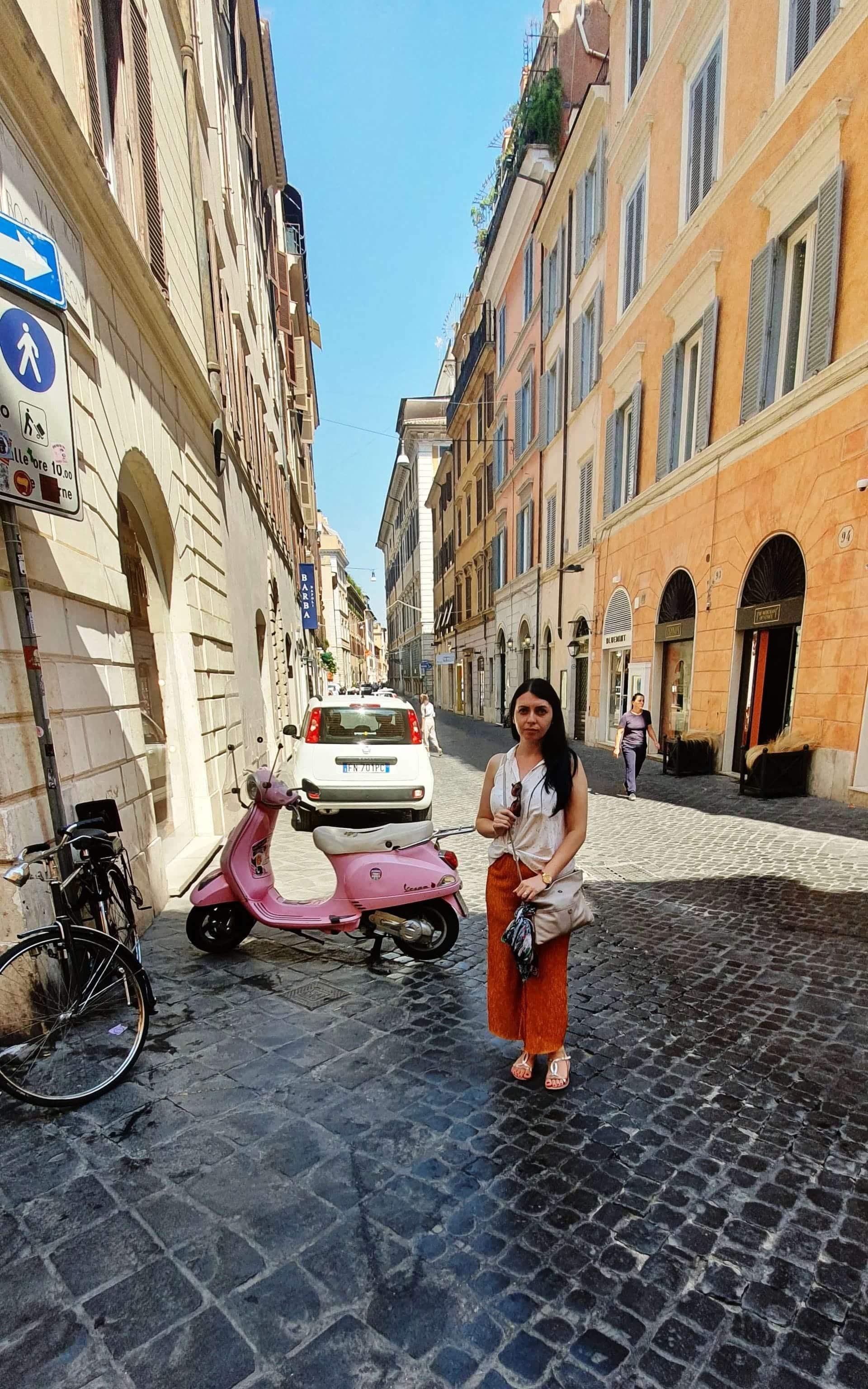
We did some quick shopping and then we headed to the famous Rome Pantheon, because the previous night we got there late and couldn’t enter to visit it.
Visiting the Pantheon – A Masterpiece of Ancient Rome
The Pantheon in Rome is one of the most remarkable and best-preserved buildings from ancient Rome — a true masterpiece of architecture and engineering.
So from Via Borgognona we got to Via del Corso and turned left. We also entered a few more shops on our way. We kept down the street until we reached Venchi chocolate shop. Then we turned right on Via di Pierta, reached Piazza di Pietra with its Tempio di Adriano and then kept forward on Via Pastini until we finally got to the Pantheon of Rome.
First we waited a few minutes in line and then finally entered the famous Pantheon of Rome. As expected, it was very crowded inside and thus hard to take photos. We especially wanted to capture the sunlight entering the roof through the round window of the Pantheon; the time was correct as it was midday and the sun was up and shining in Rome.
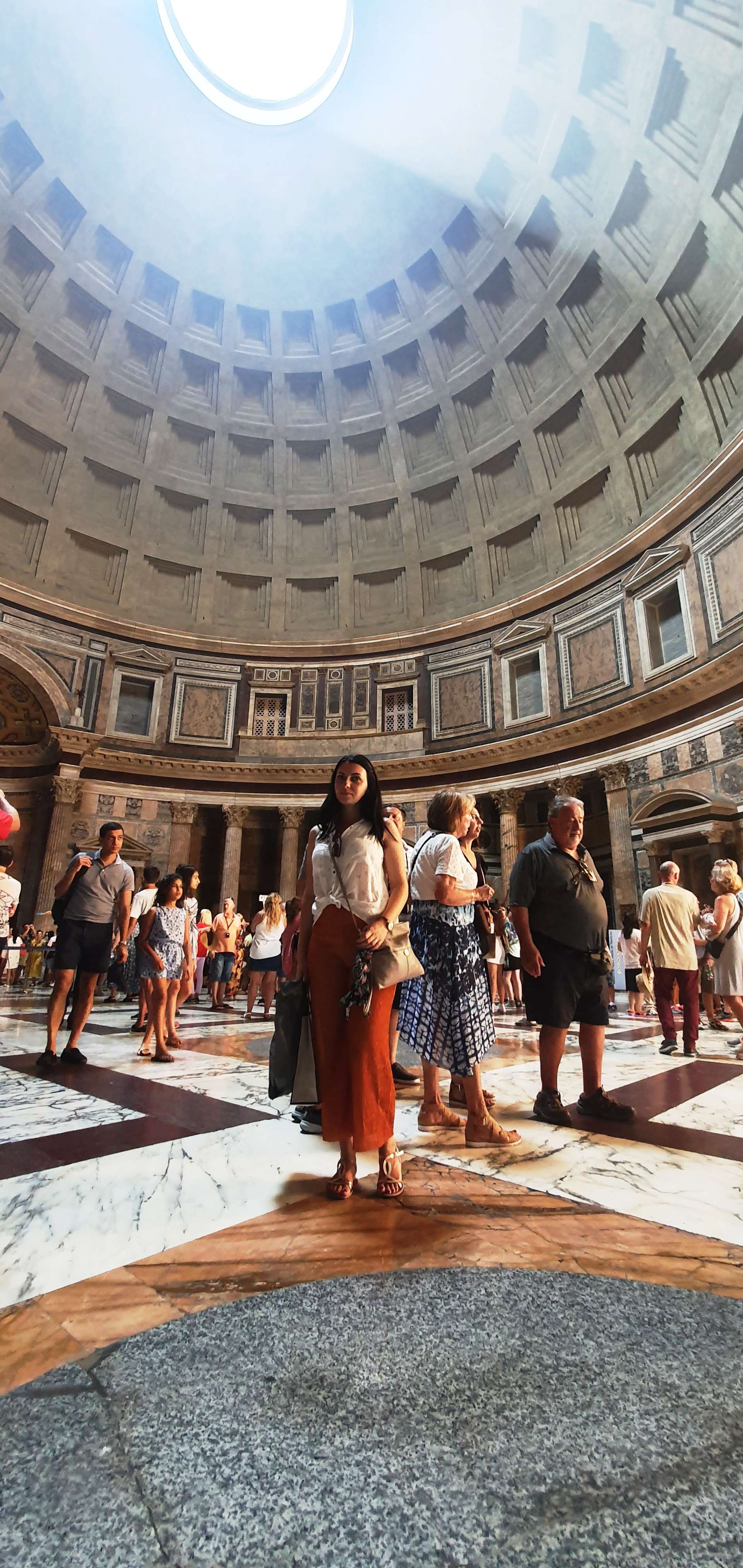

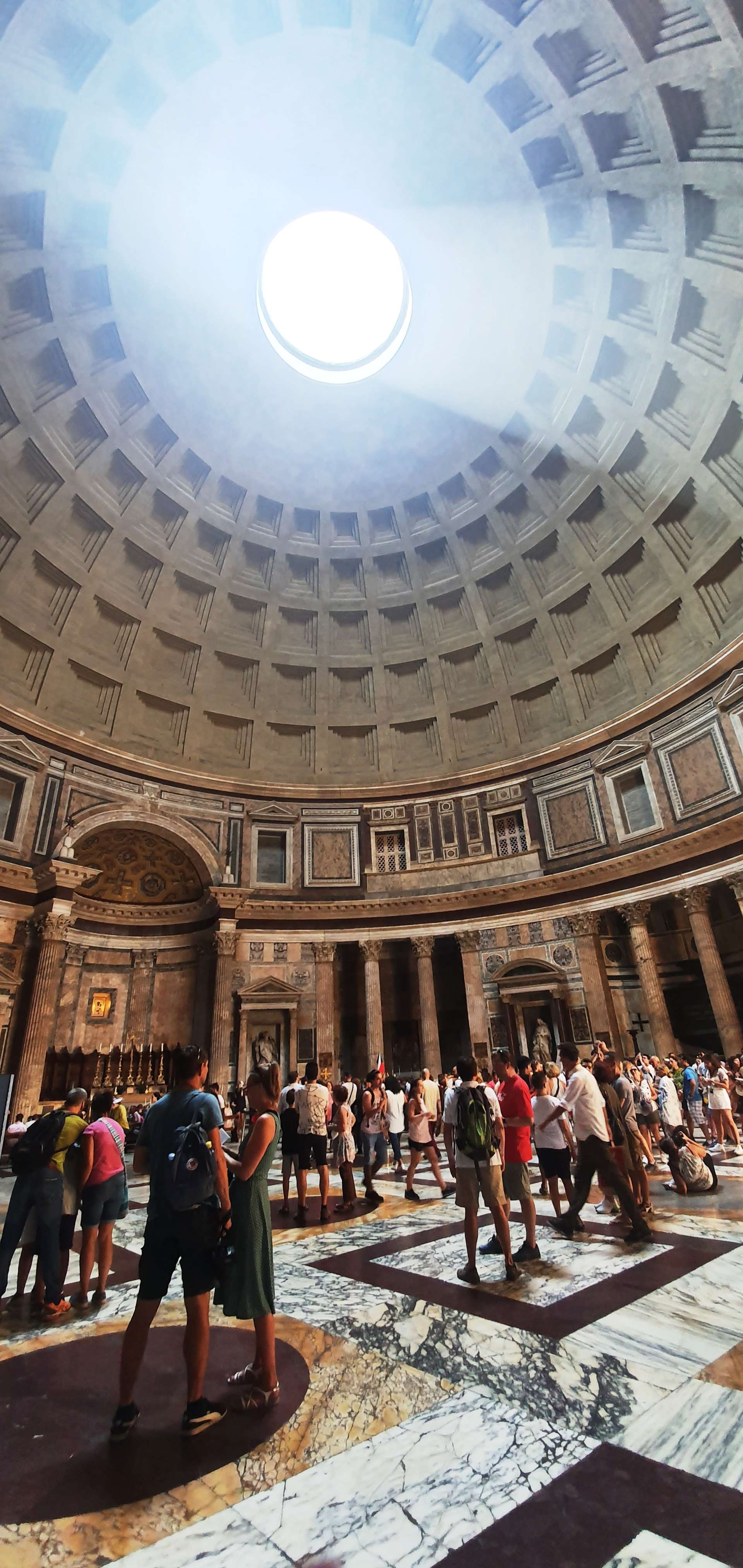
The dome of the Pantheon was an engineering marvel in ancient Rome, spanning 43 m in diameter to stand as the largest unsupported dome in the world.
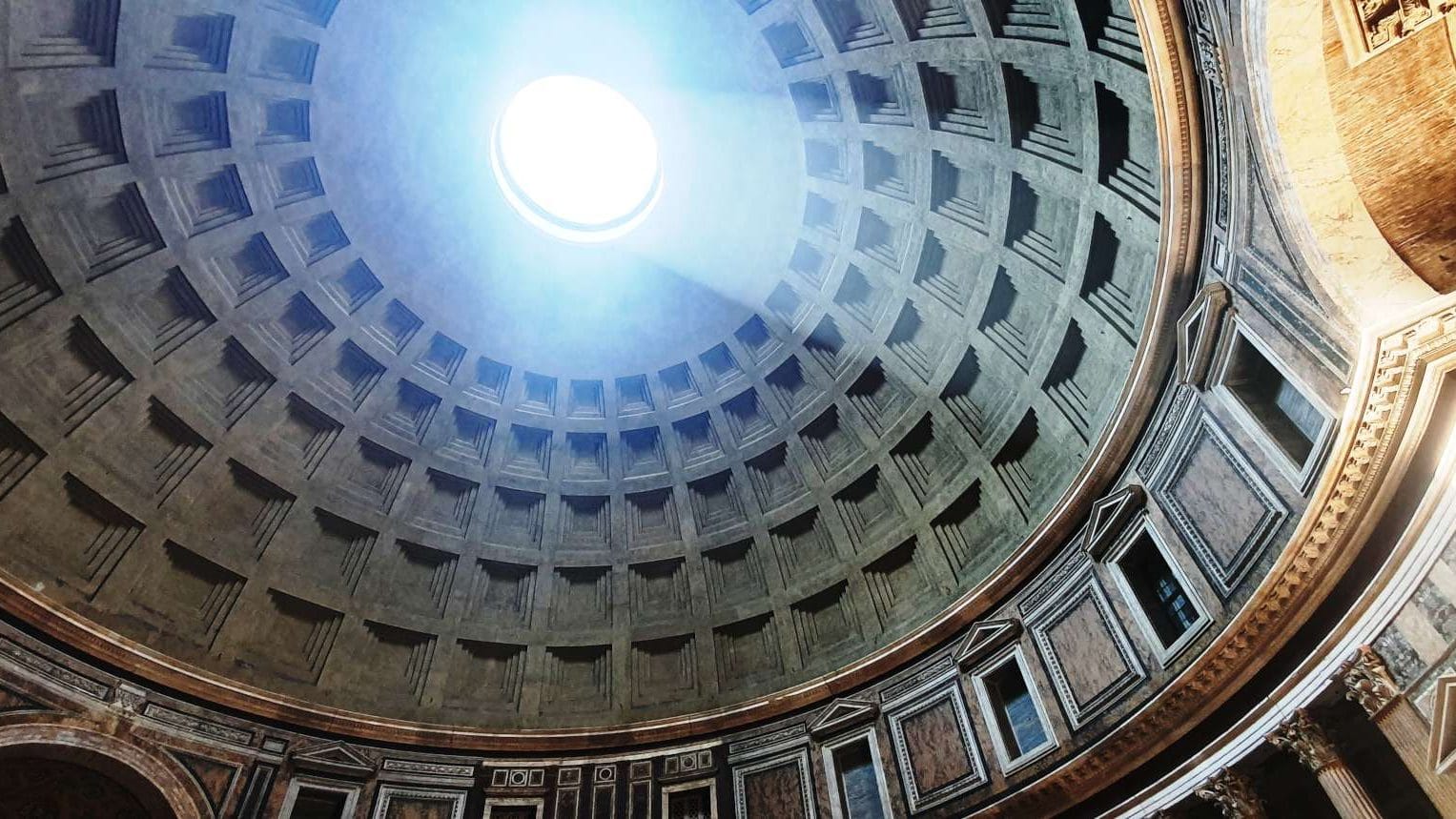
Also, the architecture is unique. The Pantheon is one of the most iconic sites in the eternal city of Rome and a must see.

Moreover, the interior of the Pantheon of Rome is a design masterpiece; the way the hole in the dome illuminates the door looks magical.

The Pantheon in Rome stands as a timeless symbol of Roman ingenuity — a harmony of art, mathematics, and spirituality that has inspired architects for nearly two thousand years.
Revisiting to the Trevi Fountain
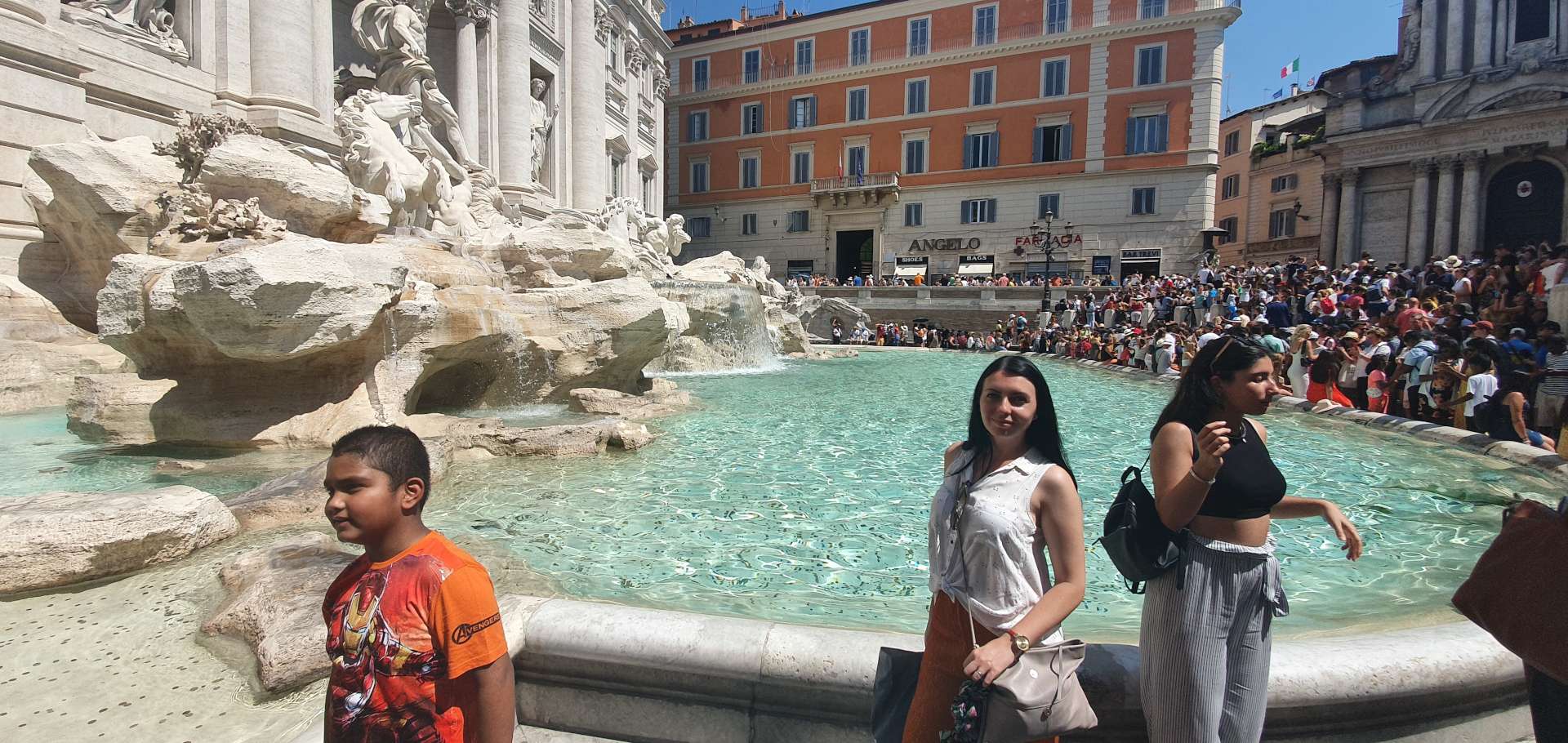
Afterwards, we returned the same way to Via del Corso, crossed the street and kept forward on Via delle Muratte until we finally arrived in Piazza di Trevi and visited again Fontana di Trevi. The crowds seemed smaller this time.

Heading to Termini to Catch the Train to Tivoli, Italy
From the Fontana di Trevi to Termini was a 25 – minutes walk. So we were on schedule with enough time to catch the train to Tivoli for a half day trip. We had bought in advance train tickets for the 2.30 pm train. The price was 2.60 euros per person.
From Piazza di Trevi, after the United Colors of Benetton, we went forward on Via del Lavatore. Then we took the first small alley to the right, called Vicolo Scanderbeg, and then got to Piazza Scanderbeg.

We kept ahead and saw the Scalinata Via della Panetteria on the left. Then we continued forward on Vicolo Scanderbeg and at the end of the street we turned left on Via della Dataria.
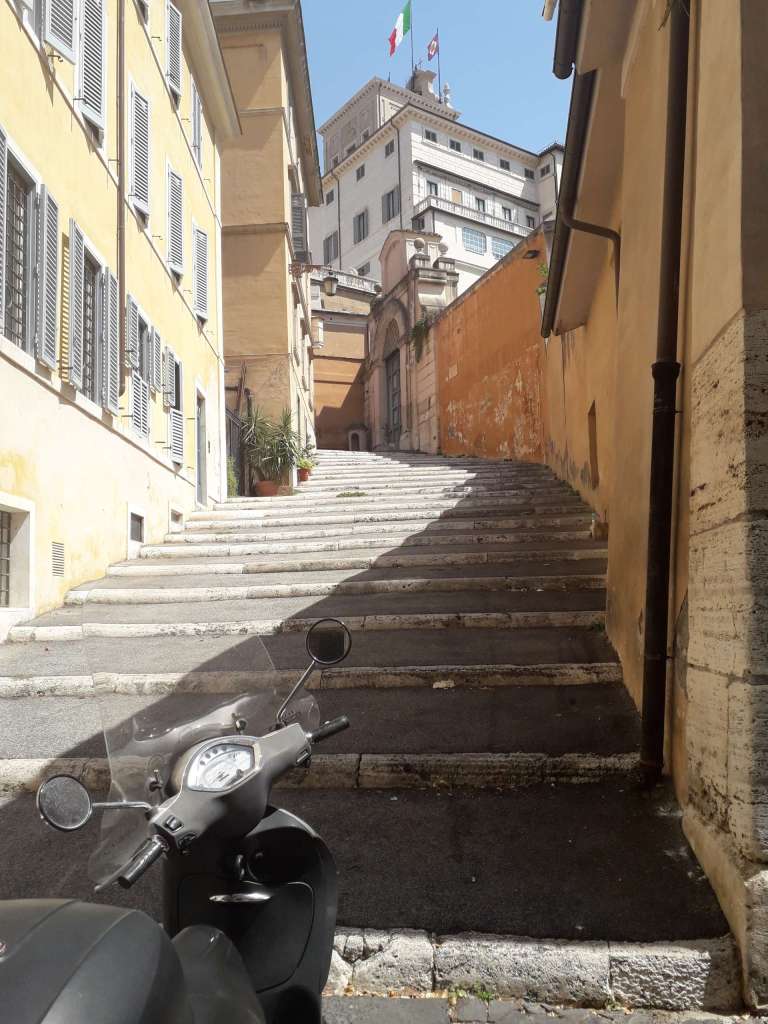
We climbed the stairs on the left and finally arrived in Piazza del Quirinale.
From there, we went to the left on Via del Quirinale, arrived back at the Crossing of Quattro Fontane and continued forward on Via Venti Settembre until we got to the big intersection in Piazza di San Bernardo, where we photographed the Fontana dell’Acqua Felice from across the street.

On the right side of the square we also noticed the Church of Saint Bernard ‘alle Terme’.

From Fontana dell’Acqua Felice we turned right on Via Vittorio Emanuele Orlando and finally arrived back in Piazza della Repubblica. We were able to see Aula Ottagona up close this time, on our way to Termini.

From Piazza della Repubblica, after passing by the Obelisk of Dogali, we reached Termini across the intersection.
Train Trip from Rome to Tivoli, Italy
We took the train from Rome Termini to Staz. Tivoli and, in about 35 minutes, we finally arrived in Tivoli.
First Impressions of Tivoli, Italy
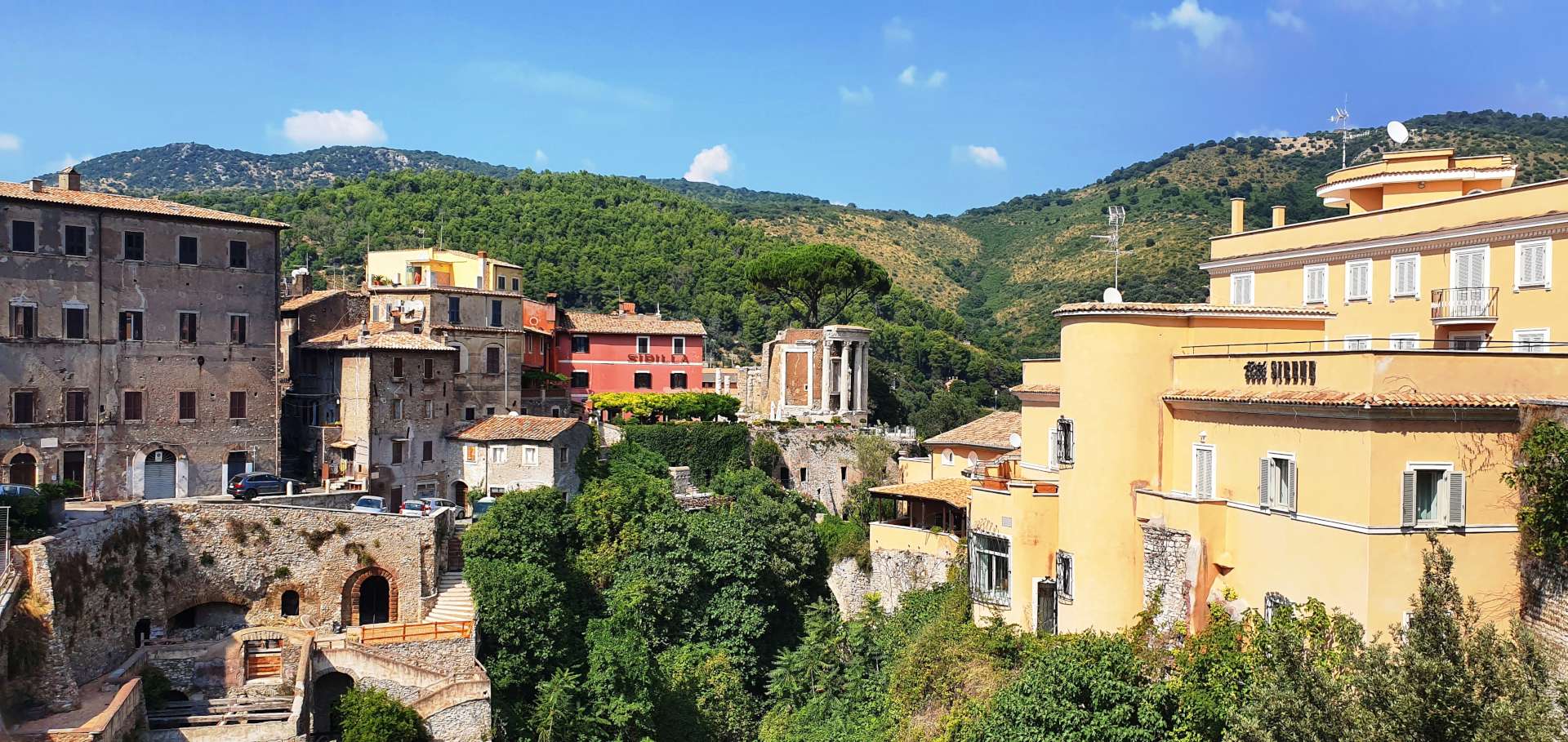
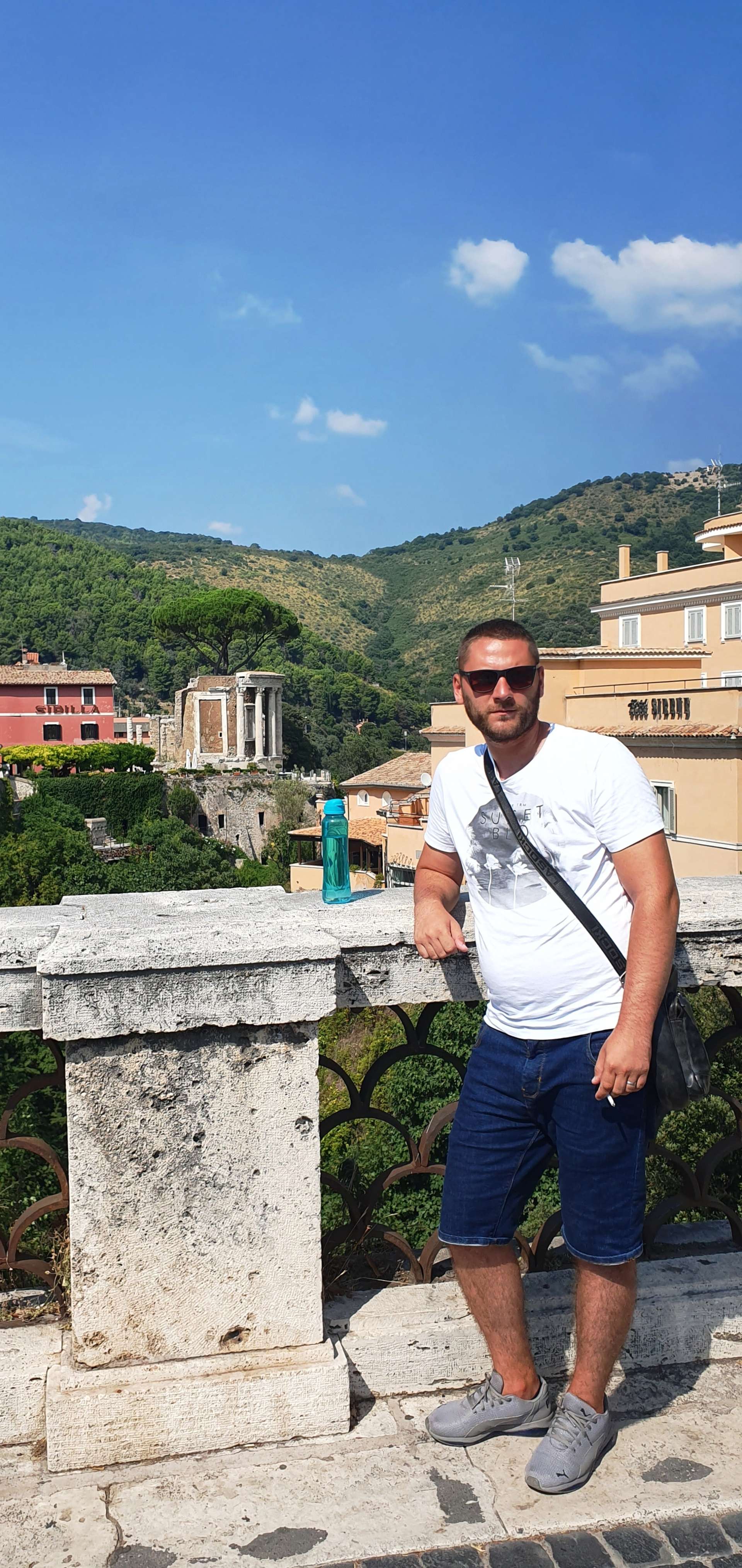
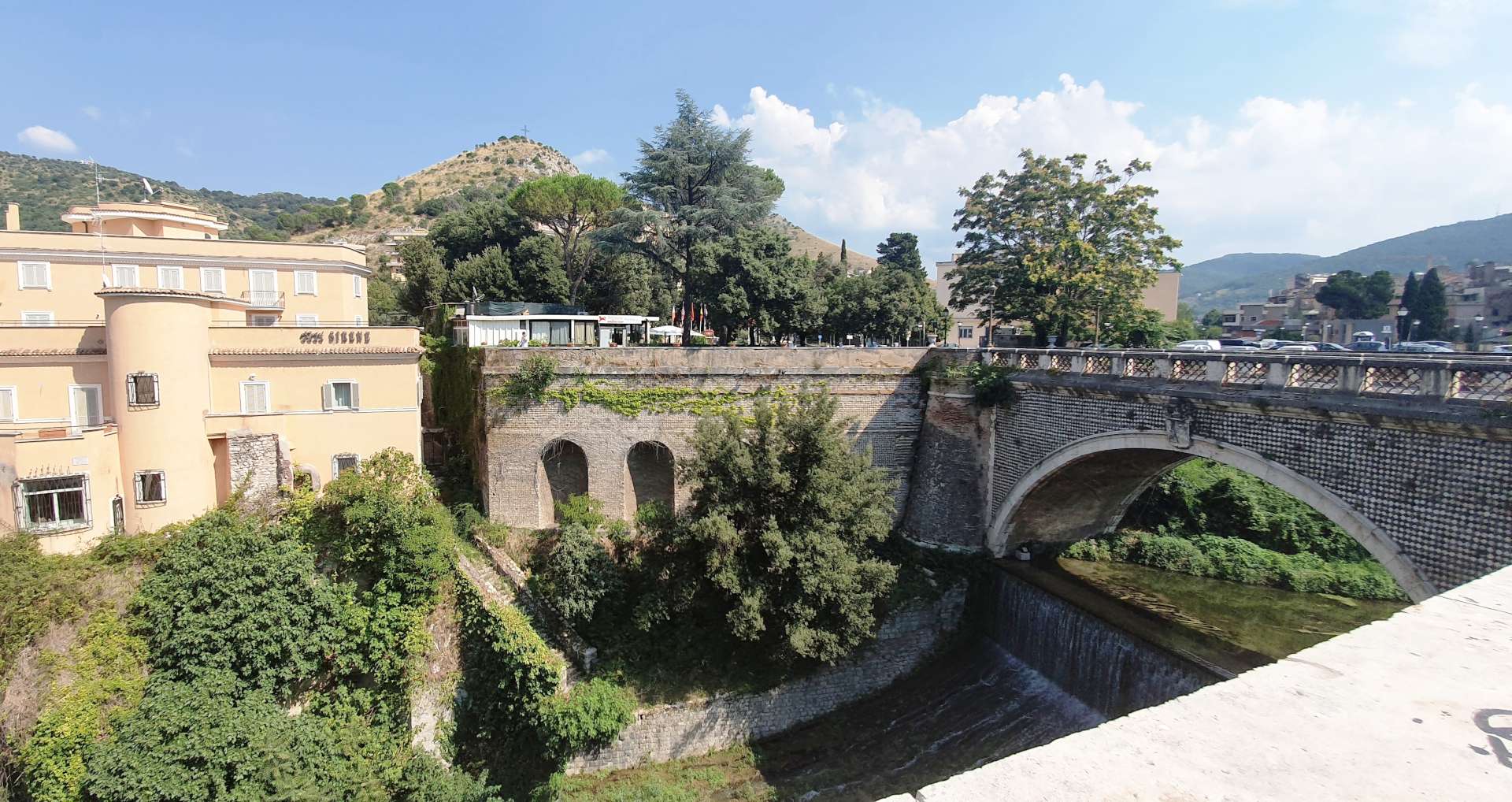
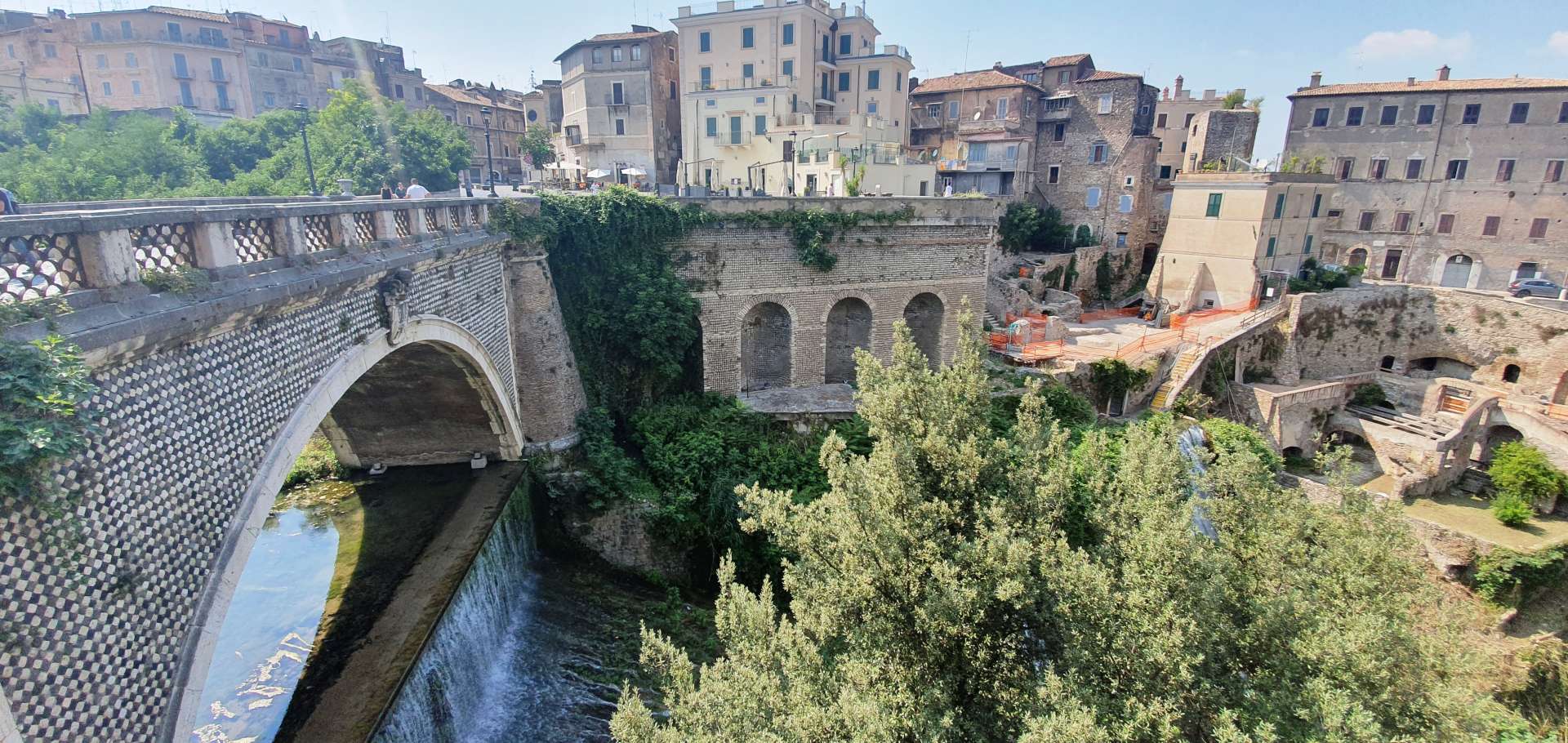
Out of the train station, we headed towards west, through a parking lot. From Staz. Tivoli we walked towards north on Via Sant’Agnese and kept ahead on the wider road Viale Giuseppe Mazzini. At the intersection we surrounded the roundabout and went left, towards west, and then kept left on Via Ponte Gregoriano. We crossed Ponte Gregoriano – a bridge over the Aniene river. From this point we could see on the left side, in the distance: Cascata di Tivoli, Aniene Falls, the Circular Temple of Vesta, the Temple of Sibilla, Villa of Manlio Vopisco and also Villa Gregoriana – gardens with paths to caves, grottoes, waterfalls and some Roman ruins.


Exploring the Historic Center of Italy Tivoli
From Ponte Gregoriano we headed to the left and got to Piazza Rivarola and then we entered Via S. Valerio, passing by a white tower.

We continued forward through the historic center of Tivoli. Honestly, this part of the town looked a little hunted, we encountered no people on those streets at those hours.

Walking through this part of Tivoli you feel projected into another era.

Discovering Tivoli’s Duomo and Medieval Streets
We arrived in a square, an intersection with a few streets, and we could see the tower of the Duomo on the left.
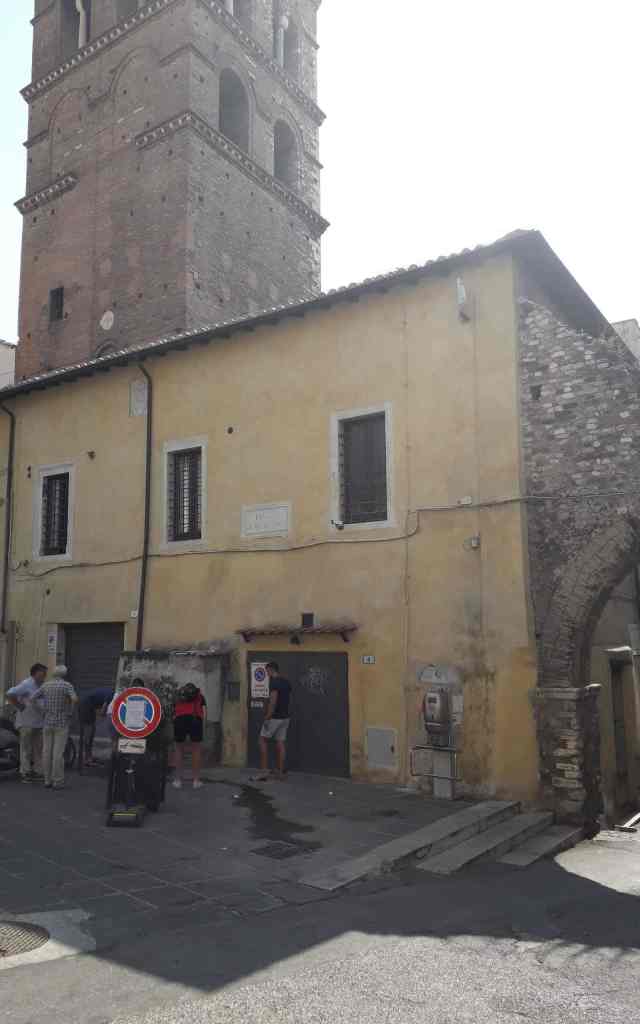
We turned left through an archway and we arrived in Piazza del Duomo.

We found the Cathedral S. Lorenzo Martire (Duomo di Tivoli) inserted in the medieval heart of Tivoli.

From the Dome, we went on the street in front, Via Postera. At the first intersection we went to the right on Via Taddei, climbed some stairs and found Casa Gotica, a medieval monument.

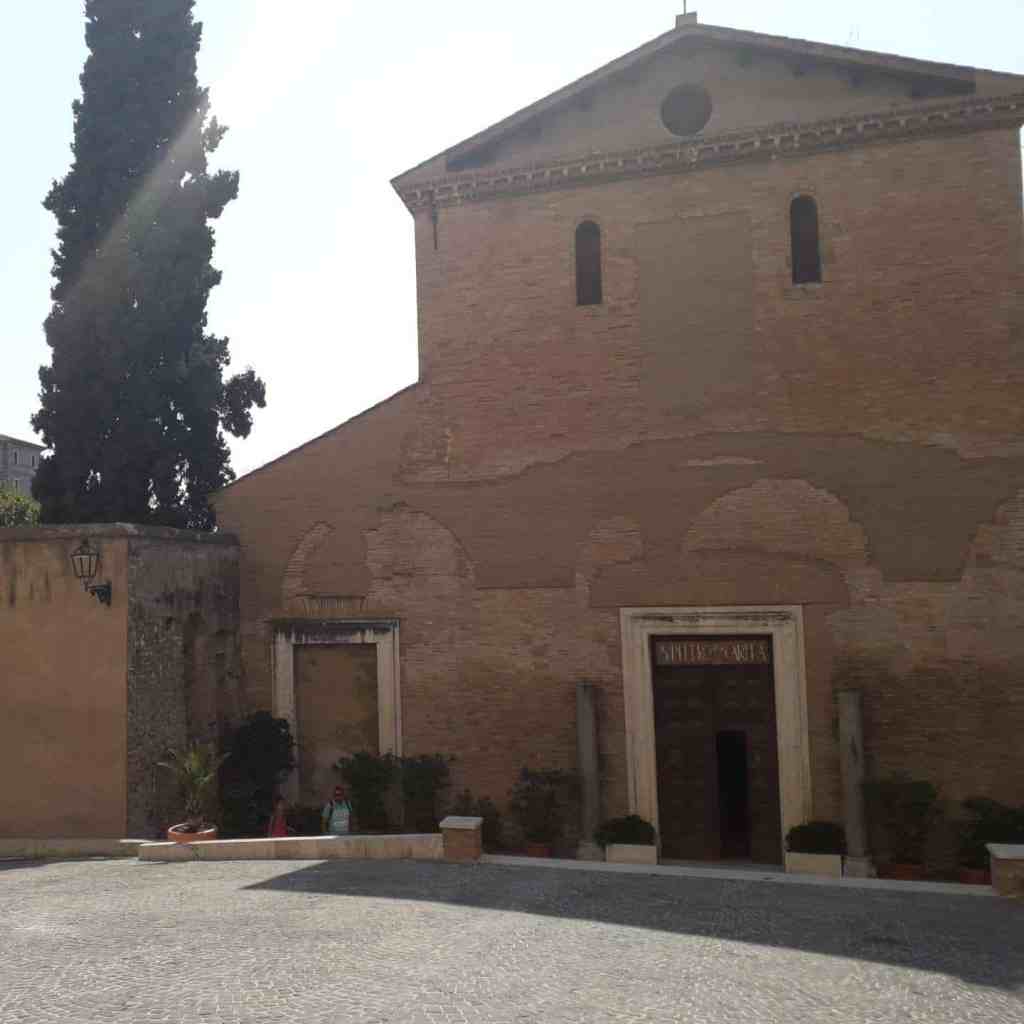
We turned left on Via Campitelli and continued walking on this winding street and we got to a little square, Piazza Campitelli with Scuola Taddei and the church San Pietro alla Carita on the right side.
A Unique Lunch in Italy at Taverna di Dracula in Tivoli
We climbed the stairs in front and, after the building, we turned slightly to the left. We arrived at Taverna di Dracula.
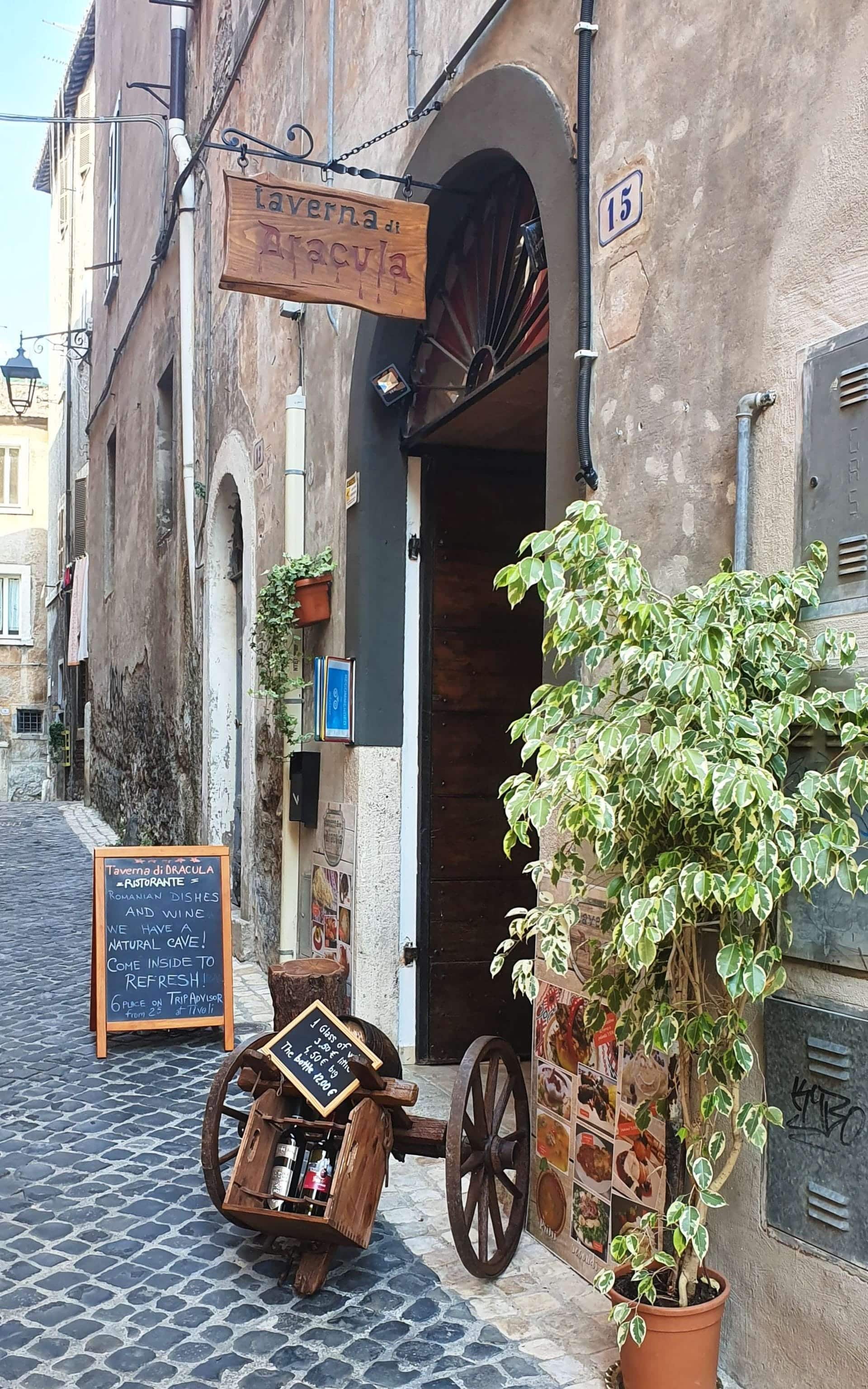
We stopped there for a late lunch, before visiting Villa d’Este. Taverna di Dracula is a restaurant serving traditional Romanian food, the interior looked interesting; you can see some pictures below. We ate some traditional beans soup and tasted some other traditional dishes based mainly on meats. The prices were reasonable, around 10 – 15 euros a course.


Reaching Piazza Garibaldi and Panoramica di Tivoli, Italy
We walked to the left on Via della Missione. The street ended and we turned right on Via Vincenzo Pacifici and reached Piazza Giuseppe Garibaldi.
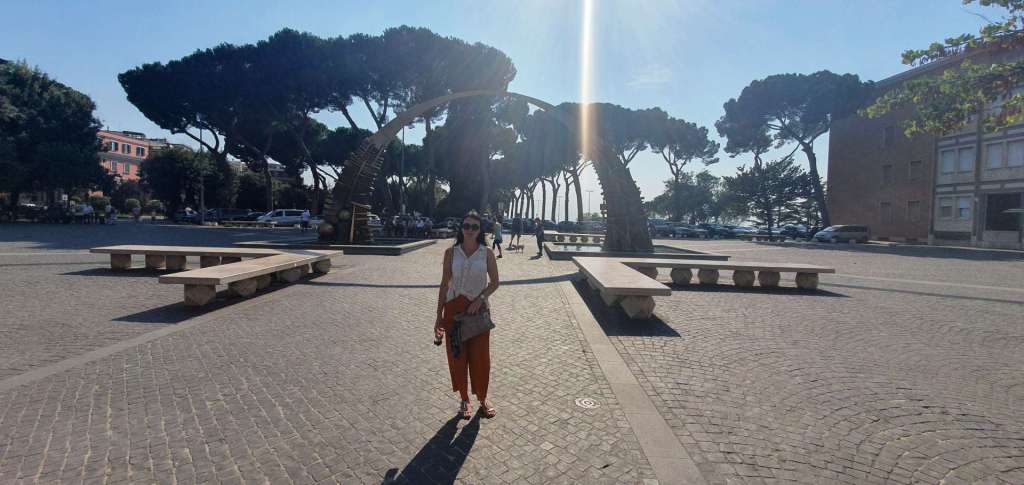
We took a short stroll along the observation deck – Panoramica di Tivoli.

Visiting Villa d’Este – Highlight of Our Italy Tivoli Adventure
Then we returned to the square and exited it through Via Boselli to the right. Then we got to a small square, Piazza Trento. On the left we finally found Santa Maria Maggiore church, and also the entrance to Villa d’Este.
The church of Santa Maria Maggiore is adjacent to the entrance to Villa d’Este. Its façade is beautiful, especially the rose window.
Villa d’Este was built in 1550 for the Cardinal of Ferrara, Ipolito II d’Este, and it’s famous for its sumptuous gardens and especially for its elaborate fountains.
Discovering the Entrance to Villa d’Este – the Courtyard
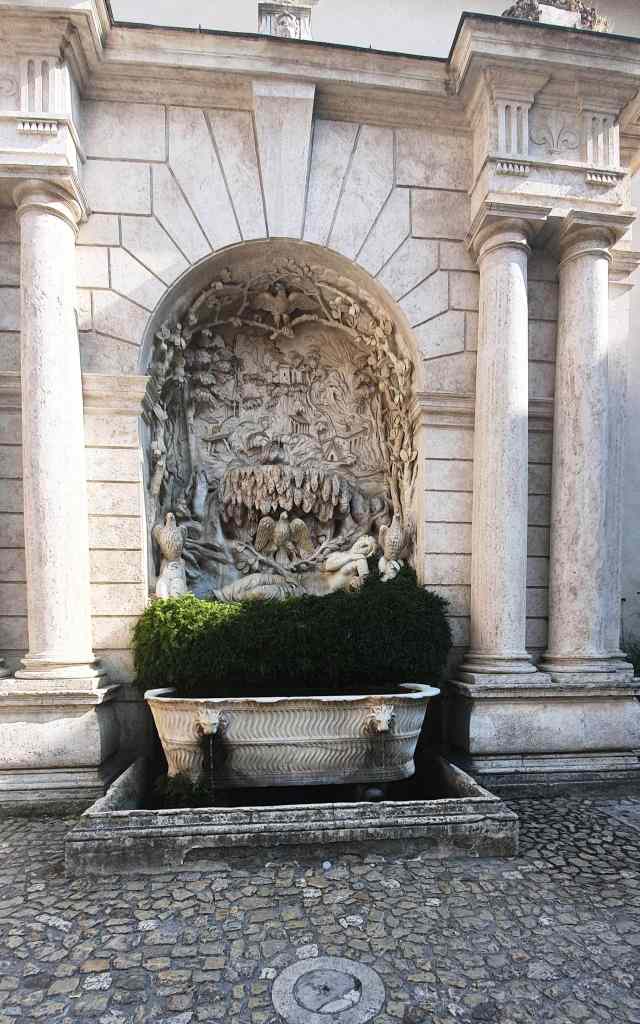
The visit started with Villa d`Este courtyard, placed where the original cloister of a former convent was, before the transformation of that convent in Villa d’Este.

In the courtyard / cloister there is the Fountain of Venus. The central element of the fountain is a Roman statue of a sleeping Venus, made in the 4th or 5th centuries A.D..
Inside the Cardinal’s Residence – Life and Luxury in Tivoli, Italy
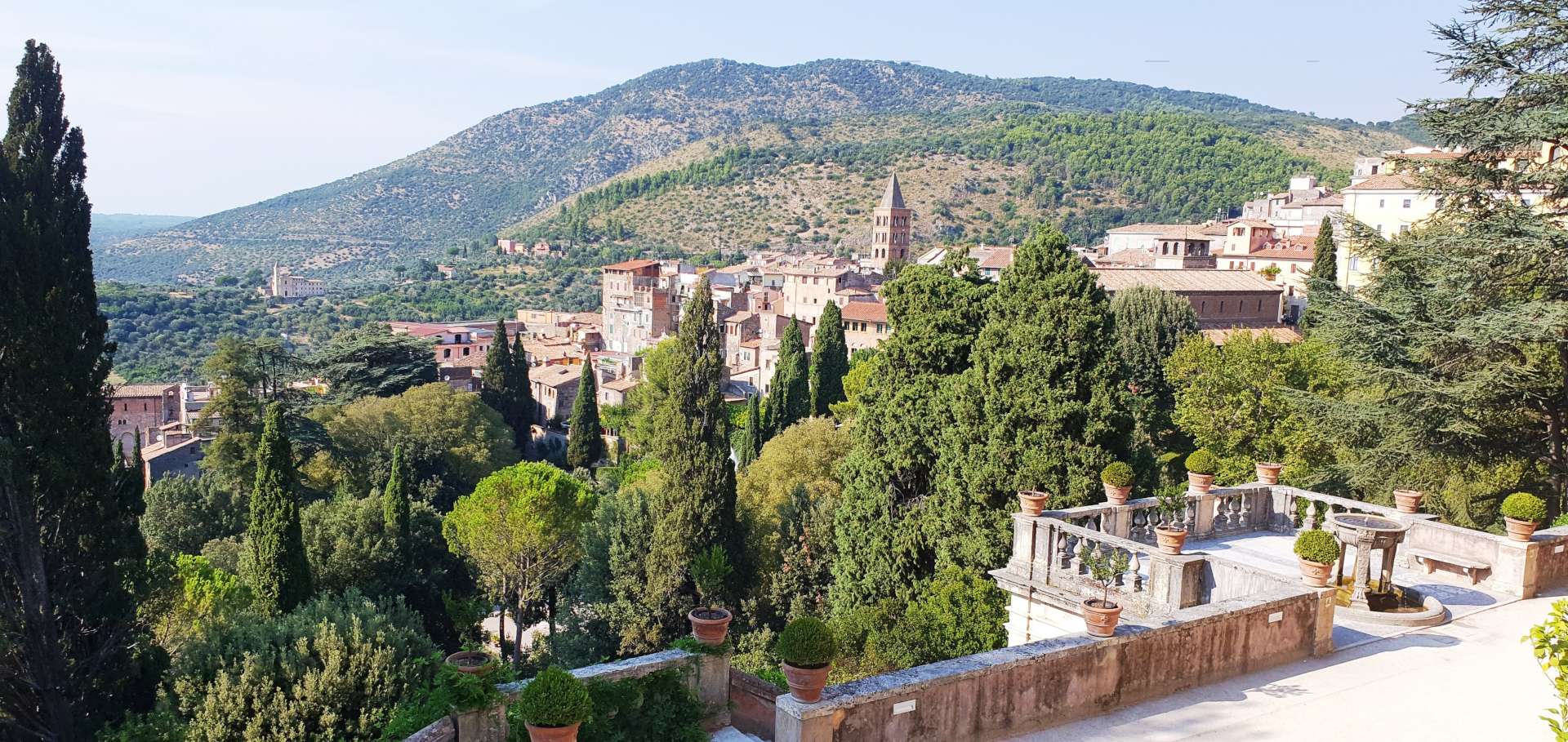
Inside the Villa, the ceremonial salons are on the lower floor, and Cardinal’s apartments are at the upper level, accessible from a terrace.
The upper floor – The Salon is the first room to enter from the courtyard, it is located on the ground floor. It was used for receptions, and offers spectacular views of the garden and also of the countryside, including Villa of Hadrian.
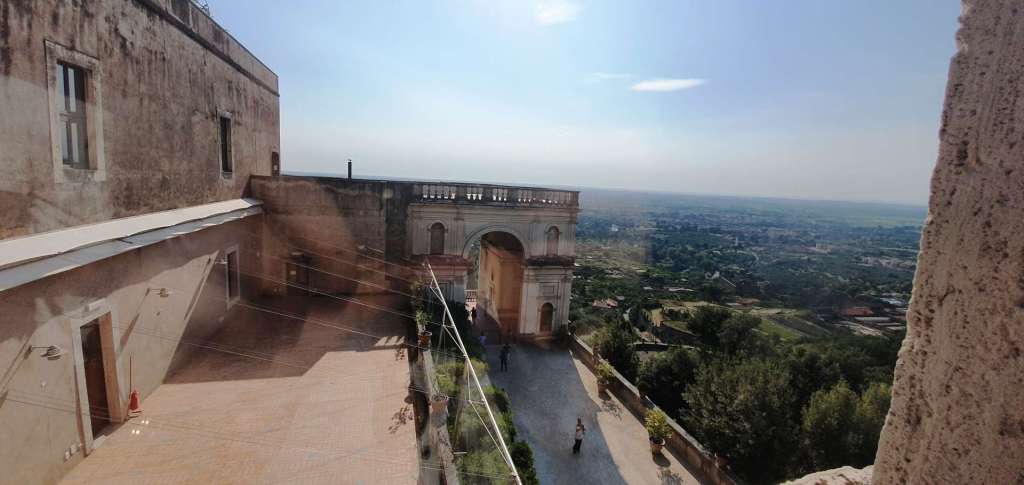
The walls of the Salon are bare today; were leather decorated with gold and green designs in the past, but the vaulted ceiling of the room is still covered with frescoes on the theme of virtue. A small antechamber next to the salon leads to the Cardinal’s Bedroom. The private apartment also has a library and a small chapel. The walls are decorated with frescoes. The apartment is also connected by doorways with the Gran Loggia on the garden façade of the house, which is designed in the form of a triumphal arch.
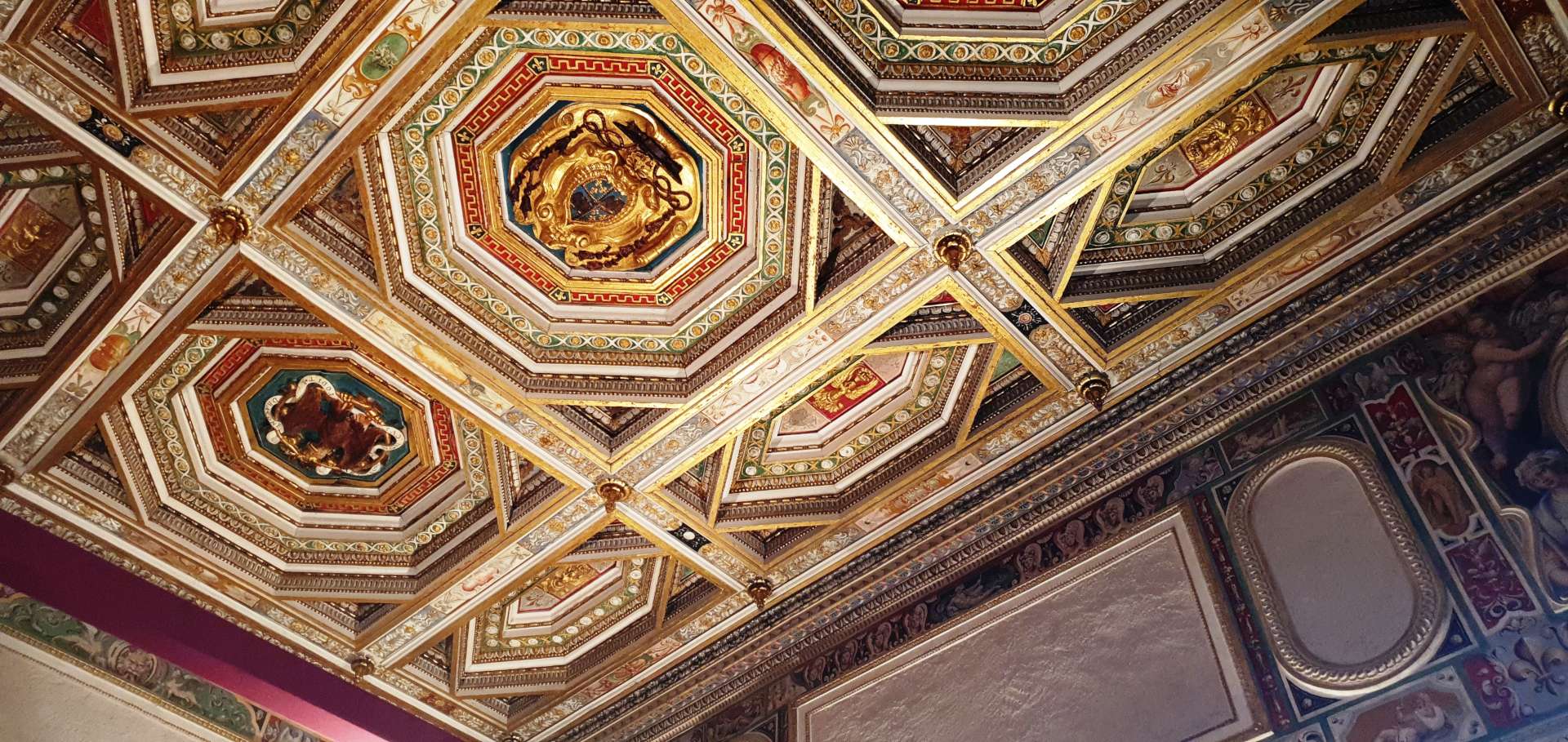
The Throne room is the central room of the Apartments of the Cardinal. It opens on to the terrace from where you can have breathtaking views of the gardens.

The lower floor – is the floor below the Cardinal’s personal rooms and contains various rooms decorated with frescoes, each one with a specific theme related to nature and also to mythology. The rooms are less formal than those of the apartment above, as they were used for private moments in the life of the Cardinal, like listening to music or poetry, or reading, etc. They are reached by a large stairway that descends from the courtyard.
Biblical and Mythological Inspirations in the Halls of Villa d’Este in Tivoli, Italy
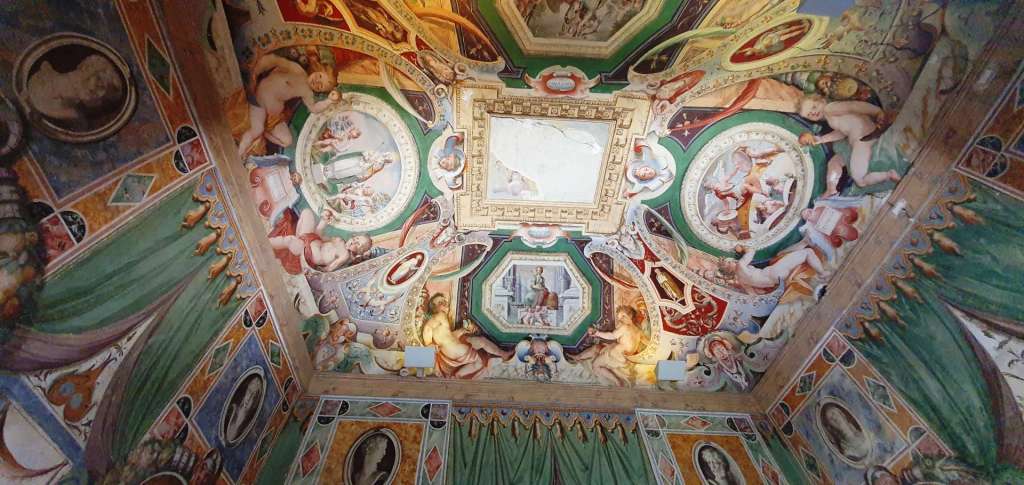
The Hall of Noah has frescoes depicting the Four Seasons, and also the central scene of Noah with the ark landing on Mount Ararat.
The next room, the Hall of Moses, features a fresco in the center of the ceiling showing Moses striking a rock and bringing water for the people of Israel.
The Hall of Venus has its ceiling decorated with a painting of angels offering flowers to Venus.
The First and Second Tiburtine Halls have decorations depicting stories from mythology and the history of the Tiburtine region, where the villa is located.
Philosophical Themes and Grand Illusions at Villa d’Este in Tivoli, Italy
The Hall of the Fountain was used by Cardinal Ippolito as a reception room for guests as they were entering from the garden below, and also for concerts and other artistic events.
The Hall of Hercules has paintings on the ceiling depicting eight of the labors of Hercules, surrounded by depictions of landscapes, the Graces and the Virtues.
Moreover, the Hall of Nobility is decorated with paintings of Plato, Pythagoras, Diogenes, Socrates and other classical philosophers, the Graces and Virtues, Diana of Ephesus, the goddess of Fertility.
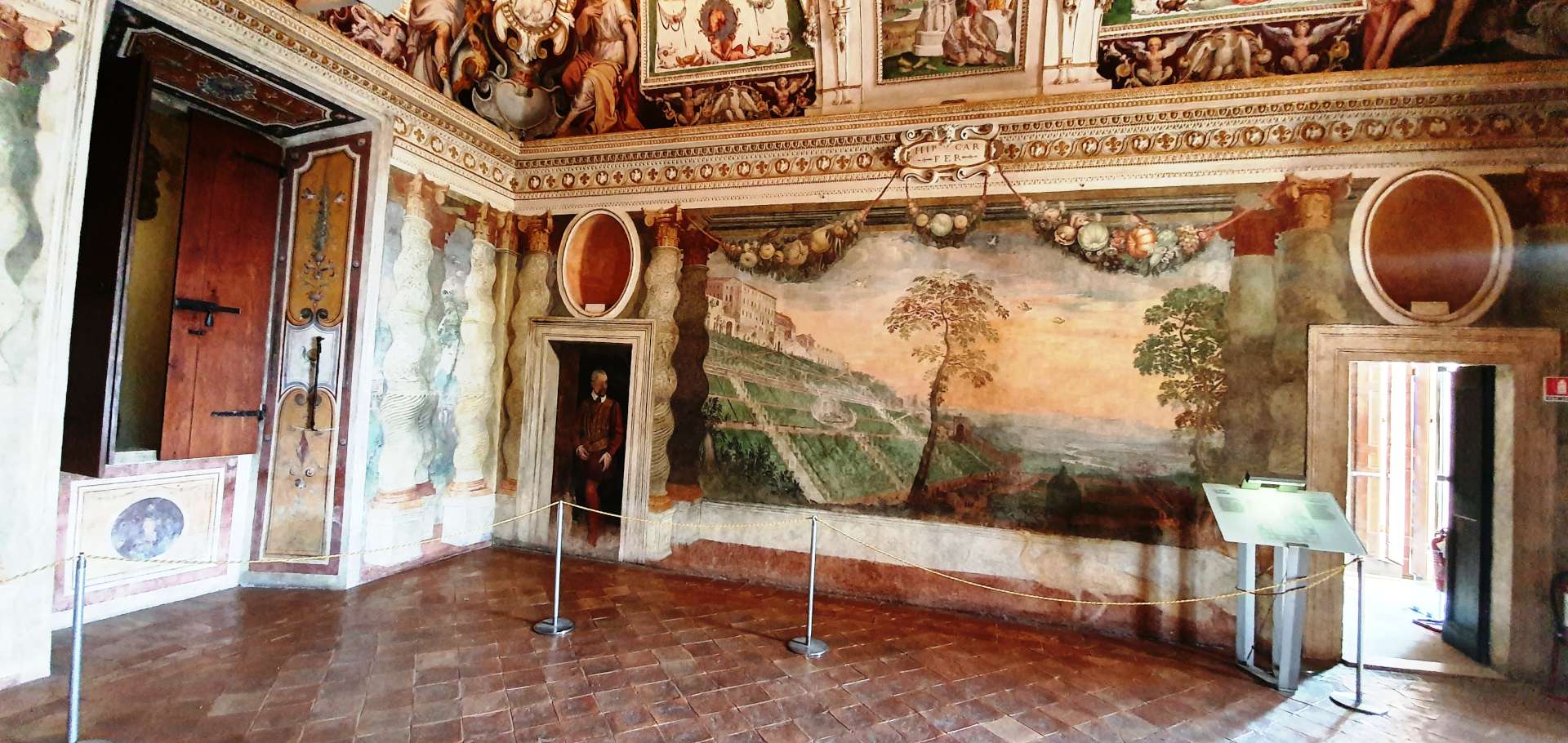
And also the Hall of Glory is a masterpiece with painted illusions of doors, windows, tapestries, sculptures, and of everyday objects used by the Cardinal. There are allegorical depictions of the Virtues, the Four Seasons, Fortune and Time, etc.

The Hall of the Hunt was created later than the other rooms and has a different style; it features hunting scenes, rural landscapes, hunting trophies, etc.


Musical Marvels and Water Wonders in the Lower Gardens of Tivoli Italy
From the lower floor, a stairway of travertine stone descends to the garden. The Gardens of Villa d’Este in Tivoli has 51 fountains and nymphaeums. During our visit we used the map of the Gardens of Villa d’Este we received when we purchased the tickets.
As leaving the villa, the visit of the upper garden began. We first noticed the Pegasus Fountain, dominated by a statue with the mythical winged horse.

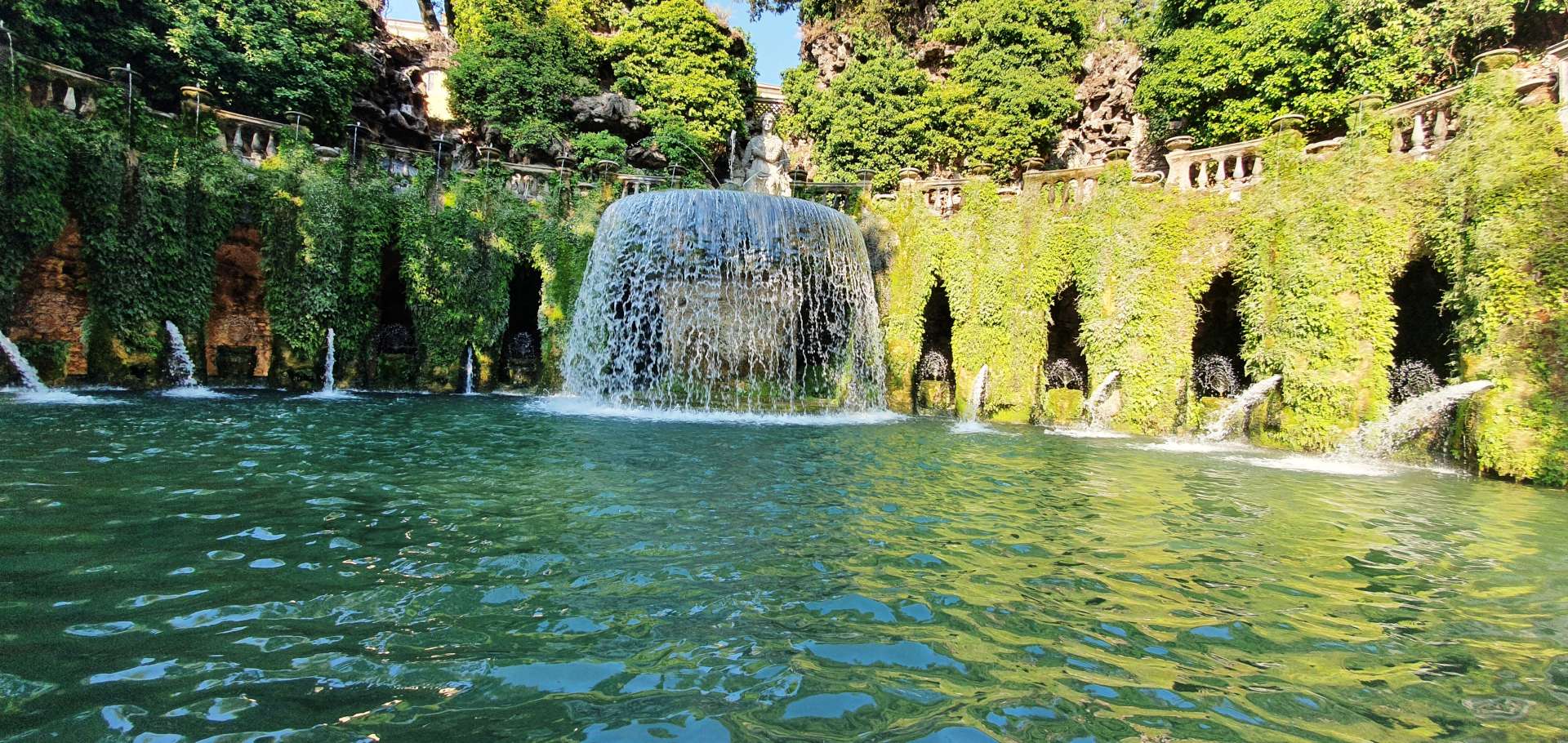
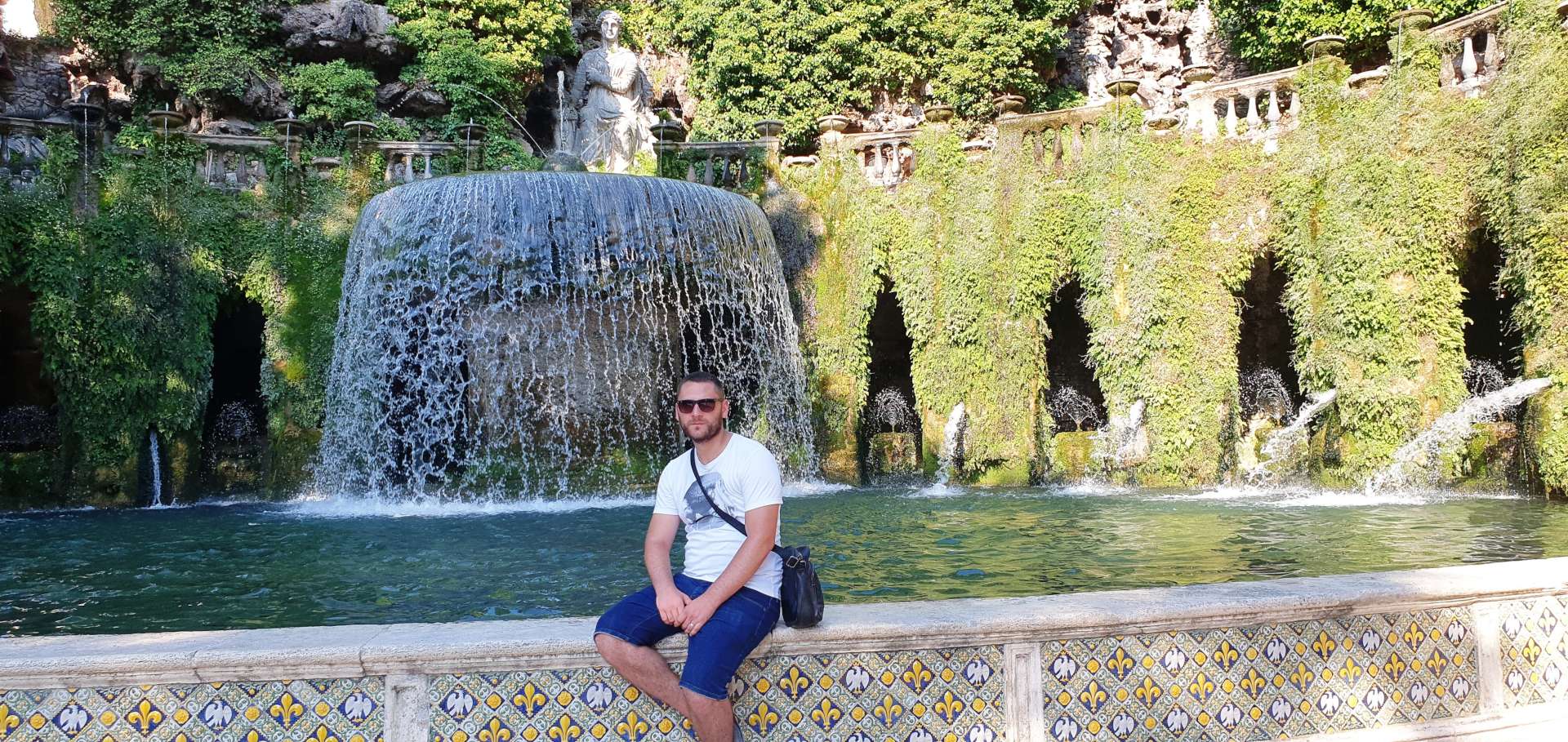
Next, we saw the famous Oval Fountain (The Fountain dell Ovato or Fontana di Tivoli), which was one of the first fountains in the garden. The fountain also has its own grotto, the Grotto of Venus.

Spectacular Fountains of Tivoli, Italy – From Organ Music to Mythology
Then we admired The Fountain of the Organ (Fontana dell’Organo); is one of the most famous fountains of the garden in Tivoli. It was imitated throughout Europe. It has a Castellum aqua, or water castle, with the water reservoir and the hydraulic machinery of the fountain. On the façade there are statues of Apollo and Orpheus. You can hear music at 4.30 pm and 6.30 pm.

From the Fountain of the Organ we could see Fontana di Nettuno’s water jets and also the fish ponds below.

The fish ponds (Peschiere) are three rectangular basins placed in a row, bordered by vegetation, which originally served to provide fresh fish, duck and also swan for the table of the Cardinal.

Next, we descended to the Lower Garden. The most famous fountain in the lower garden is the Fountain of Diana of Ephesus, also known as the Fountain of Mother Nature. There were jets of water that spurt from the multiple breasts of the goddess.

In the lower garden we also noticed the Rotonda of the Cypresses, a circular alley which originally contained sixteen cypress trees, and now has only two of the original trees. There were also two large rustic fountains, called the Mete, and another group of small rustic fountains, with water spurting up from stone bowls.
Then, below the Fountain of the Organ is the Fountain of Neptune (Fontana di Nettuno).

This fountain is receiving the water from the upper fountain.

Myth, Music, and Miniature Rome – Exploring the Upper Gardens of Tivoli Italy
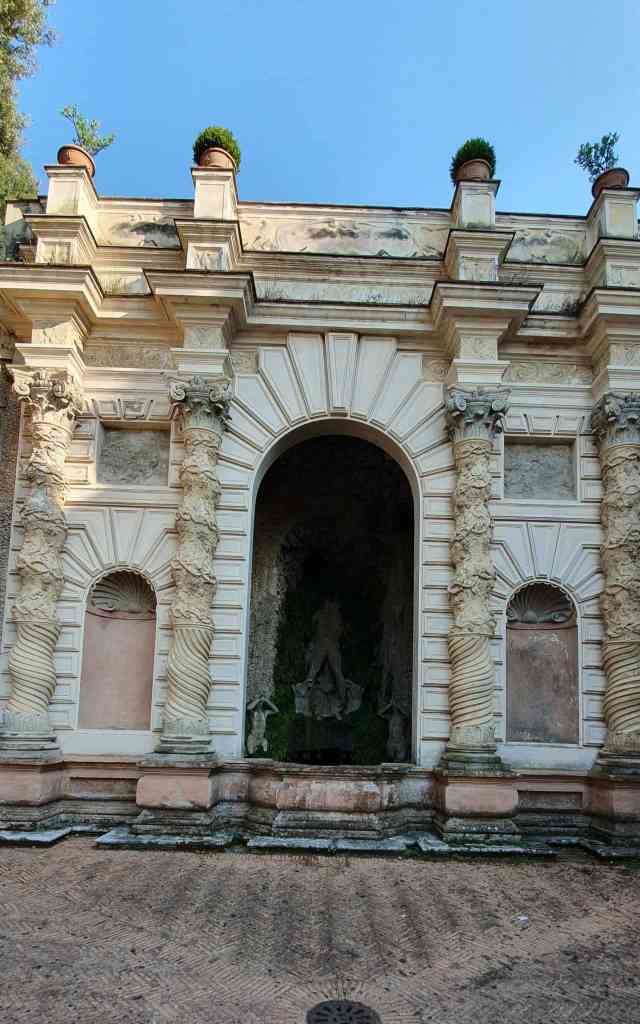
The Fountain of the Owl (Fontana della Civetta) is located in the southwest part of the garden, below the Fountain of Rometta and the Fountain of Persephone. You can hear music at 4 pm and 6 pm. The terraces of these three fountains are connected by stairways, with nymphaeums placed beneath the terraces.
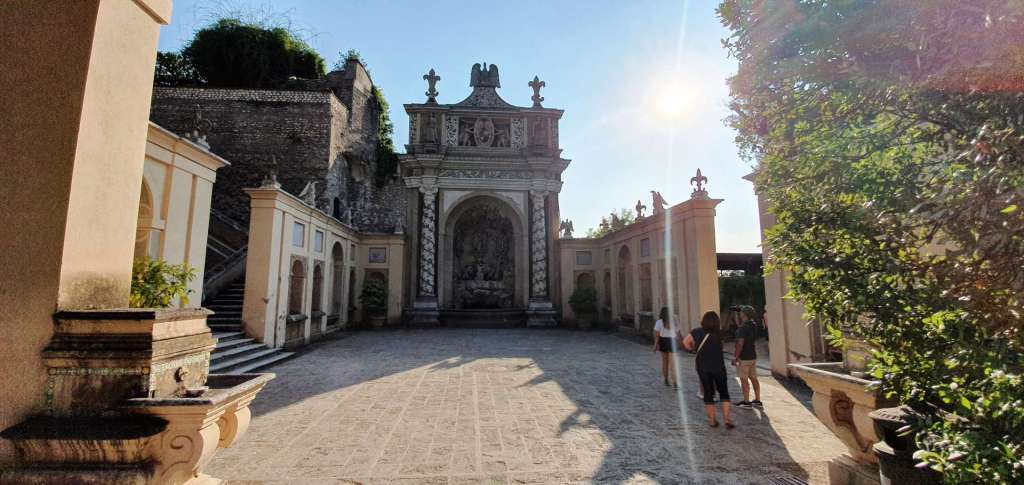
Above the Fountain of the Owl we found the Fountain of Persephone.
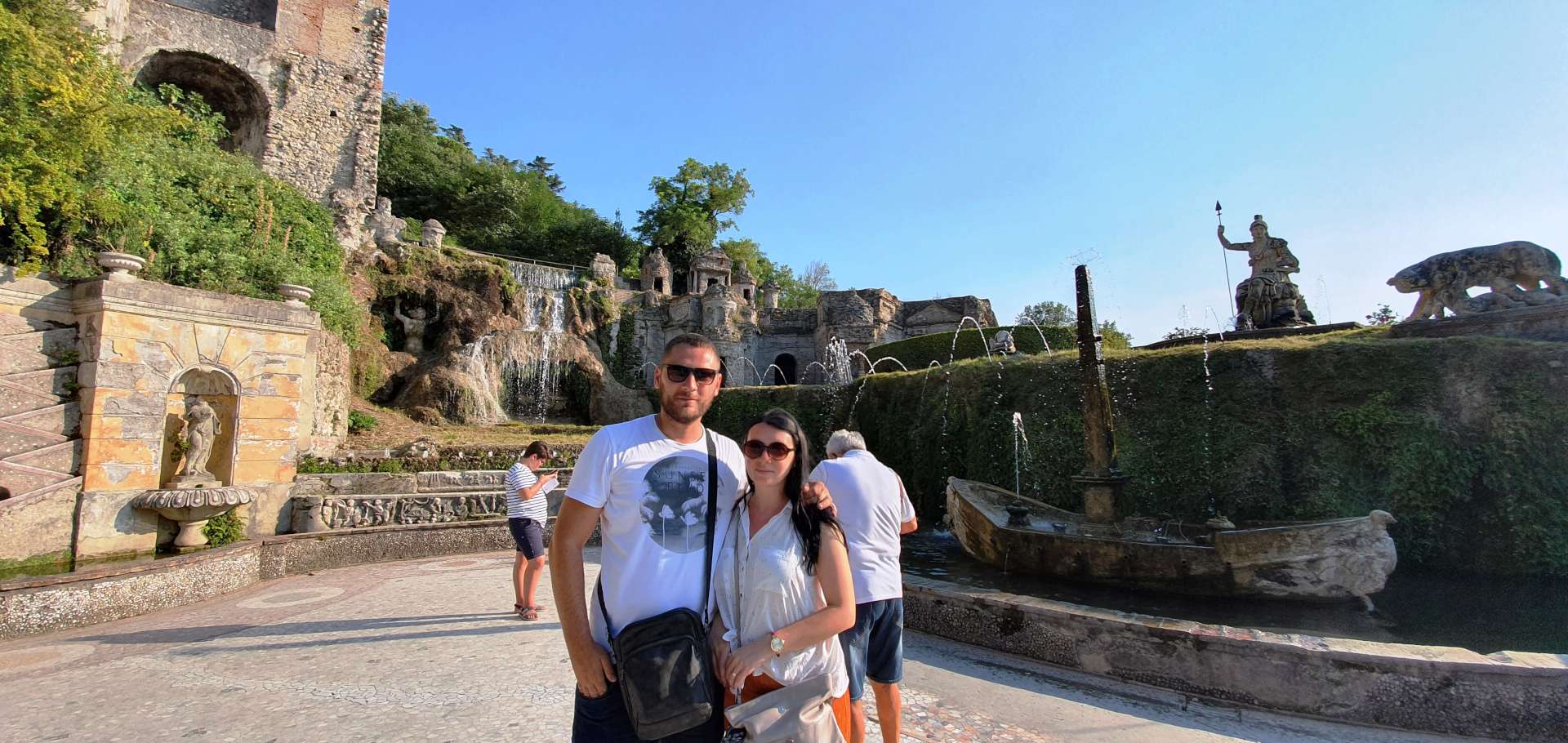
We climbed up the Ballori Steps and got to the Rometta Fountain (Fontana della Rometta or Fontana di Roma – as it represents a miniature of ancient Rome). Among the miniatures are the boat with an obelisk, symbolizing the Tiburtina Island in the Tiber, below the statue of Rome Triumphant.
Panoramic Views and Hidden Grottos – Strolling the Vialone
Afterwards, from Fontana della Rometta we climbed the stairs on the right and got on a large terrace at the top of the garden, called The Vialone. It is a 200 meters long terrace stretched between the Villa and the gardens.
The Fountain of the Tripod is located at the center of the Vialone and the Fountain of Europa is found at the northeast end at the top of the garden.
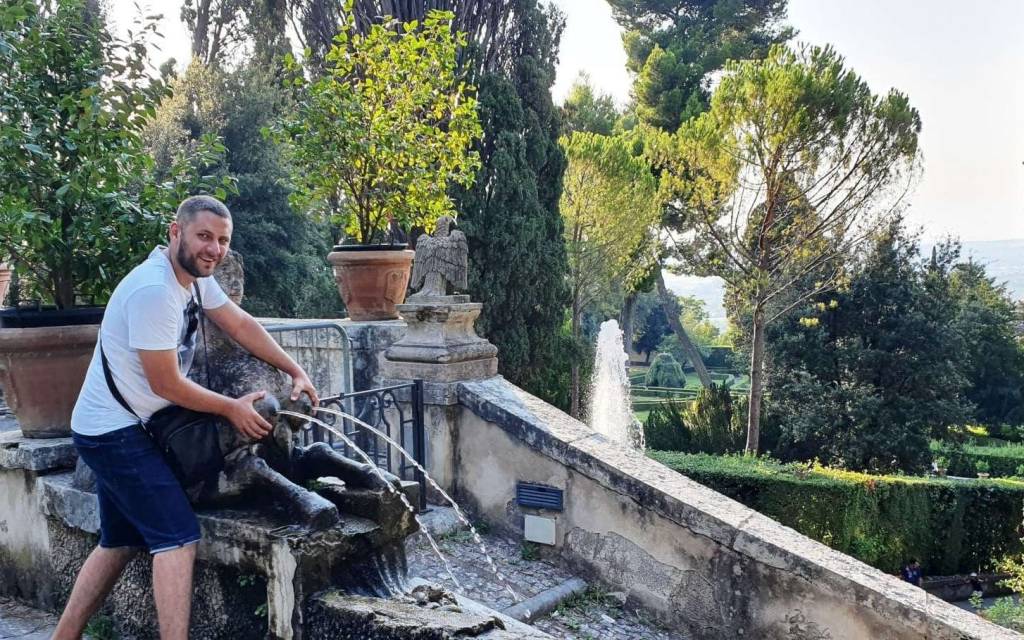
From the Vialone we then descended to Fontana del Bicchierone (Great chalice fountain) located on the Loggetta of the Cardinal, a small terrace surrounded by laurel hedges and also stone benches, between the Fountain of the Biccherone and the garden. Below is the Cardinal’s Walk, a shaded path passing by several grottos: below the Fountain of Europa is the Grotto of Aegle and Aesculpius, the Loggia of Pandora is found in the middle of the Cardinal’s Walk, the Grotto of Diana is located at the end of the Cardinal’s Walk, below the Gran Loggia. There are also the Grotto of Hercules, which is covered by the Loggetta of the Cardinal and the Grotto of Pomona.
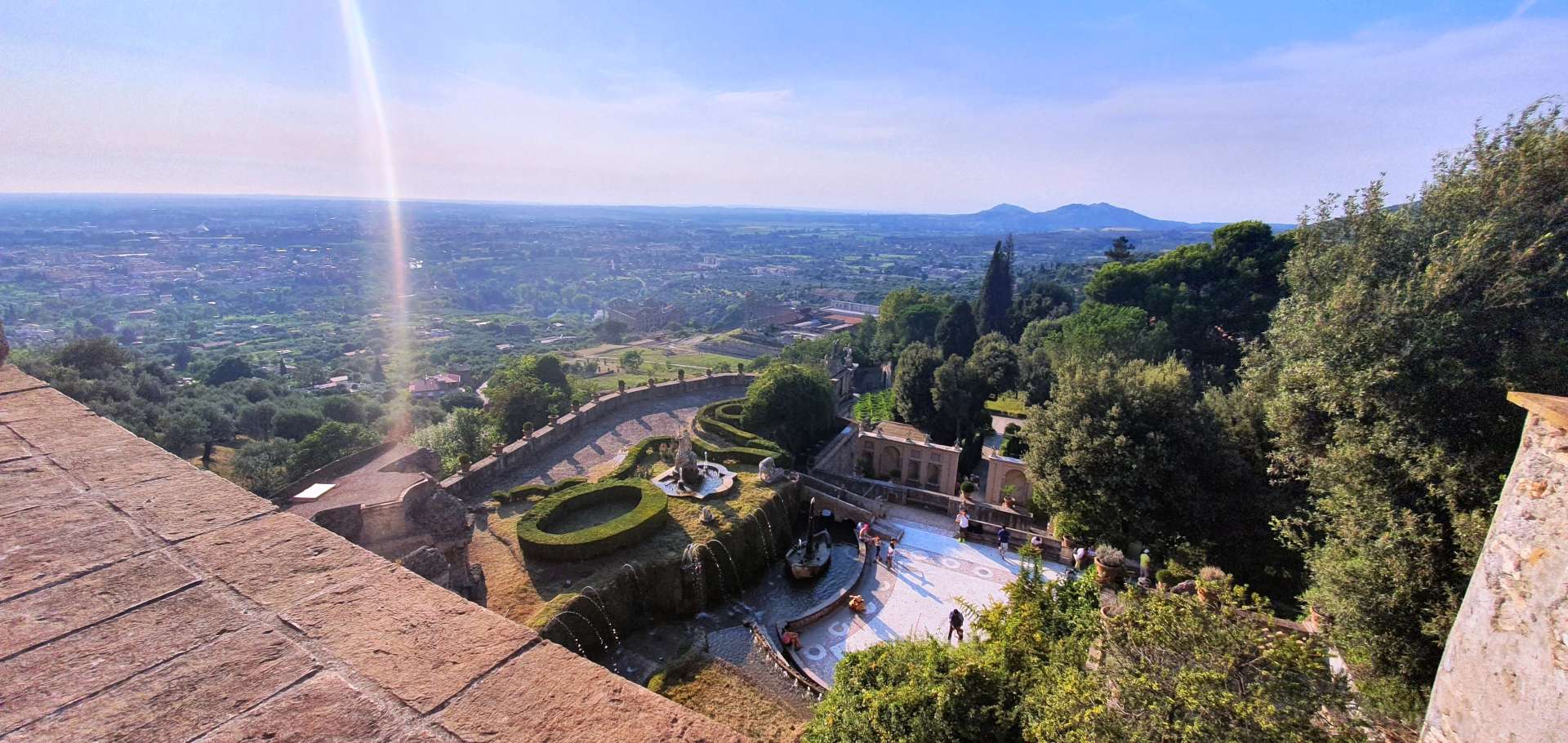
Below, the elegant avenue of the Hundred Fountains (Cento Fontane) is delimited by the Fountain of Tivoli (del Ovato) at one end, and the Fountain of Rome (La Rometta) at the other end. The cities of Tivoli and Rome were rivals in the past and fought several battles. The fountain is structured on three plans symbolizing the three rivers: Albuneo, Aninene and Ercolaneo.

Then, at the middle of the avenue of the Hundred Fountains is the Fountain of the Dragons – Fontana Dei Draghi.
The Grand Terrace and Panoramic Views of Tivoli
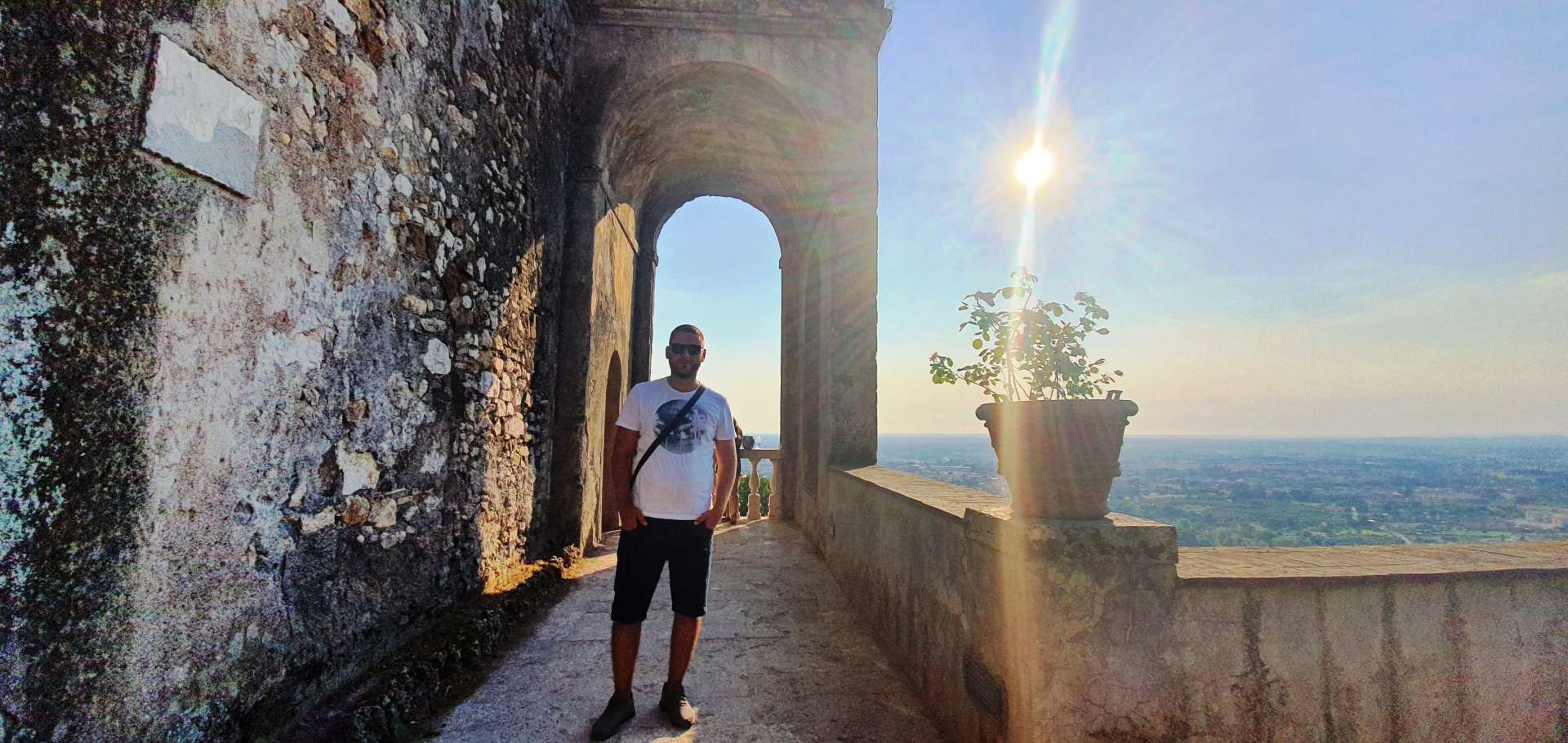
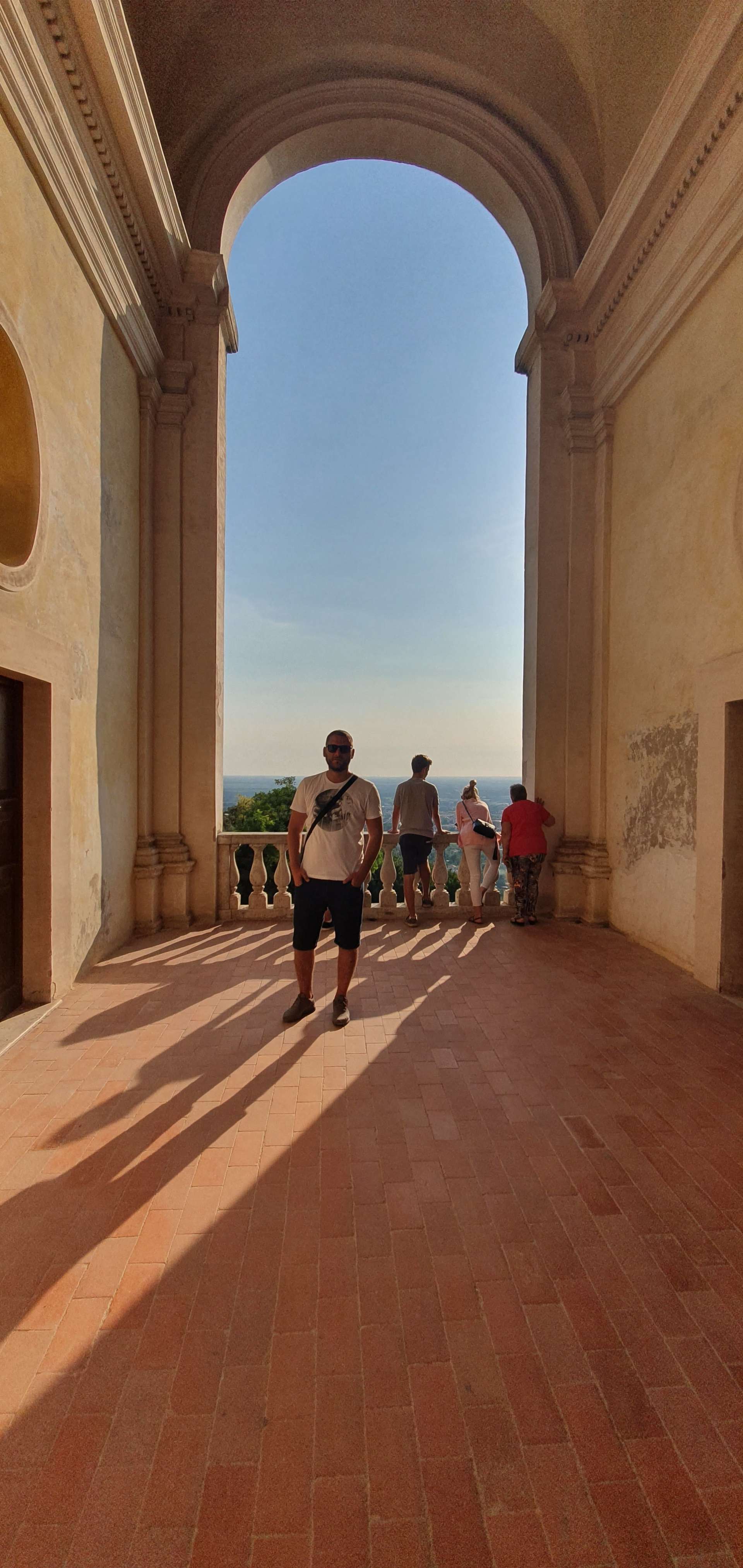
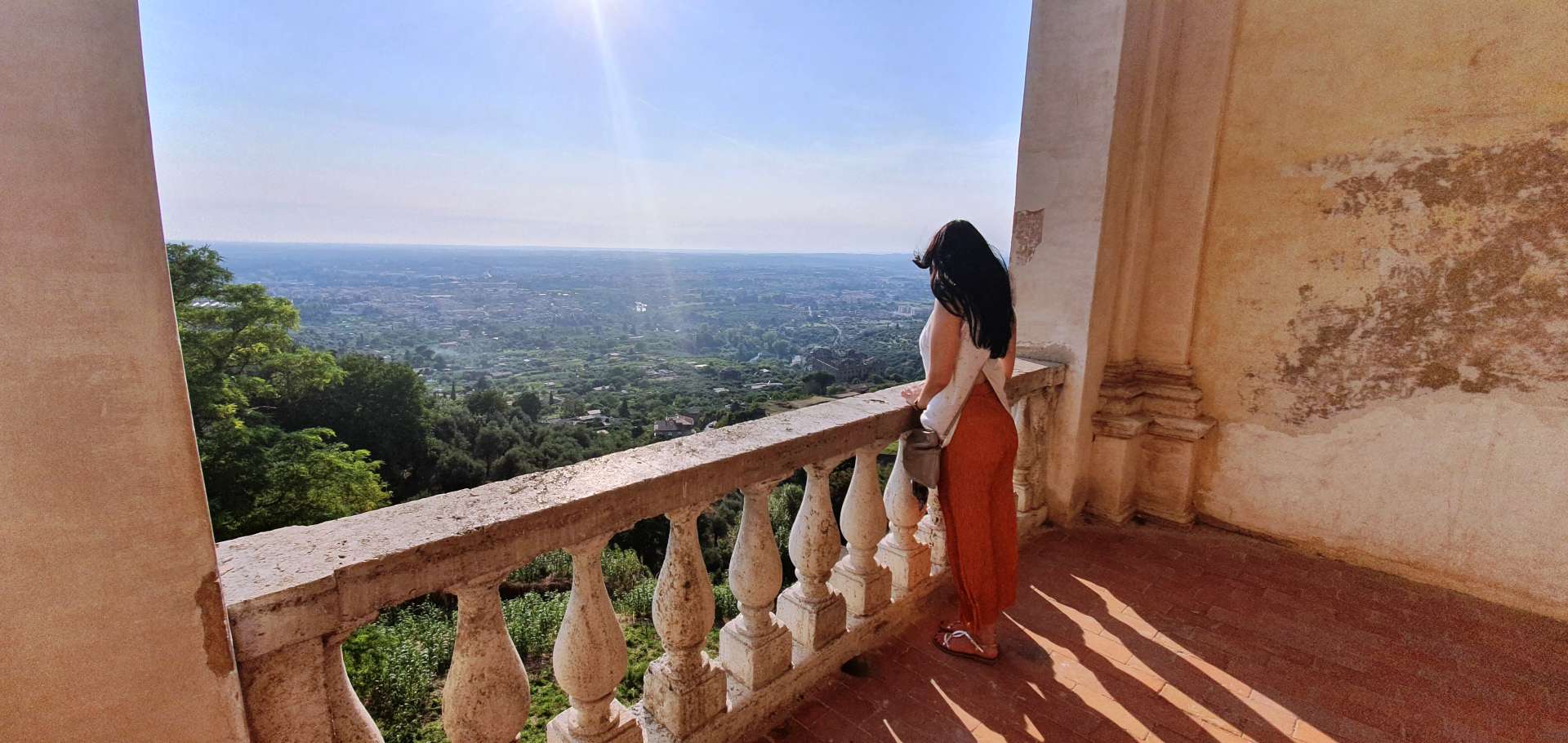
Back to the Vialone, we then visited the Cenacolo, or Gran Loggia, shaped as a triumphal arch and offering panoramic views of the gardens below and also of the Tivoli countryside. It is situated at the end of the Vialone and it contains a Nymphaeum, or grotto, with the Fountain of Leda inside.
Relaxing in Piazza Garibaldi and Enjoying Gelato
Then, after visiting Villa d’Este gardens we returned to Piazza Giuseppe Garibaldi in the center of Tivoli and spent some time people watching in the piazza. So, it was a relaxed atmosphere, people were actually enjoying their afternoon in the piazza, sitting on the benches, chatting or siting at the tables of the various restaurants and bars in the area. Moreover, there was a school in the square and some children were playing soccer enjoying their summer vacation. We enjoyed some granita fromil Gelatone D’Este di Myriam Di Faustino.
Returning to Rome After Our Italy Tivoli Visit
From Villa d’Este back to the train station we took a different route. Thus, from Piazza Giuseppe Garibaldi we went on the street in the middle, Via Vincenzo Pacifici, and then continued forward at Piazza Santa Croce and forward on Via Trevio. We eventually arrived in a piazzetta called Largo Cesare Battisti and went forward, on the street in the middle, also called Via Trevio. Then,t the next crossroads, we turned right on Via dei Sosii. Before going on Via dei Sosii, from the crossroads, we noticed Parrocchia San Biagio.

We continued our way on Via dei Sosii, at the intersection we went forward, passed by the Fontana di Gemma. We kept ahead on Vicolo dei Sosii, thus passing through a tiny tunnel with steps located under a staircase on the right. Then we arrived in a parking lot of a supermarket and saw Ponte dei Sepolcri o di Vopisco on the right. So, we went towards north on Viale Roma. Then, at the intersection, we turned right on Viale Giuseppe Mazzini and we kept forward and we finally arrived at the parking lot and train station Staz. Tivoli.
We took the first train back to Rome Termini, we bought tickets from there at the price of 3 euros a ticket. The trip lasted 1 hour and 30 minutes, because it had a longer route.
Dinner and Reflections on Our Trip
Because we got back in Rome quite late, we decided to have dinner at Termini, again at Ciao Restaurant. As expected, the food was ready fast, was tasty and also the price was reasonable.
Day 6 – Shopping and Farewell to Rome
We gave up on our idea of going to Fiumicino beach before departing. Instead, we decided to go shopping; our flight was at 6.30 pm so we had enough time. We got out for breakfast and then returned to the hotel. Afterwards, we did our check-out at 10 am and we were able to leave our luggage at the reception for free.
Last Walks Around Termini and Piazza della Repubblica
From Virginia Hotel we then walked towards Termini. We went to the left on Via Montebello, turned left on Via Goito, then right at Piazza dell’Indipendenza and walked on Via Solferino and then continued ahead on Viale Enrico de Nicola. There we stopped and had some fruits snack from a fruits stand in front of Terme di Diocleziano. Then we finally arrived at Piazza dei cinquecento.
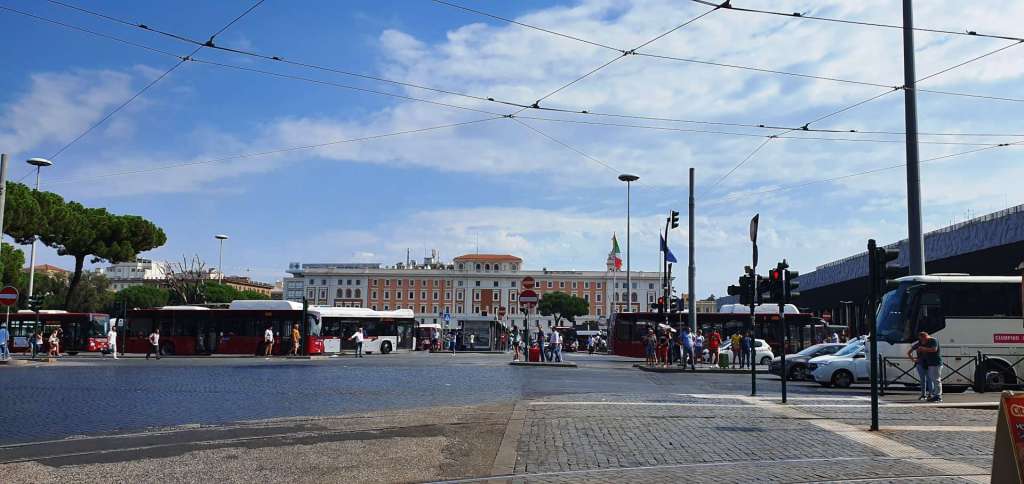

We crossed the intersection and went to Via Giovanni Giolitti to buy some souvenirs from the shops across the street from the train station. We found the Tabacchi shops in the area also a good option to look for souvenirs.
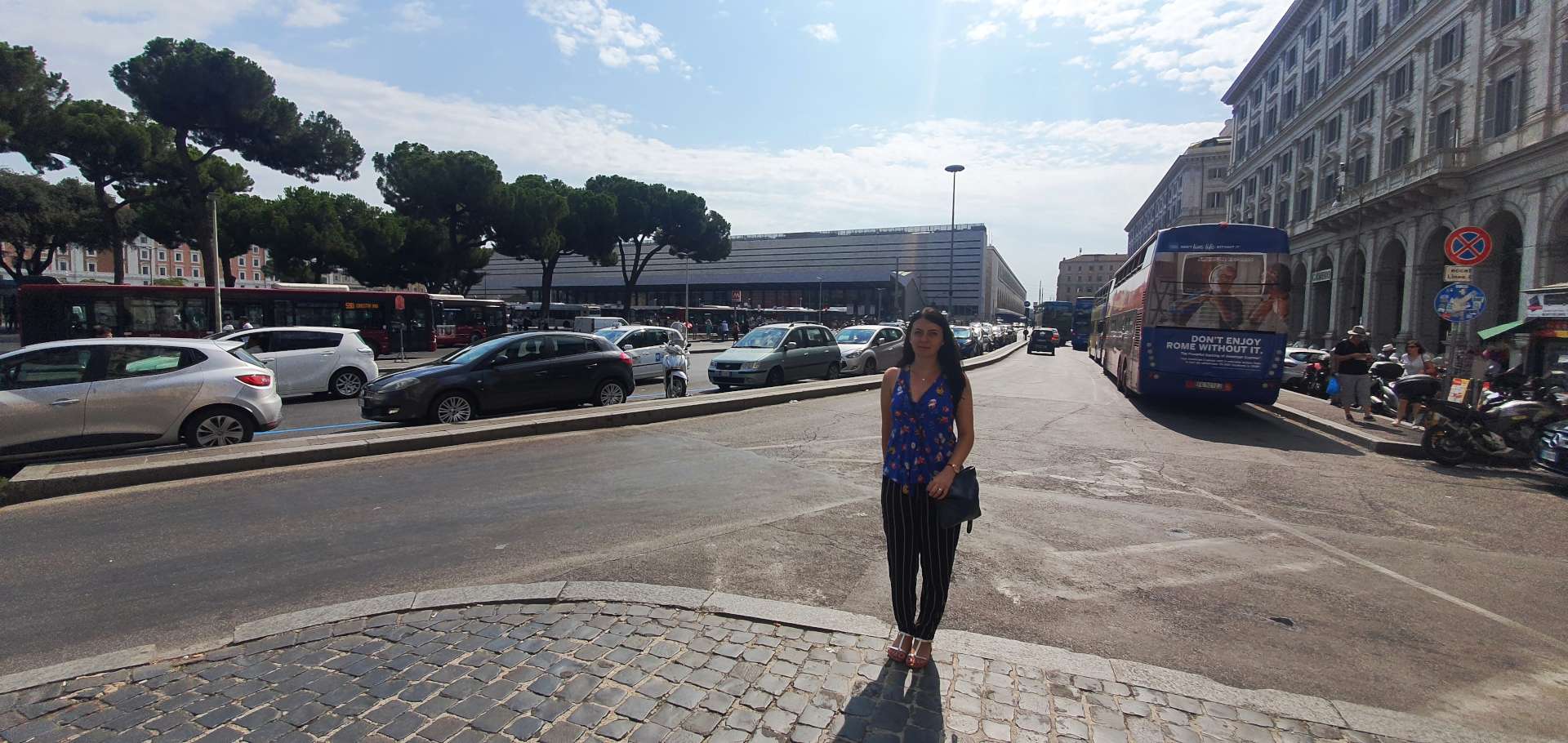
Then we returned to Piazza dei Cinquecento, heading towards Piazza della Repubblica.
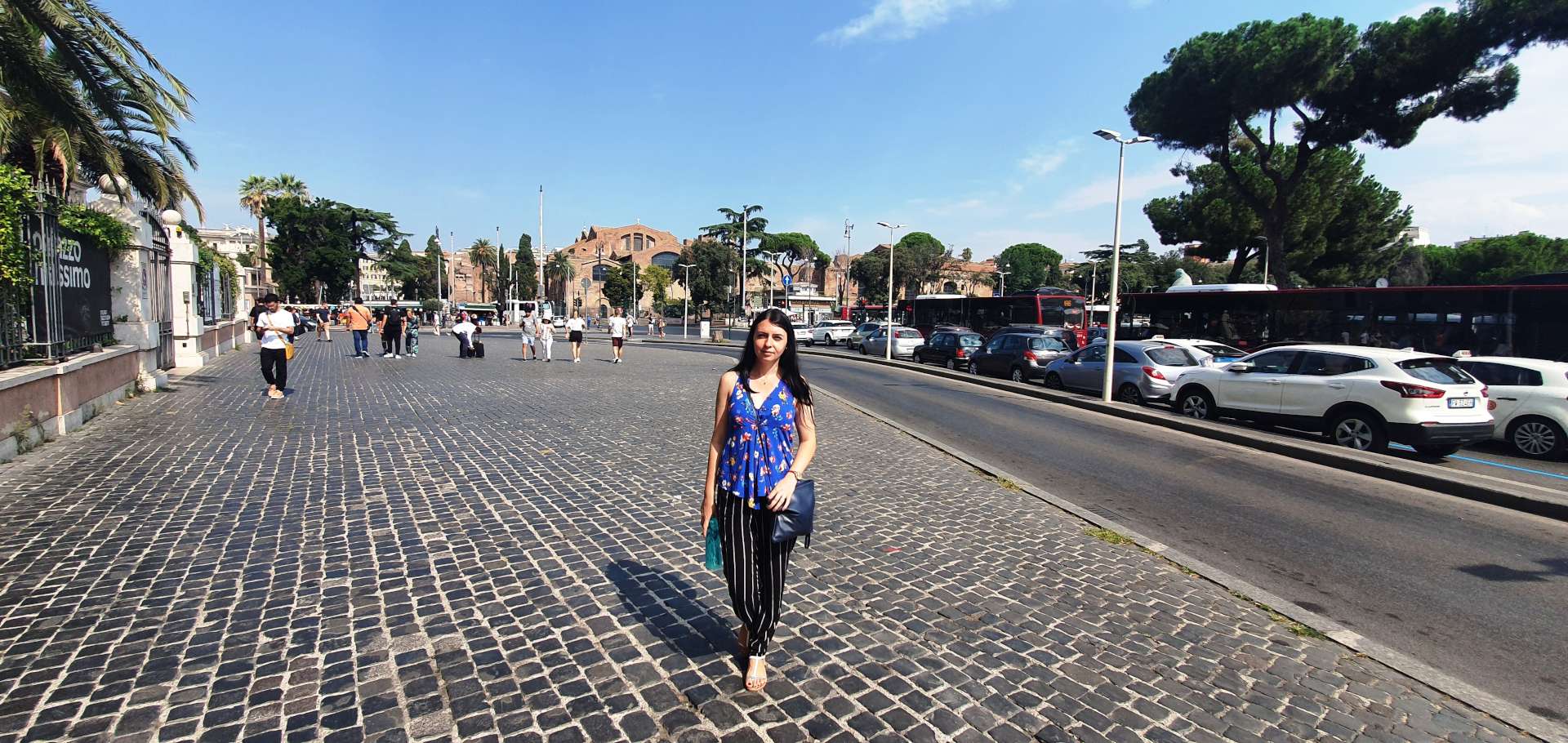
So we arrived in Piazza della Repubblica, in front of Basilica Santa Maria degli Angeli e dei Martiri.


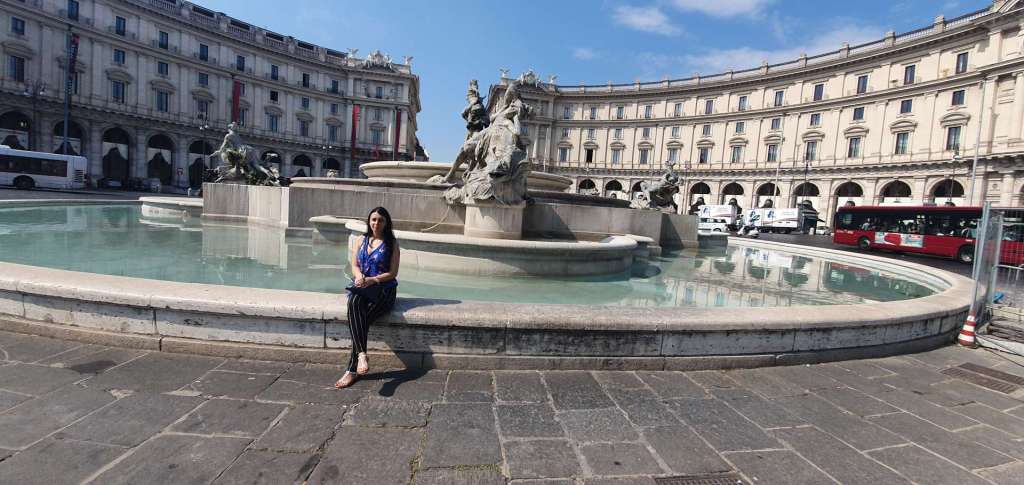
We crossed the street to take a picture with the beautiful fountain of Piazza della Repubblica.
Shopping on Via Nazionale Before Departure
Then we headed to Via Nazionale, the street that passes between the two buildings that symmetrically dominate the piazza.
Via Nazionale is a shopping street. So, it was convenient for us to do the shopping on Via Nazionale as it was close to the hotel and also close to Termini. We found some nice shops and also the prices were OK, as it was August and there were many discounts applied. Eventually, we bought some nice dresses and also some smart – casual men shirts and pants.
Sweet Stop at Verde Pistacchio
As returning to Piazza della Repubblica, we then noticed a nicely decorated ice cream shop – Verde Pistacchio. The ice cream dispenser was a converted platform of an old pistachio green Volkswagen minivan, and the cash register was the driver’s seat. There was also a pistachio green vespa on the sidewalk.

Then we finally went back to the hotel to get our luggage. Below you have the view of Via Montebello from the hotel.


We carried our luggage to Termini and boarded the Terravision shuttle bus from Termini to Fiumicino Airport, boarded our plane and said good buy to Rome – for now!

Read On
Make sure to check out Our Metropolitan City of Naples, Amalfi Coast, Capri and Pompeii Italy visit: Day 1 to continue exploring — from hidden corners to grand vistas, there’s much more to discover. Also, you can find all our posts about Rome on this page. Moreover, for inspiration and practical tips on visiting Italy, grab our maps and travel guides and also head over to our Italy Travel Hub and Italy Bucket List — your starting point for all things Italian! And if you’re looking to expand your itinerary, don’t miss our posts on Naples, and also our day trips to the Amalfi Coast, Capri and Pompeii.
Thanks for reading!
Table of contents
- A Morning Walk Through Rome Before Our Italy Tivoli Trip
- Discovering Rome’s Hidden Fountains and Churches
- From Palazzo Barberini to the Spanish Steps
- The Spanish Steps and Breakfast Stop
- Shopping Around Via dei Condotti and Via Borgognona
- Visiting the Pantheon – A Masterpiece of Ancient Rome
- Revisiting to the Trevi Fountain
- Heading to Termini to Catch the Train to Tivoli , Italy
- Train Trip from Rome to Tivoli, Italy
- A Unique Lunch in Italy at Taverna di Dracula in Tivoli
- Day 6 – Shopping and Farewell to Rome
- Read On
- ❓ Frequently Asked Questions (FAQ) — Day 5 & 6: Rome, Tivoli & Departure
Related:
❓ Frequently Asked Questions (FAQ) — Day 5 & 6: Rome, Tivoli & Departure
🚶♂️ 1. What did you do on Day 5 in Rome before heading to Tivoli?
In the morning we revisited Rome favorites like Piazza di Spagna (Spanish Steps), the Pantheon, and Trevi Fountain, taking time to appreciate them again before catching a train to Tivoli in the afternoon.
🏛 2. Which Rome landmarks did you prioritize on Day 5?
We walked through Piazza della Repubblica, Piazza Barberini, Piazza di Spagna, and then Via dei Condotti for a mix of classic sights and shopping areas. Afterwards we headed toward the Rome Pantheon and Trevi Fountain before departing to Tivoli.
🚆 3. How did you get to Tivoli from Rome?
We took a train from Roma Termini to Stazione Tivoli, which can cost around €2.60-€3 per person and takes roughly 30 min to 1½ h depending on the route. (2019)
🏞 4. What did you do in Tivoli?
After arriving, we explored Tivoli’s historic old town — including Piazza del Duomo and nearby streets — and then spent time at Villa d’Este, a 16th-century villa famed for its elaborate fountains and gardens.
💦 5. Why visit Villa d’Este?
Villa d’Este’s gardens and fountains are a highlight of Tivoli, with ornate water features like the Fountain of the Organ, Oval Fountain, and the Hundred Fountains — therefore making it one of the most impressive Renaissance garden landscapes in Italy.
🍽 6. Where did you eat in Tivoli?
We stopped for lunch at Taverna di Dracula in Tivoli’s old town — a quirky spot with traditional fare — before visiting Villa d’Este.
🕐 7. How long did the Tivoli visit take?
We spent the afternoon exploring Tivoli’s town center, and afterwards Villa d’Este, and then finally took a late train back to Rome — arriving in time for dinner.
Day 6:
🛍 8. What happened on Day 6 (departure day)?
On the final day, we checked out of our hotel but left our luggage at reception, then spent the morning shopping around Via Nazionale and near Termini, visited Piazza della Repubblica, enjoyed some pistachio ice cream at Verde Pistacchio, and prepared for departure.
🛫 9. How did you end your trip?
We took the Terravision shuttle bus from Termini to Fiumicino Airport and finally boarded our flight, wrapping up our memorable Italian visit.
👟 10. Any tips for this final part of the trip?
- Plan your train times to Tivoli carefully so you have enough time for gardens and lunch.
- Wear comfortable shoes — both Rome and Tivoli involve a lot of walking.
- Shop and snack around Termini before departure — the area has plenty of local shops and cafés.
Have questions or want to connect?


