
Early Morning Start – Day Trip from Naples to the Amalfi Coast
We woke up early in the morning eager to get from Naples to the Amalfi Coast on a day trip to visit the charming coastal towns: Positano, Amalfi and also Ravello. We had breakfast at the hotel. The cost was also included in the room price. They were serving only Italian breakfast, which in the Southern half of Italy means only coffee and something sweet, usually a croissant – cornetto in Italian.
Then we walked to Garibaldi Napoli Centrale train station. From Naples train station if you want to get to the Amalfi Coast, public transportation is the cheapest option. You have to take the Circumvesuviana train to Sorrento. Then, outside the Sorrento train station there are the SITA buses that regularly depart for Amalfi. The ride is nearly and hour and a half and you will get a good view of the Amalfi Coast along the way, but without worrying about the difficulty of driving on that famous winding narrow road. Also, during the Amalfi Coast day trip don’t forget to sit on the right side for the best views.
The Circumvesuviana Train from Naples to the Amalfi Coast
The Circumvesuviana trains had a bad reputation, as often being late, crowded, with no air conditioning, no luggage storage and, moreover, for being full of pick-pocketers. Therefore, we wanted to travel with the Campania Express train instead. But, when we arrived at the train station the first train departing to Sorrento was the old Circumvesuviana direct train. So, we decided not to wait for the express one.
Tickets from Naples to Sorrento cost 3.60 euros now, and were even cheaper back then. So, for 2 people 2 return tickets would be only 14.4 euros. The trip takes 1 hour and 10 minutes. You cannot purchase tickets online, but only at the ticket window or also at one of the newspaper stands in the station.
The Campania Express Option vs the Circumvesuviana
The Campania Express trains run along the same tracks as the Circumvesuviana, but only stops at the tourist attractions and therefore the trip takes only 50 minutes. They have guaranteed seating, air conditioning, and also hostess service on board. The cost is 15 euros one way and 25 euros round trip. You can also buy tickets online.
The L1 line – the Circumvesuviana station is on the lower level of the Naples Centrale train station, below the high speed train platforms. So, we climbed down the stairs from the center of the station. We asked around and so we managed to find the correct train. Trains to Sorrento always depart from track 3. There are also a lot of signs pointing you correctly.
Moreover, we had a surprise. As we were waiting on the platform, some Italian girls asked us for directions; they wanted to find the train to Rome. We excused ourselves, revealing to them the fact that we were actually tourists. It was actually our first time in Italy! But we weren’t looking like tourists; we were traveling only wearing some tiny crossbody bags.
The Journey to Sorrento
The train was an older one and moreover, it was covered in graffiti. It wasn’t that crowded at 8 in the morning. Most of the passengers seemed to be locals, getting off at next stops. In fact, young Asian people seemed to be the only tourists. We never felt insecure during the whole train trip. However, we were as vigilant as we always are when using public transport anywhere in the world. Moreover, we didn’t need airconditioning, as the windows opened were doing their job well at that hours in the morning.
From Garibaldi to Sorrento there are several stops on Line 1, such as: Torre Annunziata, Stazione Villa Regina, Pompei Scavi Villa Dei Misteri, Pioppaino, Via Nocera, Castellamare di Stabia, Corso Filangieri, Seiano, Meta, Piano, S. Agnello and, finally, Sorrento.
Arriving in Sorrento – Getting the SITA Bus to the Amalfi Coast
We got off at Stazione di Sorrento. Then we got out of the train station and went to buy tickets for the SITA bus. SITA buses run between the Sorrentine peninsula and the Amalfi Coast. You can find the schedule on the internet: https://www.positano.com/en/bus-schedule.
As usually in Italy, you can find bus tickets at “tabaccheries” (cigarette shops). They are also available at newspaper stands. Additionally, you can find them at bars and cafés in all the towns along the Amalfi Coast. In Sorrento, there is a ticket booth at the Circumvesuviana station. You cannot buy on board, so it can be handy to purchase your return ticket before departing.
SITA Bus Prices and Tips
There are different types of tickets, prices of which vary. One-way trip prices range from 1,00 Euro to 2,00 Euro. COSTIERASITA 24 ticket costs 10 euros, with unlimited rides on SITA SUD buses between: Agerola, Amalfi, Atrani, Cetara, Conca dei Marini, Furore, Maiori, Massa Lubrense, Meta di Sorrento, Minori, Positano, Piano di Sorrento, Praiano, Ravello, Salerno, Sant’Agnello, Scala, Sorrento, Tramonti, and Vietri sul Mare. You must validate your ticket. Stick it in the machine behind the driver, so this machine stamps it with a date and time.
Eventually, we bought two tickets valid for 24 hours. We sat on the right side of the bus in order to get the best views. From Sorrento, the bus takes roughly 45 minutes to reach Positano and 60 minutes to reach Amalfi. We decided to get off at Amalfi and therefore stop in Positano on our way back. We were also hopping to visit Sorrento a little before heading back to Naples in the evening.
The Famous Amalfi Drive – SS163 Road
The SS163 road is among the world’s most renowned stretches. It covers 36 kilometers and is often called the ‘road of 1,000 bends.’ Stretching from Sorrento to Salerno, this route is also a UNESCO World Heritage site. It features numerous tight curves, steep drops, and also narrow passages along its two lanes. Also, the road is full of stomach-churning curves. Be sure to take all necessary precautions if you’re prone to car sickness.
From Sorrento the first town on the Amalfi Coast is Positano. Approaching Positano from Sorrento along the SS163 road is an unforgettable experience. The SS163, also known as the Amalfi Drive, is renowned for its breathtaking views and winding paths that hug the cliffs of the Amalfi Coast.
You will encounter a series of dramatic turns and panoramic vistas as you drive from Sorrento towards Positano. These vistas offer stunning views of the Tyrrhenian Sea. The rugged coastline is equally breathtaking. The road gradually descends into Positano, and so the village comes into view, presenting a postcard-perfect scene.
Positano on the Amalfi Coast

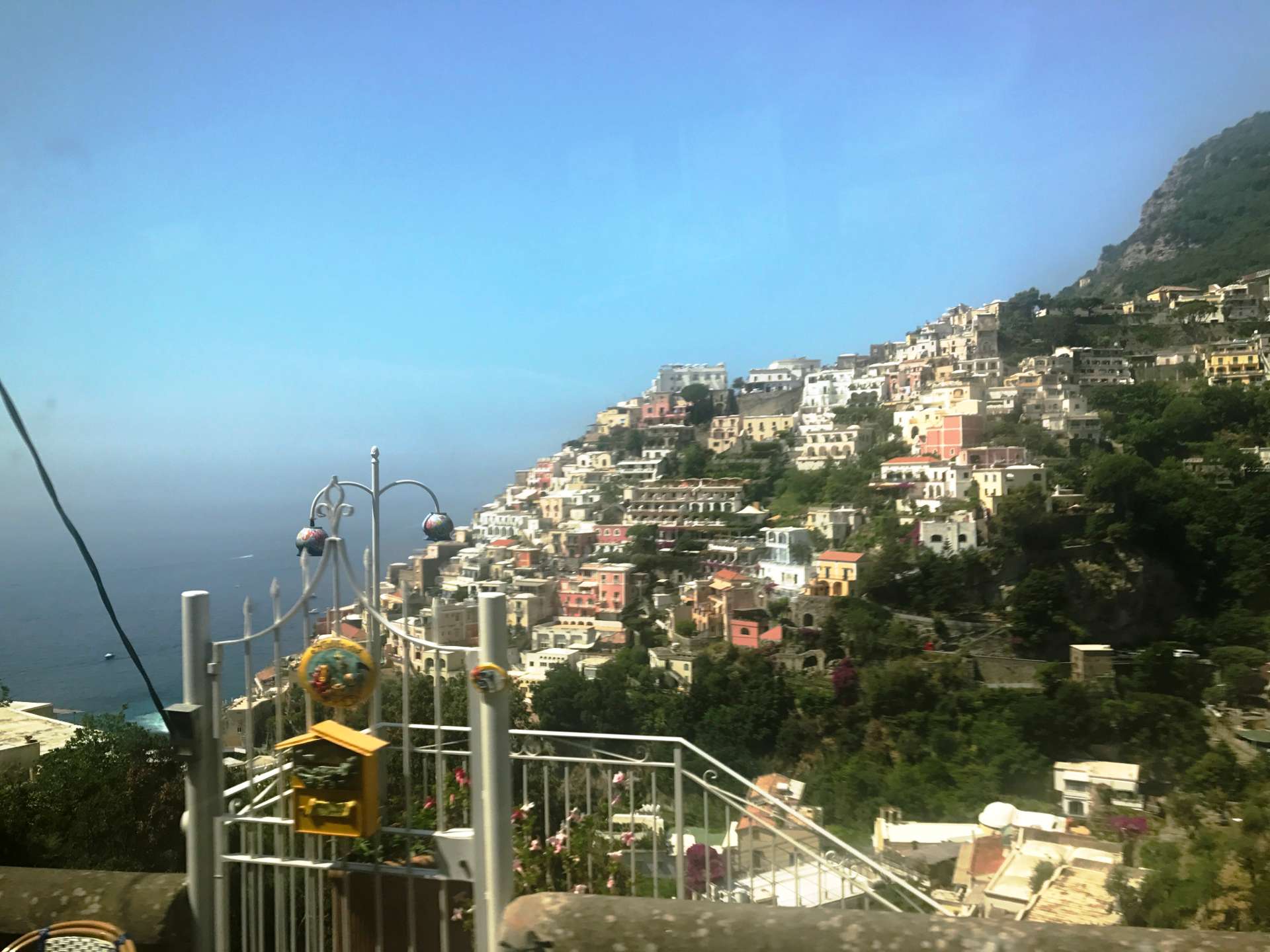
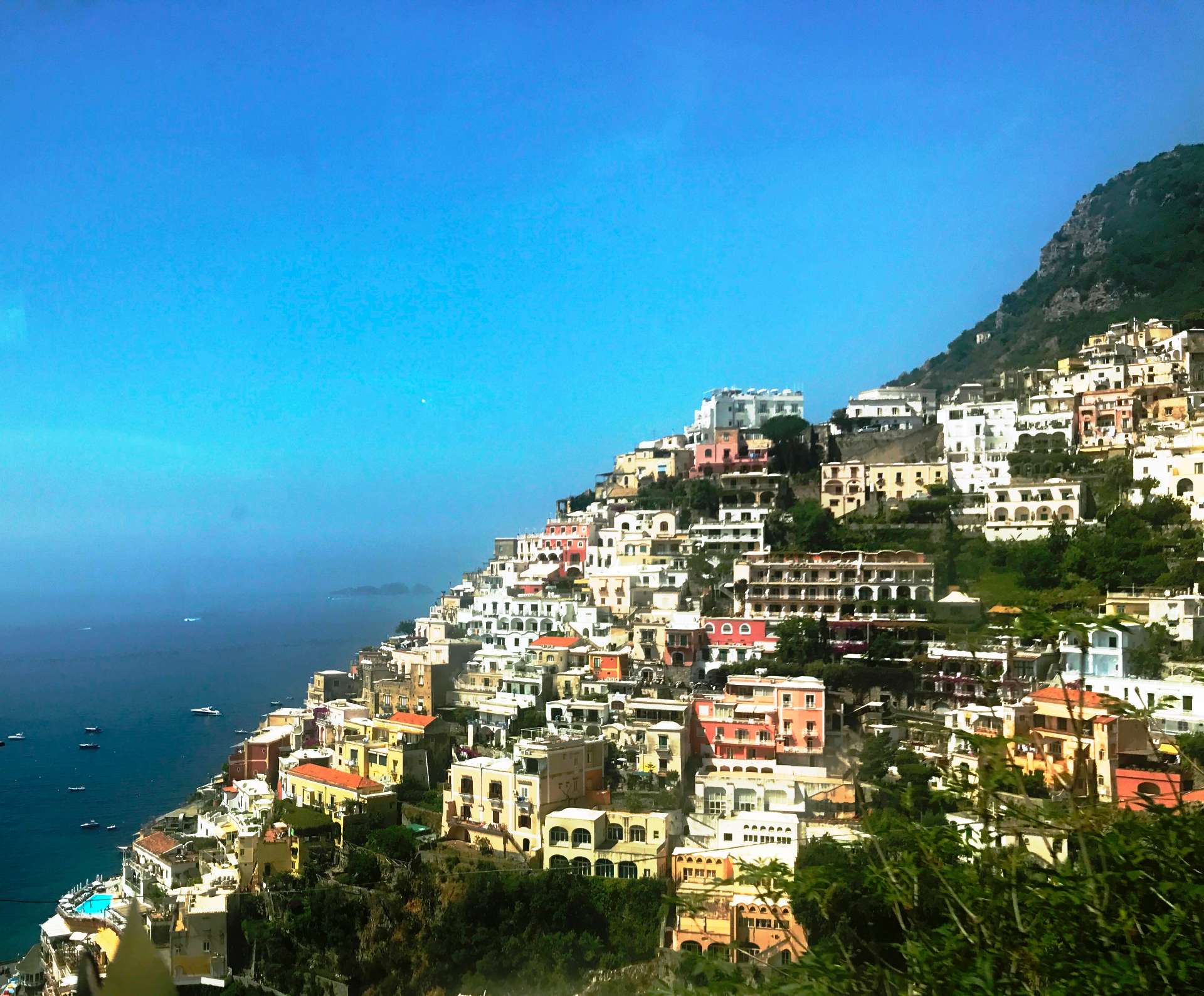
Positano appears as a cascade of colorful buildings clinging to the steep hillside. Also, narrow streets and staircases wind their way down to the sea. The view from the SS163 road showcases the village’s unique architecture, with pastel-hued houses, vibrant bougainvillea, and also terracotta rooftops, all set against the backdrop of lush greenery and the shimmering blue sea.
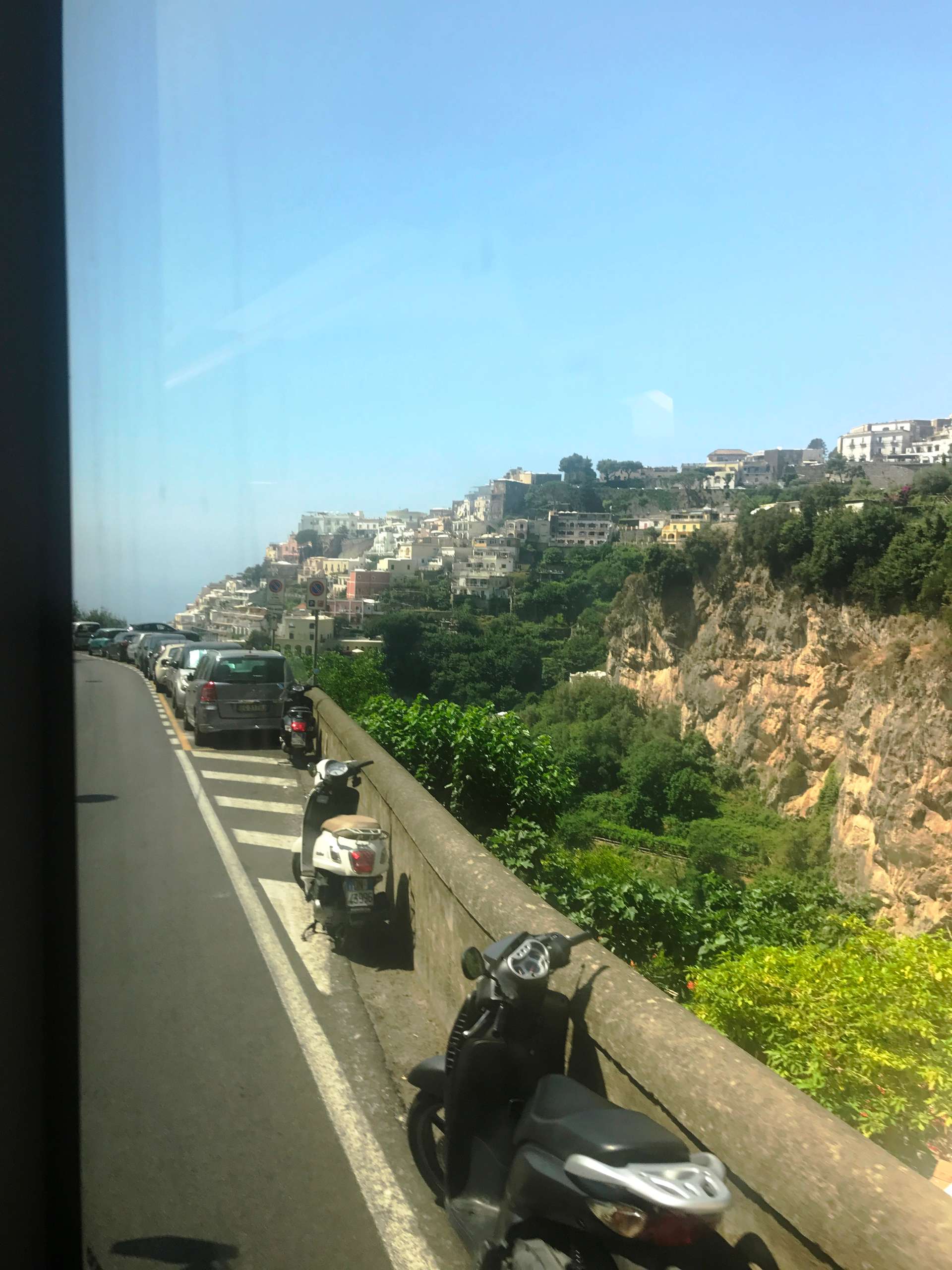
Driving a car is very difficult on this road. However, there are many spots along the way to take photos. It is true that with the bus you can’t stop anywhere you want, but only at the bus stops. But, even with a car it would be difficult to stop anywhere you want. The narrow road is often packed with a row of vehicles, including scooters, as you can see in the picture below.

You can even notice the dome of the Church of Santa Maria Assunta, an iconic landmark with its distinctive tiled roof. The sea is dotted with numerous small boats and yachts, emphasizing therefore Positano’s popularity as a destination for both tourists and seafarers.

After Positano we then head towards Praiano.
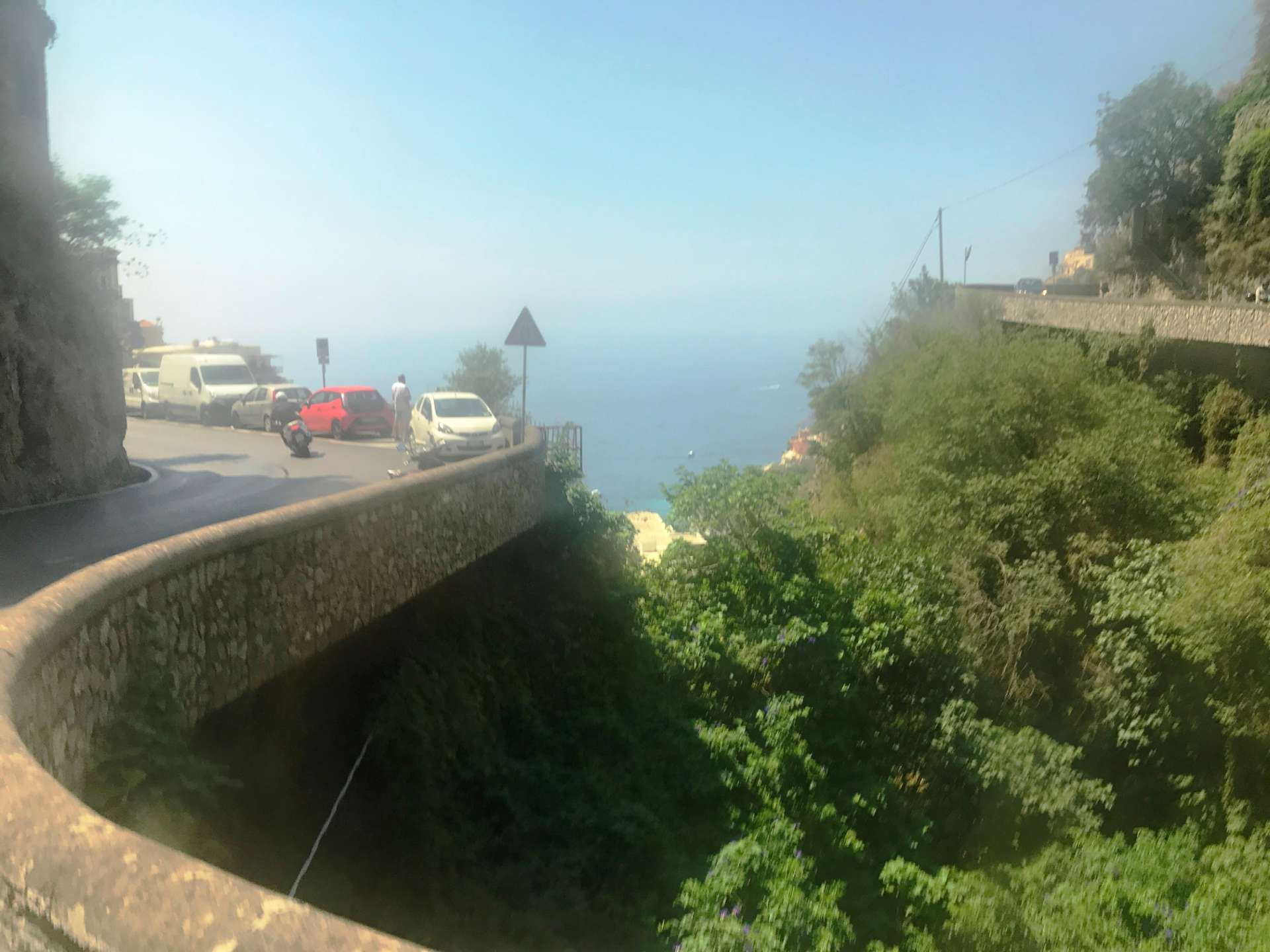
We caught a few more pictures of iconic Positano with its houses decorated with nice fences and vibrant purple flowers.

Amalfi Coast Villages: Praiano, Furore, and Conca dei Marini
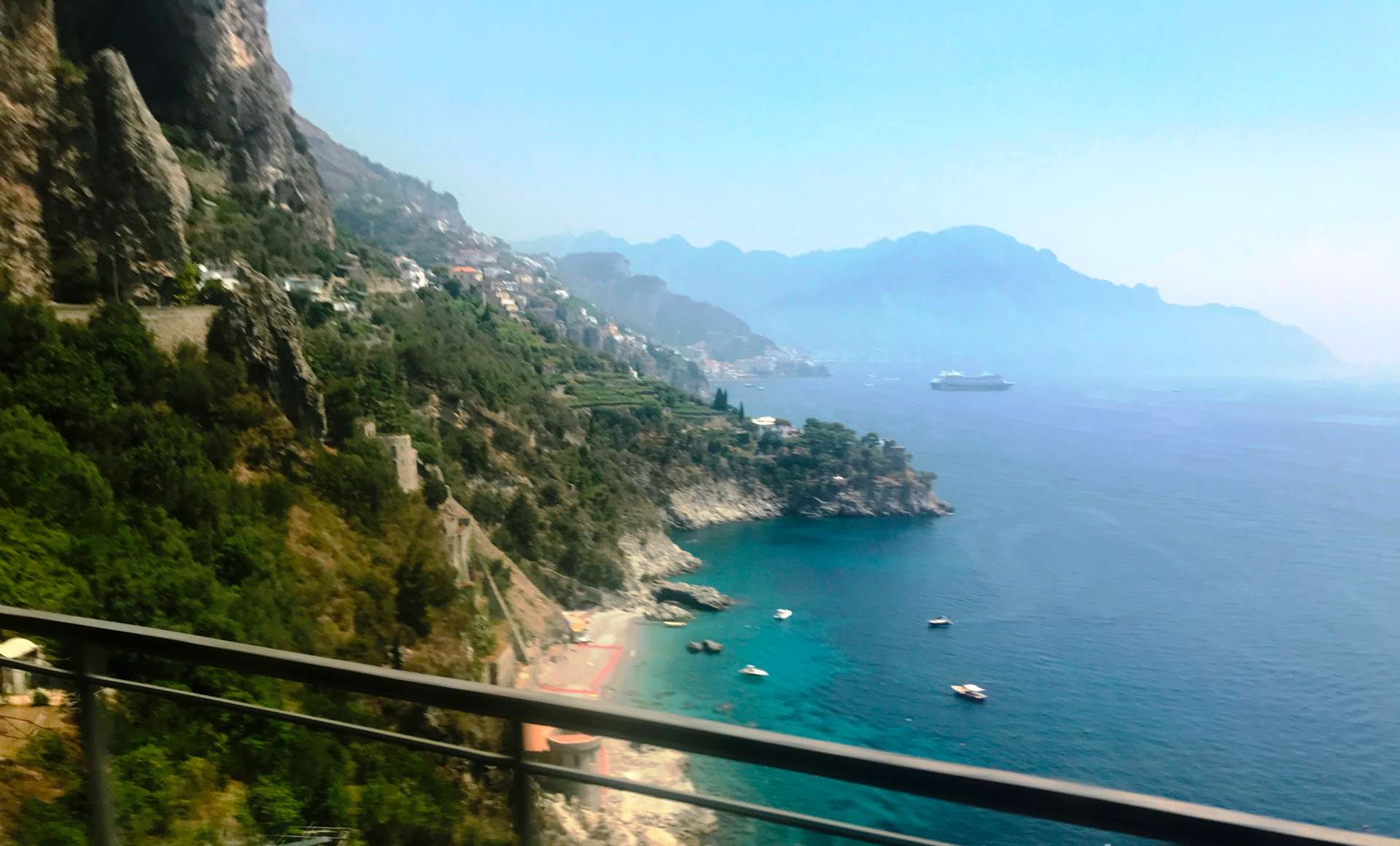
Furthermore, the winding coastal road leads through tunnels carved into a rocky cliff. The road, bordered by vibrant pink flowers and lush greenery, offers a spectacular view of the expansive blue sea below. Buses and cars are traveling along the narrow path, sometimes causing congestion.
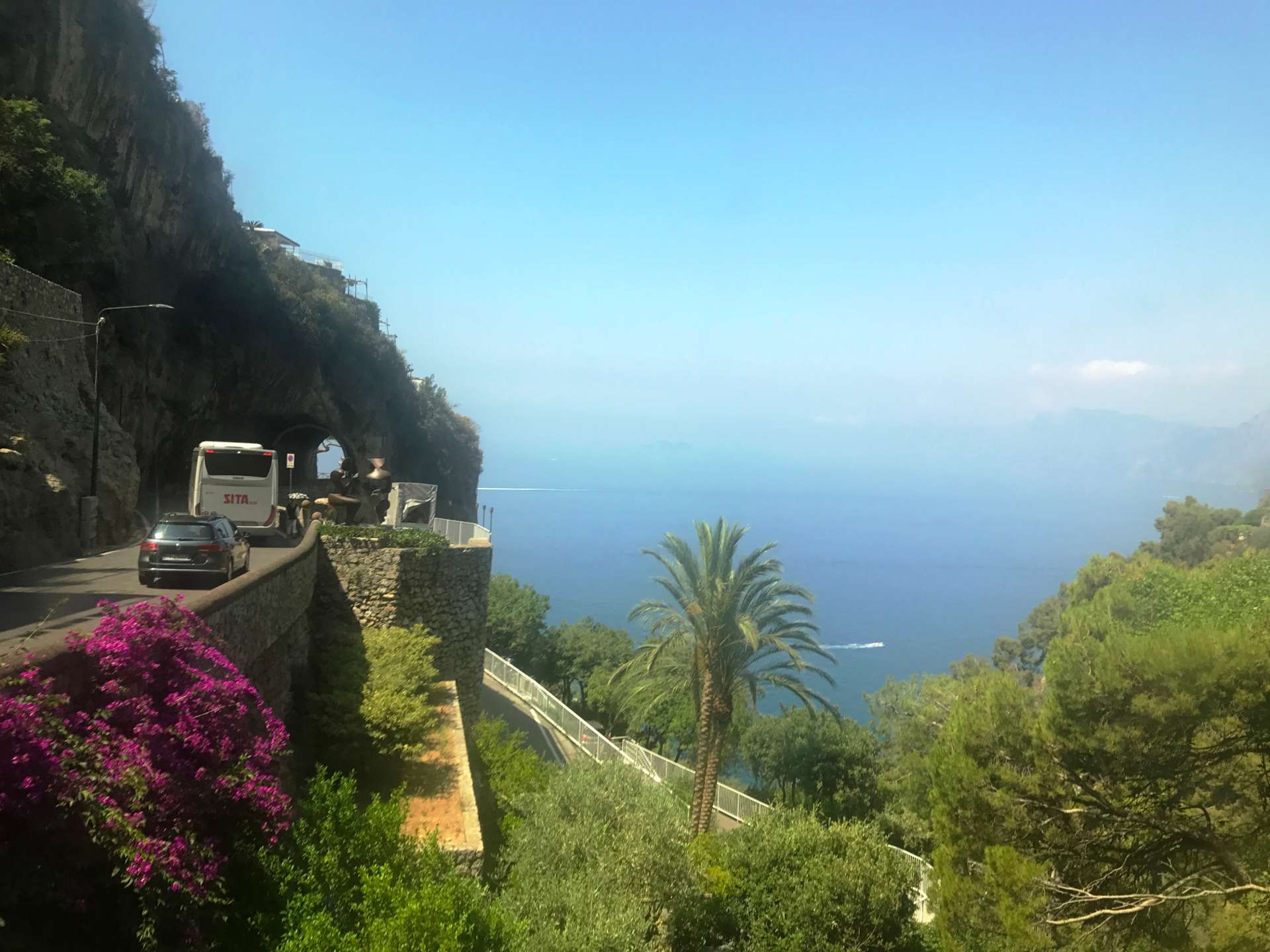
On the road you might encounter local farmers selling lemons, peppers, and tomatoes from their trucks.
Praiano
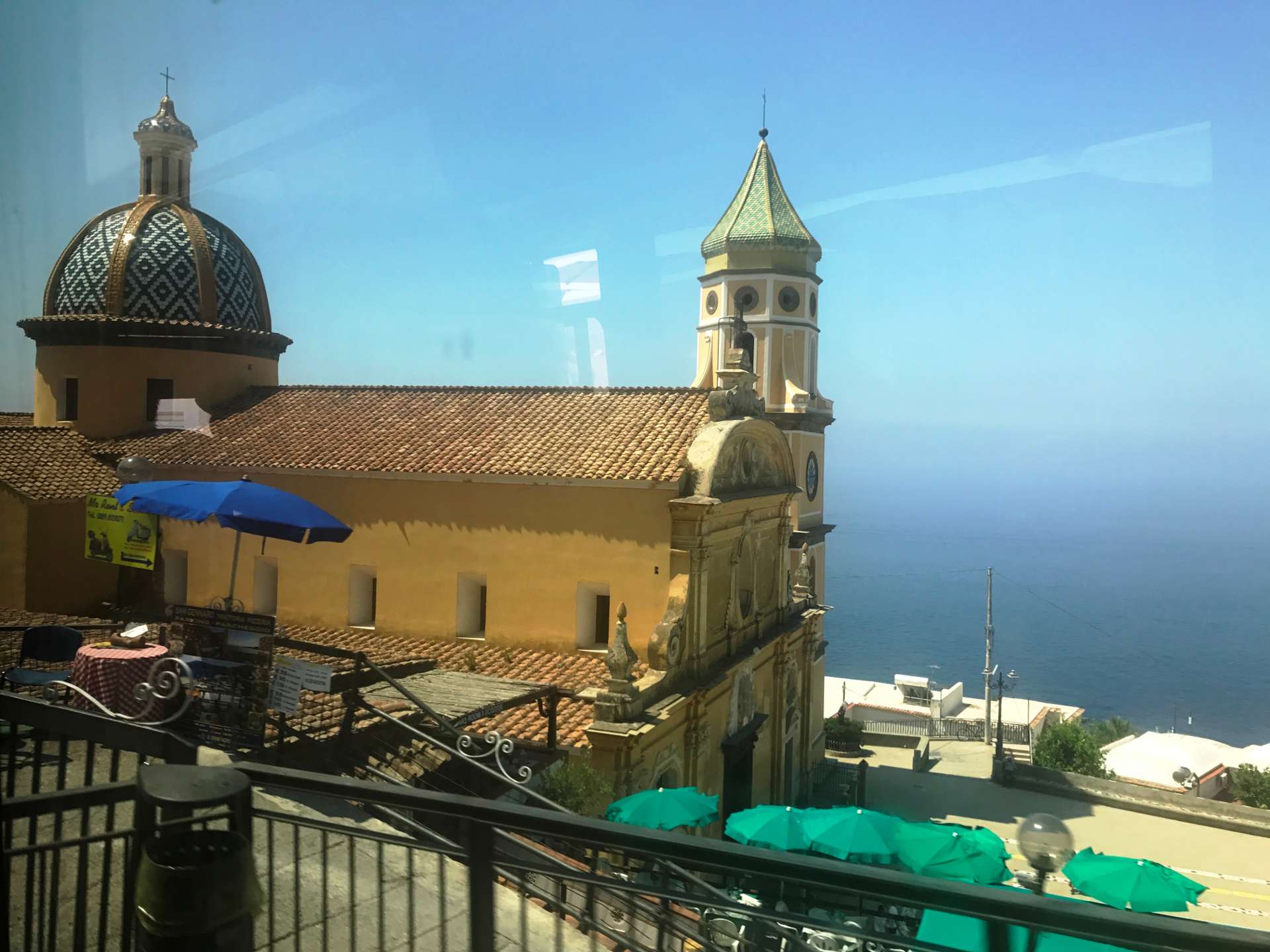
The picture below shows a scene from Praiano, another beautiful village on the Amalfi Coast. It features a prominent church, likely the Church of San Gennaro. The church is known for its distinctive dome with colorful tiles. It also has a bell tower with a green tiled roof. The church’s yellow facade and architectural details stand out against the backdrop of the clear blue Mediterranean Sea. In the foreground, there are tables with umbrellas, thus suggesting a nearby café or seating area. This adds to the picturesque and tranquil atmosphere of Praiano. In fact, this is a typical scenic stop along this famous coastal route.
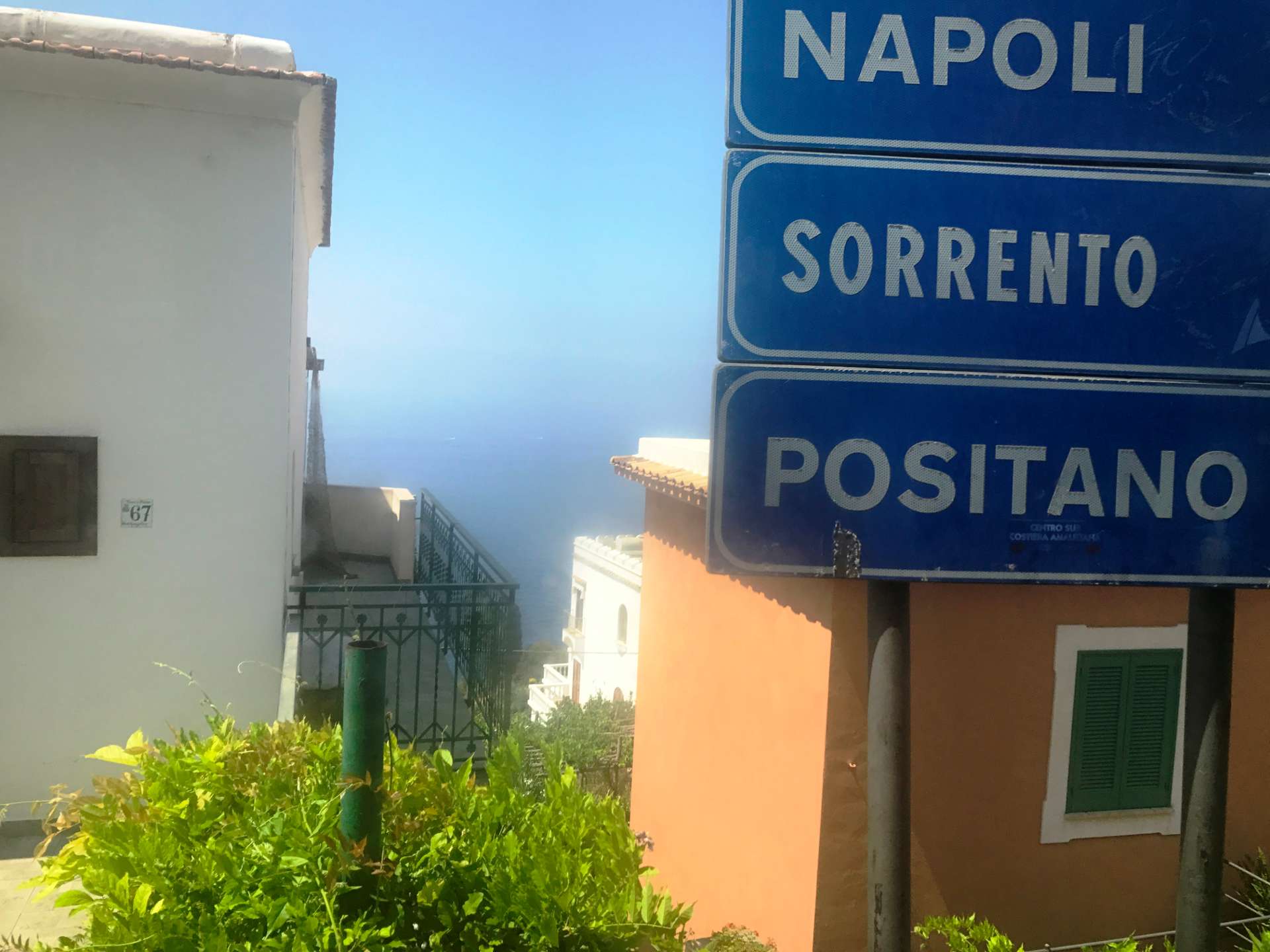
Then continuing along the twisting coastal Strada Statale 163 road, you will pass the localities of Praiano, Furore, Amalfi, Atrani, Minori, Maiori, Cetara, and finally Vietri sul Mare. The only railway station on the Amalfi Coast is in Vietri sul Mare, which is linked with the stations of Naples and Salerno.

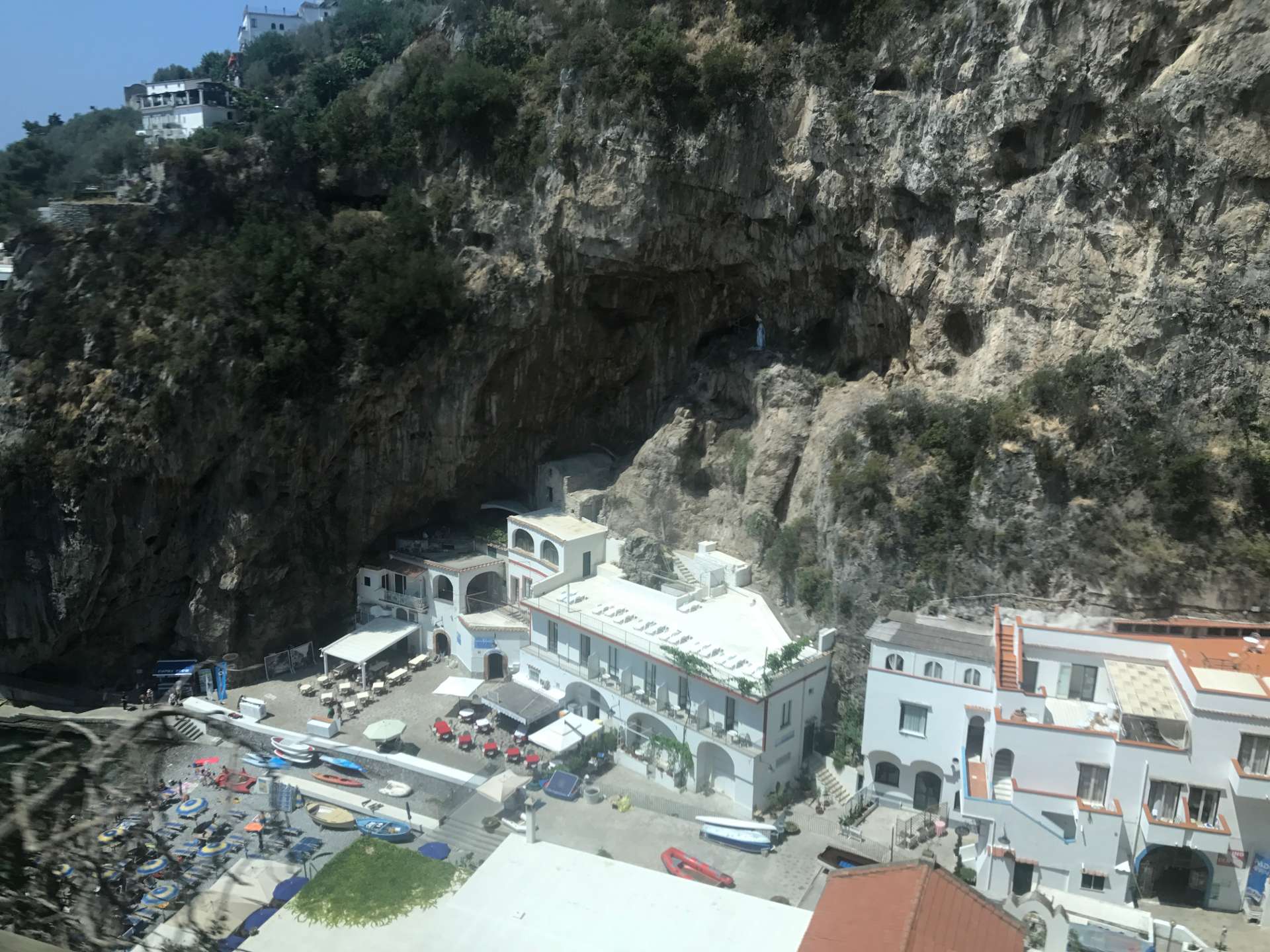
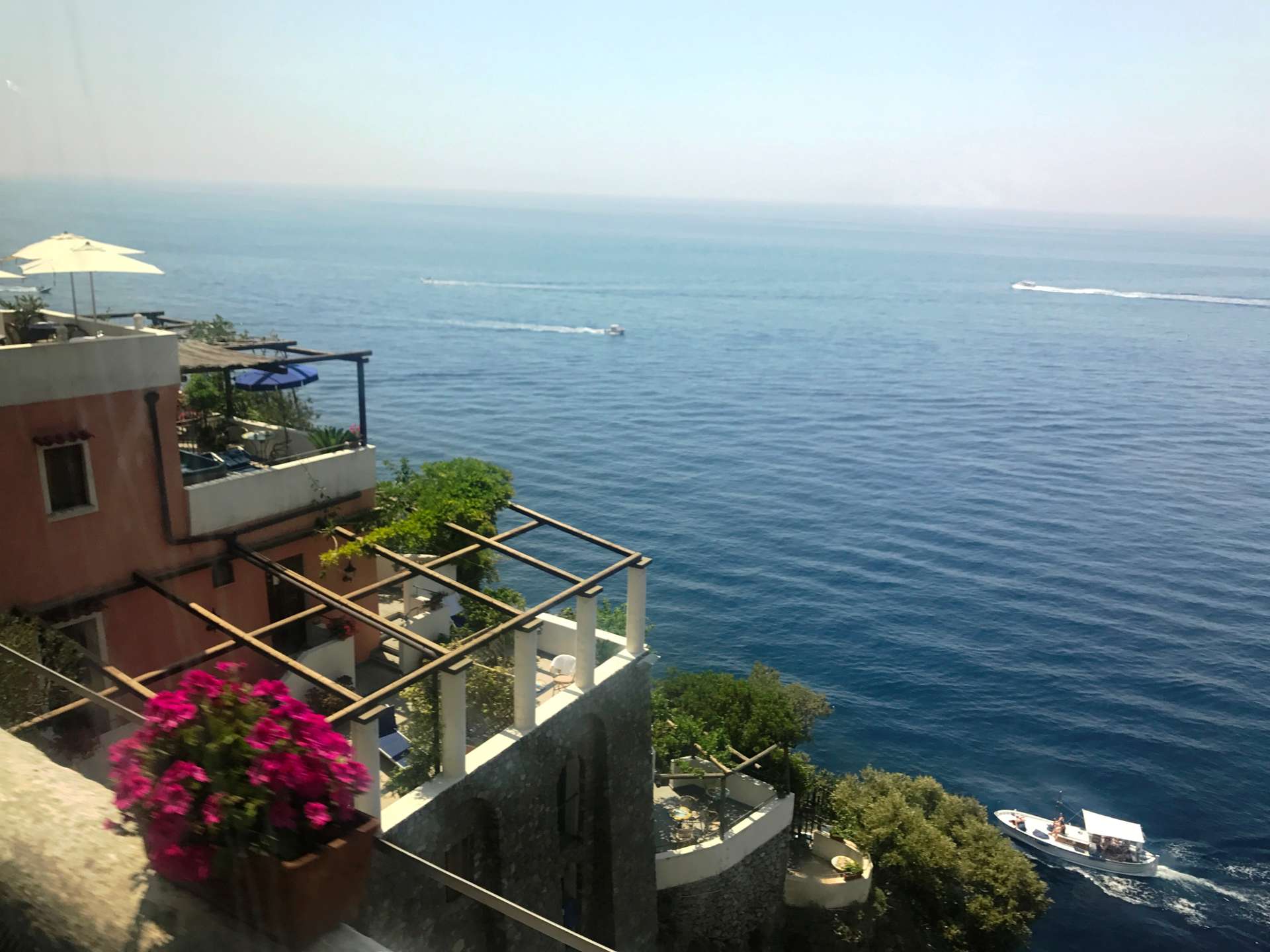
We also caught a glimpse of the Marina di Praia in Praiano. It looked like a cluster of whitewashed buildings, nestled against steep cliffs. There is also a small harbor with colorful kayaks, boats, and also a beach with umbrellas. These elements thus highlight the quaint and intimate atmosphere typical of Amalfi Coast villages.
Furore
Then, between the towns of Praiano and Conca dei Marini there is the stunning fjord Fiordo di Furore at approximately 5 kilometers west of Amalfi and about 8 kilometers east of Positano. It is one of the region’s most picturesque natural attractions. It features a deep and narrow inlet surrounded by towering cliffs.
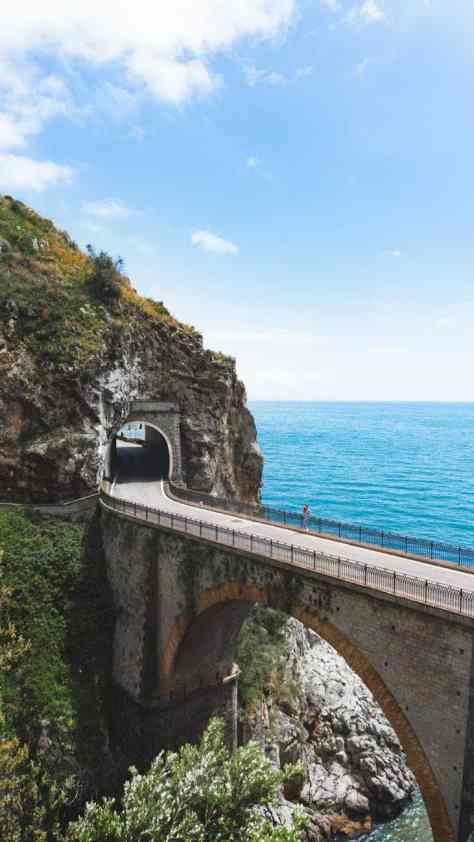
The fjord is crossed by a dramatic stone bridge, and at its base lies a small, secluded beach. In fact, Fiordo di Furore was initially a fishing village. Remnants of old fishermen’s houses can still be seen clinging to the cliffs.

Despite its beauty, Fiordo di Furore is somewhat challenging to visit due to limited accessibility. However, the SITA bus that operates along the Amalfi Coast does not make a stop directly at Fiordo di Furore. So this can make visiting the fjord more difficult for travelers relying on public transportation. In order to reach Fiordo di Furore, visitors typically need to disembark at the nearest bus stop. Then, they walk the rest of the way. Alternatively, they can use a private car or hire a taxi. The relative inaccessibility of Fiordo di Furore is part of its charm. It preserves a secluded and untouched feel compared to more easily accessible tourist spots along the coast.

Conca dei Marini
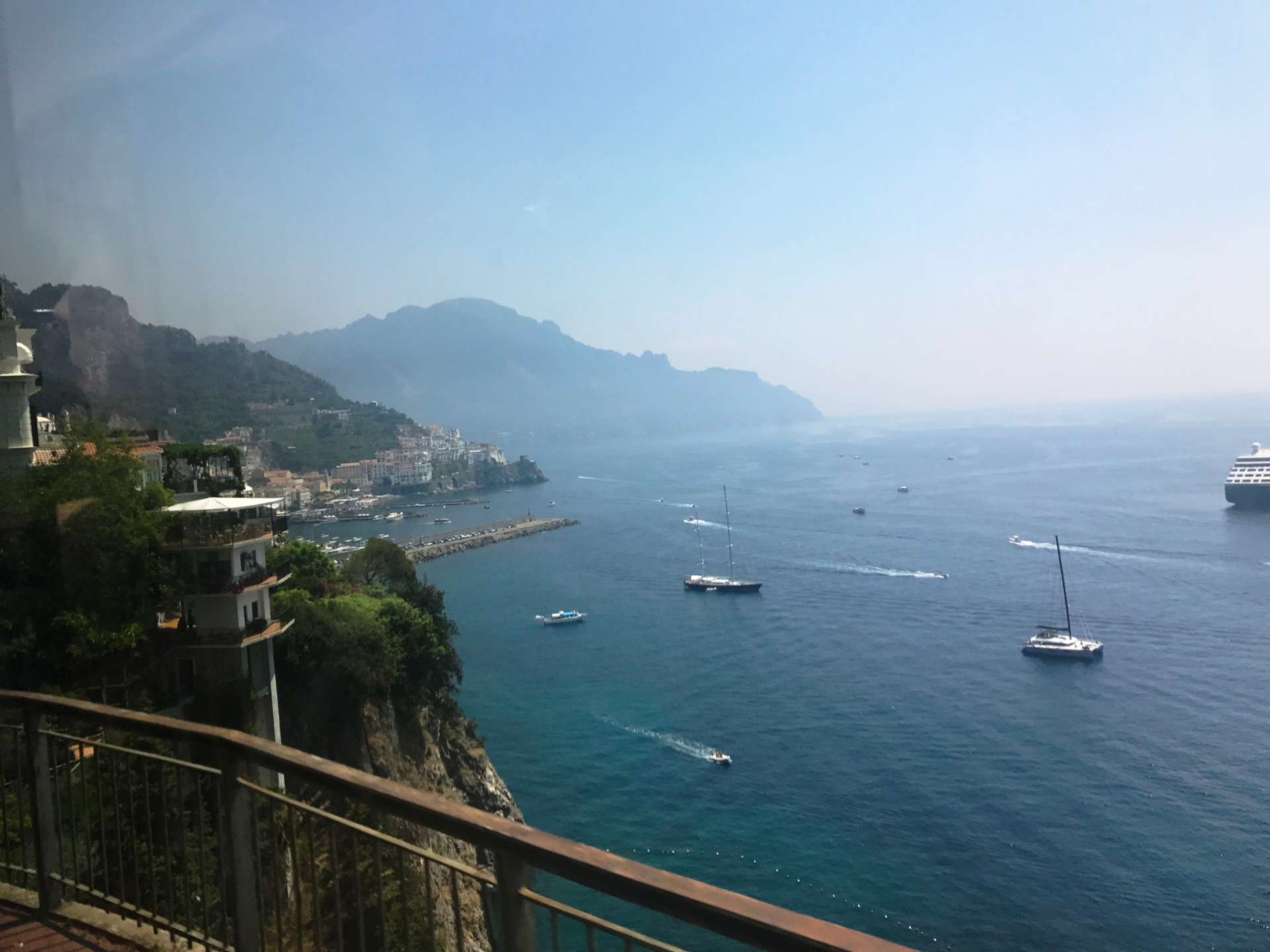
The next place we reached was Conca dei Marini, a small, picturesque village on the Amalfi Coast, situated between Praiano and Amalfi. Known for its tranquil atmosphere and stunning coastal views, it offers a quieter alternative to the busier neighboring towns.
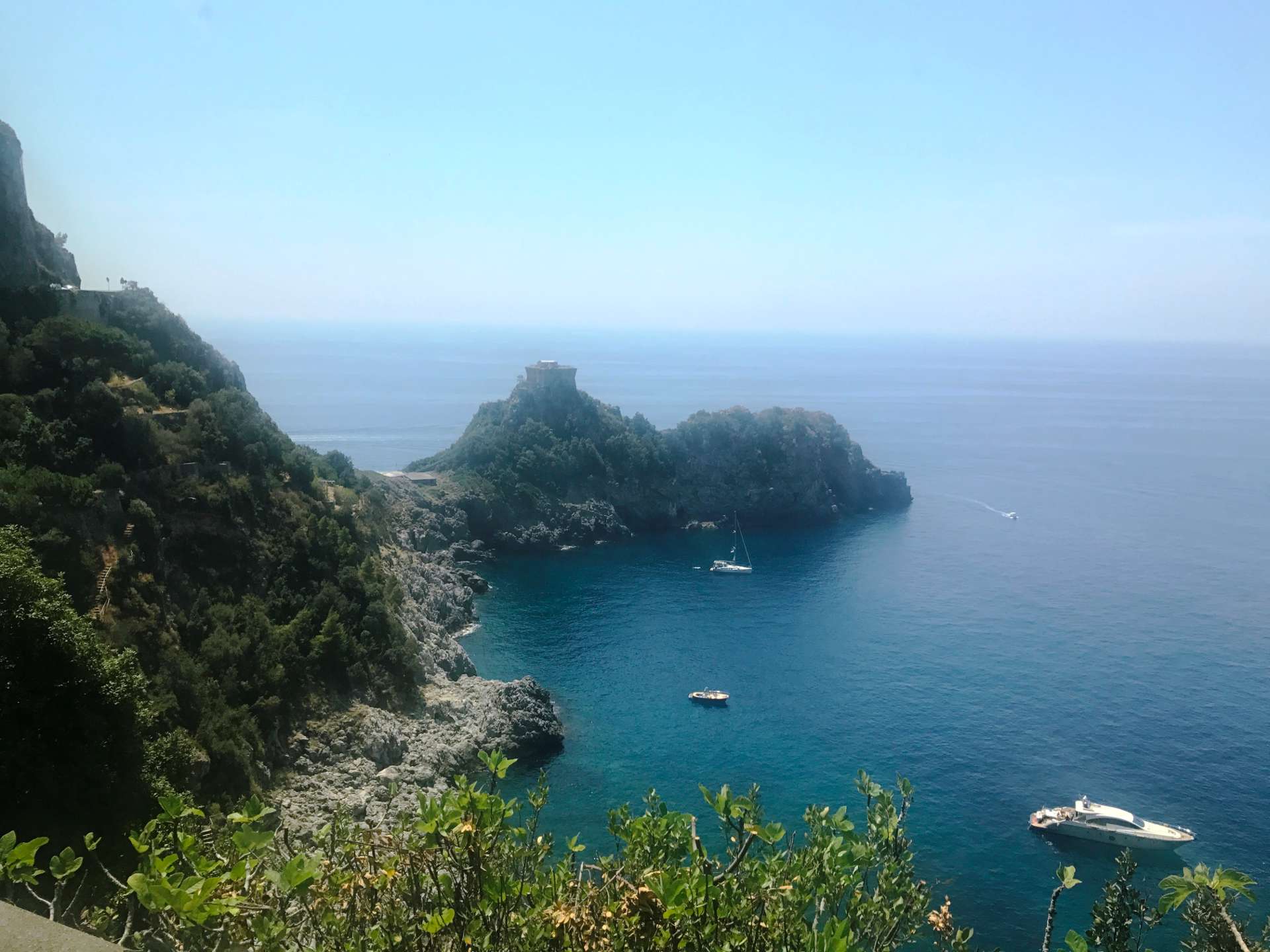
The Grotta dello Smeraldo (Emerald Grotto) is one of the village’s most famous attractions. It is a sea cave known for its brilliant emerald-green water. This effect is caused by sunlight filtering through an underwater opening. Visitors can explore the grotto by boat, making it a unique and memorable experience.
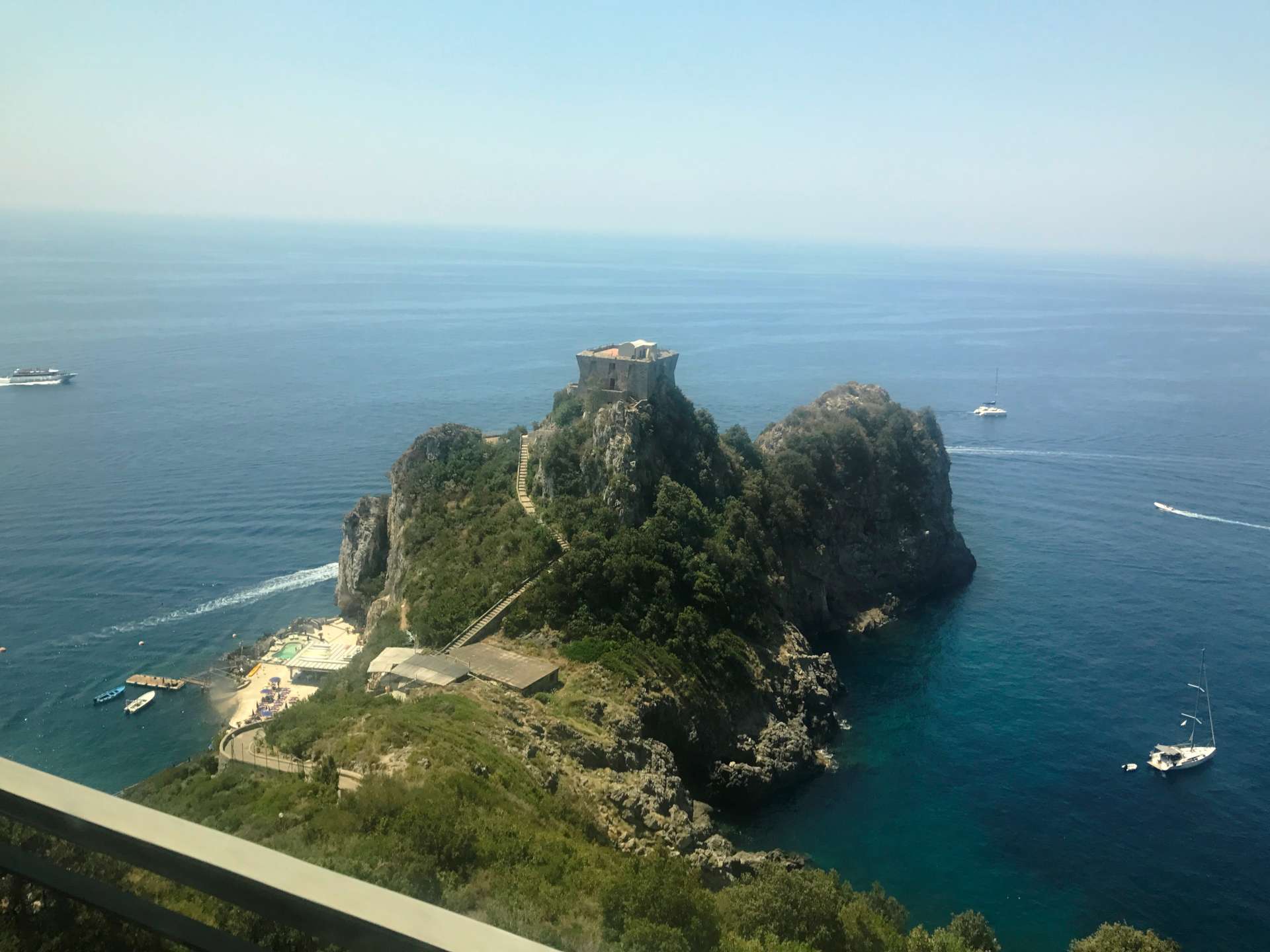
Conca dei Marini is also famous for its traditional architecture. It features charming whitewashed houses with terracotta roofs. The village also includes lush gardens and narrow winding streets. The village is steeped in history. It features the 12th-century Church of San Pancrazio. The historic Convent of Santa Rosa now houses a luxury hotel.
Amalfi Arrival and Exploration
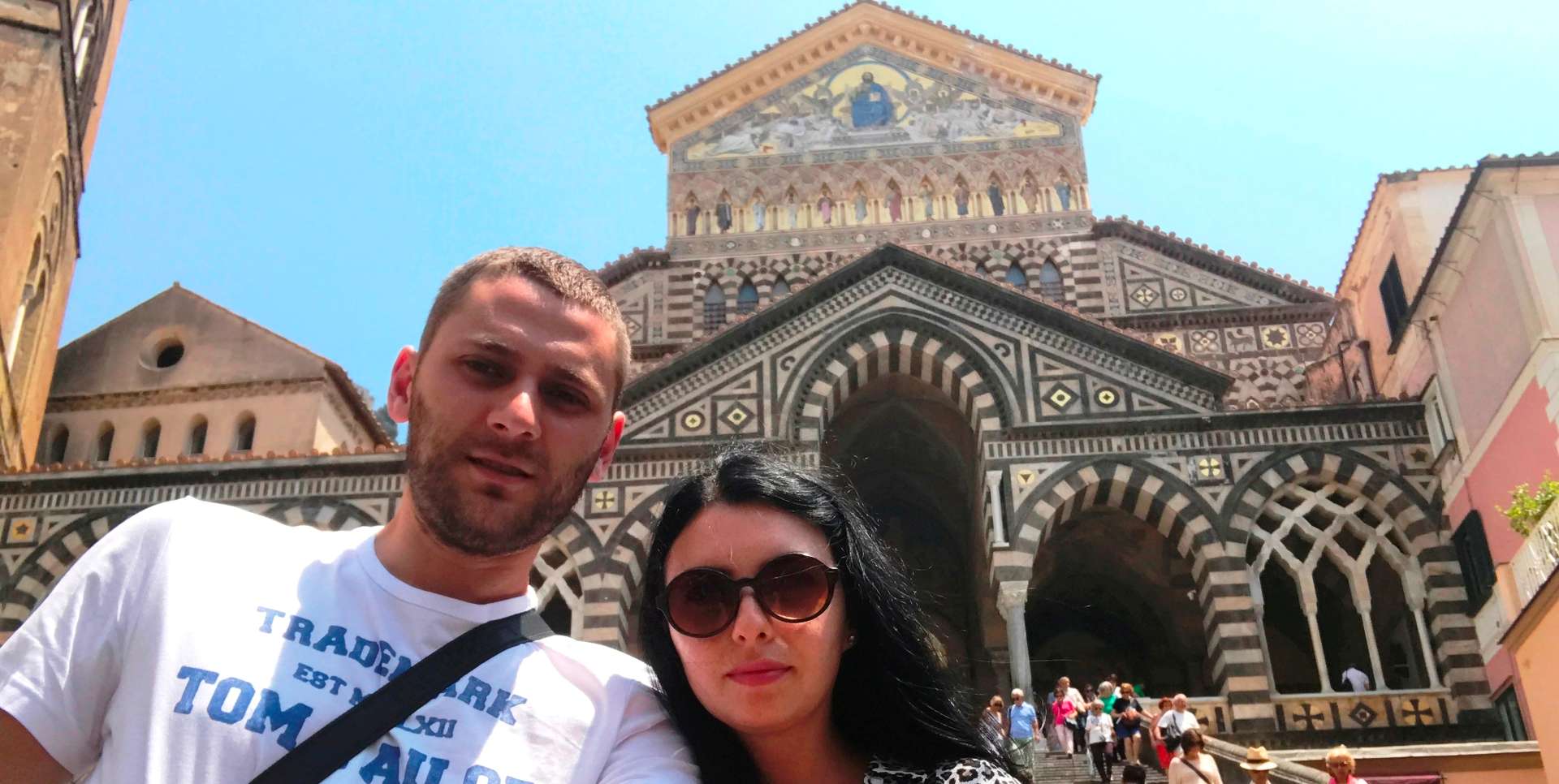
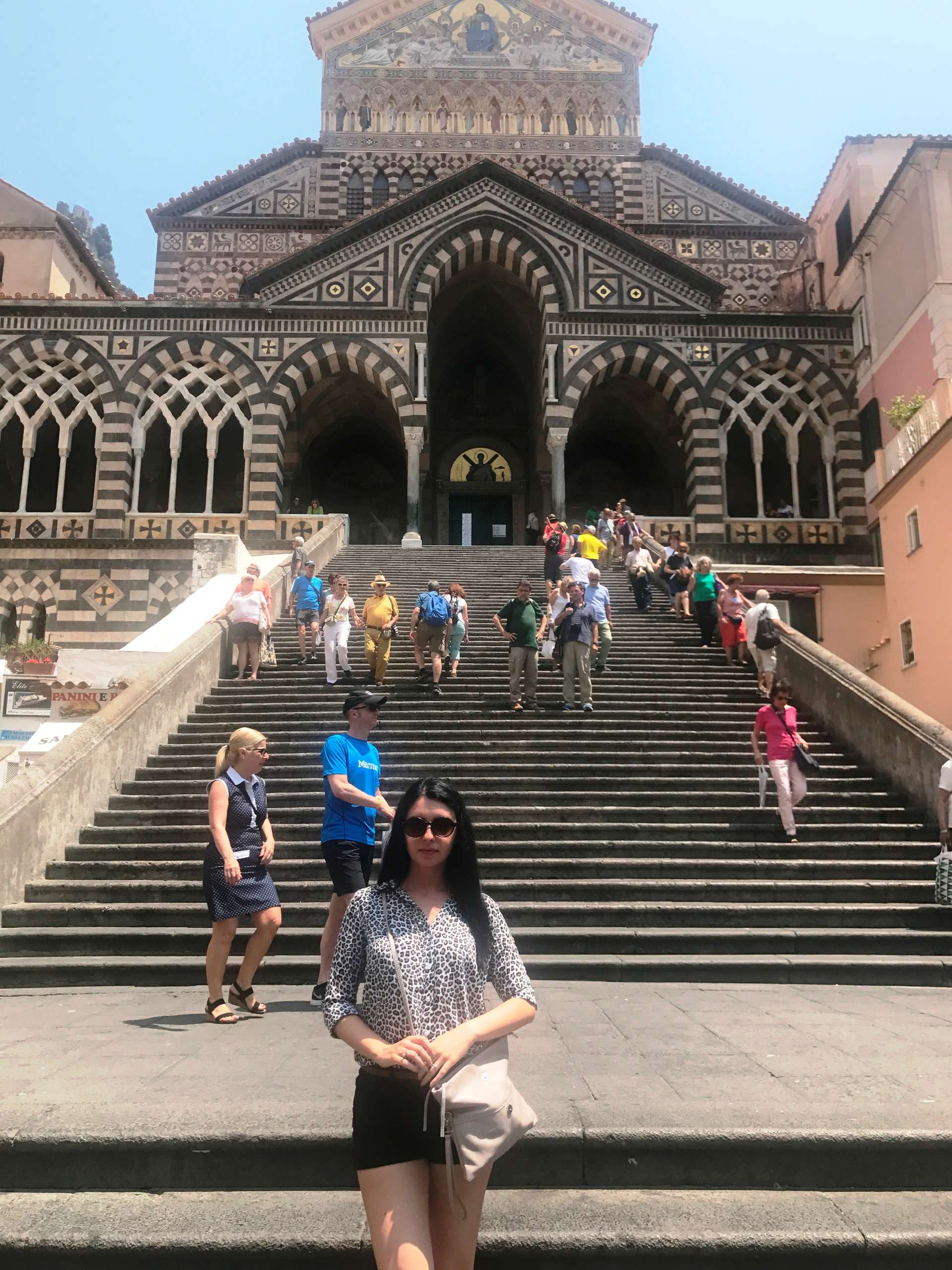
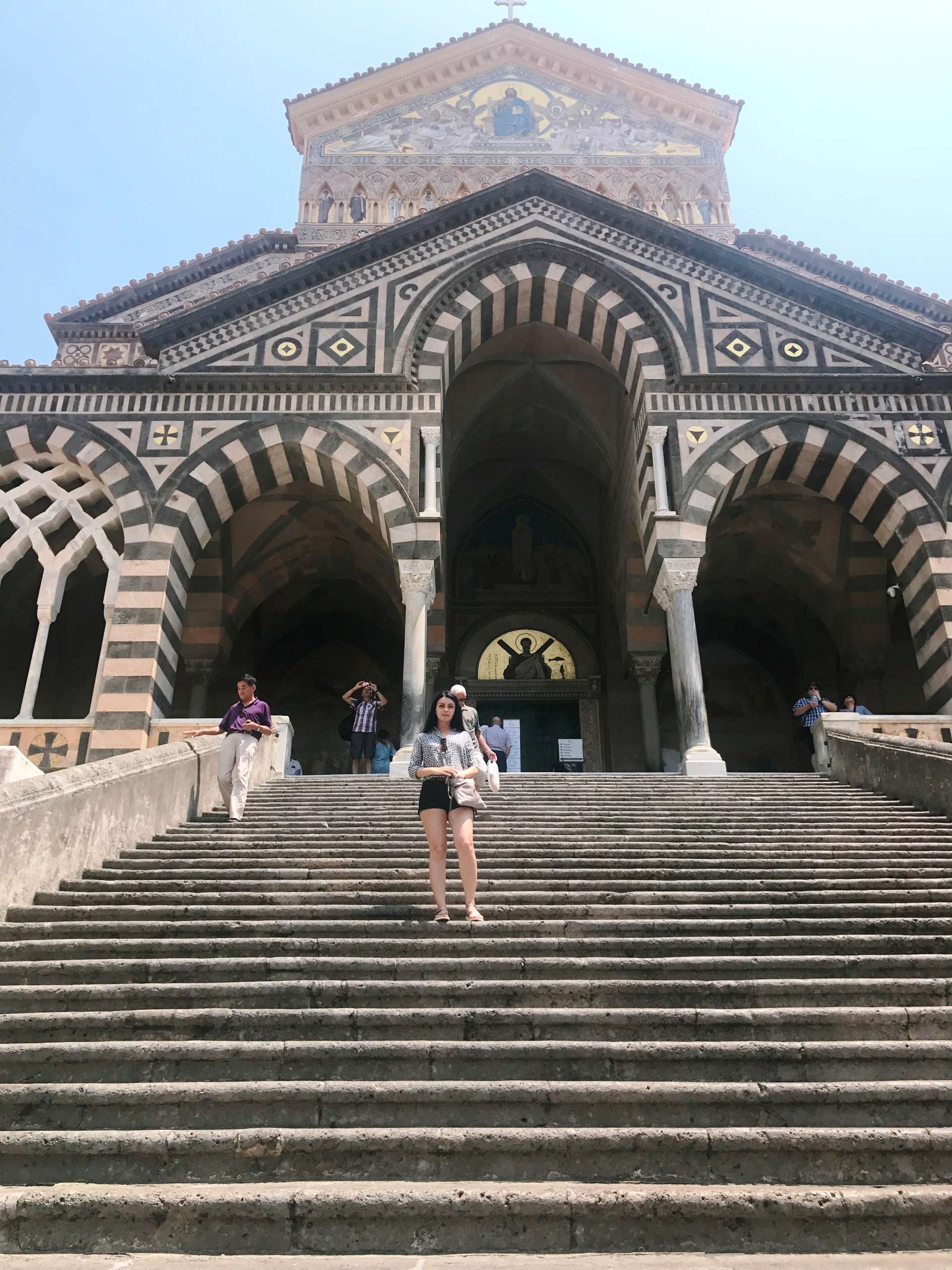
We reached Amalfi and got off at Piazza Flavio Gioia. Then we went towards the central square of the village, we crossed the street and walked on Via Duca Mansone I. We got to Piazza Duomo with its Fontana di Sant’ Andrea and also the imposing Duomo di Amalfi. The impressive cathedral features distinctive architecture, with a facade decorated in a horizontal black-and-white striped pattern and various ornamental details and its grand staircase.
Duomo di Amalfi
The Duomo di Amalfi, also known as the Cathedral of St. Andrew, is one of the most iconic landmarks on the Amalfi Coast.
Inside the Duomo, visitors can marvel at the richly decorated interior, which includes beautiful frescoes, ornate chapels, and also the Baroque-style crypt that houses the relics of St. Andrew, the patron saint of Amalfi. The crypt is particularly significant as it contains the remains of the apostle Andrew, which were brought to Amalfi from Constantinople in the 13th century.
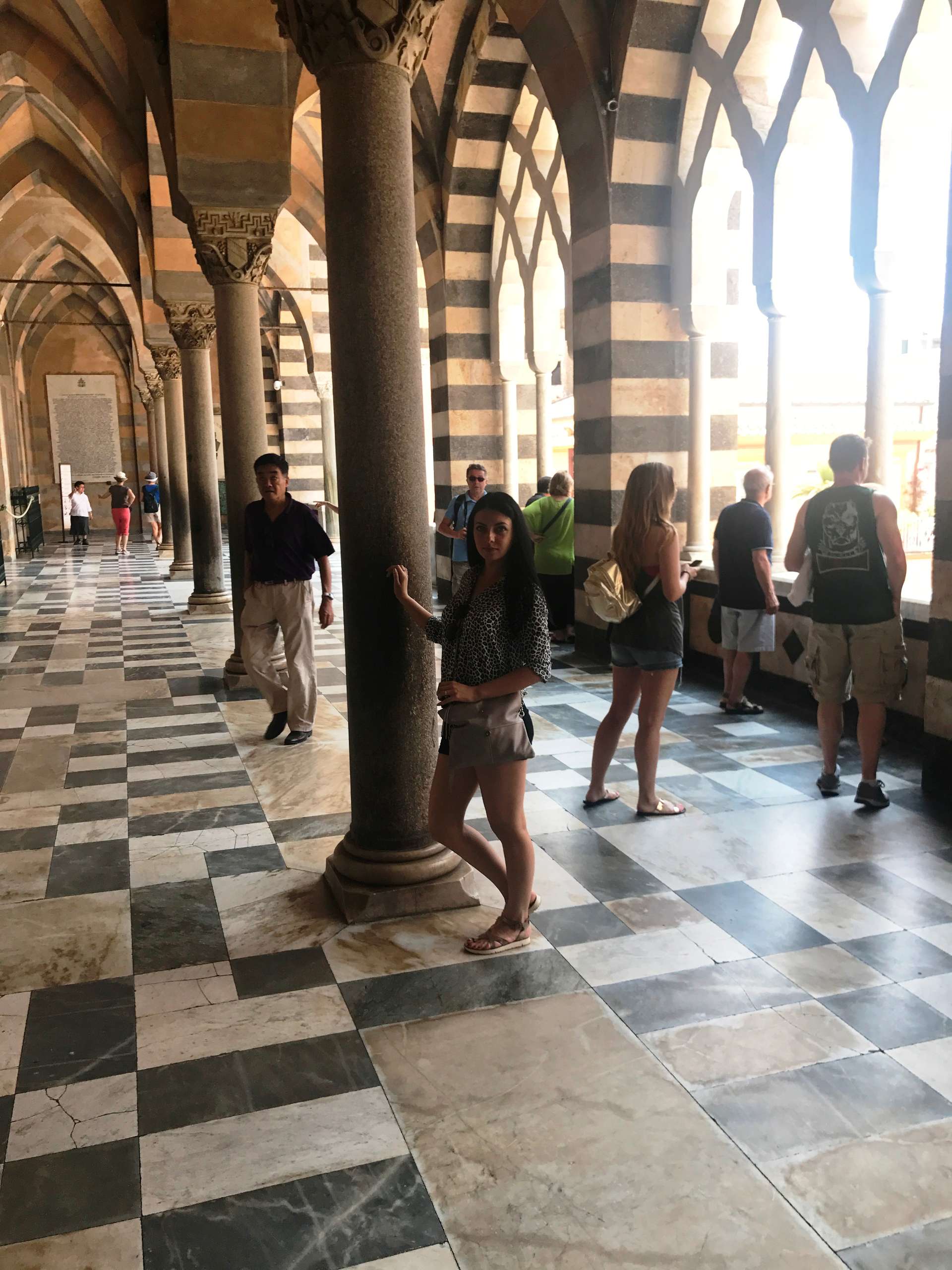
The striped columns and arches in the background are characteristic of the cathedral’s Arab-Norman architecture. This style reflects the blend of cultures that have influenced the region over the centuries. The checkerboard marble floors add to the grandeur of the interior.
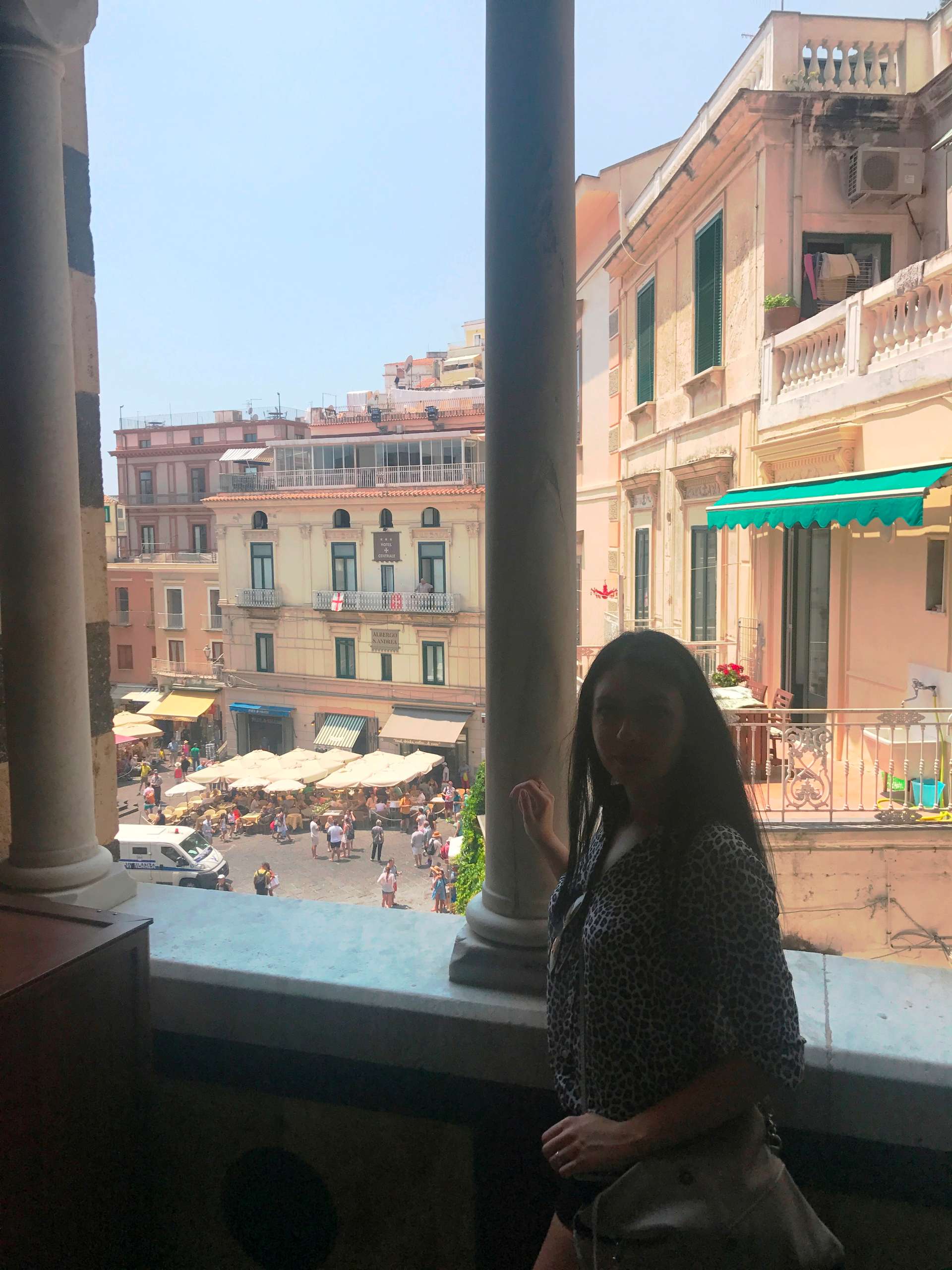
The view from the balcony provides a stunning perspective of the bustling Piazza del Duomo below.
Piazza del Duomo
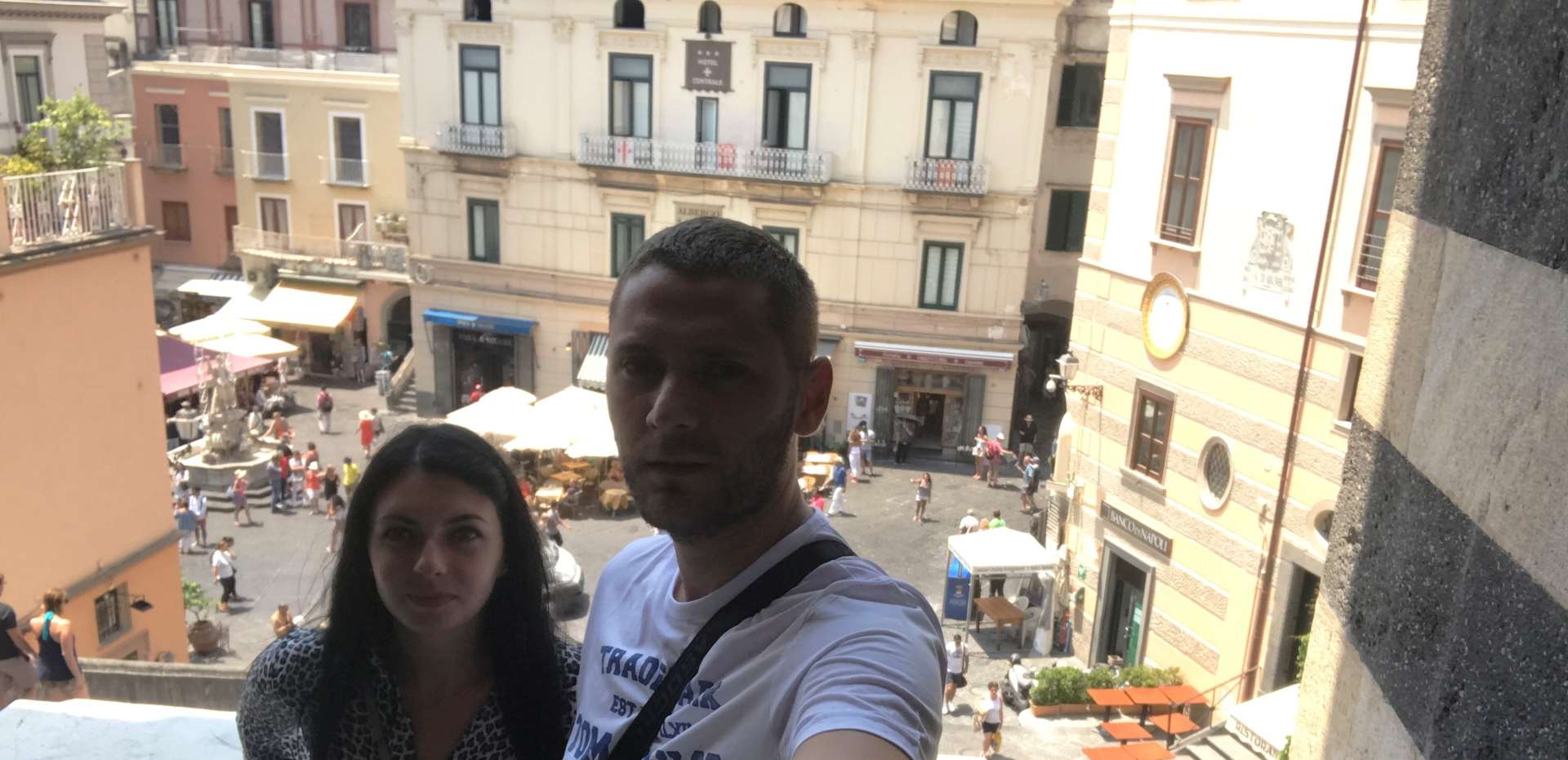
The cathedral dates back to the 9th century, though it has undergone numerous renovations and expansions over the centuries, blending various architectural styles, including Romanesque, Byzantine, Gothic, and Baroque influences. Its striking Arab-Norman façade, adorned with intricate mosaics and a central bronze door, reflects the diverse cultural influences that have shaped the region.
Adjacent to the cathedral is the Cloister of Paradise, a 13th-century cloister with elegant Moorish-style arches and columns surrounding a tranquil garden.
At the bottom of the staircase, on the left we found Pasticceria Pansa, a renowned pastry shop. Established in 1830, this historic café and patisserie has been a beloved spot for locals and visitors alike for nearly two centuries.

The interior of Pasticceria Pansa exudes old-world charm, with its elegant decor, marble counters, and beautifully arranged pastries that showcase the finest of Italian craftsmanship. The outdoor seating area is equally delightful, allowing patrons to enjoy their treats while taking in the vibrant atmosphere of the Piazza del Duomo. Pansa is famous for its traditional Neapolitan and Amalfitan pastries, such as sfogliatelle, delizie al limone (a lemon delight cake), and pastiera napoletana. Their limoncello and lemon-infused desserts are particularly popular, thanks to the Amalfi Coast’s abundant lemon groves.
Marina Grande
Afterwards we walked back to Piazza Flavio Gioia, by the seashore.
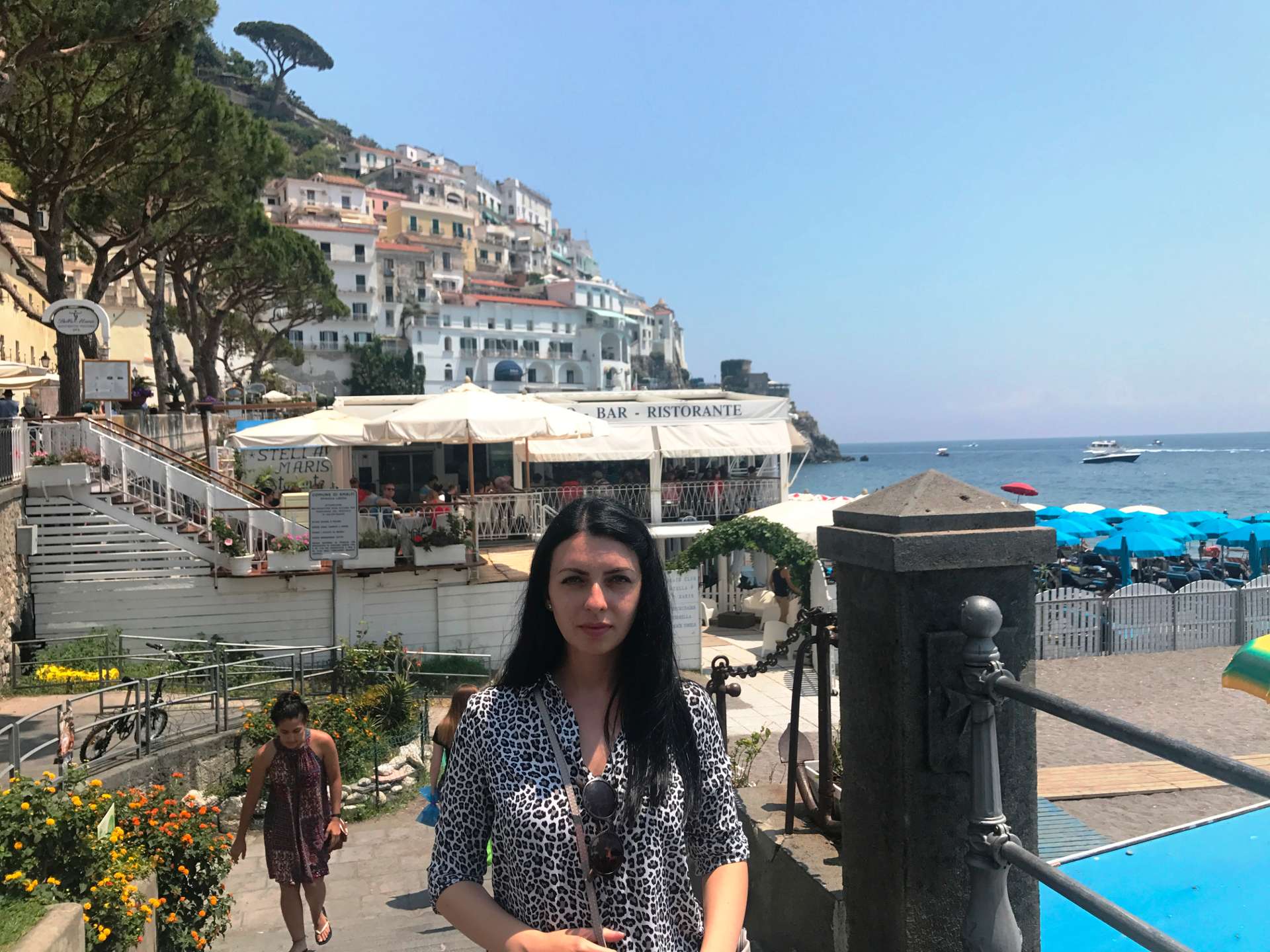
Piazza Flavio Gioia is a notable square located in the town of Amalfi, situated near the entrance to the town center and close to the port. Named after Flavio Gioia, a historical figure often (though incorrectly) credited with inventing the maritime compass, this piazza also serves as a gateway to the heart of Amalfi and its many attractions. It’s a starting point for exploring the town, with the grand Duomo di Amalfi just a short walk away. The piazza is also close to the waterfront, making it a popular spot for those arriving by ferry or looking to enjoy views of the harbor.

At the center of the piazza stands a statue of Flavio Gioia, celebrating the town’s long maritime history and connection to the sea. Surrounding the square are various shops, cafes, and restaurants, providing a lively atmosphere where you can relax and soak in the beauty of Amalfi.
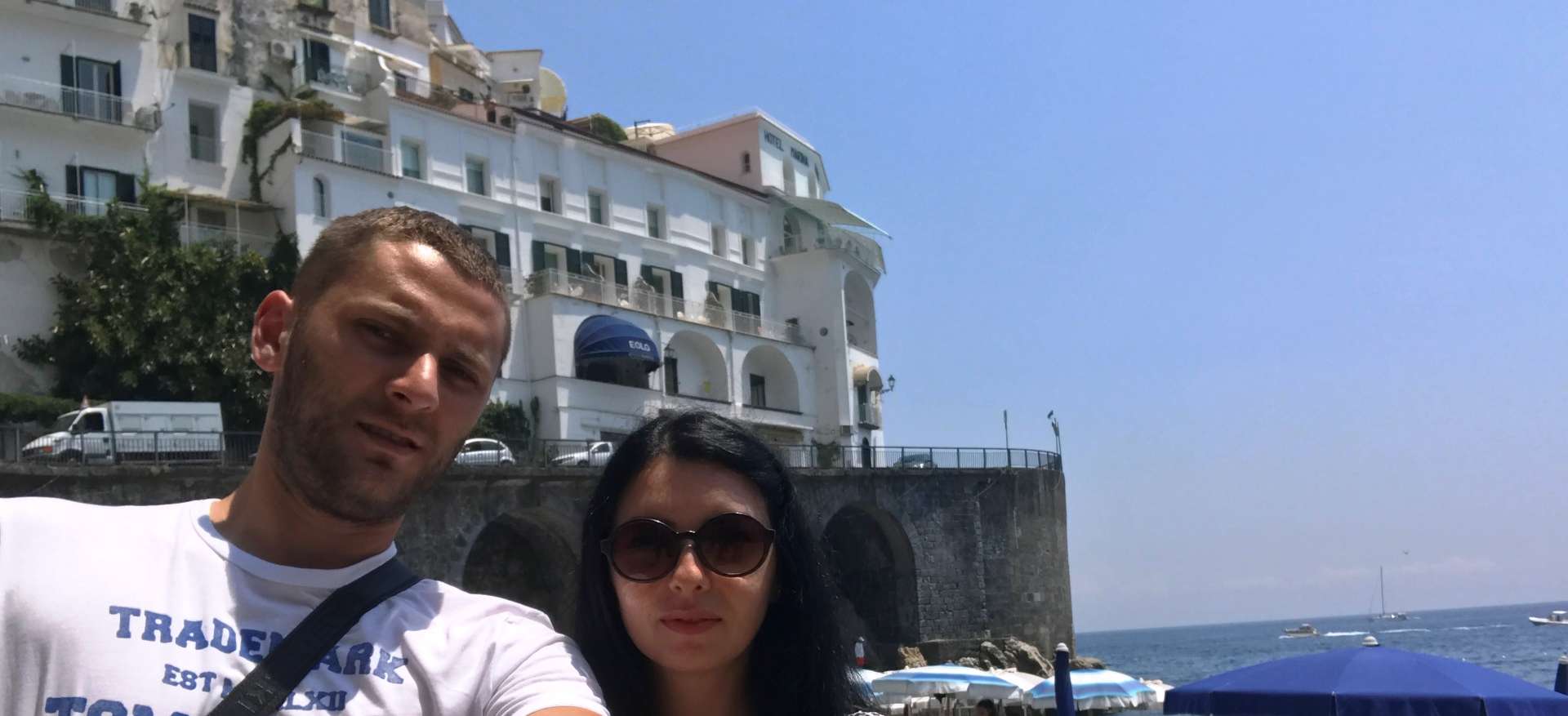
From the square we then descended to the beach.

Marina Grande Beach is lively, with people sunbathing under colorful umbrellas, enjoying the beautiful Mediterranean scenery. The backdrop of the sea, boats, and historic coastal buildings captures the essence of Amalfi’s charm.
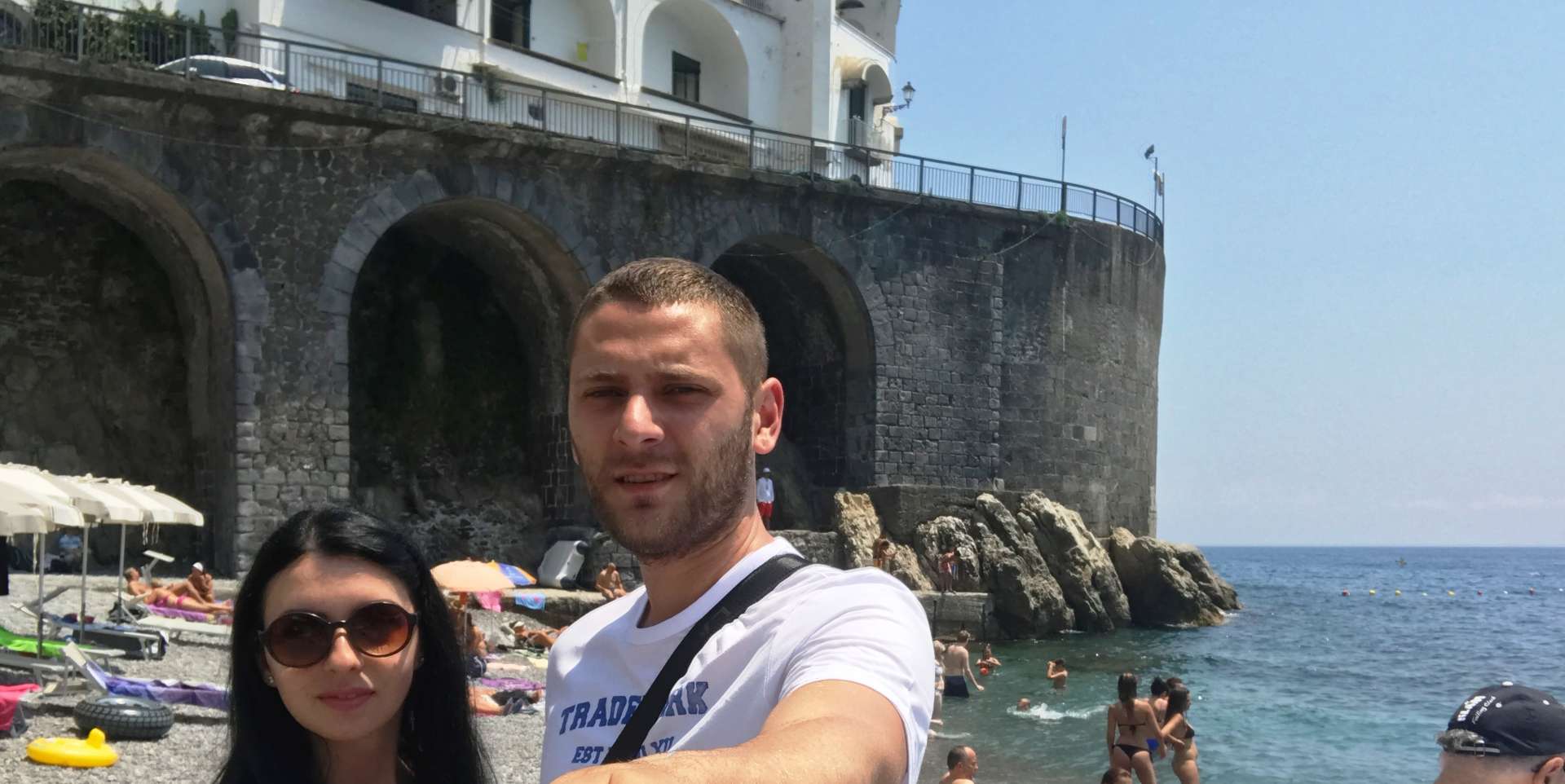
Marina Grande is the main beach and one of the most popular spots in Amalfi, located just a short walk from the town center and Piazza Flavio Gioia.

The beach is always full of colorful umbrellas and sunbeds, and it’s a great place to relax and enjoy the Mediterranean sunshine.
Amalfi Beach
Back to Piazza Flavio Gioia, we then walked towards South on Via Lungomare dei Cavalieri along the Amalfi Beach.
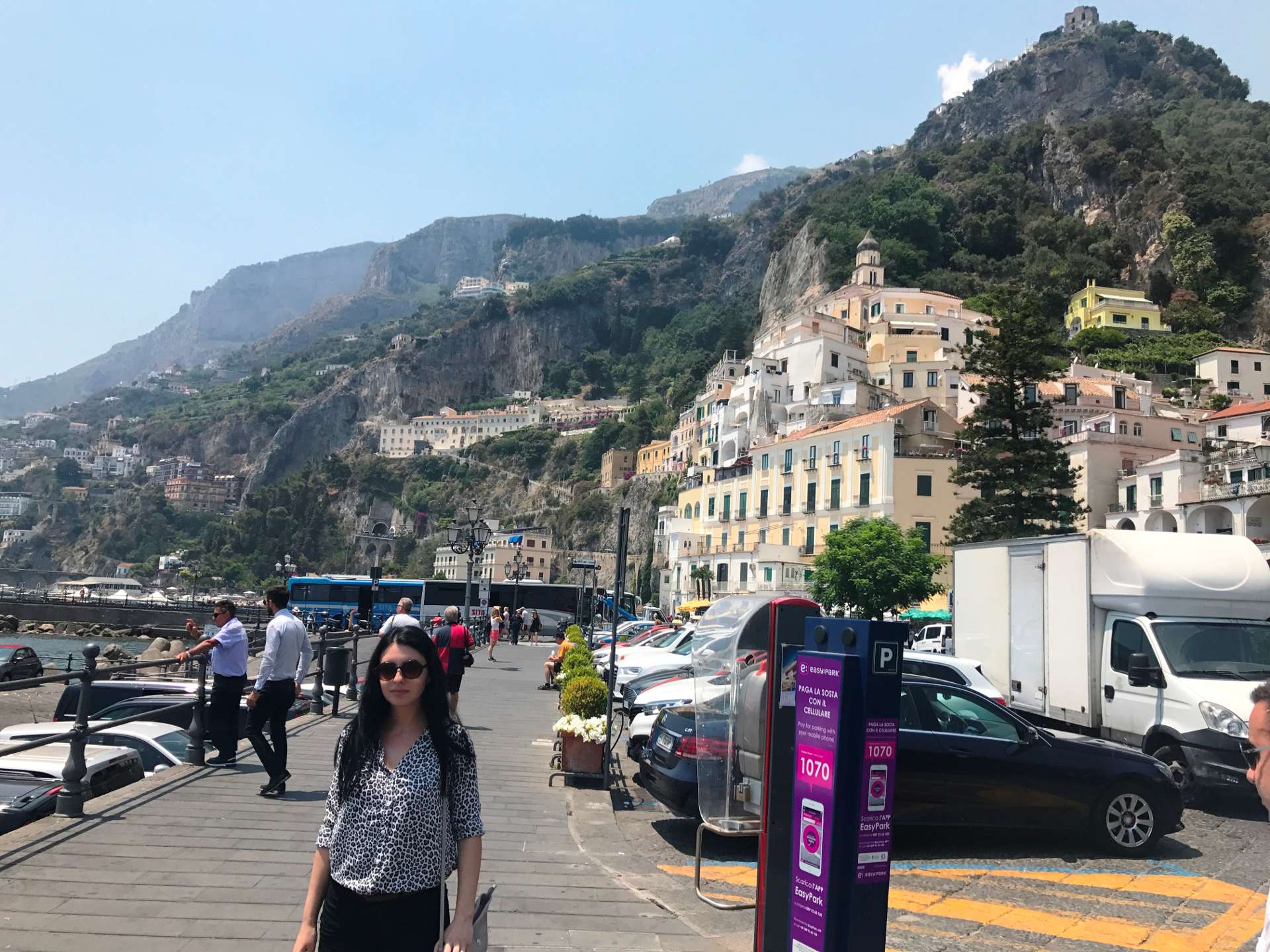
Amalfi Beach is not very large, reflecting the generally compact and rugged nature of the coastline. However, it is a popular destination due to its picturesque setting and the charm of the surrounding town.
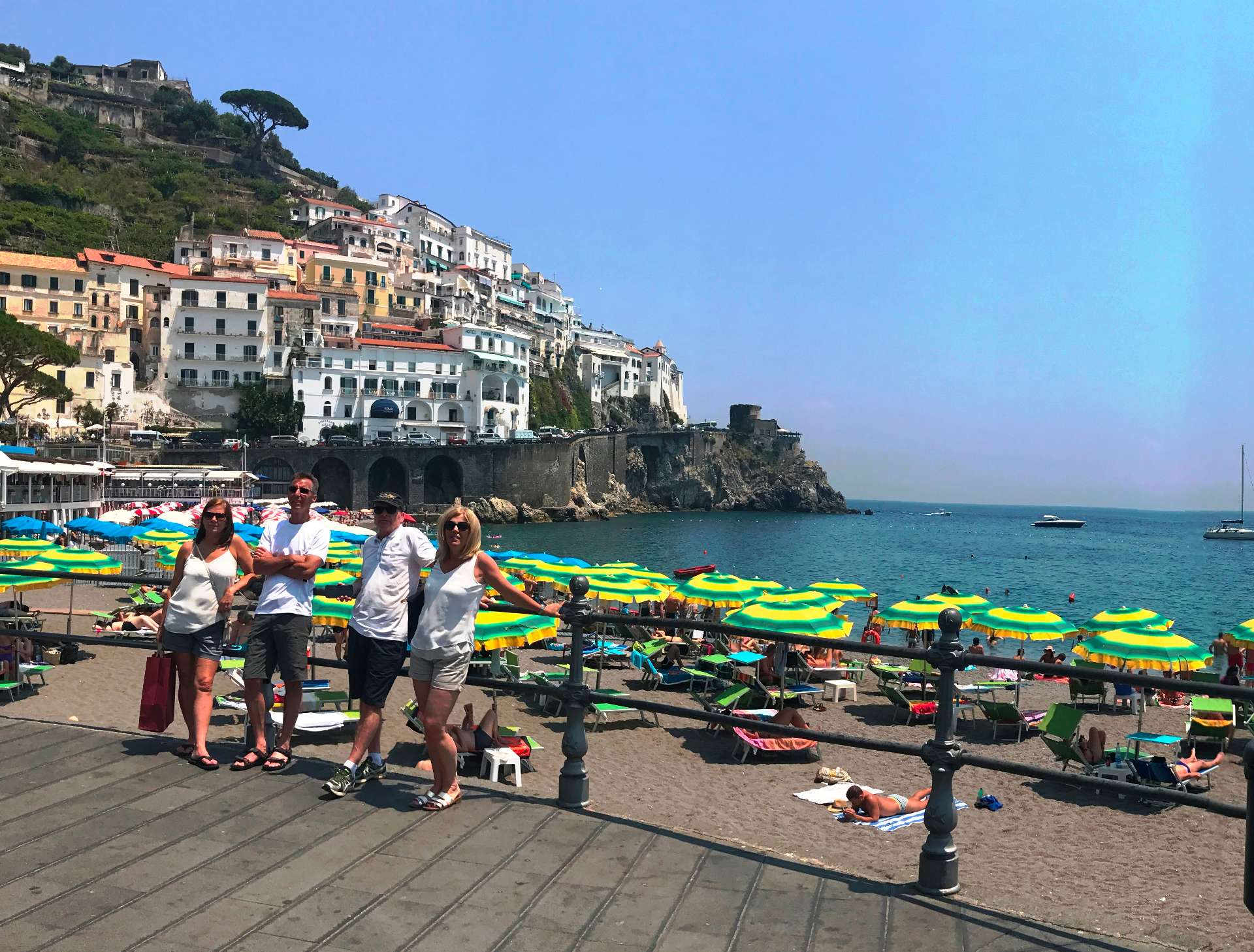
The beach is a mix of sand and pebbles. While it may not have the soft white sands of other beach destinations, the beauty of the surroundings more than compensates for it. So, given the pebbly nature of the beach, wearing water shoes can make walking and swimming more comfortable. During the summer months, the beach can get quite crowded. Arriving early in the day can help secure a good spot. Amalfi Beach is perfect for those who appreciate a mix of natural beauty, cultural heritage, and a touch of luxury in their beach experience.
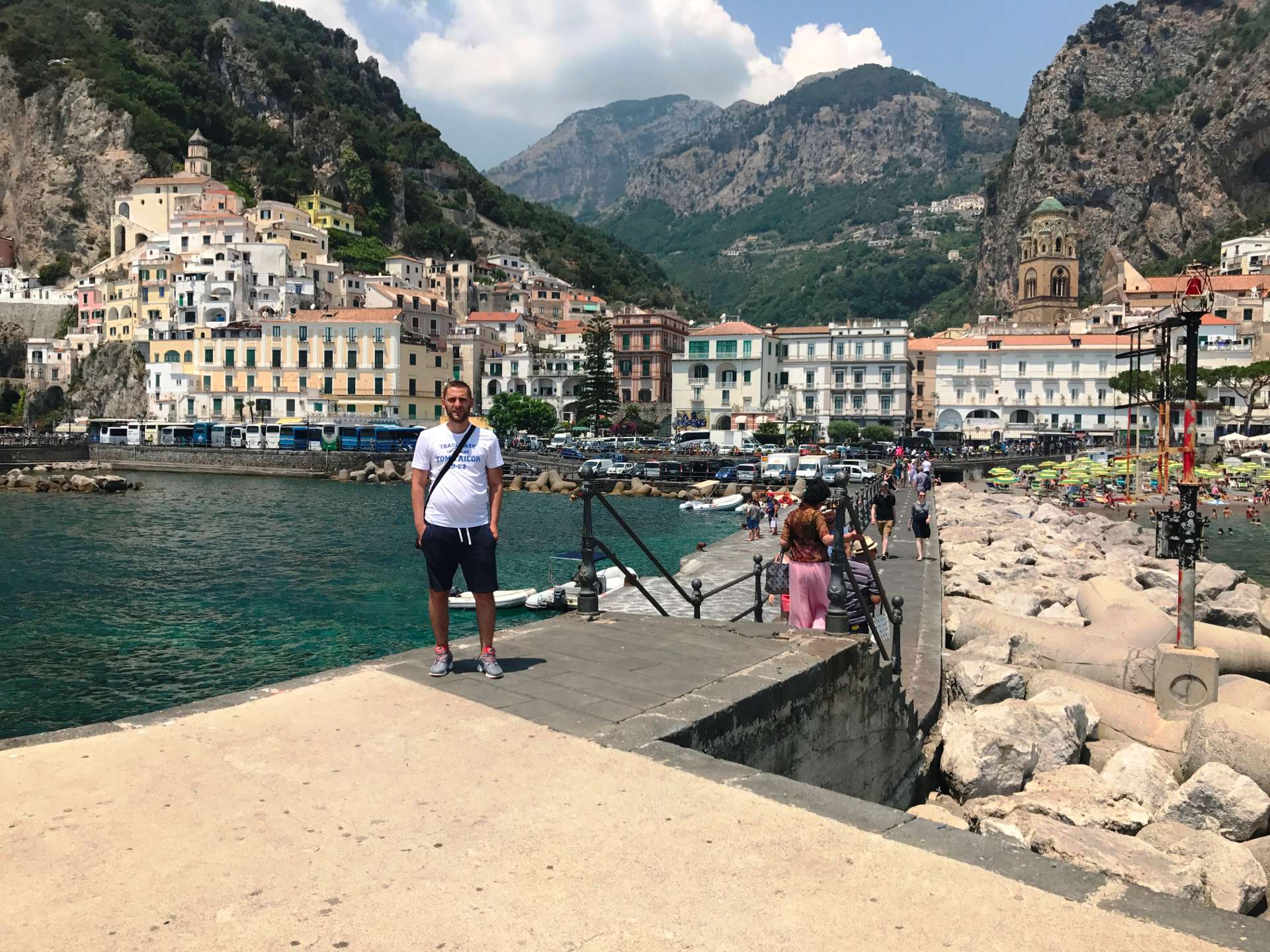
Marina Grande also serves as a port area where ferries and boats frequently depart for nearby destinations such as Positano, Capri, and also Salerno. This makes it a convenient starting point for exploring the Amalfi Coast by sea. From Via Lungomare dei Cavalieri we got to the ferry terminal and strolled along the walkway into the sea.

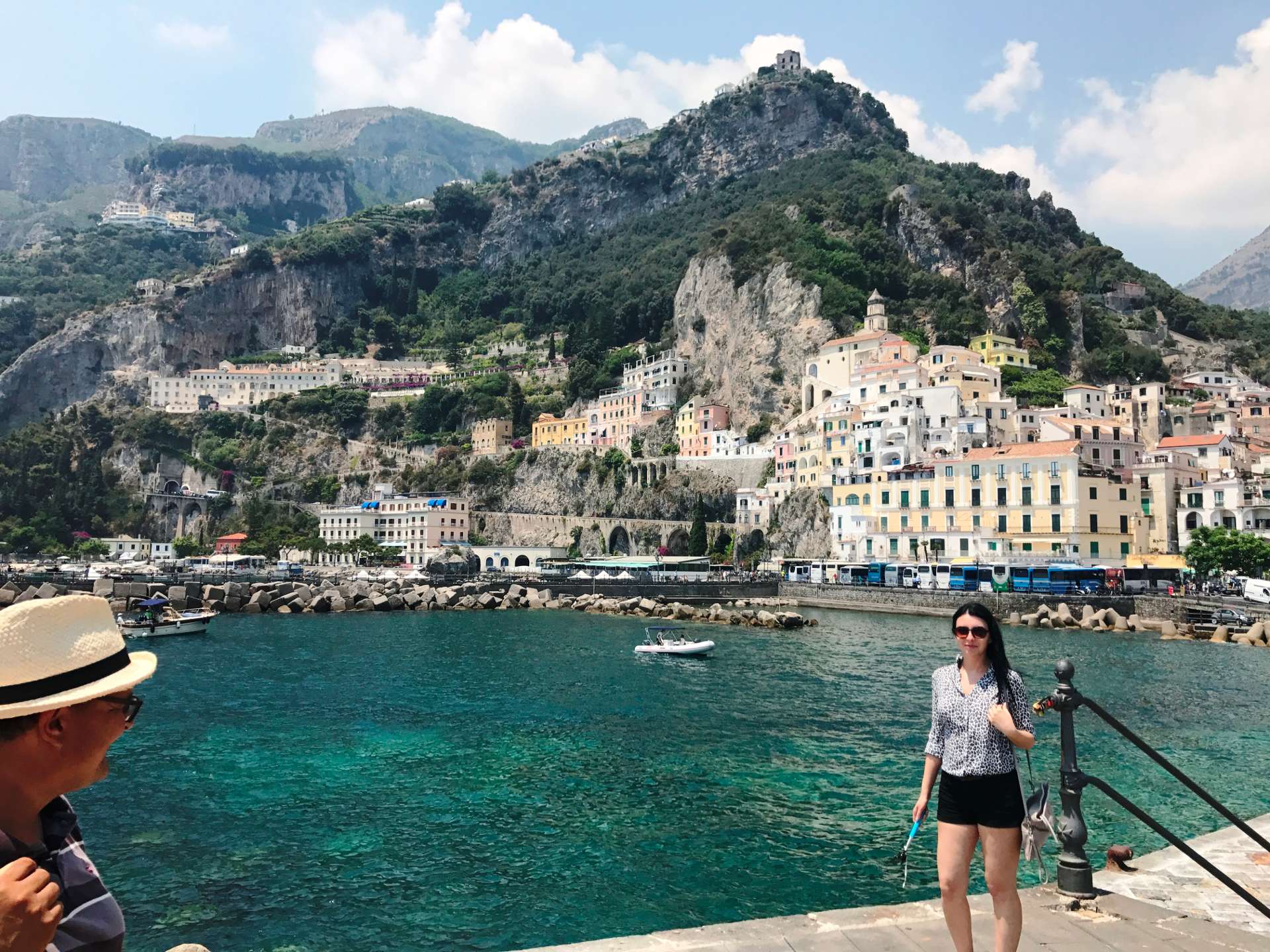
From there we could capture some panoramic pictures of the stunning coastline of Amalfi.
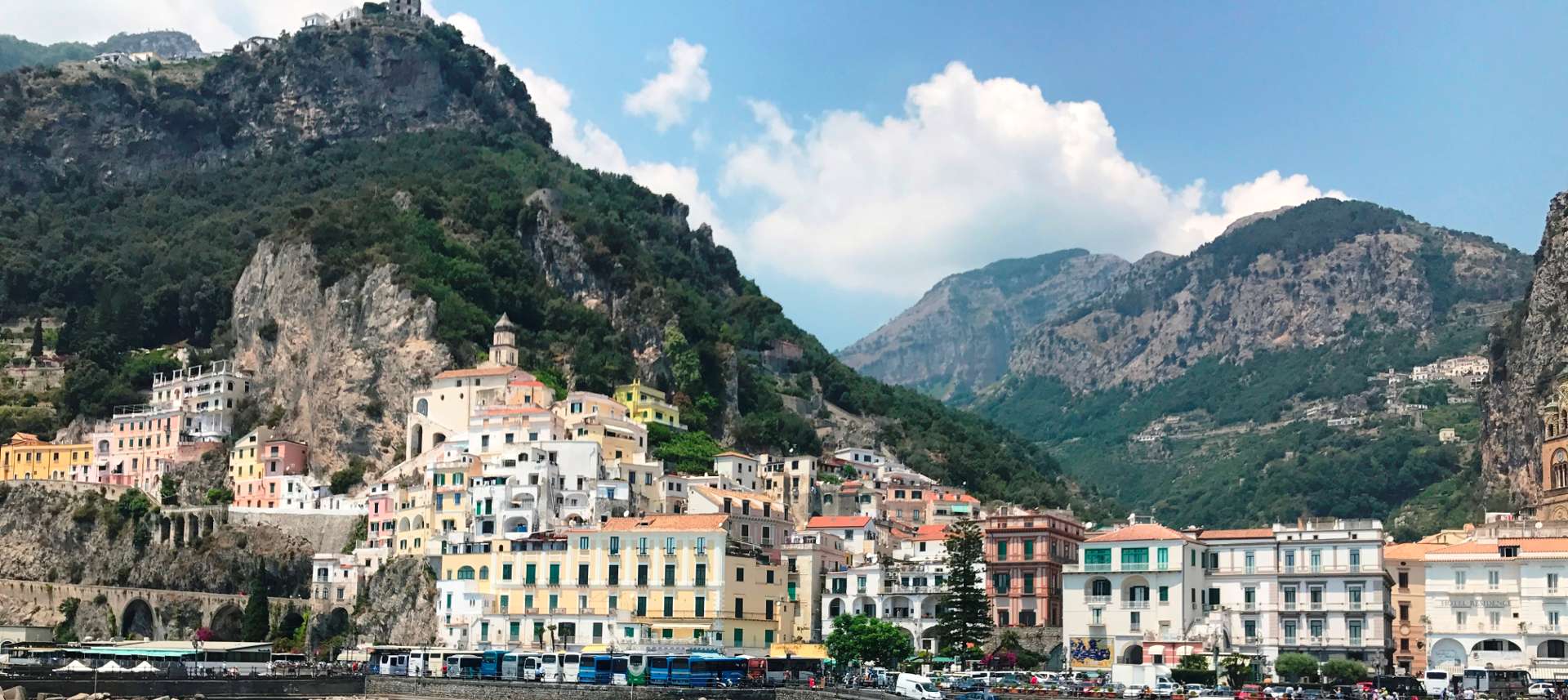
The images show the vibrant cluster of colorful buildings nestled along the steep cliffs, characteristic of the region, with the buildings cascading down toward the waterfront and the mountains rising dramatically in the background, adding a sense of grandeur to the scene.
Lunch in Amalfi – Pizza Marinara
We were starving and started searching for a place to have lunch. I wanted to try La Taverna di Pulcinella, we used Google Maps but because of the tunnel we couldn’t find the entrance. We got to Vicolo Masaniello, wandered around towards Piazza Duomo; there were plenty of restaurants and didn’t know which one to pick. We finally decided to eat at Taverna Masaniello. Outside it was very hot, so we managed to stay inside where it was cooler. There were impressive decor details: the artwork, tiles, and the overall style of the restaurant suggesting a traditional Amalfi/ Neapolitan eatery.

The restaurant specializes in classic Italian cuisine with a focus on traditional dishes. We ordered Pizza Marinara and also Insalata Caprese. Pizza Marinara: is a classic Neapolitan pizza that is simple but flavorful, made with tomato sauce, garlic, oregano, and olive oil. It’s typically served without cheese, highlighting the quality of the tomato sauce and the flavors from the garlic and herbs. Insalata Caprese: is a traditional Italian salad made with fresh mozzarella cheese, ripe tomatoes, fresh basil, and a drizzle of olive oil and sometimes balsamic vinegar. It’s a simple yet elegant dish, often enjoyed as an appetizer. Back then in 2017 Pizza Marinara was €6 an Insalata Caprese around €9-€13. Now Pizza Marinara might cost between €10-€13 and Insalata Caprese might cost around €14-€18.

We then walked back on Vicolo Masaniello and then on Via Lungomare dei Cavalieri, towards Piazza Flavio Gioia where the bus stop was.

From Amalfi to Ravello Scenic Route
SITA operates all the local buses on the Amalfi Coast, and Amalfi is the main transfer point on the coastline. Buses to Sorrento, Salerno and to Ravello/ Scala and other destinations depart from Piazza Flavio Gioia.
We took the bus to Ravello, bus no. 5110 direction Scala. A one way ticket was around 1 euro, now 1.3 euros. The journey from Amalfi to Ravello via the SITA bus is one of the most scenic routes you can take along the Amalfi Coast. The road winds through the steep cliffs and offers breathtaking views of the coastline and the Tyrrhenian Sea.
As the bus leaves Amalfi, it starts to climb the hills inland. The road is narrow and winding, typical of the Amalfi Coast, with steep drops on one side and cliffs on the other. This part of the journey offers stunning views of Amalfi below, as well as glimpses of the sea.
Atrani
Shortly after leaving Amalfi, the bus passes through Atrani, which I consider the most charming village on the Amalfi Coast, even though I didn’t get to visit it yet.
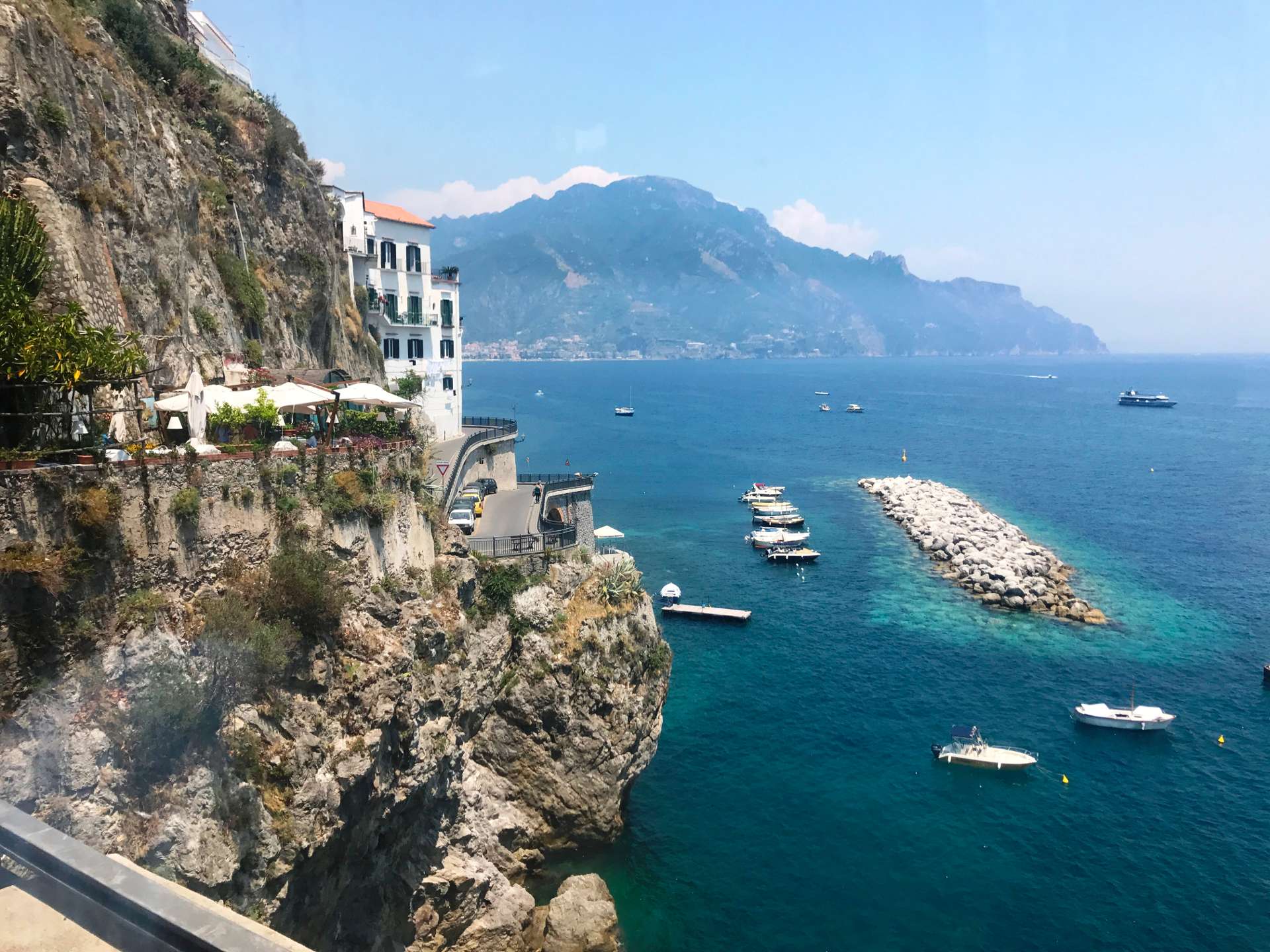
Atrani is a small, picturesque town located on the Amalfi Coast, just a short distance from the larger and more famous town of Amalfi. It is famous for its charming, authentic atmosphere and is often considered one of the best-preserved villages on the coast. Atrani is one of the smallest towns in Italy, both in terms of population and area.
The town has a peaceful, almost timeless quality, with narrow streets, steep staircases, and tightly clustered houses that give it a very intimate feel.
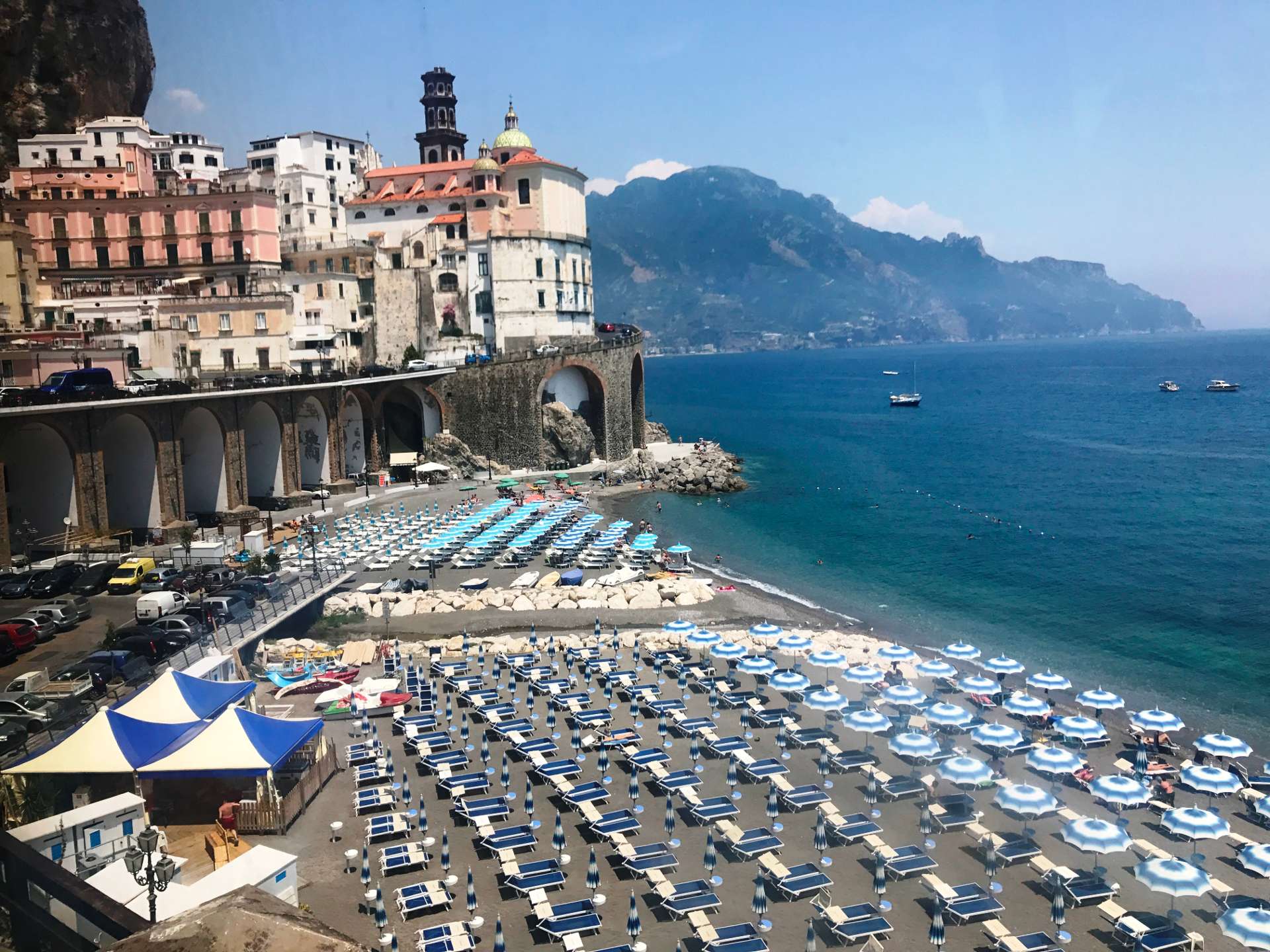
Atrani has a small but beautiful beach, located right at the town’s edge where the Dragone River meets the sea. The beach is sandy with some pebbles and is surrounded by the town’s characteristic steep cliffs.
The bus continues to ascend through the Valle del Dragone, a deep valley that separates the Lattari Mountains from the cliffs of the Amalfi Coast. This valley is lush with vegetation, and the winding road offers views of terraced vineyards and lemon groves.
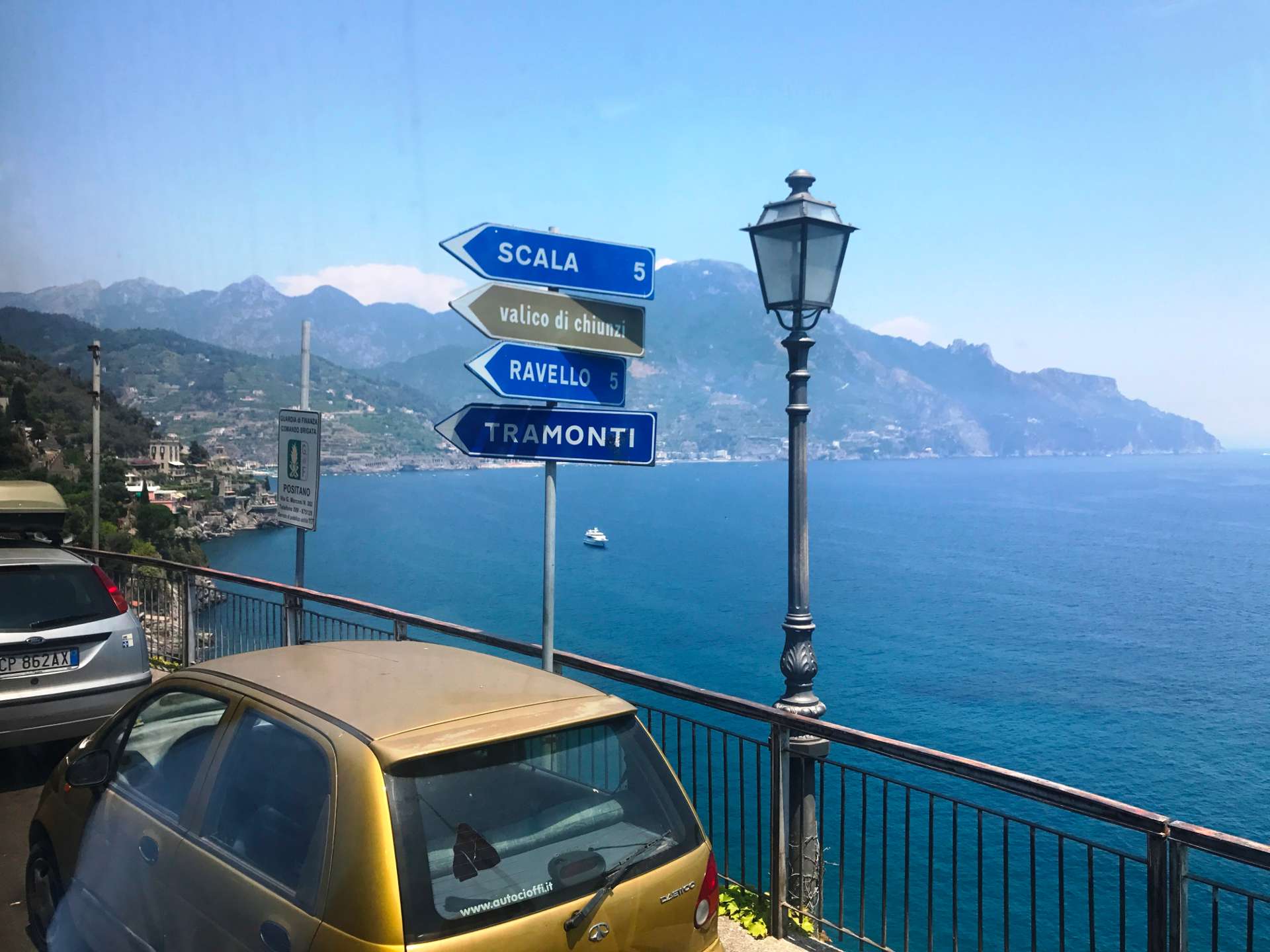
We finally reached an indicator located at a key junction where the road splits towards different destinations: Scala, Valico di Chiunzi, Ravello and Tramonti.
After this junction, the bus continues its climb towards Ravello. The road becomes even narrower, and the views become more expansive as you approach the town.
Ravello – Naples and Amalfi Coast Panoramas
The Ravello bus stop, located on Via Giovanni Boccaccio, is a key entry point for visitors arriving in this stunning hilltop town on the Amalfi Coast. Just across the street from the bus stop, you’ll find a panoramic viewpoint that offers breathtaking views of the surrounding cliffs, the Mediterranean Sea, and the lush terraced landscapes that characterize this region. This viewpoint is a perfect spot to pause and take in the natural beauty of the area, providing a taste of the scenic vistas that make Ravello so famous.

Center of Ravello Highlights
From the bus stop, you can take a pleasant walk along Via Giovanni Boccaccio towards Piazza Duomo, the main square of Ravello. This route takes you through a charming pedestrian tunnel. Out of the tunnel you can see the Annunziata Building and Villa Rufolo. The Annunziata Historic Building is a significant architectural and cultural landmark. Originally built in the 13th century, this beautiful structure was part of a larger religious complex and is noted for its twin bell towers, which are visible from various points around the town. The building, with its distinctive Arab-Sicilian architectural influences, is a fine example of the region’s historical melding of different styles and cultures. Today, the Annunziata is famous for its role in the Ravello Festival, an annual music and arts festival that draws performers and visitors from around the world.
Villa Rufolo
Villa Rufolo is one of Ravello’s most famous and enchanting landmarks. Originally built in the 13th century by the wealthy Rufolo family, the villa is an architectural gem, blending Moorish, Norman, and Gothic styles. The villa’s historic significance is matched by its breathtaking beauty, particularly its gardens, which are celebrated for their lush vegetation, colorful flowers, and stunning views over the Amalfi Coast.
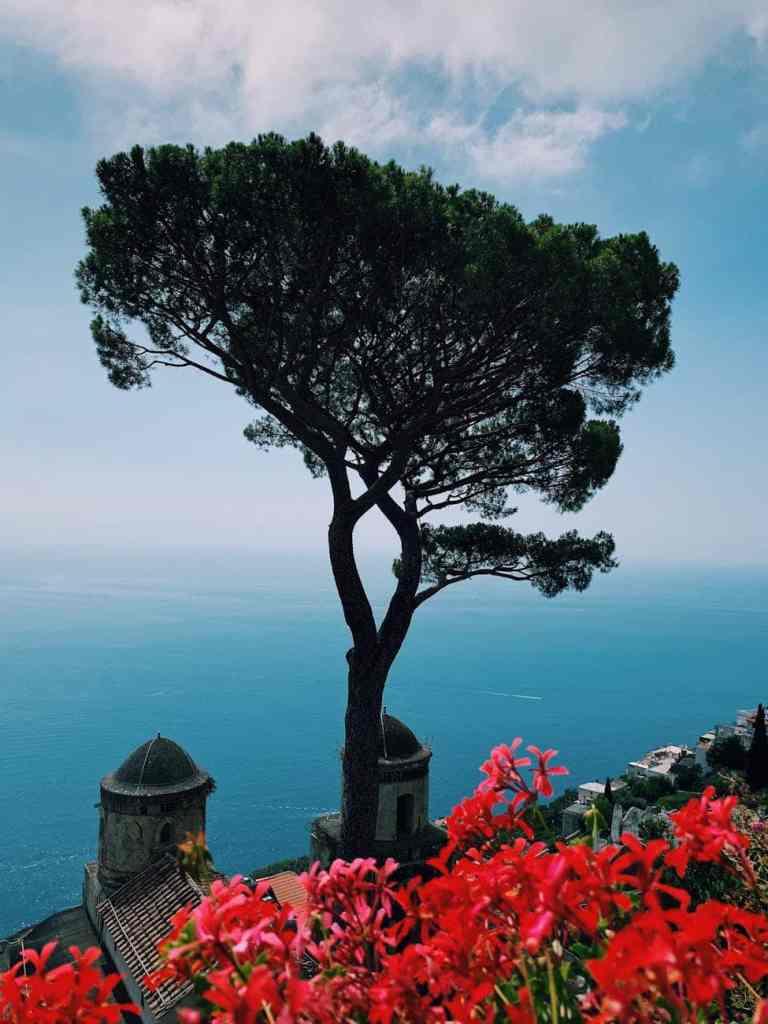
The gardens of Villa Rufolo are often referred to as the “Garden of the Soul” and have inspired many artists and musicians over the years, including Richard Wagner, who was so captivated by the gardens that they inspired the setting for the “magic garden of Klingsor” in his opera Parsifal. Today, the villa hosts many cultural events, including concerts during the Ravello Festival.
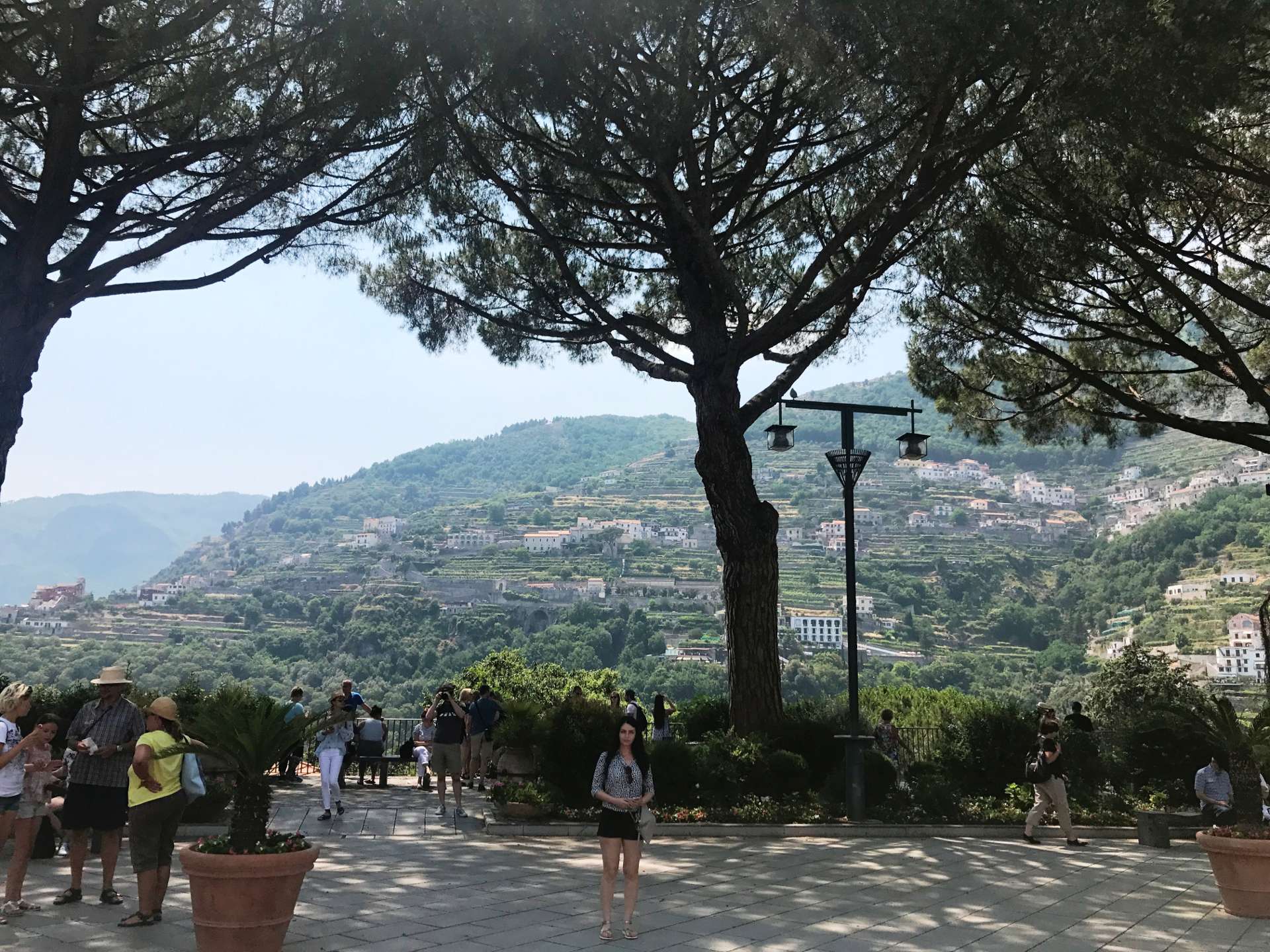
Piazza Centrale
Piazza Centrale, also known as Piazza del Duomo, is the main square in Ravello, is the heart of Ravello’s social and cultural life, surrounded by historical landmarks, quaint cafés, and shops. The square is dominated by the Duomo di Ravello, a historic cathedral that dates back to the 11th century and nearby you’ll find Villa Rufolo. The Cathedral of Ravello is dedicated to St. Pantaleon and showcases a mix of Romanesque and Baroque architectural styles. The interior is adorned with beautiful mosaics and features a bronze door.


Villa Cimborne
Given the limited time on our 1 day trip to the Amalfi coast we had to chose between visiting Villa Rufolo or Villa Cimborne in Ravello. We chose Villa Cimborne. Why?
For the unparalleled panoramic views – Villa Cimbrone is renowned for its Terrazza dell’Infinito (Terrace of Infinity), which offers arguably the most breathtaking views on the entire Amalfi Coast. The terrace is lined with marble busts and provides a sweeping panorama of the coastline and the azure Mediterranean Sea, creating a truly unforgettable experience. The views from Villa Cimbrone are often described as one of the most beautiful in the world. Moreover, the gardens at Villa Cimbrone are larger and more varied than those at Villa Rufolo. They are beautifully landscaped with a mix of formal gardens, ancient statues, temples, and hidden nooks that evoke a sense of timeless romance. The gardens are perfect for a leisurely stroll, offering a peaceful and immersive experience surrounded by nature.
While both villas are historically significant, Villa Cimbrone has a unique blend of architectural styles, including Gothic, Moorish, and Classical elements. The villa itself, although more modern (largely reconstructed in the early 20th century), has an eclectic charm and an air of mystery, adding to its allure. Villa Cimbrone has a rich history of attracting artists, writers, and intellectuals, including Virginia Woolf and E.M. Forster.
From Piazza Centrale to Villa Cimborne
Piazza Centrale is surrounded by charming cafés, restaurants, and boutiques that sell local crafts, ceramics, and souvenirs. We then headed towards the southern exit of the square and walked on Via dei Rufolo.

We kept ahead on Via S. Francesco. This area offers beautiful views and a relaxed atmosphere.

We reached the Church of Saint Francis of Assisi of the Order of Friars Minor Conventual.
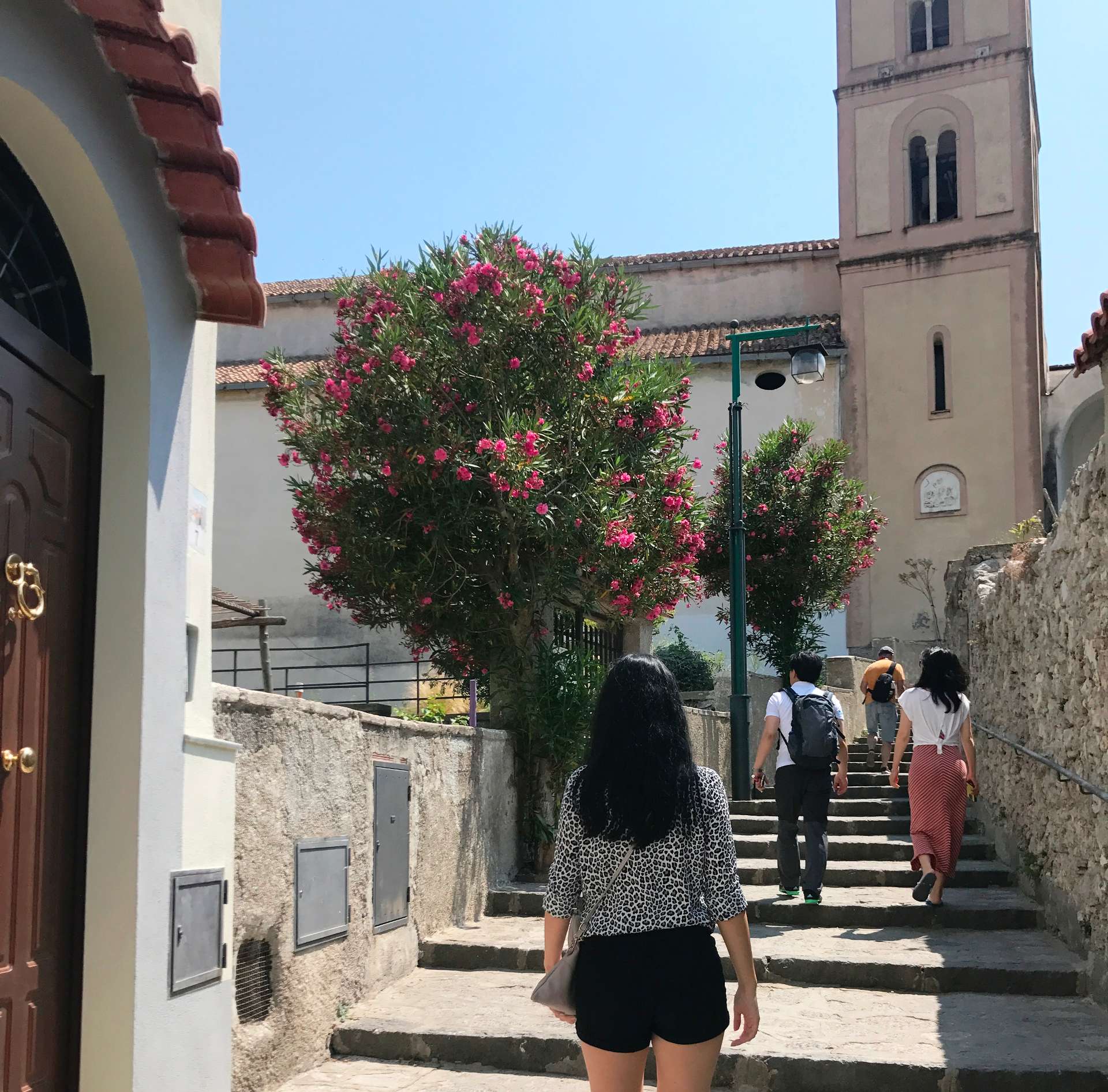
The pathway will take you through steps and along narrow, winding streets typical of Ravello. These steps and alleyways give you a true sense of the town’s historical charm. At the intersection we kept left on Via Santa Chiara and reached Hotel Villa Maria.

Viale dell’Immenso
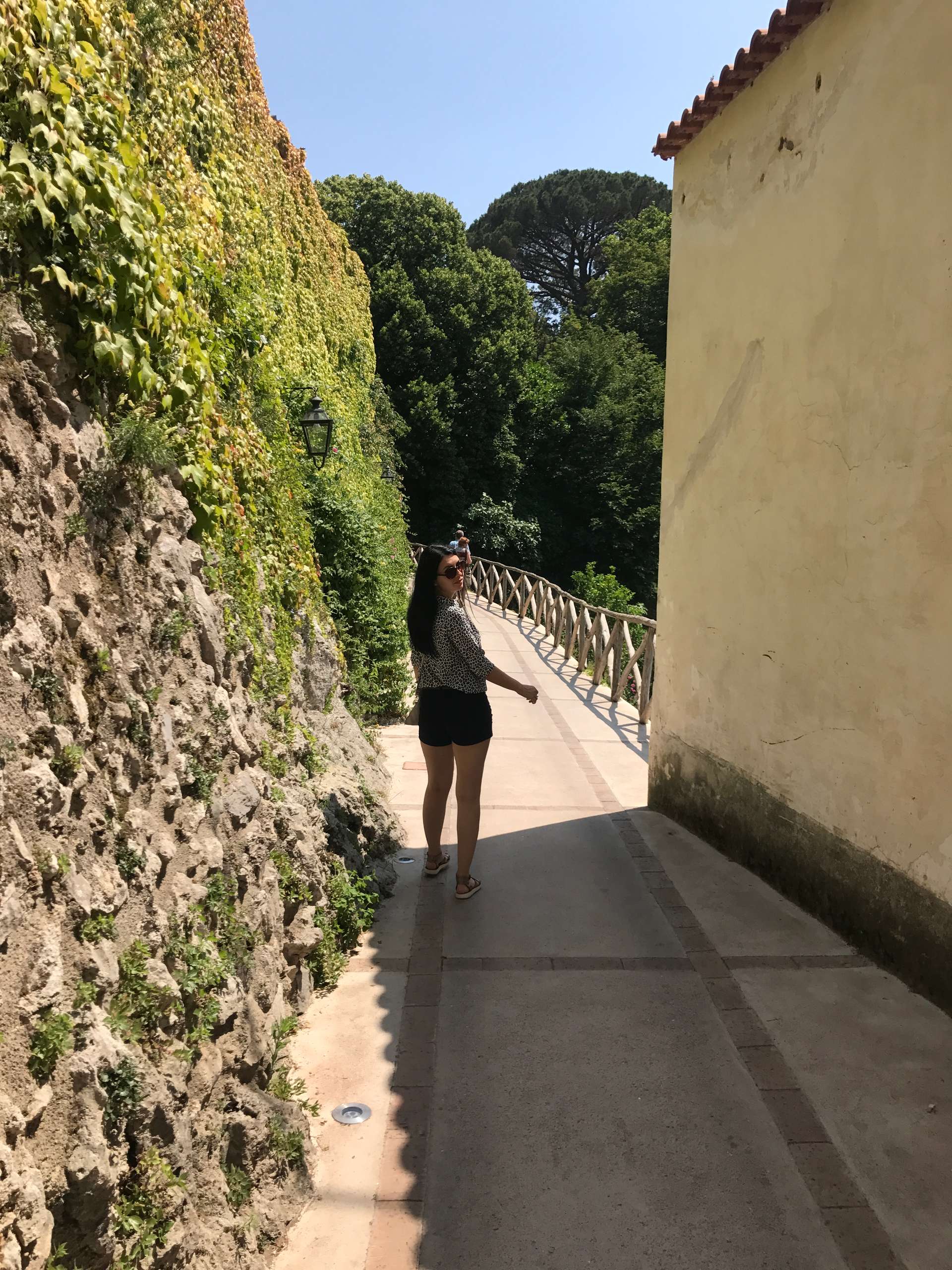
Continue walking along the pathway and you’ll notice terraced gardens and the expansive landscape that stretches towards the sea.

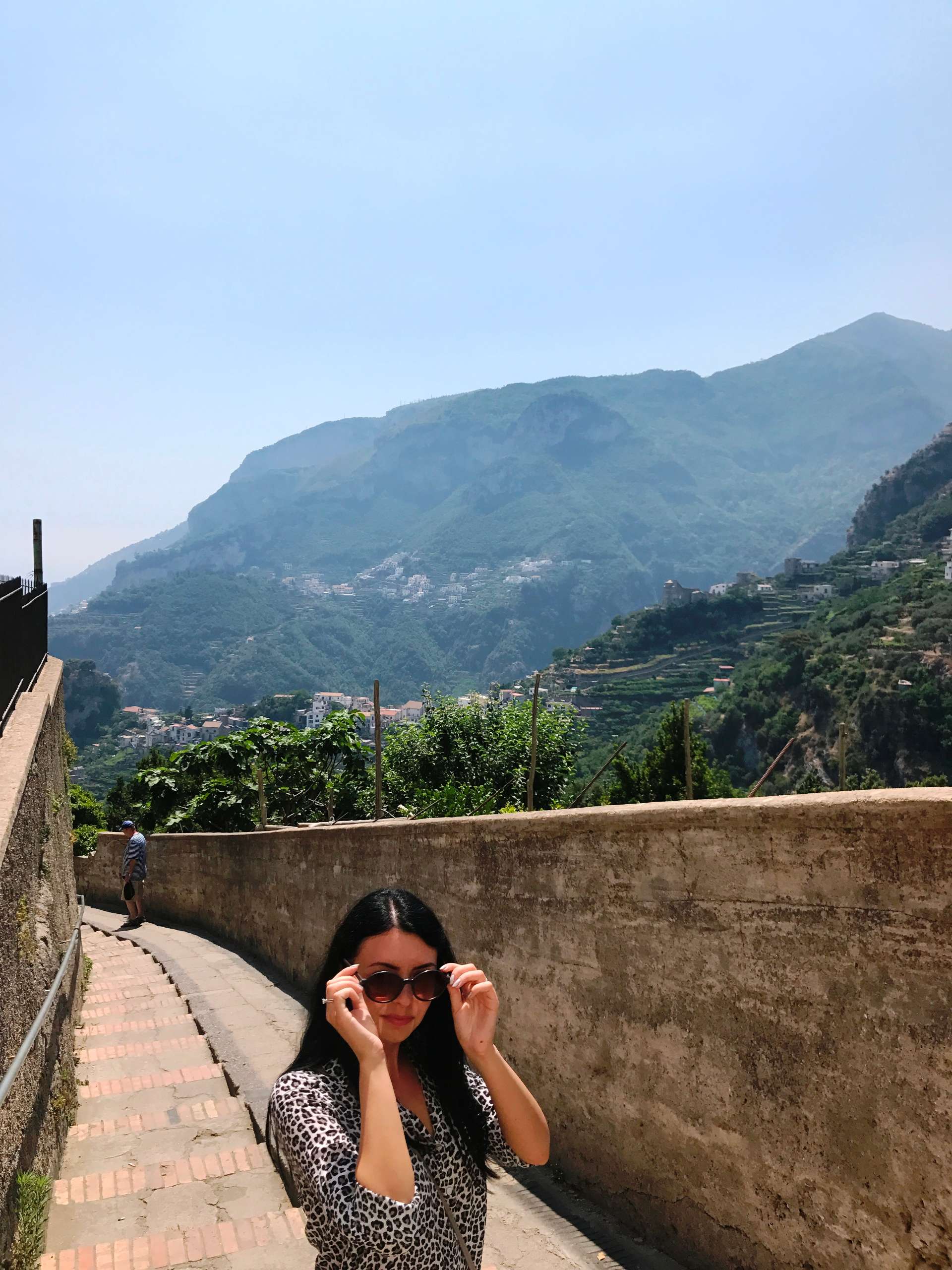
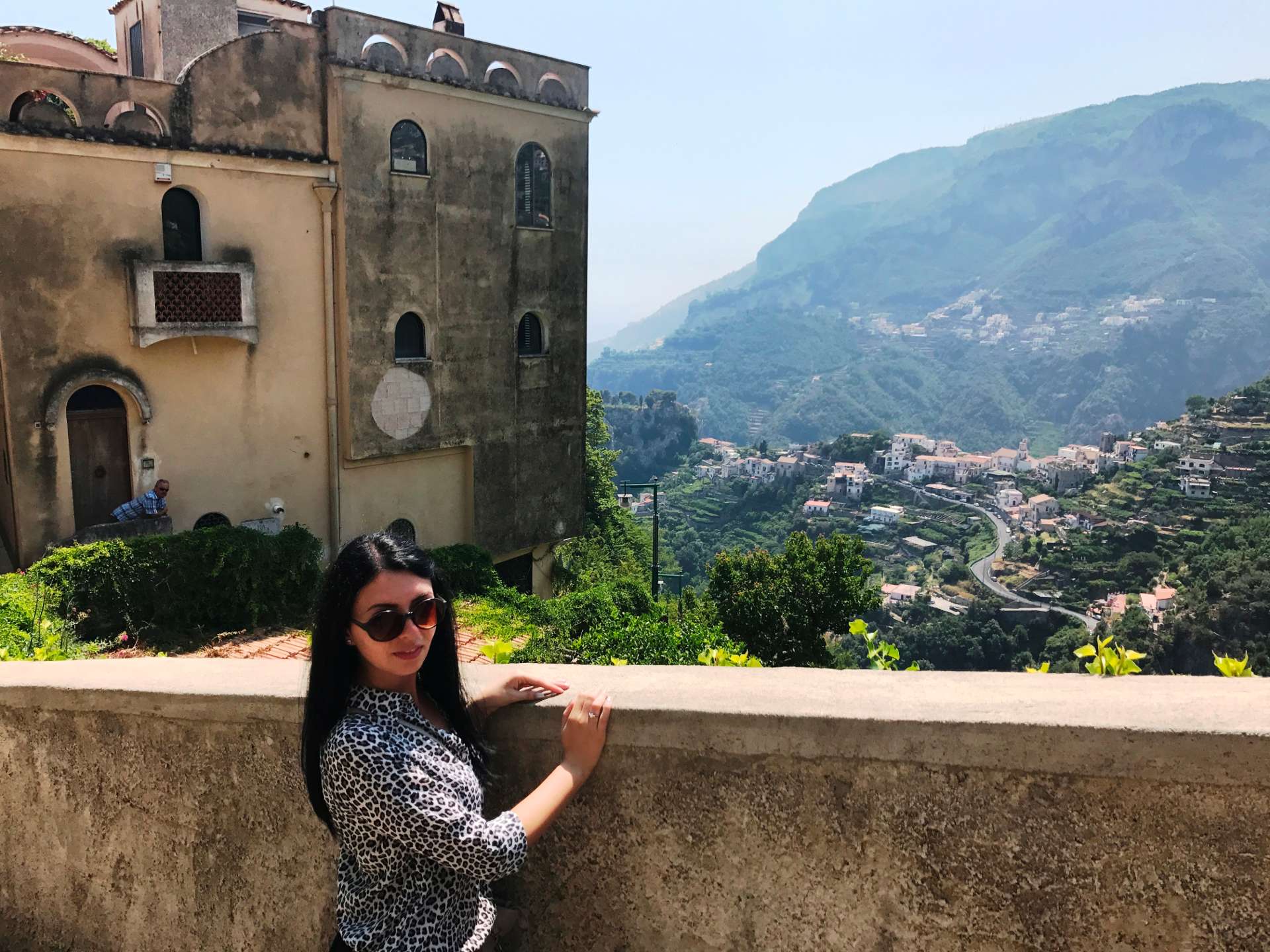
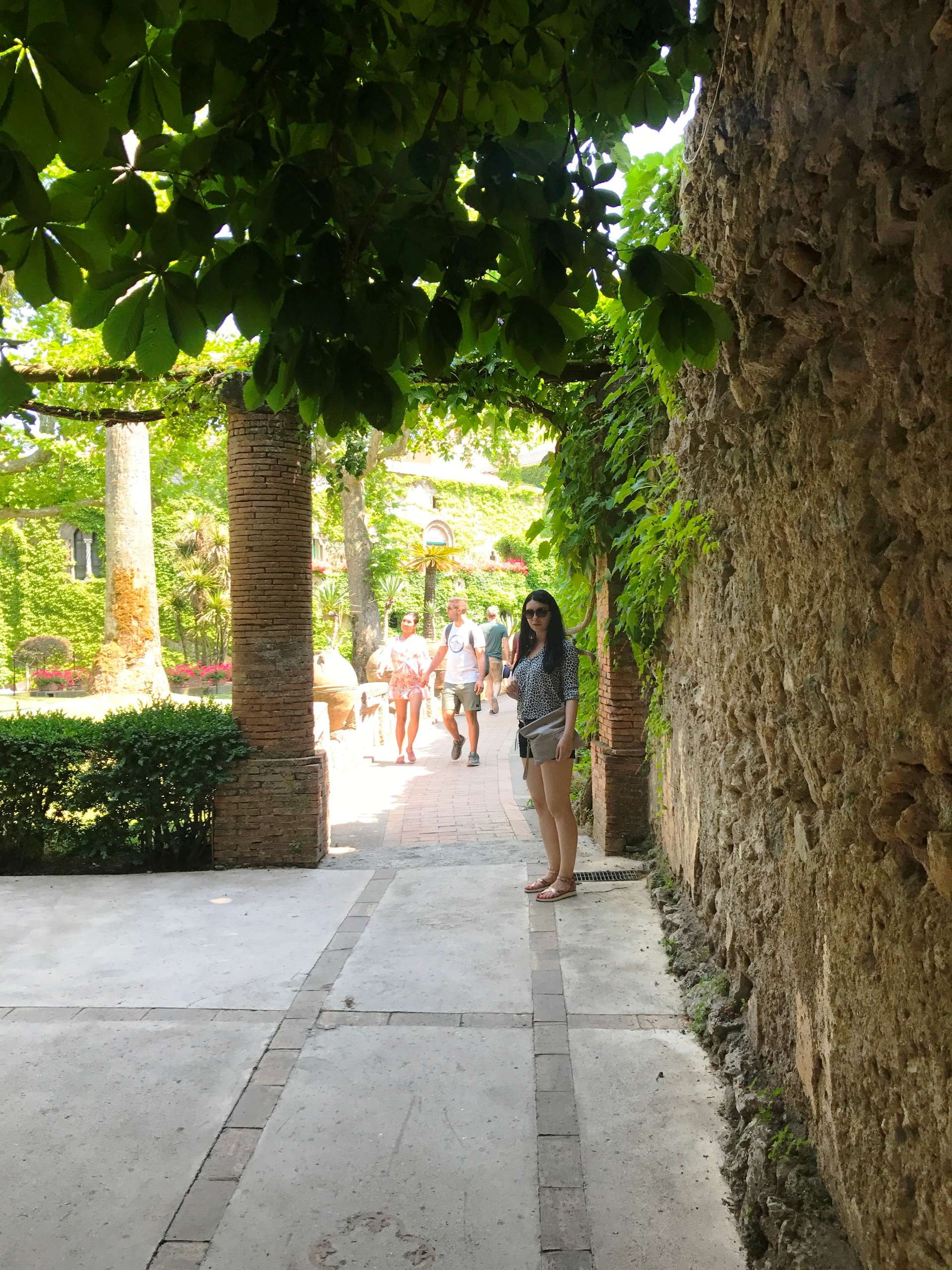
After walking for about 15 – 20 minutes from Piazza Centrale you’ll finally reach Villa Cimbrone. The next two images show the end of the journey, with the villa’s entrance and its well-maintained gardens.
Villa Cimborne Gardens
Once inside Villa Cimbrone, explore the gardens at your leisure. The gardens at Villa Cimbrone are open to the public every day. The entrance tickets are 10 euros. Website: https://www.hotelvillacimbrone.com.


Hotel Villa Cimbrone is among the most distinguished Hotels de Charme in the Mediterranean. This 12th-century residence exudes the grandeur and ambiance of a bygone era. The Vuilleumier family, drawing on generations of experience in the hospitality industry, has carefully preserved the villa’s original architectural and also the decorative elements.

Throughout its history, Villa Cimbrone has hosted influential figures from the aristocracy and intellectual circles, inspiring numerous artists and so becoming a favored gathering spot for English visitors on the Amalfi Coast. Today, the hotel also remains a sanctuary for discerning travelers seeking elegance, inspiration, discretion, and exceptional service. Its vibrant atmosphere has long attracted renowned politicians, aristocrats, and also artists, and served as a meeting place for the literati of the Bloomsbury Group. The villa’s halls are adorned with frescoes, significant artworks, and antiques, with each design element marked by distinctive style and exquisite color nuances.
The Temple of Ceres and the Terrace of Infinity
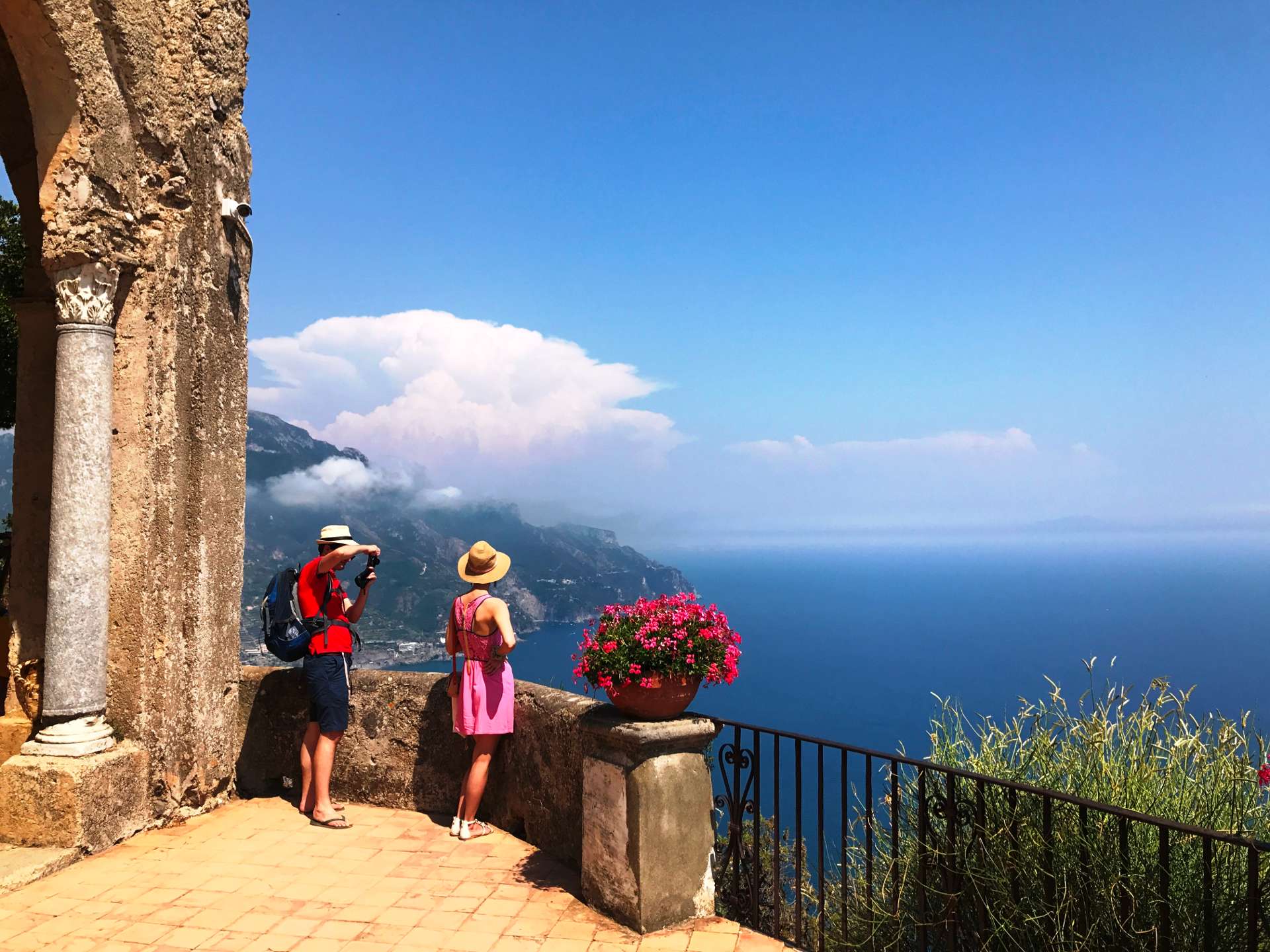
The Terrace of Infinity is a must-see, where you can enjoy unparalleled views of the coastline and the sea below. Reached via the “Viale dell’Immenso” (Avenue of Immensity), a pergola‑covered lane trailing through wisteria and classical motifs. At its terminus, the Temple of Ceres opens onto the terrace—called the “Door to the Sun” .
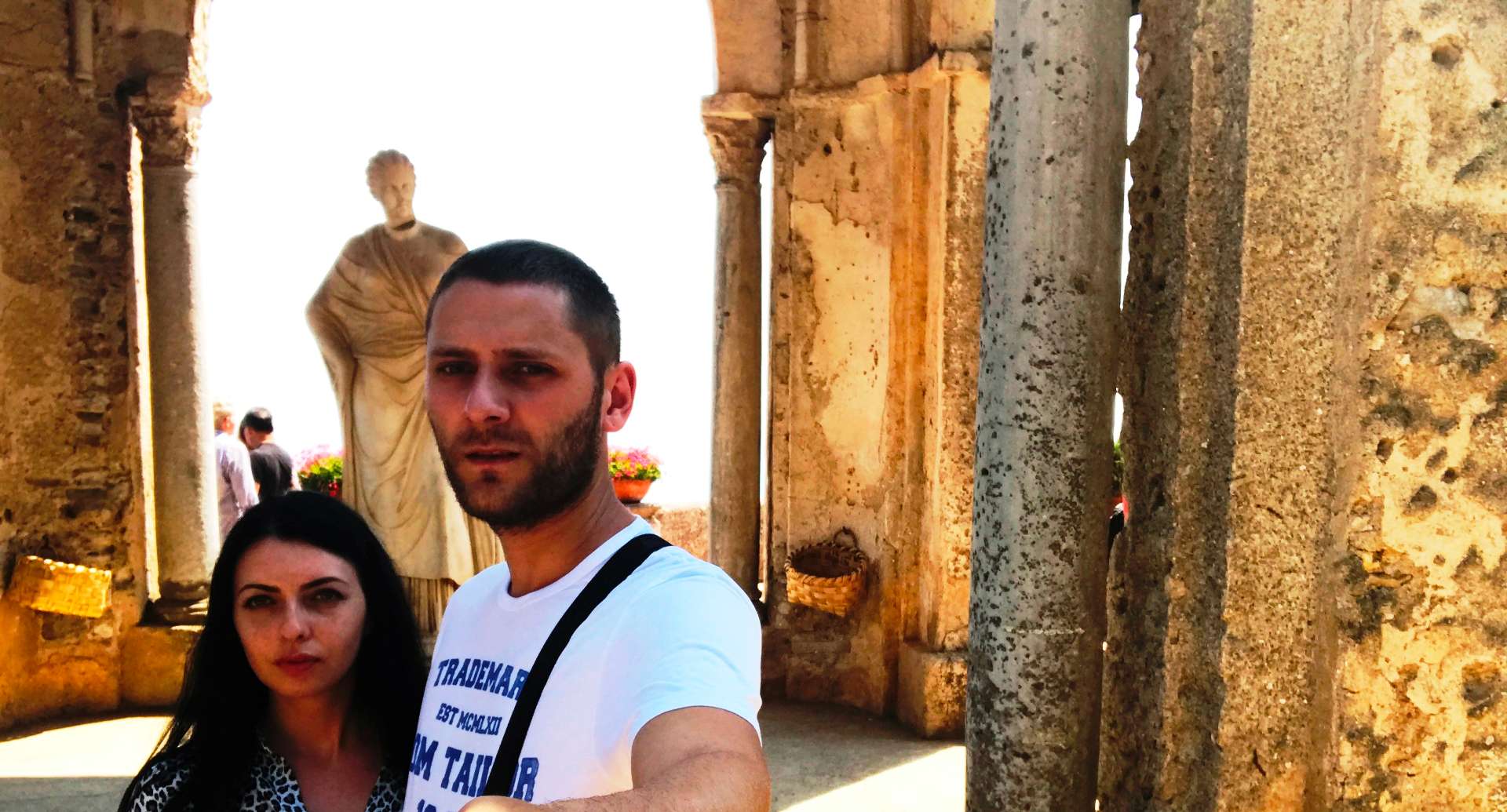
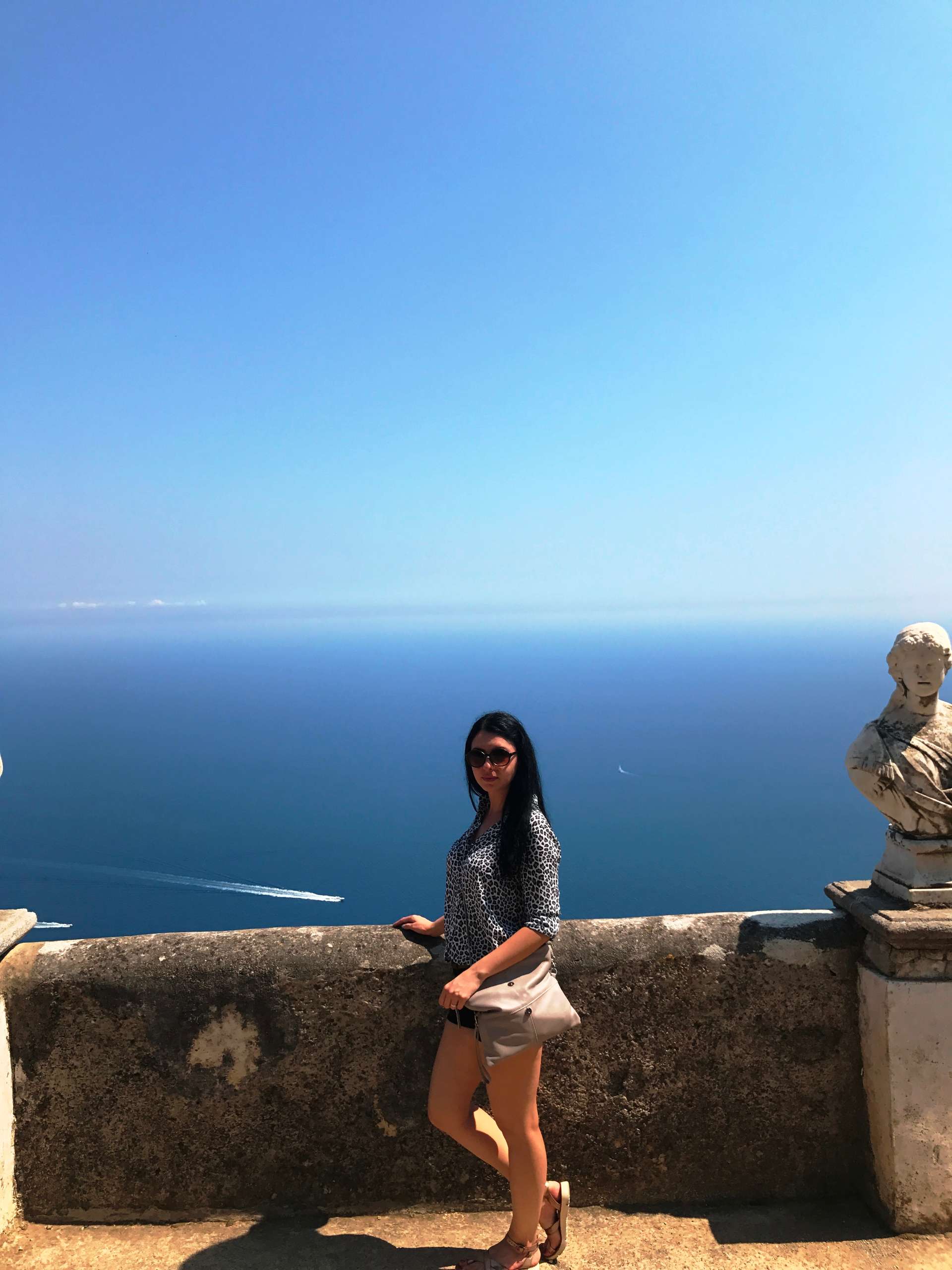
The Terrazza dell’Infinito (Terrace of Infinity) at Villa Cimbrone in Ravello is nothing short of magical—a sweeping clifftop belvedere perched about 365 m (1,200 ft) above the Tyrrhenian Sea. It’s a masterful blend of architecture and nature, where sky meets water in shades of uninterrupted cobalt—a true “natural balcony” that feels like the edge of the world.

The low balustrade is lined with elegant 18th-century marble busts and also with vibrant flower pots that frame the vast sea view perfectly.
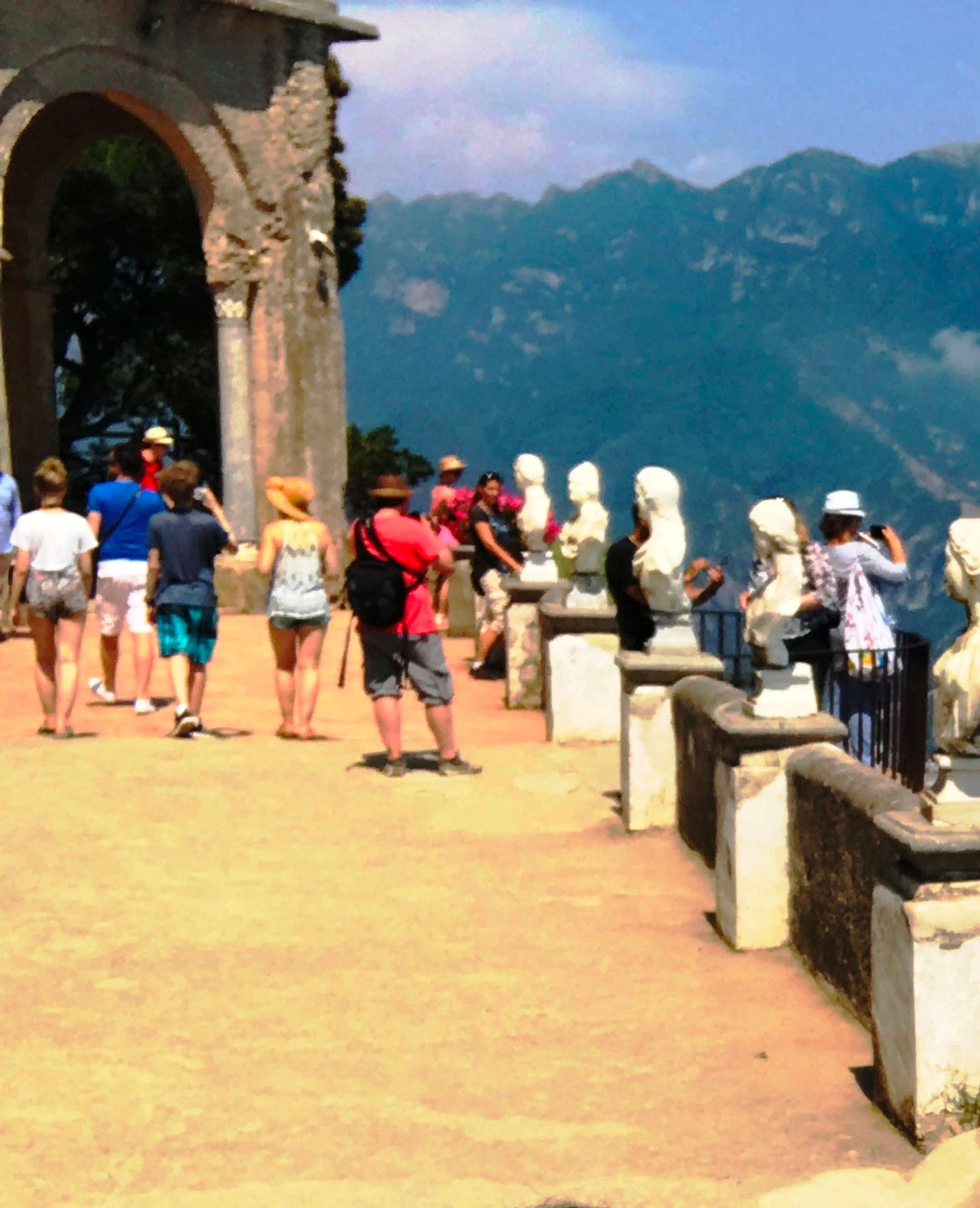
On clear days, the sky and sea kiss at the horizon. You can glimpse the Amalfi coastline, Maiori, Minori, the Cilento mountains, and even Punta Licosa—offering a sublime sensory experience that inspired writers like Gore Vidal, who called it “the finest view in the world”.

The Terrace of Infinity Spectacular Views

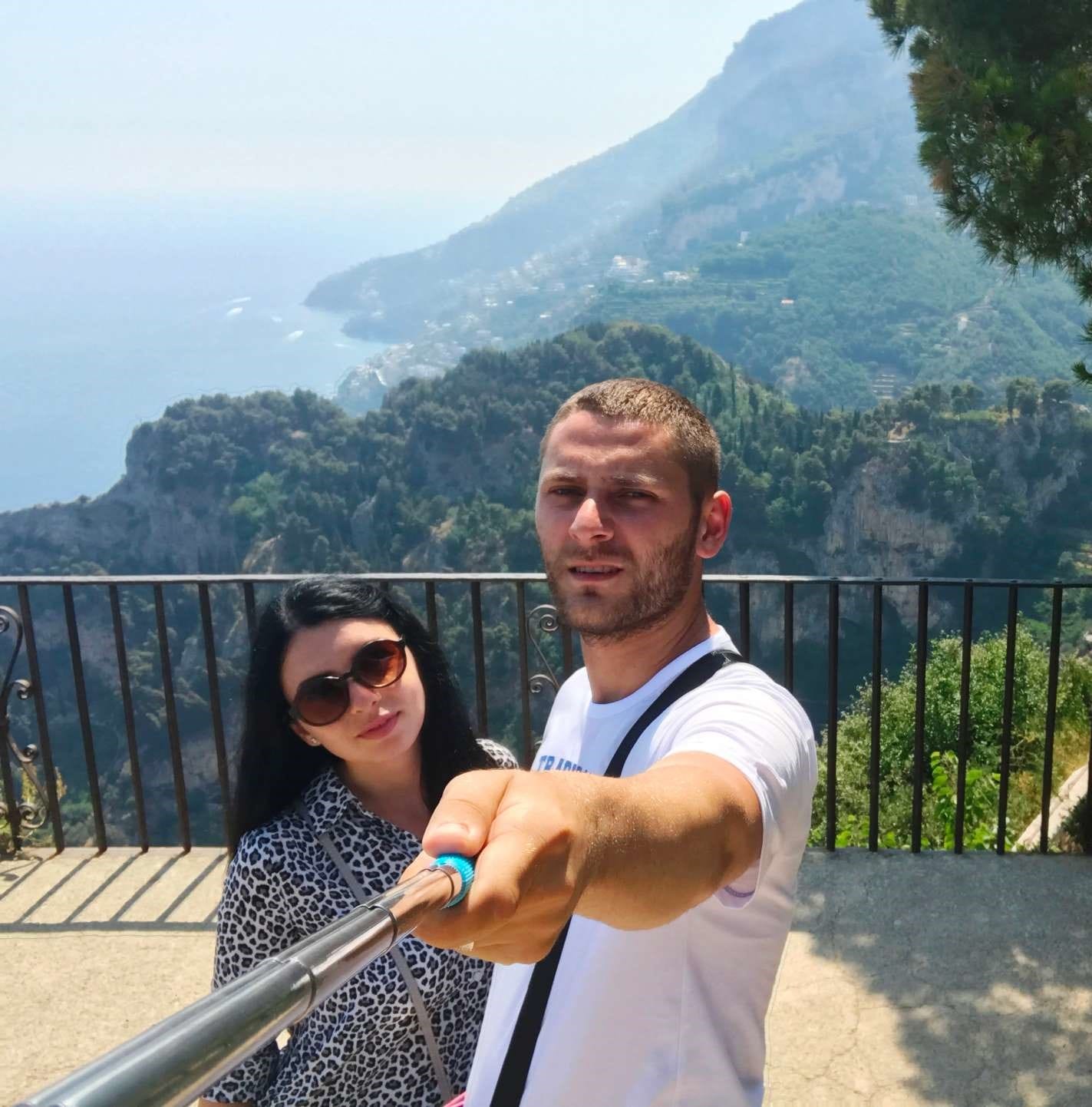
Once a haven for 19th‑ and 20th‑century cultural icons—Virginia Woolf, D.H. Lawrence, T.S. Eliot, Winston Churchill, Greta Garbo—the Terrace continues to captivate visitors today, serving as a symbol of infinity, inspiration, and also a fusion of art, botany and vision.
Hotel Villa Cimbrone and its Restaurants


Within Villa Cimborne there are Il Flauto di Pan restaurant and Mediterraneo restaurant and also some bars. Villa Cimborne is a gem tucked between land and sea, where the breathtaking scenery harmonizes with an exquisite culinary experience.
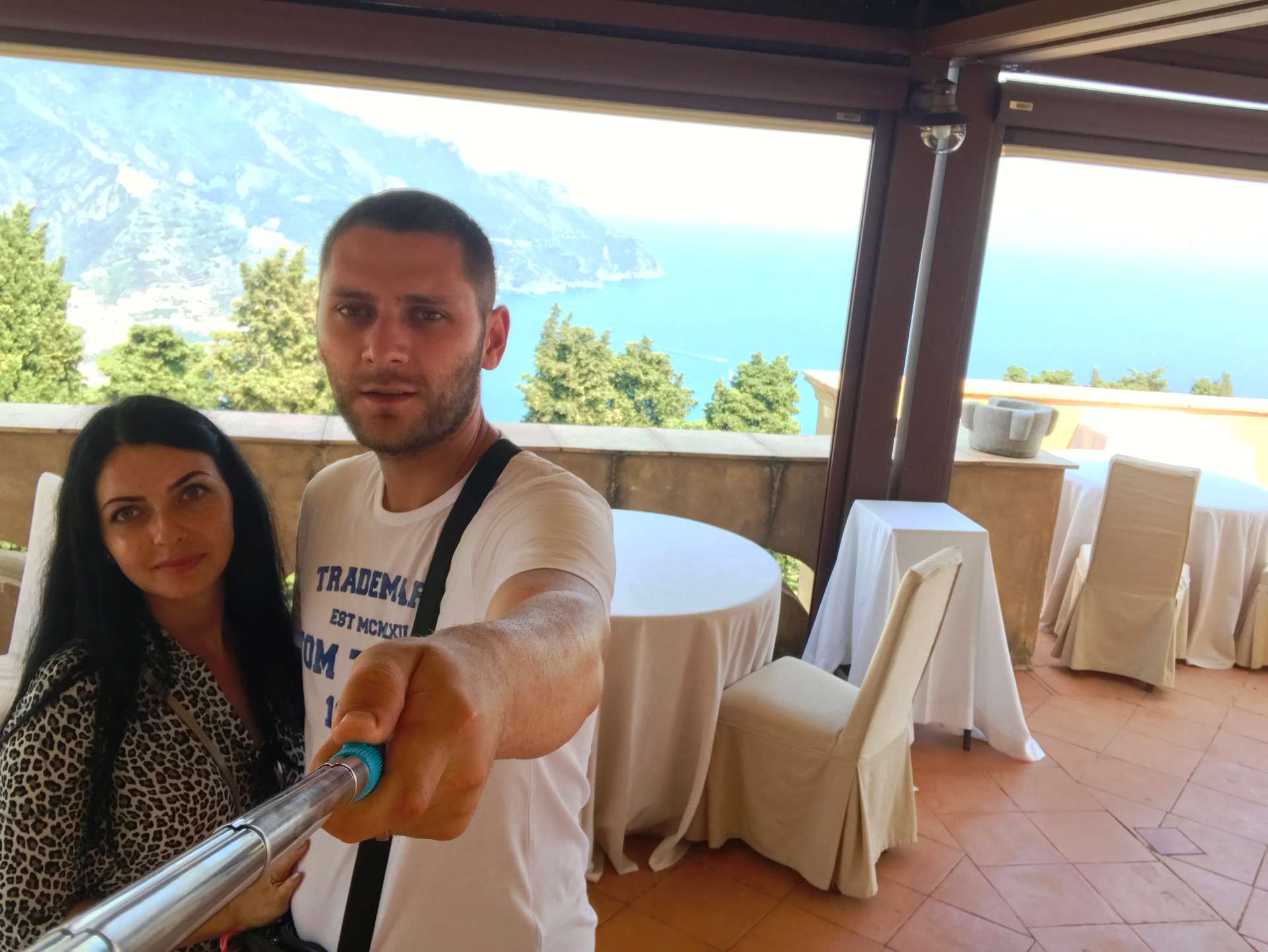
The menu features fresh, authentic ingredients, focusing on the revival of time-honored flavors.
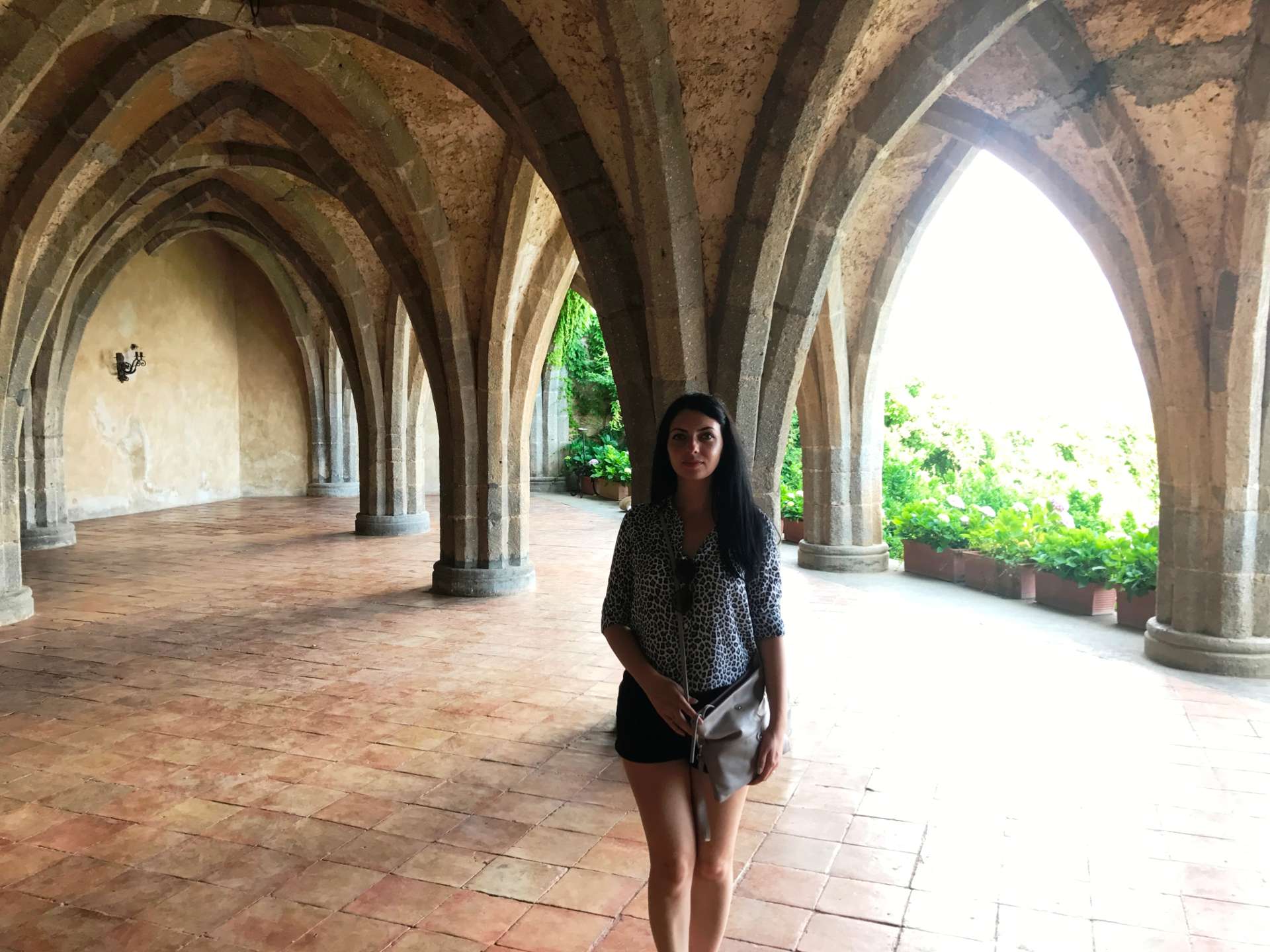
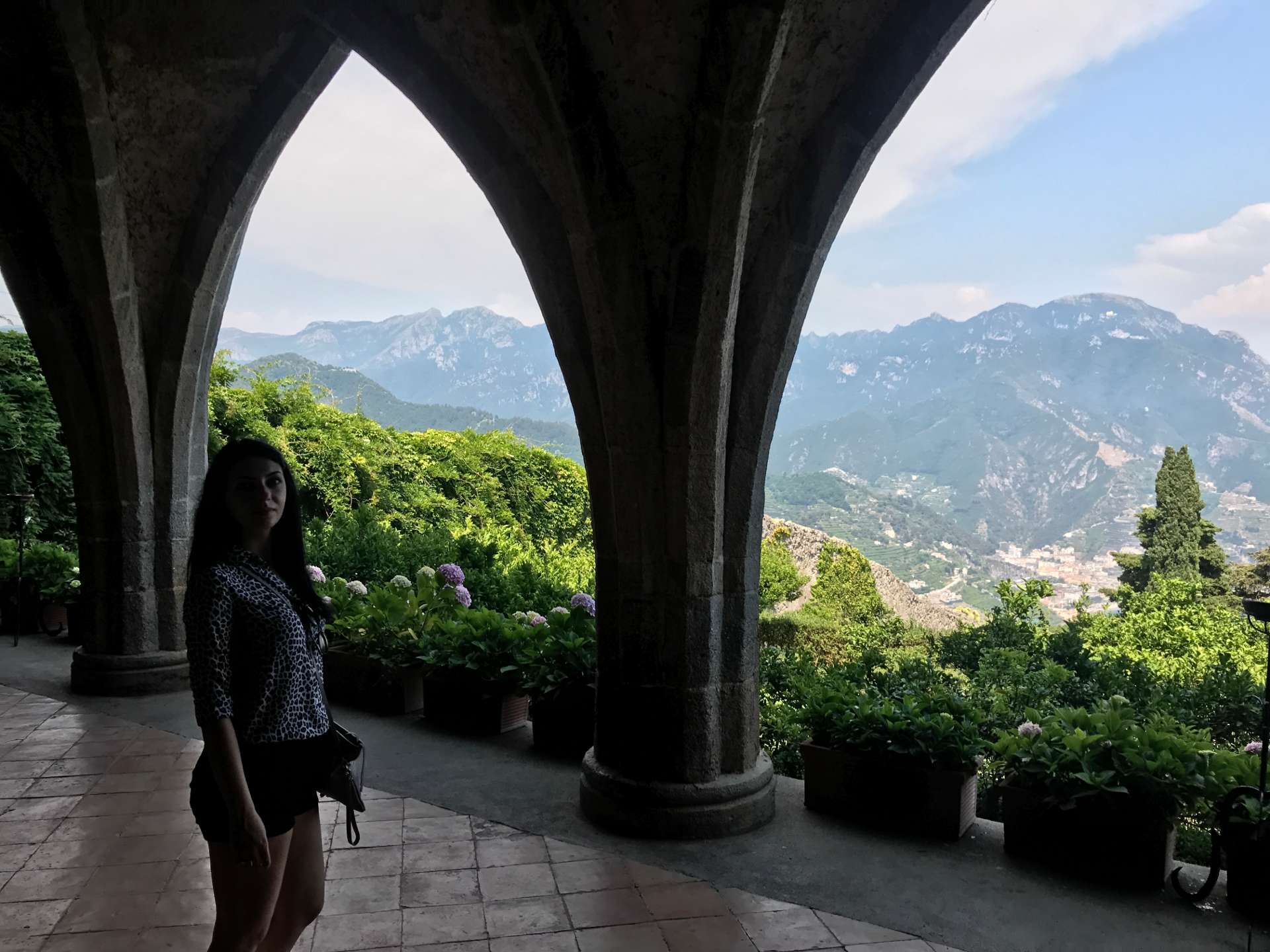
Then from Ravello we finally took the bus back to Amalfi. The driver was young and also good looking and very confident on his driving skills. He drove us very fast back to Amalfi and parked in a very narrow spot at the bus stop, while proudly smiling.
From Piazza Flavio Gioia we took bus 5070. The trip took around an hour. We got off at Positano (Sponda) bus stop on Via Cristoforo Colombo.
Positano – The Jewel of the Amalfi Coast
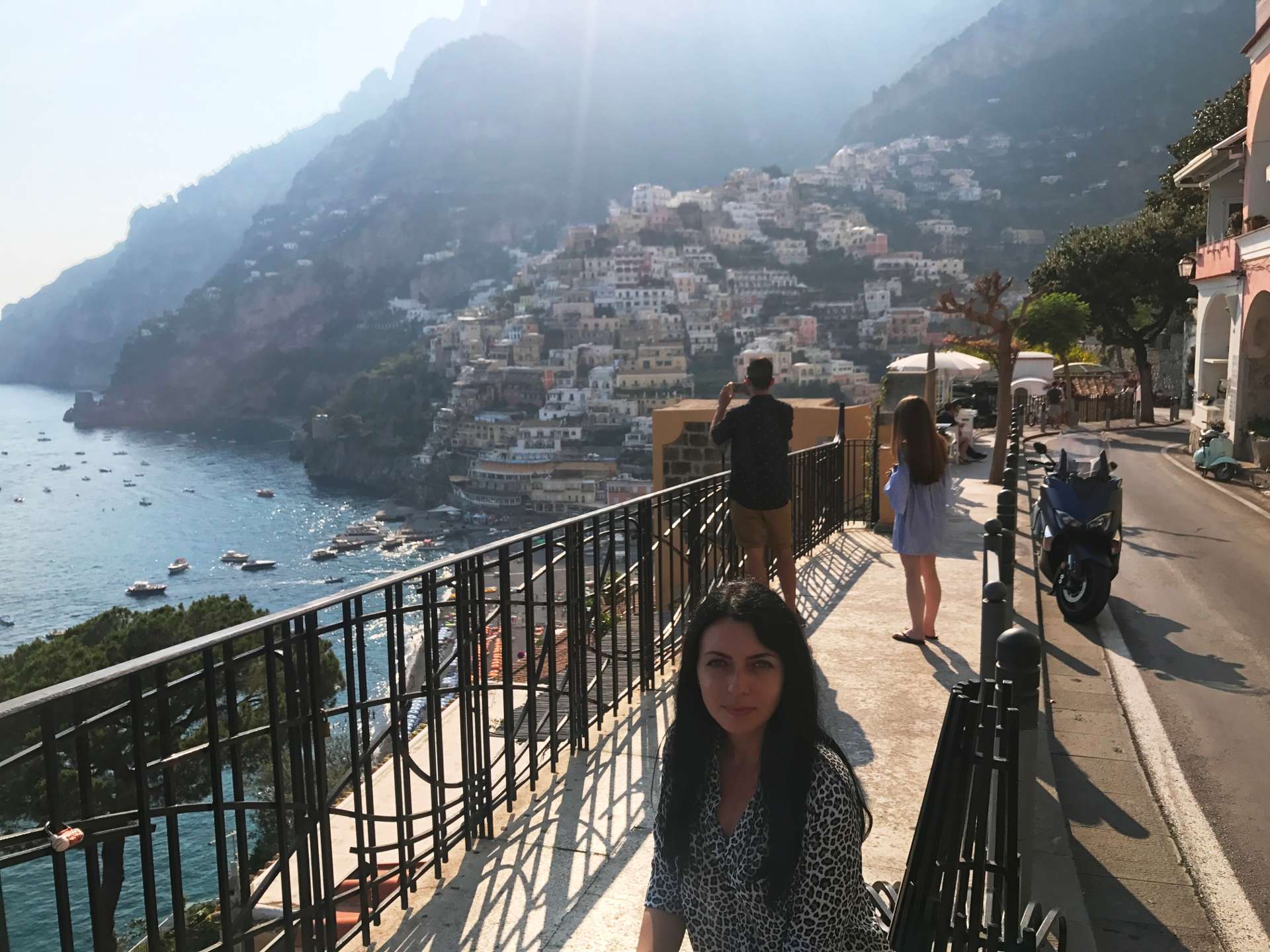
The bus will drop you off right at the entrance to the small town. From there, go down the path that leads into the town — it’s pretty hard to go the wrong way.
Positano Views from Via Cristoforo Colombo
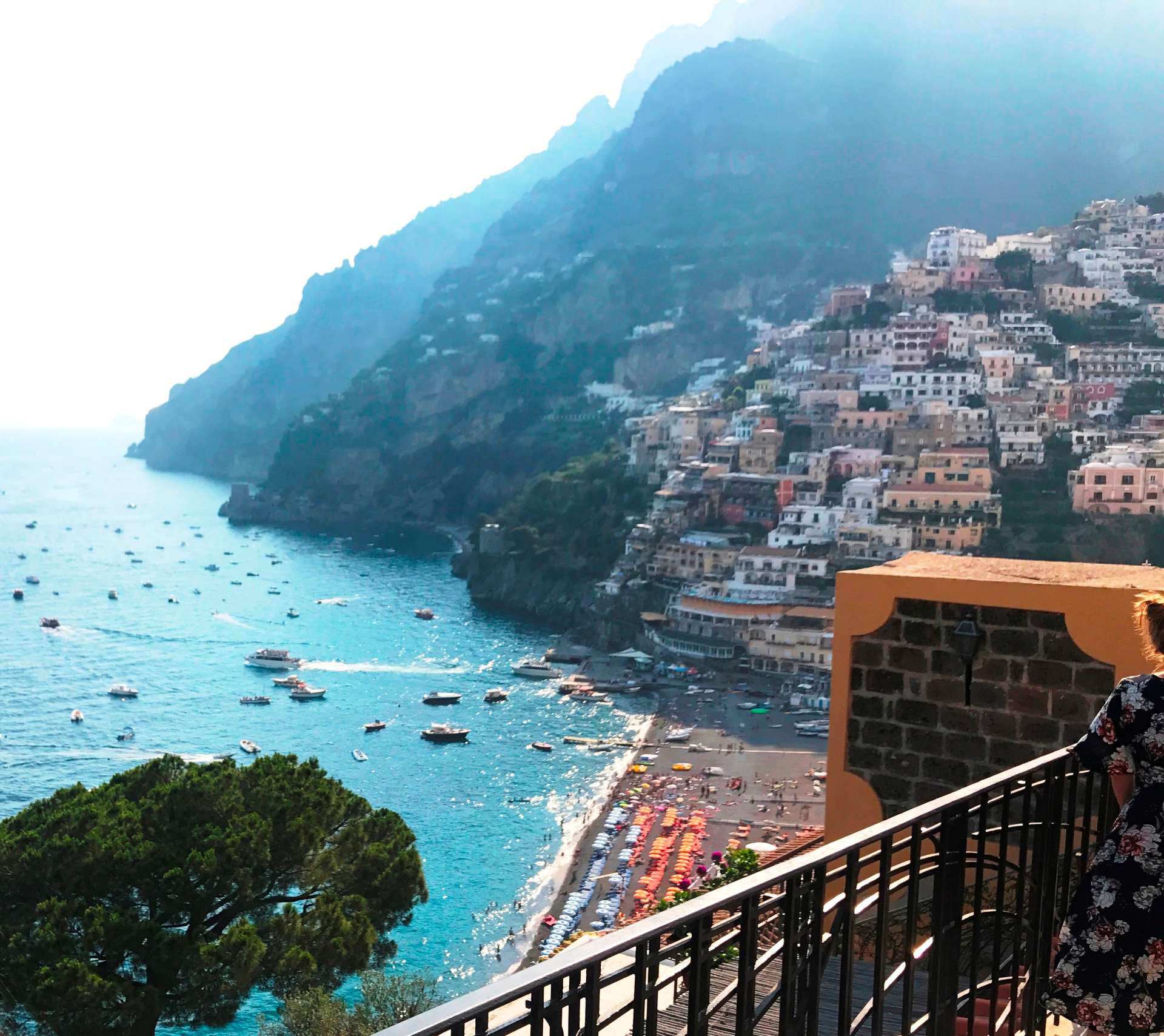
Via Cristoforo Colombo is one of the main roads in Positano, which offers stunning views of the town and coastline. The location is popular among tourists for its panoramic views of the colorful buildings cascading down the cliffs toward the sea.
We took some photos near the pedestrian area where Via Cristoforo Colombo intersects with other small streets. This area is a short walk from the central part of Positano and is a well-known viewpoint where many visitors stop to capture the iconic scenery.

From this vantage point the view overlooks the main beach area, Spiaggia Grande, and provides a clear view of the iconic cliffside buildings of Positano.

Then we went down Via Cristoforo Colombo and posed for another photo. In the background you can also see the sea and the boats. The turquoise water of the Tyrrhenian Sea is dotted with various small boats and yachts.
Positano’s Iconic Cliffside Architecture and Bougainvillea
After Residence La Tavolozza we were able to capture the beauty of the bougainvillea flowers with the Positano’s iconic cliffside architecture, with buildings in shades of white, pastel yellow, peach, and pink in the background.

We turned left at the first intersection and got to Piazza dei Mulini and then walked down on Via dei Mulini.

Via dei Mulini Shopping Street
Via dei Mulini is a picturesque, narrow street in Positano. The street is lined with small shops and colorful merchandise. The lush greenery and especially the vibrant purple flowers overhead add to the charm of the location.

This is one of Positano’s popular shopping areas in the central part of town where tourists frequently walk and explore.

At the end of the street we eventually found the Chiesa di Santa Maria Assunta. We wandered on the narrow streets around to find a place to eat something fast, because we were in a hurry to catch a bus back to Sorrento and the train back to Naples.
We finally found Capprici restaurant, a typical Amalfi Coast seafood, pizza and pasta trattoria, located in a buzzing area with a sea-facing balcony.
Lunch with a View in Positano

Eventually we had some pizza slices, some Sprite soda and pineapple natural juice. The prices were also OK. And, moreover, from the balcony we could admire Positano Beach.
Positano Beach, also known as Spiaggia Grande, is one of the most iconic and picturesque beaches on the Amalfi Coast. Nestled at the foot of Positano’s steep cliffs, this beach is famous for its stunning backdrop of colorful houses cascading down the hillside and also for the clear blue waters of the Tyrrhenian Sea.
Spiaggia Grande is the main beach of Positano and also one of the largest on the Amalfi Coast. It’s a lively and popular spot, stretching about 300 meters long and offering a mix of public areas and private beach clubs with sun loungers and umbrellas. The beach is a bustling hub of activity, especially in the summer. It’s lined with restaurants, bars, and shops, making it a perfect place to enjoy the local cuisine or sip on a refreshing drink while taking in the breathtaking views.
The beauty of Positano Beach is truly spectacular. The contrast between the vibrant sea, the pebbled shoreline, and the pastel-colored buildings of Positano’s hillside creates a postcard-perfect scene that has made this beach famous worldwide.
The beach is conveniently located at the heart of Positano, making it easy to explore the town’s winding streets, boutique shops, and charming cafés. In fact, after spending time on the beach, you can take a stroll up through the town to enjoy more of Positano’s unique charm.
Adjacent to Spiaggia Grande is the Marina Grande, where you can catch ferries and boats to other destinations along the Amalfi Coast, such as Capri, Amalfi, and Sorrento, making Positano Beach a great starting point for further exploration.
Return from the Amalfi Coast to Naples via Sorrento
We finally took the SITA bus back to Sorrento, to the train station. As it was already after 8.30 pm we knew there wasn’t enough time to visit Sorrento at all. So, unfortunately, the only memory of Sorrento we have is the picture bellow.
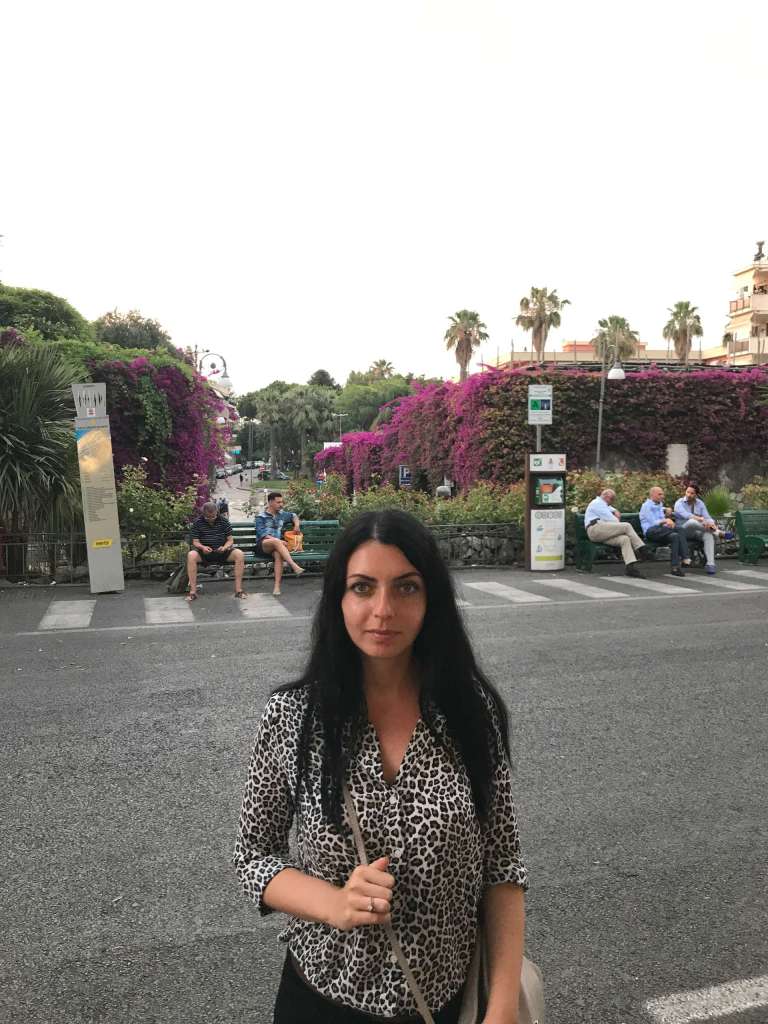
The picture was taken outside the Sorrento train station, specifically at the SITA bus stop located in Piazza Giovanni Battista De Curtis.
The area is surrounded by lush greenery and also vibrant bougainvillea-covered walls, adding a touch of natural beauty to the urban setting. In the distance, you can spot people sitting on benches, likely waiting for their buses or simply relaxing. The scene is typical of a busy yet relaxed Mediterranean town square. There are also a few palm trees visible, contributing to the tropical atmosphere typical of Sorrento and the surrounding region.
Then we finally took the Circumvezuviana train back to Naples late, around 9.30 pm. They say that train is full of thieves, but we were OK. Afterwards, once back at the Napoli P. Garibaldi train station, we walked the crowded streets that finally led us to our hotel. Although we encountered some mountains of garbage at the corner of the streets and some sex workers, we eventually got to our accommodation safe and sound, but very tired. We finally got some good night rest to prepare for our next full day in Naples.
Read On
Check out Our Metropolitan City of Naples, Amalfi Coast, Capri and Pompeii Italy visit: Day 3 to continue exploring — from hidden corners to grand vistas, there’s much more to discover. Also, you can find info about the Amalfi Coast also on this page. Moreover, for inspiration and practical tips on visiting Italy, grab our maps and travel guides and also head over to our Italy Travel Hub and Italy Bucket List — your starting point for all things Italian! And if you’re looking to expand your itinerary, don’t miss our posts on Rome and Vatican experiences, and also our day trips to Nemi, Tivoli and Riviera di Ulisse.
Thanks for reading!
Table of contents
- Early Morning Start – Day Trip from Naples to the Amalfi Coast
- The Famous Amalfi Drive – SS163 Road
- Amalfi Arrival and Exploration
- From Amalfi to Ravello Scenic Route
- Ravello – Naples and Amalfi Coast Panoramas
- Positano – The Jewel of the Amalfi Coast
- Read On
- ❓ Frequently Asked Questions (FAQ) — Day 2: Amalfi Coast Day Trip
Related:
❓ Frequently Asked Questions (FAQ) — Day 2: Amalfi Coast Day Trip
🚗 1. What was the main plan for Day 2?
On Day 2, we took a full-day trip from Naples to the Amalfi Coast, visiting coastal towns like Positano, Amalfi and Ravello, and also experiencing the famous winding SS163 Amalfi Drive.
🚆 2. How did you get from Naples to the Amalfi Coast?
We started the day by walking to Naples Centrale (Garibaldi) train station and took a Circumvesuviana train to Sorrento, then continued by SITA bus along the Amalfi Coast route.
🚌 3. What are the train and bus tips?
- Trains: The Circumvesuviana train from Naples to Sorrento takes about 1 hr 10 min and is cheap but often crowded.
- Buses: The SITA buses connect Sorrento with Positano, Amalfi, Ravello, and other coastal towns — sit on the right side for the best sea views.
🔄 4. Why is the Amalfi Drive famous?
The Amalfi Drive (SS163) is one of the world’s most scenic coastal roads with dramatic cliffside views and dozens of hairpin turns — therefore, a highlight of the Amalfi Coast experience.
🏔️ . Are there scenic viewpoints between towns?
Yes — the coastal road passes dramatic spots like Fiordo di Furore and also quiet villages such as Praiano and Conca dei Marini, where you’ll find gorgeous sea views and natural charm, though some require walking or private transport to access more fully.
Amalfi:
🏙 5. What did you do in Amalfi?
In Amalfi, we explored the historic Piazza del Duomo and Duomo di Amalfi with its striking architecture, then walked along the Marina Grande near the sea.
🍰 6. Any food recommendations from Amalfi?
Yes — we visited Pasticceria Pansa in Piazza del Duomo, known for its traditional sfogliatelle, delizie al limone, and also lemon-infused desserts.
Ravello:
🏞 7. Can you visit other Amalfi Coast towns on the same day?
Yes — after Amalfi, many travelers continue to Ravello or Atrani via SITA bus. Ravello’s hilltop position offers panoramic sea views and charming squares.
🌿 8. What did you see and do in Ravello during your Amalfi Coast day trip?
We visited Ravello, one of the most peaceful and scenic towns on the Amalfi Coast, known for its elevated position and breathtaking views over the coastline. We wandered through the charming historic center, explored Piazza Duomo, and also enjoyed the relaxed atmosphere away from the busy coastal road. Ravello felt like a perfect escape, offering spectacular panoramas, elegant villas, and a calm, romantic vibe that made it a highlight of our Amalfi Coast experience.
🏞 9. Why did you visit Villa Cimbrone in Ravello and what makes it special?
We visited Villa Cimbrone in Ravello in order to experience one of the most breathtaking viewpoints on the Amalfi Coast. As we walked through its elegant gardens, we admired manicured terraces, sculptures, and shaded paths leading to the famous Terrace of Infinity, where we enjoyed uninterrupted panoramic views over the coastline and the sea. Villa Cimbrone felt peaceful and timeless, and it certainly became one of the most memorable stops of our entire Amalfi Coast journey.
Positano:
🌅 9. What did you see in Positano?
Positano appeared as a “cascade” of colorful hillside houses overlooking the sea. In conclusion, its narrow streets, staircases, and panoramic vantage points make it a postcard-perfect stop.
🍕 10. What did you see and experience in Positano?
We walked through narrow streets like Via dei Mulini, explored small shops, and also enjoyed stunning viewpoints overlooking the beach and coastline. Then we enjoyed pizza at a local pizzeria in Positano, savoring fresh, thin-crust Neapolitan-style pizza with flavorful toppings. It was the perfect way to relax after walking the steep streets and enjoying the stunning coastal views.
📸 11. What are some picturesque spots?
Top photo opportunities include:
- Cliffside views from the SS163 road
- Pastel buildings of Positano
- Duomo and Piazza del Duomo in Amalfi
- Amalfi’s seaside promenade (Marina Grande)
- Ravello – Villa Cimborne’s Terrace of Infinity
🕐 12. How tiring is this day trip?
This is a full and active day — you’ll spend a lot of time on public transport and also walking around steep, scenic towns. Comfortably paced, it’s a memorable experience but be prepared for long days.
Have questions or want to connect?


